

Did you know over 60% of power users upgrade their desktop every three years to stay productive? You’ll want a tower that pairs a high‑core CPU with strong single‑thread turbo, 32–64 GB RAM, NVMe storage and roomy cooling. Consider PCIe 4/5 readiness, multiple M.2 slots, USB‑C, Wi‑Fi 6/6E and enterprise firmware so your system stays fast and secure — and you’ll want specifics on models that balance performance, quiet operation and upgradeability.
| Dell Tower Desktop PC i7-7700 16GB 512GB SSD |
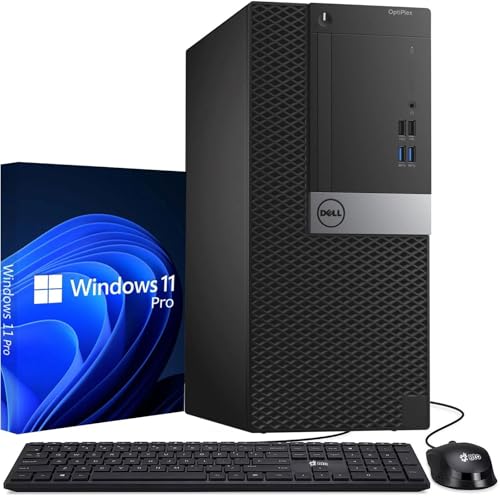
| Reliable Workhorse | Processor: Intel Core i7-7700 (7th Gen) | Memory (RAM): 16 GB DDR4 | Primary Storage: 512 GB SSD | VIEW LATEST PRICE | Read Our Analysis |
| Dell OptiPlex 3060 Desktop i5-8500 32GB 1TB SSD |

| Memory Powerhouse | Processor: Intel Core i5-8500 | Memory (RAM): 32 GB DDR4 | Primary Storage: 1 TB SSD | VIEW LATEST PRICE | Read Our Analysis |
| Dell Slim Desktop ECS1250 — Core Ultra 5 16GB 512GB |
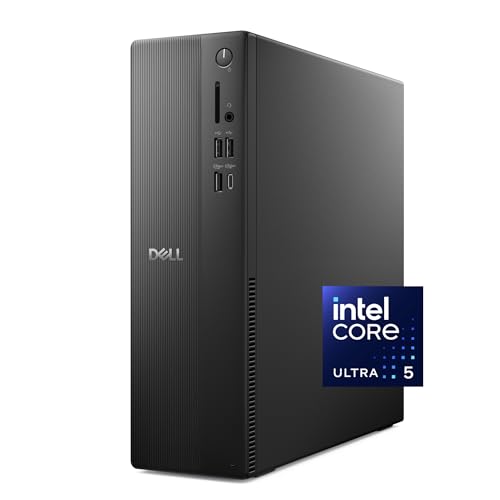
| AI-Ready Compact | Processor: Intel Core Ultra 5-225 | Memory (RAM): 16 GB (type not explicitly DDR4 listed) | Primary Storage: 512 GB M.2 SSD | VIEW LATEST PRICE | Read Our Analysis |
| Dell ECT1250 Tower PC — 14th Gen 16GB 512GB |
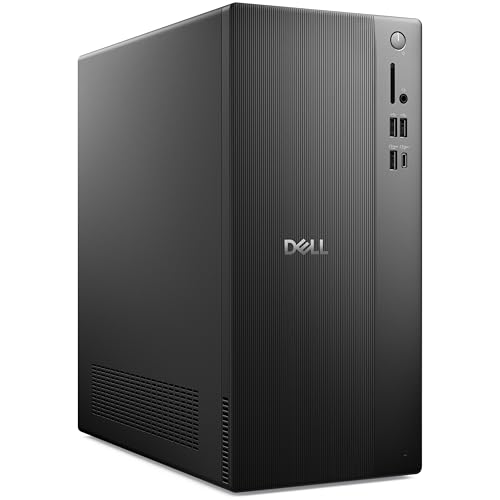
| Modern Business Performer | Processor: Intel Core i3-14100 (14th Gen) | Memory (RAM): 16 GB DDR5 SDRAM | Primary Storage: 512 GB PCIe SSD | VIEW LATEST PRICE | Read Our Analysis |
| Dell OptiPlex 7050 Desktop PC i5 16GB 512GB |

| Refurbished Value Pick | Processor: Intel Core i5-7500 | Memory (RAM): 16 GB DDR4 | Primary Storage: 512 GB SSD | VIEW LATEST PRICE | Read Our Analysis |
More Details on Our Top Picks
Dell Tower Desktop PC i7-7700 16GB 512GB SSD
Should you need a reliable, no‑frills workstation for office tasks and remote work, the renewed Dell OptiPlex with an i7‑7700, 16GB RAM, and a 512GB SSD is a smart pick — it boots fast, handles multitasking smoothly, and includes keyboard, mouse, and Wi‑Fi so you can get productive right away. You’ll appreciate the i7‑7700’s 3.6–4.2 GHz range for documents, web browsing, and video calls. Windows 11 Pro is preinstalled, 16 GB DDR4 keeps apps responsive, and the 512 GB SSD speeds file access. Ports and 4K‑capable DisplayPort/HDMI cover peripherals. It’s refurbished, tested, and backed with a 90‑day warranty.
- Processor:Intel Core i7-7700 (7th Gen)
- Memory (RAM):16 GB DDR4
- Primary Storage:512 GB SSD
- Operating System:Windows 11 Pro
- Graphics:Integrated Intel HD Graphics
- Network Connectivity:Wi‑Fi (adapter included) and Ethernet
- Additional Feature:Includes keyboard and mouse
- Additional Feature:90-day warranty
- Additional Feature:eSATA hard-drive interface
Dell OptiPlex 3060 Desktop i5-8500 32GB 1TB SSD
Assuming you need a dependable everyday workhorse that can handle multitasking and storage-heavy projects, the Dell OptiPlex 3060 with an i5-8500, 32GB RAM, and a 1TB SSD delivers—fast boot times, smooth app switching, and plenty of space for files. You’ll get a solid 3.2 GHz six-core processor and ample DDR4 memory to run demanding productivity suites, virtual machines, or browser tabs without slowdown. Windows 11 Pro is preinstalled, and the unit ships renewed from a Microsoft Authorized Refurbisher with quality assurance, free tech support, and award-winning service. Built-in Wi‑Fi, Bluetooth, and RGB side-panel lighting round out a practical, customizable desktop.
- Processor:Intel Core i5-8500
- Memory (RAM):32 GB DDR4
- Primary Storage:1 TB SSD
- Operating System:Windows 11 Professional
- Graphics:Integrated graphics (Intel, unspecified model)
- Network Connectivity:Built-in Wi‑Fi (adapter) and Bluetooth
- Additional Feature:13-mode RGB lighting
- Additional Feature:Microsoft refurbisher certified
- Additional Feature:Free tech support
Dell Slim Desktop ECS1250 — Core Ultra 5 16GB 512GB
Should you need a compact, upgrade-friendly desktop that handles everyday productivity and light content creation, the Dell Slim ECS1250 fits the bill—its Intel Core Ultra 5-225 with built‑in AI accelerates multitasking, while the slim chassis and tool‑less access make future upgrades easy. You get 16 GB memory and a 512 GB M.2 SSD for responsive performance, integrated Intel UHD Graphics, and multi-monitor support—up to four FHD displays via DisplayPort 1.4a or two 4K via HDMI 2.1 plus DP. Security features include TPM, a lock slot, and padlock loop. Windows 11 Home, one-year onsite service, and included keyboard/mouse complete the package.
- Processor:Intel Core Ultra 5-225
- Memory (RAM):16 GB (type not explicitly DDR4 listed)
- Primary Storage:512 GB M.2 SSD
- Operating System:Windows 11 Home
- Graphics:Integrated Intel UHD Graphics
- Network Connectivity:(Not explicitly detailed) — includes modern I/O and likely Wi‑Fi; wired Ethernet typical (summary lists built-in features like TPM, card reader but keyboard/mouse included)
- Additional Feature:Tool-less internal access
- Additional Feature:Hardware TPM chip
- Additional Feature:Supports four FHD displays
Dell ECT1250 Tower PC — 14th Gen 16GB 512GB
Should you need a reliable office workhorse that balances modern performance with efficiency, the Dell ECT1250 Tower is a strong pick—its 14th Gen Core i3-14100 delivers snappy everyday multitasking while the 16 GB DDR5 and 512 GB PCIe SSD keep apps and files responsive. You’ll appreciate integrated Intel UHD 730 graphics and dual-display support via DisplayPort 1.4 and HDMI 2.1 for clear productivity screens. Connectivity includes Wi‑Fi 6, Bluetooth, and 1 Gbps Ethernet plus a mix of front and rear USB ports including Type‑C. Windows 11 Pro comes preinstalled in a recycled-material chassis that’s compact, quiet, and business-ready.
- Processor:Intel Core i3-14100 (14th Gen)
- Memory (RAM):16 GB DDR5 SDRAM
- Primary Storage:512 GB PCIe SSD
- Operating System:Windows 11 Professional (64-bit)
- Graphics:Integrated Intel UHD 730 Graphics
- Network Connectivity:MediaTek Wi‑Fi 6 (802.11ax) and Ethernet (1 Gbps), Bluetooth
- Additional Feature:Wi‑Fi 6 (MT7920)
- Additional Feature:USB‑C front port
- Additional Feature:Uses recycled chassis materials
Dell OptiPlex 7050 Desktop PC i5 16GB 512GB
Should you need a reliable, business-grade tower that balances everyday performance with longevity, the Dell OptiPlex 7050 is a smart pick — its quad‑core Intel Core i5-7500 with 16 GB RAM and a 512 GB SSD keeps multitasking and office workloads snappy while the Microsoft Authorized Refurbisher warranty and Windows 11 Pro make it a cost-effective, sustainable choice for small offices, remote workers, or anyone who wants a dependable desktop without breaking the budget. You get Intel HD Graphics 630 with 4K support, multiple DisplayPort and HDMI outputs, USB-C and plentiful USB-A, Intel 7260 Wi‑Fi, Bluetooth, TPM 1.2, and solid refurb quality.
- Processor:Intel Core i5-7500
- Memory (RAM):16 GB DDR4
- Primary Storage:512 GB SSD
- Operating System:Windows 11 Pro 64-bit
- Graphics:Intel HD Graphics 630 (integrated)
- Network Connectivity:Intel 7260 Wi‑Fi (802.11ac) and Bluetooth, plus Ethernet
- Additional Feature:TPM 1.2 security chip
- Additional Feature:USB‑C 3.0 port
- Additional Feature:Microsoft refurbished remanufacture
Factors to Consider When Choosing a Desktop Tower PC
Upon selecting a desktop tower for 2026, you’ll want to prioritize CPU performance and memory capacity so your system stays responsive and upgradeable. Check storage type and size, plus graphics support and display outputs to match your workloads and monitors. Finally, verify connectivity and available ports so peripherals and future expansions plug in without compromise.
Performance And CPU
Pick a CPU that matches how you work: prioritize higher single-core turbo clocks and larger caches for responsiveness and gaming, or choose more cores/threads for heavy multitasking, media creation, and virtualization. Match core/thread count to tasks—4 cores handle basic office work, while 6–8+ cores suit editing, compiling, and VMs. Check boost frequencies and cache size (MB); they matter for latency-sensitive apps and single-threaded business software. Factor in TDP and thermals—higher-performance chips need stronger cooling, beefier PSUs, and might run louder under load. Verify platform capabilities: PCIe lane count/version for GPUs and NVMe, supported memory type/speed (DDR4 vs DDR5), and integrated graphics in case you won’t use a discrete GPU. Choose a balanced CPU and platform for your workflow.
Memory And Upgradability
Plan your memory to match both today’s needs and tomorrow’s upgrades: aim for at least 16 GB of DDR4 or DDR5 for smooth multitasking and go to 32 GB or more should you run VMs, heavy editing, or large datasets. Check the motherboard’s max RAM and DIMM count so you won’t hit a ceiling later; many boards offer 2–4 slots and 64–256 GB total. Match module type and speed to your CPU and board—DDR4-3200 or DDR5-4800, for example—to avoid downclocking. Prefer systems with user-accessible DIMM slots, tool-less panels, and standard modules so upgrades or replacements are simple. Finally, confirm dual- or quad-channel support and populate the recommended slots with matched modules to maximize memory bandwidth.
Storage Type And Capacity
Memory choices matter, but storage shapes how your system feels day-to-day: you’ll want an SSD for snappy boots and apps, and larger drives for media, games, or archival files. Choose NVMe PCIe SSDs for top speed—multiple GB/s—while SATA SSDs still beat HDDs by miles. Match capacity to use: 256–512 GB handles OS and apps; 1 TB+ or an SSD+HDD combo suits large media libraries, editing, or big game collections. Should you be on a budget, pair a 256–512 GB SSD with a 1–4 TB 7200 RPM HDD for cost-effective bulk storage. Check your motherboard’s M.2 slots, SATA ports, PCIe lanes and NVMe versus SATA support so drives run at full performance and remain upgradeable.
Graphics And Display Support
Because your workflow determines how much graphics horsepower you need, check whether the CPU has integrated graphics or should you require a discrete GPU—integrated solutions handle basic office tasks and video playback, while gaming, 3D work, and GPU‑accelerated editing demand a dedicated card with enough VRAM. Verify maximum resolution and display count—single 4K, dual 4K, or up to four FHD—and match monitor inputs (HDMI, DisplayPort, USB‑C). Take note of port versions (HDMI 2.1, DisplayPort 1.4) because bandwidth governs refresh rates and color depth. Assess VRAM (shared vs dedicated) for textures, rendering, and timeline scrubbing. Finally, confirm multi‑monitor features like MST/daisy‑chaining and driver support so extended desktops, tiling, and GPU scaling work reliably for your setup.
Connectivity And Ports
Consider how you’ll plug things in: a good tower gives you a mix of USB‑A and USB‑C at USB 3.2 Gen 1 speeds (or faster), modern video outputs like HDMI 2.1/DisplayPort 1.4 that support your monitor resolutions and refresh rates, and both Gigabit Ethernet plus Wi‑Fi 6/Bluetooth for flexible networking; also favor front I/O—headset jack, quick USB ports, and an SD reader—and internal headers and extra PCIe/M.2/SATA slots so you can add ports, cards, or drives later. You should verify port types and speeds to handle external SSDs, peripherals, and charging. Confirm video output bandwidth for multi‑monitor or 4K/120Hz setups. Prefer systems with Gigabit Ethernet and Wi‑Fi 6 for reliability. Check internal headers and spare PCIe/M.2/SATA lanes so upgrades don’t force a full system replacement.
Security And Manageability
As you pick a tower, prioritize hardware and firmware that let you lock down the system and manage it at scale: a hardware TPM for secure key storage and BitLocker, UEFI with signed and remotely deployable firmware updates, and support for Windows Hello or smart‑card authentication cut password risk. Also guarantee the PC supports modern OS management — Windows 11/Enterprise features, MDM compatibility, and Group Policy — so you can enforce configuration and security policies centrally. Verify UEFI remote-update capability and signed firmware to patch vulnerabilities fast. Choose machines with out‑of‑band remote management (Intel AMT or vendor equivalent) plus standard logging and telemetry to monitor health, troubleshoot remotely, and accelerate incident response. Those features make large deployments manageable and secure.
Form Factor And Cooling
Upon choosing a tower, its size and internal layout determine how well it cools and how quietly it can run under load; mid‑ and full‑tower cases give you room for more fans, bigger heatsinks, and full‑length GPUs, while compact cases force tighter component packing and higher fan speeds. You should check fan mounts and radiator support—120/140 mm fan positions and 240/360 mm AIO compatibility—to match your cooling plan. Evaluate airflow design: front intake, rear/top exhaust, mesh panels, and unobstructed channels directly affect sustained performance. Confirm CPU cooler clearance and GPU‑to‑front‑panel distance in millimeters so tall coolers or long cards don’t block flow. Keep in mind the noise/thermal tradeoff: bigger cases let you run larger, slower fans for lower noise and better thermal headroom.
