

You’ll feel like you’ve got a supercomputer on your desk the moment you boot one of these systems, but the truth is smarter choices matter more than raw specs. You’ll want brands that offer reliable firmware updates, clear warranty terms, and easy upgrade paths—especially provided that you value security, serviceability, or long-term value. Keep in mind specific OptiPlex, ThinkCentre, EliteDesk, Mac mini/Studio, and boutique options, and consider how each fits your needs before you determine.
| Dell OptiPlex 7060 SFF i7-8700 Desktop (Renewed) |
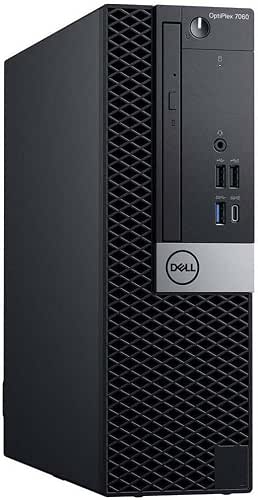
| Small-Workstation Power | Processor Family: Intel Core i7 (8th Gen i7-8700) | Form Factor: Small Form Factor (SFF) | Memory (RAM): 32 GB DDR4 | VIEW LATEST PRICE | Read Our Analysis |
| Dell OptiPlex 7070 SFF Desktop i7-9700 32GB 1TB |

| Performance Leader | Processor Family: Intel Core i7 (9th Gen i7-9700) | Form Factor: Small Form Factor (SFF) | Memory (RAM): 32 GB DDR4 | VIEW LATEST PRICE | Read Our Analysis |
| Dell OptiPlex 5050 SFF i7-7700 16GB 512GB SSD |

| Compact Productivity | Processor Family: Intel Core i7 (7th Gen i7-7700) | Form Factor: Small Form Factor (SFF) | Memory (RAM): 16 GB DDR4 | VIEW LATEST PRICE | Read Our Analysis |
| Dell OptiPlex 7050 Desktop PC i5 16GB 512GB |

| Reliable Office Workhorse | Processor Family: Intel Core i5 (7th Gen i5-7500) — Intel Core family | Form Factor: Desktop tower (standard SFF/desktop; compact business tower) | Memory (RAM): 16 GB DDR4 | VIEW LATEST PRICE | Read Our Analysis |
More Details on Our Top Picks
Dell OptiPlex 7060 SFF i7-8700 Desktop (Renewed)
Should you need a compact, business-ready workstation that handles heavy multitasking without taking up much desk space, the renewed Dell OptiPlex 7060 SFF with an Intel i7-8700 and 32 GB of RAM is a strong choice—its small form factor, dual-display support, and fast 512 GB NVMe SSD let you run demanding office workflows smoothly while leaving room for future upgrades. You’ll get six-core performance up to 4.60 GHz, Windows 11 Pro, built-in WiFi and Bluetooth, and plenty of ports: five USB 3.0, two USB 2.0, plus two DisplayPorts. A wireless keyboard and mouse are included for immediate setup.
- Processor Family:Intel Core i7 (8th Gen i7-8700)
- Form Factor:Small Form Factor (SFF)
- Memory (RAM):32 GB DDR4
- Primary Storage:512 GB M.2 NVMe SSD
- Operating System:Windows 11 Pro
- Included Peripherals / Wireless:Wireless keyboard and mouse; built‑in WiFi and Bluetooth
- Additional Feature:Small form factor tower
- Additional Feature:2 × DisplayPort outputs
- Additional Feature:Built-in WiFi & Bluetooth
Dell OptiPlex 7070 SFF Desktop i7-9700 32GB 1TB
Should you need a compact, business-ready workstation that handles heavy multitasking, the Dell OptiPlex 7070 SFF with an i7-9700, 32GB RAM, and a 1TB NVMe SSD delivers reliable performance and quick responsiveness. You’ll get an 8-core Intel 9th Gen i7 (3.0–4.7 GHz) tuned for demanding office workloads. With 32 GB DDR4 and a fast M.2 NVMe drive, applications and files load promptly and multitasking stays smooth. Windows 11 Pro arrives preinstalled, and the roomy SFF chassis still allows future upgrades. Built-in AX210 WiFi 6E, wireless keyboard/mouse, multiple USB ports, and dual DisplayPorts support two monitors.
- Processor Family:Intel Core i7 (9th Gen i7-9700)
- Form Factor:Small Form Factor (SFF)
- Memory (RAM):32 GB DDR4
- Primary Storage:1 TB M.2 NVMe SSD
- Operating System:Windows 11 Pro
- Included Peripherals / Wireless:Wireless keyboard and mouse; AX210 WiFi 6E (built‑in)
- Additional Feature:AX210 WiFi 6E
- Additional Feature:1 TB M.2 NVMe
- Additional Feature:4 × USB 2.0 ports
Dell OptiPlex 5050 SFF i7-7700 16GB 512GB SSD
In case you need a compact, business-ready desktop that still handles multitasking and light content work, the Dell OptiPlex 5050 SFF with an i7-7700, 16 GB RAM, and a 512 GB NVMe SSD delivers dependable performance in a slim chassis. You’ll appreciate the quad-core i7-7700 (3.6–4.2 GHz) for responsive productivity, while 16 GB DDR4 keeps apps and browser tabs smooth. The 512 GB NVMe SSD boots Windows 11 Pro quickly and stores projects. Integrated Intel HD Graphics 630 suits office visuals and light editing. A wired keyboard and mouse are included; this renewed unit balances space savings and reliable business use.
- Processor Family:Intel Core i7 (7th Gen i7-7700)
- Form Factor:Small Form Factor (SFF)
- Memory (RAM):16 GB DDR4
- Primary Storage:512 GB NVMe SSD
- Operating System:Windows 11 Professional (64-bit)
- Included Peripherals / Wireless:Wired keyboard and mouse included; Intel HD Graphics (WiFi not specified)
- Additional Feature:Intel HD Graphics 630
- Additional Feature:Slim compact design
- Additional Feature:Wired keyboard and mouse
Dell OptiPlex 7050 Desktop PC i5 16GB 512GB
Should you need a reliable refurbished business desktop that balances performance and sustainability, the Dell OptiPlex 7050 delivers with its Intel Core i5-7500, 16 GB RAM and 512 GB SSD—ideal for multitasking office workloads and light multimedia. You’ll get Turbo Boost up to 3.8 GHz, 6 MB cache, and Intel HD Graphics 630 with 4K support via two DisplayPort 1.2 and one HDMI 1.4 output. It’s renewed through a Microsoft Authorized Refurbisher and ships with Windows 11 Pro 64-bit. TPM 1.2 is present (TPM 2.0 recommended). Connectivity includes Intel 7260 Wi‑Fi, Bluetooth, USB-C and multiple USB-A ports.
- Processor Family:Intel Core i5 (7th Gen i5-7500) — Intel Core family
- Form Factor:Desktop tower (standard SFF/desktop; compact business tower)
- Memory (RAM):16 GB DDR4
- Primary Storage:512 GB SSD
- Operating System:Windows 11 Pro 64-bit
- Included Peripherals / Wireless:(Wired/wireless unspecified) keyboard/mouse may be included; integrated Wi‑Fi 802.11ac and Bluetooth (Intel 7260)
- Additional Feature:TPM 1.2 security chip
- Additional Feature:USB-C (USB 3.0) port
- Additional Feature:4K display support
Factors to Consider When Choosing Desktop PC Brands
Whenever picking a desktop brand for 2026, you’ll want to prioritize performance and speed to match your workload and future needs. Also check build quality, upgradeability, and security features so your system stays reliable, customizable, and protected. Finally, confirm compatibility, connectivity, and available ports to make certain your peripherals and networks plug in without hassle.
Performance And Speed
Focus on components and cooling that actually move the needle on real-world speed: pick a CPU with more cores and higher turbo clocks (6–8 cores and turbos above ~4.0 GHz are a good target), equip the system with 16–32 GB of DDR4/DDR5 RAM to avoid swapping, and choose NVMe M.2 storage over SATA to slash boot and load times. You should also verify the cooling solution—case airflow, fans, and heat pipes—so the CPU/GPU don’t throttle under sustained loads. Check platform details that impact throughput: PCIe generation, memory frequency/latency, and whether fast integrated or discrete graphics suit your workload. Prioritize balanced systems where CPU, RAM, storage, and cooling match your intended tasks for consistently responsive performance.
Build Quality And Reliability
Good performance only matters provided the machine keeps running reliably over time, so you should look beyond raw specs to build quality and reliability. Inspect chassis materials and construction—metal frames, reinforced drive bays, and screw-mounted internals cut flex and component stress. Check thermal design: dedicated airflow channels, multiple fans or heat pipes, and documented TDP headroom prevent throttling and premature failure. Favor systems that use long-life, enterprise-grade parts (higher-MTBF PSUs, server-grade capacitors) to reduce failure rates. Review warranty terms, serviceability, and modular access to RAM, storage, and power connectors; multi-year on-site or advance-replacement coverage lowers downtime and repair costs. Finally, prefer brands with quality-control evidence—ISO certifications, burn-in testing, and published failure-rate stats—for better out-of-box reliability.
Upgradeability And Expansion
How will your desktop evolve over the next few years? You should check the internal layout and case form factor—towers usually give more PCIe slots, drive bays, and easier access than small-form-factor builds. Verify motherboard expansion: count PCIe and M.2 slots, SATA ports, and supported RAM capacity and speeds so future CPUs, GPUs, storage, and memory will fit. Confirm the power supply wattage and form factor (ATX vs. SFX) and leave headroom for higher-power GPUs or extra drives. Prefer modular components and standard connectors—ATX mounts, replaceable drives, user-replaceable RAM, and swappable GPU/PSU—to simplify upgrades and repairs. Finally, review BIOS/UEFI features and vendor firmware support to guarantee compatibility with newer processors and revisions.
Security And Compatibility
Because attackers and updates both target the lowest layers of a system, you should prioritize brands that provide modern firmware, hardware security features, and consistent driver support so your desktop stays secure and compatible over time. Check for a hardware TPM (preferably TPM 2.0) to enable disk encryption, Secure Boot, and platform integrity required by current OS policies. Confirm UEFI firmware support instead of legacy BIOS and verify signed driver availability and a reliable update cadence for BIOS/UEFI and drivers so patches deploy quickly. Make certain motherboard and CPU support virtualization and security extensions (Intel VT-x/VT-d or AMD-V, Intel TXT/AMD SME) in case you require secure enclaves or hypervisor protections. Finally, validate 64-bit, signed peripheral drivers and ongoing vendor support to avoid future compatibility problems.
Connectivity And Ports
Should you pick a desktop brand, verify the I/O mix and wireless options so your system matches current devices and future upgrades: look for multiple USB 3.x Type‑A ports plus at least one USB‑C, several video outputs (DisplayPort/HDMI) for multi‑monitor setups, and built‑in Wi‑Fi 6/6E and modern Bluetooth for reliable wireless use. Also confirm Ethernet RJ‑45 and audio jacks for wired networking and sound, plus an SD card reader or legacy ports provided you need them. Check internal expansion headers, PCIe slots and M.2 bays so you can add network cards, extra storage or upgraded I/O later. Verify the exact port count and placement on models you consider so dongles and cables won’t block adjacent connectors.
Warranty And Support
While evaluating desktop brands, check warranty length and coverage so you know what hardware faults, on-site repairs, and parts replacements are actually included over the system’s expected lifespan. You should confirm warranty terms (typically 1–3 years), whether accidental damage and battery coverage are included or optional, and any deductibles or claim limits. Verify technical support channels—phone, chat, email—the languages offered, availability (ideally 24/7), and guaranteed response times like same-day or next-business-day. Look for clear SLAs outlining repair turnaround, on-site versus depot service, and loaner or advance-replacement options. Finally, assess firmware/driver update policies and the cost and duration of extended warranties or premium support tiers before you buy.
