

A sturdy desktop is like a well-tuned engine under your desk—quiet, reliable, and ready. You’ll want machines that balance performance, security, and manageability without blowing your budget, and the right pick will save time and headaches. I’ll compare compact vPro minis, expandable towers, efficient Ryzen small-form-factors, and cost-conscious refurbished options so you can pick what fits your workflow and IT needs.
| HP EliteDesk 800 G3 Mini Desktop i5 16GB 256GB |
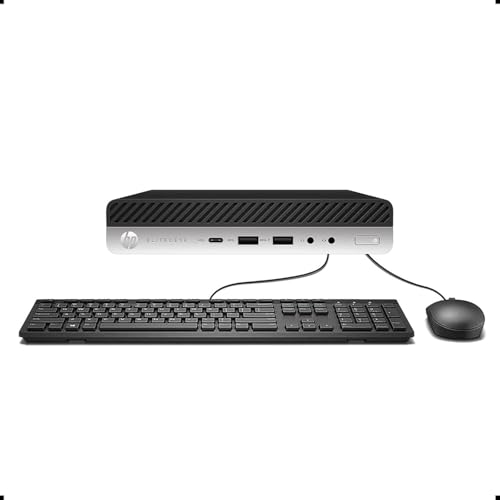
| Compact Business Workhorse | Processor: 6th Gen Intel Core i5-6500 (quad-core, up to 3.6 GHz) | Memory (RAM): 16 GB DDR4 | Storage: 256 GB SSD | VIEW LATEST PRICE | Read Our Analysis |
| Dell OptiPlex 7020 SFF Desktop PC i5-14500 16GB |

| Top Performance Pick | Processor: 14th Gen Intel Core i5-14500 vPro (14 cores / 20 threads) | Memory (RAM): 16 GB DDR5 SDRAM | Storage: 512 GB PCIe SSD | VIEW LATEST PRICE | Read Our Analysis |
| HP ProDesk 600 G1 SFF Desktop (i5-4570 8GB 500GB) |
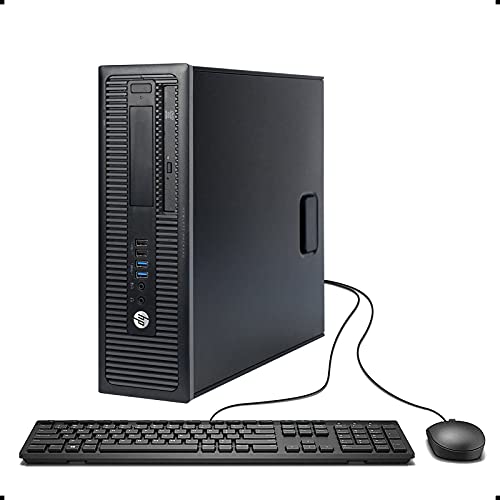
| Reliable Budget Option | Processor: Intel Core i5-4570 (quad-core, up to 3.6 GHz) | Memory (RAM): 8 GB (type not specified; includes USB 3.0) | Storage: 500 GB HDD | VIEW LATEST PRICE | Read Our Analysis |
| KAMRUI Pinova P1 Mini PC Ryzen 4300U 16GB |

| Mini Powerhouse | Processor: AMD Ryzen 4300U (4 cores / 4 threads, up to 3.7 GHz) | Memory (RAM): 16 GB DDR4 (single-channel, upgradable to 64 GB) | Storage: 256 GB M.2 SSD (two M.2 slots; up to large expansion) | VIEW LATEST PRICE | Read Our Analysis |
| Lenovo IdeaCentre Business Tower Desktop — Intel Ultra 5 |

| Future-Proof Tower | Processor: Intel Core Ultra 5 225 (10-core, up to 4.9 GHz) | Memory (RAM): 16 GB DDR5 | Storage: 512 GB PCIe 4.0 NVMe SSD + 500 GB HDD | VIEW LATEST PRICE | Read Our Analysis |
| HP ProDesk 400 G9 SFF Business Desktop (32GB 1TB) |

| Memory-Heavy Performer | Processor: Intel Celeron G6900 (dual-core, 3.4 GHz) | Memory (RAM): 32 GB (title/default) DDR4 (configurable up to 64 GB) | Storage: 1 TB PCIe SSD (default/title; up to 2 TB supported) | VIEW LATEST PRICE | Read Our Analysis |
More Details on Our Top Picks
HP EliteDesk 800 G3 Mini Desktop i5 16GB 256GB
Should you need a compact, business-ready PC that won’t slow down everyday office work, the HP EliteDesk 800 G3 Mini delivers—its 6th‑Gen Core i5 and 16 GB of RAM handle multitasking smoothly while the 256 GB SSD boots Windows 11 Pro fast; the mini form factor, DisplayPort outputs, and included keyboard and mouse make it an easy, space-saving turnkey choice for small teams. You’ll get reliable performance from the i5-6500 (3.2–3.6 GHz) and Intel HD Graphics 530 for spreadsheet, browser, and conferencing tasks. Renewed units save cost, and USB‑C, Wi‑Fi, and Bluetooth cover modern connectivity needs.
- Processor:6th Gen Intel Core i5-6500 (quad-core, up to 3.6 GHz)
- Memory (RAM):16 GB DDR4
- Storage:256 GB SSD
- Graphics:Intel HD Graphics 530 (integrated)
- Operating System:Windows 11 Pro
- Form Factor / Size:Mini / Small form factor (HP EliteDesk Mini)
- Additional Feature:USB Type‑C port
- Additional Feature:Includes keyboard & mouse
- Additional Feature:Two DisplayPort outputs
Dell OptiPlex 7020 SFF Desktop PC i5-14500 16GB
Should you need a compact, business-ready desktop that balances multitasking power with a small footprint, the Dell OptiPlex 7020 SFF with a 14th Gen i5-14500 and 16GB DDR5 is a strong fit—its vPro-enabled CPU, up to four-display support, and Wi‑Fi 6E make it ideal for office users who run multiple productivity apps, video conferencing, and dual- or multi-monitor setups without sacrificing desk space. You get 14 cores/20 threads, 24MB cache, a 512GB PCIe SSD, and Intel UHD 770 graphics with HDMI, two DisplayPorts and a Type-C at 4K/60Hz. Windows 11 Pro, wired keyboard/mouse, plenty of USB, and gigabit Ethernet round it out.
- Processor:14th Gen Intel Core i5-14500 vPro (14 cores / 20 threads)
- Memory (RAM):16 GB DDR5 SDRAM
- Storage:512 GB PCIe SSD
- Graphics:Intel UHD Graphics 770 (integrated)
- Operating System:Windows 11 Pro (English 64-bit)
- Form Factor / Size:Small Form Factor (OptiPlex 7020 SFF)
- Additional Feature:Intel vPro management
- Additional Feature:USB Type‑C 4K@60Hz
- Additional Feature:Supports four screens
HP ProDesk 600 G1 SFF Desktop (i5-4570 8GB 500GB)
Provided you need a reliable, space-saving workhorse for everyday office tasks, the HP ProDesk 600 G1 SFF is a smart pick—its quad-core i5-4570 delivers responsive performance for productivity apps while the small form factor fits tight desks and shared workspaces. You get 8 GB RAM and a 500 GB HDD, plus a DVD drive, USB 3.0 ports, keyboard and mouse, so deployment is straightforward. Certified refurbished units are tested, cleaned, and backed with a minimum 90-day warranty. Windows 11 Pro (multi-language) is included together with a 30-day Office trial, making this a cost-effective choice for basic business needs.
- Processor:Intel Core i5-4570 (quad-core, up to 3.6 GHz)
- Memory (RAM):8 GB (type not specified; includes USB 3.0)
- Storage:500 GB HDD
- Graphics:Integrated (CPU graphics; legacy HD class)
- Operating System:Windows 11 Pro 64-bit (multi-language)
- Form Factor / Size:Small Form Factor (HP ProDesk 600 G1 SFF slim)
- Additional Feature:DVD optical drive
- Additional Feature:Certified refurbished warranty
- Additional Feature:Multi-language Windows
KAMRUI Pinova P1 Mini PC Ryzen 4300U 16GB
Should you need a compact workstation that handles multitasking and media tasks without breaking the budget, the KAMRUI Pinova P1 delivers—a Ryzen 4300U with Radeon graphics gives noticeably better multi-threaded and GPU-capable performance than typical entry-level mini PCs, making it a smart pick for multi-screen office setups, digital signage, or light content work while staying quiet and reliable for 24/7 use. You get 16 GB DDR4 (upgradeable to dual-channel 64 GB), a 256 GB M.2 SSD plus a second M.2 slot, triple 4K outputs, six USB 3.2 ports, Gigabit Ethernet, Wi‑Fi 5, and Wake-on-LAN.
- Processor:AMD Ryzen 4300U (4 cores / 4 threads, up to 3.7 GHz)
- Memory (RAM):16 GB DDR4 (single-channel, upgradable to 64 GB)
- Storage:256 GB M.2 SSD (two M.2 slots; up to large expansion)
- Graphics:AMD Radeon integrated graphics (up to 1.4 GHz)
- Operating System:(Not explicitly stated) — implied Windows-compatible; commonly shipped without OS specified
- Form Factor / Size:Mini PC (Pinova P1 mini)
- Additional Feature:Triple 4K display outputs
- Additional Feature:Two M.2 slots
- Additional Feature:24/7 operation design
Lenovo IdeaCentre Business Tower Desktop — Intel Ultra 5
Should you need a reliable office workhorse that speeds through multitasking and light content creation, the Lenovo IdeaCentre Business Tower with Intel Core Ultra 5 is a smart pick—its 10-core (6P+4E) CPU and 16 GB DDR5 deliver responsive performance for video meetings, spreadsheets, and web apps. You’ll get Turbo up to 4.9 GHz, 20 MB cache, and a 10-thread design tuned for productivity. Storage combines a 512 GB PCIe 4.0 NVMe SSD and 500 GB HDD for fast boots and ample files. Wi‑Fi 6E, Bluetooth 5.2, Gigabit Ethernet, USB‑C, HDMI 2.1, and Windows 11 Pro simplify deployment.
- Processor:Intel Core Ultra 5 225 (10-core, up to 4.9 GHz)
- Memory (RAM):16 GB DDR5
- Storage:512 GB PCIe 4.0 NVMe SSD + 500 GB HDD
- Graphics:Integrated graphics (Intel Ultra platform)
- Operating System:Windows 11 Pro
- Form Factor / Size:Business Tower (IdeaCentre tower)
- Additional Feature:Extra 500GB HDD
- Additional Feature:Wi‑Fi 6E support
- Additional Feature:HDMI 2.1 output
HP ProDesk 400 G9 SFF Business Desktop (32GB 1TB)
Should you need a compact, business-ready PC that balances everyday productivity with dependable security, the HP ProDesk 400 G9 SFF (32GB, 1TB) is a strong fit—especially for small teams or solo operators who value fast multitasking and easy manageability. You get a dual-core Intel Celeron G6900 with Intel UHD Graphics and Windows 11 Pro for smooth office workflows. The default 32GB DDR4 and 1TB PCIe M.2 SSD are upgradeable to 64GB and 2TB for heavier workloads. Ports include USB-C, multiple USB-A, HDMI and DisplayPort for dual 4K, plus RJ-45, Wi‑Fi, TPM 2.0 and HP Wolf Security.
- Processor:Intel Celeron G6900 (dual-core, 3.4 GHz)
- Memory (RAM):32 GB (title/default) DDR4 (configurable up to 64 GB)
- Storage:1 TB PCIe SSD (default/title; up to 2 TB supported)
- Graphics:Intel UHD Graphics (integrated)
- Operating System:Windows 11 Pro
- Form Factor / Size:Small Form Factor (ProDesk 400 G9 SFF)
- Additional Feature:TPM 2.0 security
- Additional Feature:HP Wolf Security
- Additional Feature:RTC Wake / Wake‑on‑LAN
Factors to Consider When Choosing a Desktop Computer for Small Business
Upon choosing a desktop for your small business, you’ll want to prioritize performance and the right CPU to handle your workloads. Check memory and storage capacity, evaluate graphics and display needs, and confirm the connectivity and ports you require. Also consider security features and manageability tools to keep devices and data protected.
Performance And CPU
Pick a CPU that matches the tasks you’ll run: aim for at least 4 cores/8 threads for general multitasking and 6–8 cores for heavier workloads like virtualization or concurrent builds, and compare base/turbo clocks (roughly 2.5–3.5 GHz base, up to 4.5–5.0 GHz turbo) since single-threaded responsiveness still matters for business apps. Choose modern designs with generous L3 cache (12–24+ MB) to gain performance per watt, security fixes, and longer platform support. Match the processor to chipsets and memory standards (DDR4/DDR5) so upgrades stay feasible. Check TDP and cooling needs: lower-power CPUs cut noise and energy costs for always-on machines, while higher-TDP parts need sturdy cooling and larger chassis. Balance cores, clocks, efficiency, and upgrade path.
Memory And Storage
Memory and storage choices directly affect how responsive your desktop feels and how much data you can reliably keep—so plan for both speed and capacity. Aim for at least 16 GB of RAM for routine multitasking; choose 32 GB should you run VMs, heavy spreadsheets, or local databases. Prefer DDR5 or DDR4 depending on platform, and confirm supported speeds, dual‑channel support, DIMM slot count, and upgradeability so you can expand later.
Pick a fast NVMe PCIe SSD—256–512 GB minimum for OS and apps, 512 GB–1 TB recommended for business data—to slash boot and load times versus HDDs. Use a hybrid strategy: NVMe for the system and a larger HDD or secondary SSD for bulk files and backups. Verify M.2 slots, SATA ports, removable bays, and RAID/backup options for capacity and redundancy.
Graphics And Displays
Decide how many monitors and what resolutions you’ll actually use, then match a GPU or integrated graphics that natively supports them—single 4K@60Hz, dual 4K, or triple 1080p each have different bandwidth and output needs. Choose outputs (DisplayPort, HDMI, USB‑C with DP Alt Mode) that align with your displays and docks to avoid passive converters. Should you do video editing, CAD, or heavy spreadsheet visualizations, prefer a GPU with dedicated VRAM or a modern integrated GPU with proven media engines to cut render/export times. Recall multi‑display ergonomics and that multiple high‑res panels increase framebuffer and encoding load, so plan for sufficient GPU memory bandwidth and good certified cables. Pick platforms with extra outputs or PCIe/USB‑C expansion for future scalability.
Connectivity And Ports
Upon planning ports and connectivity, map the devices and workflows you’ll support so the desktop has the right mix of display outputs, USB types, networking, and audio jacks to avoid ad‑hoc adapters and bottlenecks. Guarantee at least two display outputs (DisplayPort/HDMI/USB‑C with DP Alt Mode) for dual or multi‑monitor setups. Choose a blend of USB‑C (USB 3.2 Gen 2/10 Gbps) and several USB‑A 3.0 ports for fast external drives, docks, and peripherals. Confirm Gigabit Ethernet plus Wi‑Fi 6 (or better) and Bluetooth for reliable wired and high‑speed wireless connectivity. Verify dedicated audio jack and mic/line‑in or combo jack for conferencing and line‑out for speakers. Finally, check expansion options—extra SATA/M.2 slots, legacy I/O or serial, and Wake‑on‑LAN—for future upgrades and remote maintenance.
Security And Manageability
Good port planning keeps workflows moving, but you also need desktops that protect data and simplify management at scale. You should pick hardware with TPM 2.0 and Secure Boot to enable disk encryption and meet compliance for sensitive data. Verify BIOS/UEFI controls—passwords, boot-device restrictions, and firmware-update protection—to reduce tampering risk. Choose systems offering enterprise remote management (out-of-band, Wake-on-LAN) so you can patch, troubleshoot, and automate updates across endpoints. Prioritize machines that integrate with centralized endpoint security (antivirus/EDR) and support deployment via MDM or group policies for consistent protection and rapid response. Finally, confirm hardware-backed authentication (smart card, Windows Hello for Business, FIDO2) and configurable user privileges to limit credential theft and lateral movement.
Total Cost Of Ownership
At any time you compare desktop options, look beyond the sticker price and total up lifecycle costs—purchase, expected repairs and maintenance, warranty extensions, and periodic upgrades—so you don’t underestimate what each machine will actually cost over its useful life. Include software licensing and subscription fees for the OS, productivity suites, security, and remote-management tools; over 3–5 years these can exceed hardware expenses. Factor energy consumption and cooling—energy-efficient CPUs and PSUs lower operating costs whenever machines run 24/5 or 24/7. Estimate productivity losses from downtime, IT support hours, and training while considering reliability and manageability features. Finally, plan for secure data-wiping, disposal, recycling, or resale to recover value and meet compliance, which affects your net replacement cost.
