The best crosscut saws give woodworkers clean, confident cuts on both boards and big logs. Top picks include the Kings County One-Man Crosscut and several Lynx models in 3, 4, and 5 foot lengths, plus 3.6 and 4 foot two-man saws.
They use tough CS80 or Sheffield steel, about 1.5 mm thick, with Great American or classic crosscut teeth for fast cutting. Comfortable hardwood handles help reduce strain so long sessions stay productive and enjoyable.
| Kings County One-Man Crosscut Hand Saw for Wood |

| Quiet Powerhouse | Intended Use: One-man crosscut saw for log bucking and firewood | Operation Mode: One-man primary; includes auxiliary handle for optional two-hand/two-person use | Blade Length: 36″ blade (3 feet); overall length 39.75″ | VIEW LATEST PRICE | Read Our Analysis |
| Lynx 3′ One Man Crosscut Saw |

| Classic Crosscutter | Intended Use: One-man crosscut saw for logs and similar materials | Operation Mode: One-man primary; auxiliary handle allows two-man use | Blade Length: 3-foot blade | VIEW LATEST PRICE | Read Our Analysis |
| Lynx 3-Foot One-Man Crosscut Saw |

| Heavy-Duty Workhorse | Intended Use: One-man crosscut saw for general crosscutting | Operation Mode: One-man primary; auxiliary handle enables two-person or assisted solo pushing | Blade Length: 3-foot blade | VIEW LATEST PRICE | Read Our Analysis |
| 3.6′ Two Man Crosscut Saw |

| Best for Green Logs | Intended Use: Two-man crosscut saw for medium to large logs/green timber | Operation Mode: Designed for two-person use with handles at both ends | Blade Length: 39.4″ blade (~3.6 feet); overall length 44″ | VIEW LATEST PRICE | Read Our Analysis |
| Lynx 4′ One Man Crosscut Saw |

| Long-Reach Performer | Intended Use: One-man crosscut saw for heavy-duty crosscutting | Operation Mode: One-man primary; auxiliary handle allows two-person or assisted solo pushing | Blade Length: 4-foot blade | VIEW LATEST PRICE | Read Our Analysis |
| Lynx 5′ Two-Man Crosscut Saw Sheffield England |

| Pro Two-Man Choice | Intended Use: Two-man crosscut saw for heavy-duty crosscutting | Operation Mode: Designed for two-person use with two wooden handles | Blade Length: 5-foot blade | VIEW LATEST PRICE | Read Our Analysis |
| 4′ Two-Man Crosscut Saw for Logs and Trees |
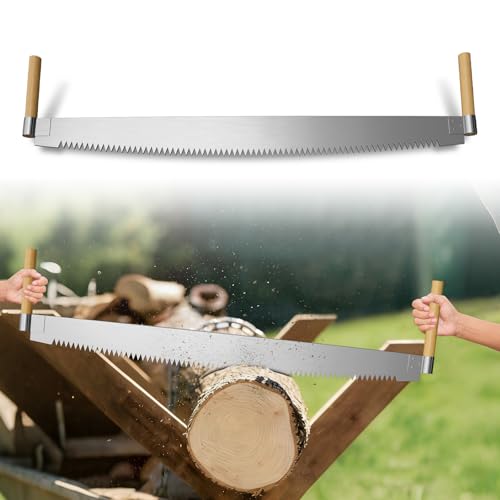
| High-Efficiency Cutter | Intended Use: Two-man crosscut saw for logs, trees, wet/dry wood | Operation Mode: Designed for two-person teamwork operation | Blade Length: 4-foot blade | VIEW LATEST PRICE | Read Our Analysis |
| Crosscut Saw 3′ One Man Crosscut Saw is Used for Logging. |

| Versatile Logging Pick | Intended Use: One-man crosscut saw used for logging and log cutting | Operation Mode: One-man primary; auxiliary handle allows second person to assist | Blade Length: 3-foot blade | VIEW LATEST PRICE | Read Our Analysis |
More Details on Our Top Picks
Kings County One-Man Crosscut Hand Saw for Wood
In case you love the quiet rhythm of hand tools and often work alone, the Kings County One-Man Crosscut Hand Saw for Wood feels like it was made for you. You get a 3 foot blade with a gentle rocker curve, so the saw glides through logs instead of fighting you. The beech handle feels warm in your hand, and the screw-on second handle lets you switch to two handed use whenever you’re tired.
Its Great American tooth pattern, with deep gullets and smaller starter teeth up front, clears dust fast, so you cut wet or dry wood without constant stopping.
- Intended Use:One-man crosscut saw for log bucking and firewood
- Operation Mode:One-man primary; includes auxiliary handle for optional two-hand/two-person use
- Blade Length:36″ blade (3 feet); overall length 39.75″
- Blade Material & Thickness:1.5mm thick steel blade
- Tooth Pattern / Style:Great American tooth pattern with deep gullets and starter teeth
- Handle Type & Material:Beech wood main handle plus screw-on auxiliary handle
- Additional Feature:Slight rocker blade curve
- Additional Feature:Starter teeth first 5″
- Additional Feature:Self-clearing deep gullets
Lynx 3′ One Man Crosscut Saw
Serious hand-tool woodworkers and homesteaders often fall in love with the Lynx 3′ One Man Crosscut Saw because it gives you real power on logs without needing a full two-person team. You feel that right away in the beech handle. It sits solid in your hand, so long sessions don’t punish your wrist. Whenever a big log shows up, you can clip on the auxiliary handle and let a partner jump in.
The British CS80 steel blade stays stiff and true, while the 1.5 mm thickness keeps cuts tracking straight. Each tooth is hand set in a Great American pattern, so chips clear fast and the saw doesn’t bind in green or seasoned logs. Once it finally dulls, you just reach for a large triangular file and bring the teeth back to life. That simple sharpening routine means this saw can stay with you for years, ready for storms, firewood, or quiet, satisfying work in the yard.
- Intended Use:One-man crosscut saw for logs and similar materials
- Operation Mode:One-man primary; auxiliary handle allows two-man use
- Blade Length:3-foot blade
- Blade Material & Thickness:1.5mm thick British CS80 steel blade
- Tooth Pattern / Style:Great American tooth pattern, each tooth hand set
- Handle Type & Material:Beech handle plus auxiliary handle
- Additional Feature:British CS80 steel
- Additional Feature:Each tooth hand set
- Additional Feature:Sharpenable with file
Lynx 3-Foot One-Man Crosscut Saw
Old-school woodworkers who love hand tools will feel right at home with the Lynx 3-Foot One-Man Crosscut Saw. You get a tool made in Sheffield, England, crafted the old-fashioned way from British CS80 steel. With a Rockwell hardness of 44 to 46 and a 1.5 mm thick blade, it feels solid and steady on long strokes, not flimsy or twitchy.
The champion tooth pattern gives you cutter teeth to slice and raker teeth plus gullets to pull waste out. You can resharpen it with a large file. The clear-finished beech handle and movable auxiliary handle make both solo and two-person cutting comfortable.
- Intended Use:One-man crosscut saw for general crosscutting
- Operation Mode:One-man primary; auxiliary handle enables two-person or assisted solo pushing
- Blade Length:3-foot blade
- Blade Material & Thickness:1.5mm thick British CS80 steel blade (Rockwell 44–46)
- Tooth Pattern / Style:Champion tooth pattern with cutter and raker teeth plus gullets
- Handle Type & Material:Clear-finished beech handle plus friction-fit auxiliary handle
- Additional Feature:Champion tooth pattern
- Additional Feature:Friction-fit auxiliary handle
- Additional Feature:Made in Sheffield, England
3.6′ Two Man Crosscut Saw
You reach for a two man crosscut saw whenever a single chainsaw just doesn’t seem like the right solution and you want power, control, and teamwork in your hands. This 3.6 foot model gives you that old school feeling of working together while still cutting fast. With about 44 inches total and a 39.4 inch blade, it tackles medium to large logs without drama.
You get two teeth per inch, so the saw bites cleanly into green wood. The hardwood handles lock into sockets at each end and the log style grips stay steady, so both of you can pull smoothly, safely, and confidently.
- Intended Use:Two-man crosscut saw for medium to large logs/green timber
- Operation Mode:Designed for two-person use with handles at both ends
- Blade Length:39.4″ blade (~3.6 feet); overall length 44″
- Blade Material & Thickness:Steel blade, 1.5mm thick
- Tooth Pattern / Style:Crosscut tooth pattern, 2 teeth per inch, super sharp edge
- Handle Type & Material:Durable hardwood handles with miter feature and log-style no-slip grips
- Additional Feature:Optimized for green wood
- Additional Feature:Two teeth per inch
- Additional Feature:Miter-feature hardwood handles
Lynx 4′ One Man Crosscut Saw
For woodworkers who crave a traditional feel with modern reliability, the Lynx 4′ One Man Crosscut Saw offers the kind of control and power that makes big cuts feel steady instead of stressful. You get a 4 foot blade made in Sheffield, England from CS80 steel, hardened to 44 to 46 Rockwell, so it feels tough but not brittle in your hands.
The 1.5 mm thick blade stays stiff on long strokes, and the Great American teeth bite fast while gullets carry chips out of the cut. You can reshape the flatter bevel with a file, tune it for softwoods or hardwoods, and even switch to two person cutting with the movable auxiliary handle.
- Intended Use:One-man crosscut saw for heavy-duty crosscutting
- Operation Mode:One-man primary; auxiliary handle allows two-person or assisted solo pushing
- Blade Length:4-foot blade
- Blade Material & Thickness:1.5mm thick British CS80 steel blade (Rockwell 44–46)
- Tooth Pattern / Style:Great American style teeth with bevel sharpened design and gullets
- Handle Type & Material:Clear-finished beech handle plus friction-fit auxiliary handle
- Additional Feature:Flatter factory bevel angle
- Additional Feature:Heavier-duty construction
- Additional Feature:Adjustable bevel by filing
Lynx 5′ Two-Man Crosscut Saw Sheffield England
Serious hand tool fans who love the feel of real steel will gravitate to the Lynx 5′ Two-Man Crosscut Saw from Sheffield, England. You get British CS80 steel with a 1.5 mm thick blade, so the saw feels stiff, solid, and ready for real work. The Rockwell 44 to 46 hardness helps it stay tough yet still sharpenable.
The Great American tooth pattern lets each tooth bite and clear chips, while deep gullets carry waste out fast. You and a partner can use long, smooth strokes, and the wooden handles friction fit, so you can remove them easily for sharpening, cleaning, and oiling.
- Intended Use:Two-man crosscut saw for heavy-duty crosscutting
- Operation Mode:Designed for two-person use with two wooden handles
- Blade Length:5-foot blade
- Blade Material & Thickness:1.5mm thick British CS80 steel blade (Rockwell 44–46)
- Tooth Pattern / Style:Great American style teeth with gullets and flatter bevel angles
- Handle Type & Material:Two wooden handles with friction-fit rivets
- Additional Feature:Five-foot blade length
- Additional Feature:Friction-fit handle rivets
- Additional Feature:Recommended post-use oiling
4′ Two-Man Crosscut Saw for Logs and Trees
Power and partnership define a good two-man crosscut saw, and this 4-foot model is built for woodworkers and outdoor workers who want real control over big logs and trees. You feel that balance right away. The blade isn’t just long. It’s sharp, fast, and hungry for wood, so each pull clears sawdust and keeps your cut moving without choking up.
Because the steel is 1.5 mm thick, the blade stays rigid instead of wobbling. That stiffness gives you straighter cuts, even in wet logs. The wooden handles feel secure, reduce strain, and you can swap them easily once they finally wear out.
- Intended Use:Two-man crosscut saw for logs, trees, wet/dry wood
- Operation Mode:Designed for two-person teamwork operation
- Blade Length:4-foot blade
- Blade Material & Thickness:1.5mm thick high-quality steel blade
- Tooth Pattern / Style:Double crosscut pattern with sharp teeth optimized for fast cutting
- Handle Type & Material:Non-slip ergonomic wooden handles, easy to disassemble/replace
- Additional Feature:Corrosion-resistant steel construction
- Additional Feature:Easy-replace wooden handles
- Additional Feature:Designed for harsh weather
Crosscut Saw 3′ One Man Crosscut Saw is Used for Logging.
Should you love working with real logs and want a hand tool that cuts clean and fast without wearing you out, a 3-foot one man crosscut saw can feel like a quiet little miracle. You use it across the grain, so it slices cleanly through logs instead of smashing fibers like an axe. That means smoother cuts and less sweat.
This saw’s 1.5 mm steel blade feels solid, not flimsy. The sharp push-pull teeth bite in both directions, while the rake teeth clear sawdust so the blade never feels stuck. You hold a comfy D-shaped handle, and you can clip on the auxiliary handle whenever a helper jumps in.
- Intended Use:One-man crosscut saw used for logging and log cutting
- Operation Mode:One-man primary; auxiliary handle allows second person to assist
- Blade Length:3-foot blade
- Blade Material & Thickness:1.5mm thick high-strength steel blade
- Tooth Pattern / Style:Crosscut teeth with special rake teeth for sawdust clearing
- Handle Type & Material:D-shaped comfortable handle plus auxiliary handle
- Additional Feature:Push-pull stroke cutting
- Additional Feature:D-shaped comfort handle
- Additional Feature:Special rake cleaning teeth
Factors to Consider When Choosing Crosscut Saws
At the moment someone chooses a crosscut saw, a few key details quietly decide how easy and comfortable the work will feel. Saw length, one-man versus two-man designs, tooth pattern and TPI, blade thickness and steel, and even the handle shape all work together to shape how the saw cuts and how tired the user becomes. Through walking through each of these factors, a woodworker can pick a saw that truly fits the body, the project, and the style of cutting that feels best.
Saw Length and Reach
Although most people initially notice the teeth on a crosscut saw, the length of the blade quietly decides how the tool will feel and what jobs it can realistically handle. Blade length controls reach, stroke, and comfort.
A longer blade can crosscut larger logs, because it reaches deeper and allows a longer stroke. With each pull, more teeth stay in the cut, so the saw clears more wood and feels smoother on big sections. However, that extra reach can demand more strength and steady rhythm, especially over a long day.
A shorter blade trades reach for control. It fits better in tight spots, feels lighter in the hands, and lets one person guide the cut carefully on smaller stock or indoor projects.
One-Man Vs Two-Man
Choosing between a one-man and a two-man crosscut saw often starts with a simple question: how many people will actually be cutting most of the time. Provided someone usually works alone, a one-man saw makes daily life easier. It is about 3 to 4 feet long, lighter, and simpler to carry into the woods or around a yard. It also allows more control on smaller logs, and an auxiliary handle can still let a second person help when necessary.
Whenever larger logs enter the scenario, a two-man saw starts to shine. With handles on both ends and extra length, it lets two people share the force, cut faster, and feel less worn out, especially during heavier forestry tasks.
Tooth Pattern and TPI
Before a crosscut saw ever touches a log, its tooth pattern and teeth per inch quietly decide how easy or frustrating each cut will feel. The classic crosscut layout uses sharp cutter teeth to slice wood fibers across the grain, whilst rake teeth follow behind to pull sawdust from the kerf. This teamwork keeps the cut moving instead of choking with debris.
The Great American tooth pattern takes this further. Every third tooth drops into a deep gullet, with smaller starter teeth that help the saw feed smoothly and clear chips on its own. Lower TPI, around 2, bites aggressively into green or large logs. Higher TPI feels slower, but gives smoother, more controlled cuts whenever accuracy matters.
Blade Thickness and Steel
Tooth pattern and TPI decide how a saw meets the wood, but blade thickness and steel decide how that saw feels in the hand, stroke after stroke. At the point someone chooses a crosscut saw, that thin band of metal quietly controls how smooth, straight, and confident each cut becomes.
A typical blade sits around 1.5 mm thick. This size gives enough stiffness for long strokes, yet still bends slightly instead of snapping. For heavier work, a thicker blade brings more stability and tracks better in deep cuts.
Steel quality then decides how long the saw stays sharp. Carbon steel in the mid 40s on the Rockwell scale offers a strong mix of toughness and edge retention, while special treatments improve corrosion resistance in damp shops or outdoor jobs.
Handle Design and Comfort
At the moment someone picks up a crosscut saw, the handle is the initial thing the body notices and the last thing the hands forget. A good handle feels steady, kind, and almost familiar right away. Hardwood, often beech, gives that solid, warm feel that stays comfortable during long cutting sessions.
Ergonomic shapes guide the fingers into a natural grip, so the wrist stays relaxed and the saw tracks straight. Non slip surfaces help the user stay in control whenever the cut gets tough. Handle length and clearance matter too, giving space for gloves and natural hand angles.
Auxiliary handles add flexibility for two person work or tricky positions, and friction fit rivets let users move or remove them without fuss.
Sharpening and Maintenance Needs
Comfort in the hand is vital, but the way a crosscut saw is sharpened and cared for quietly determines how it behaves in the cut. Whenever someone chooses a saw, they also choose how often they will file and clean it. Regular sharpening with a large triangular file keeps the teeth cutting quickly and prevents that rough, grabby feel.
Tooth patterns with rakers and deep gullets need extra attention, since dust can pack in and slow everything down. Careful cleaning and filing keep these spaces clear. Some woodworkers also adjust flatter bevel angles through removing a bit of metal, shaping the edge to match their style.
However, simple habits like wiping the blade, adding a light oil, and using friction fit rivets for easy handle removal make long term care less demanding.
Intended Wood and Usage
At the moment someone chooses a crosscut saw, the initial real question is what kind of wood it will face most of the time. Green, wet logs ask for a different tooth pattern than dry, seasoned boards. Green wood cuts better with larger teeth and gullets that clear wet chips fast, while dry wood often benefits from a slightly finer pattern for smoother control.
Next comes size and job type. Long blades with aggressive teeth shine whenever bucking big logs or felling trees, where deep strokes and speed matter. Thicker, stiffer blades help keep those long cuts straight. For firewood or mixed tasks, a one-man saw with an auxiliary handle offers flexibility, working comfortably alone yet still able to handle tougher hardwood.