

You’ll find seven top commercial sanitary product receptacles for 2026 chosen for durability, odor control, capacity, and easy maintenance: Alpine (black ABS, 4 L), EnBath stainless (6 L, no‑drill mount), Bobrick B‑270 (one‑piece stainless, 1 gal), SUNERA (304 stainless, 2 gal), Hospeco 250‑201W (white ABS), a generic stainless wall unit, and Tioncy stainless. They’re ranked for traffic level, finish, mounting style, and serviceability - keep going and you’ll get model details and buying tips.
| Alpine Wall-Mounted Feminine Hygiene Disposal Receptacle |

| Best Compact Choice | Mounting: Wall-mounted (hardware included) | Material: ABS plastic | Opening Mechanism: Manual lift (lid) | VIEW LATEST PRICE | Read Our Analysis |
| Wall-Mounted Sanitary Napkin & Tampon Disposal Receptacle |

| Sleek Stainless Option | Mounting: Wall-mounted (easy mount; no‑drill option) | Material: Stainless steel | Opening Mechanism: Manual lift (lid) | VIEW LATEST PRICE | Read Our Analysis |
| Bobrick Wall-Mounted Stainless Steel Sanitary Napkin Receptacle |
| Commercial Standard | Mounting: Wall-mounted (screw or through‑bolt) | Material: Stainless steel | Opening Mechanism: Flip‑top lid | VIEW LATEST PRICE | Read Our Analysis |
| SUNERA Wall-Mount Stainless Steel Sanitary Napkin Receptacle |
| Durable Heavy-Duty | Mounting: Wall-mounted | Material: 304 stainless steel | Opening Mechanism: Manual lift (lid) | VIEW LATEST PRICE | Read Our Analysis |
| Hospeco Feminine Hygiene Receptacle White ABS Plastic 250-201W |

| Trusted Classic | Mounting: Wall-mounted (designed for restroom mounting) | Material: ABS plastic | Opening Mechanism: Top opening (open‑top) | VIEW LATEST PRICE | Read Our Analysis |
| Stainless Steel Wall-Mounted Sanitary Napkin & Tampon Receptacle |

| High-Traffic Ready | Mounting: Wall-mounted | Material: 304 stainless steel (premium) | Opening Mechanism: Lid (reduces odor; manual) | VIEW LATEST PRICE | Read Our Analysis |
| Tioncy Stainless Steel Wall-Mounted Sanitary Napkin Receptacle |

| Bulk Value Set | Mounting: Wall-mounted (mounting screw fittings included) | Material: Stainless steel | Opening Mechanism: Fitted lid (manual) | VIEW LATEST PRICE | Read Our Analysis |
More Details on Our Top Picks
Alpine Wall-Mounted Feminine Hygiene Disposal Receptacle
In case you need a compact, durable wall-mounted solution for busy restrooms-whether in offices, RVs, boats, or laundries-the Alpine Wall-Mounted Feminine Hygiene Disposal Receptacle fits the bill. You get a polished square, black ABS unit (9″L x 5″W x 12″H, 1.5 lbs) with a manual-lift opening and 4-liter capacity. It seals odors, has a removable inner bucket for easy cleaning, and includes installation hardware for straightforward mounting. Lightweight yet heavy-duty, it’s rated 4.6/5 from 420 reviews and holds strong commercial ranking. It’s a cost-effective, manufacturer-backed option for hygienic disposal needs.
- Mounting:Wall-mounted (hardware included)
- Material:ABS plastic
- Opening Mechanism:Manual lift (lid)
- Odor Control:Tight‑sealing lid for odor seal
- Removable Inner Bin / Bag Support:Removable inner bucket for easy cleaning
- Intended Location / Use:Bathrooms, boats, RVs, laundry rooms, kitchens (indoor/outdoor)
- Additional Feature:Tight-sealing polished lid
- Additional Feature:Lightweight ABS construction
- Additional Feature:Includes installation hardware
Wall-Mounted Sanitary Napkin & Tampon Disposal Receptacle
Provided you manage restrooms in offices, restaurants, or schools and need a discreet, hygienic disposal solution, the EnBath wall-mounted sanitary napkin and tampon receptacle is a smart choice because its removable inner container and odor-sealing lid make waste handling cleaner and faster. You’ll mount it easily to any flat wall or stall with included no-drill hardware, then use the polished stainless steel rectangular body to complement decor and resist stains. The 1.6 gallon (6 L) bin keeps bags secure so they don’t slip, minimizes mess with a manual-lift lid, and simplifies maintenance for staff tasked with keeping facilities fresh.
- Mounting:Wall-mounted (easy mount; no‑drill option)
- Material:Stainless steel
- Opening Mechanism:Manual lift (lid)
- Odor Control:Lid design seals odors
- Removable Inner Bin / Bag Support:Removable bin keeps bags in place
- Intended Location / Use:Bathrooms, restroom stalls, commercial washrooms
- Additional Feature:Stainless polished finish
- Additional Feature:No-drill mounting option
- Additional Feature:Bag-retaining removable bin
Bobrick Wall-Mounted Stainless Steel Sanitary Napkin Receptacle
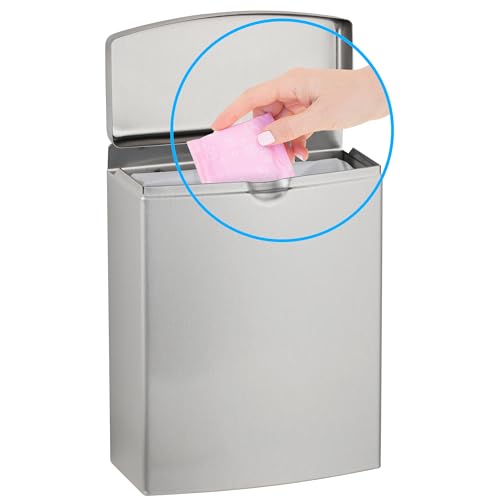
Upon managing busy public restrooms and needing a low-maintenance, durable disposal solution, the Bobrick Wall-Mounted Stainless Steel Sanitary Napkin Receptacle (Model B-270) is built for that use. You get a one-piece satin stainless steel cabinet (7½” W x 10″ H x 3 13/16″ D) with a 1-gallon capacity and flip-top lid that controls odors. The full-length piano hinge keeps the cover secure, there are no sharp edges, and the stainless resists corrosion for easy sanitization. Install it with two #8 x 3/4″ screws or through bolts; maintenance is straightforward for high-traffic commercial restrooms.
- Mounting:Wall-mounted (screw or through‑bolt)
- Material:Stainless steel
- Opening Mechanism:Flip‑top lid
- Odor Control:Flip‑top lid controls/reduces odors
- Removable Inner Bin / Bag Support:One‑piece design (no separate inner bucket) - designed for easy sanitize
- Intended Location / Use:Commercial/public restrooms (restaurants, schools, offices)
- Additional Feature:Full-length piano hinge
- Additional Feature:One-piece corrosion-resistant steel
- Additional Feature:No sharp edges
SUNERA Wall-Mount Stainless Steel Sanitary Napkin Receptacle
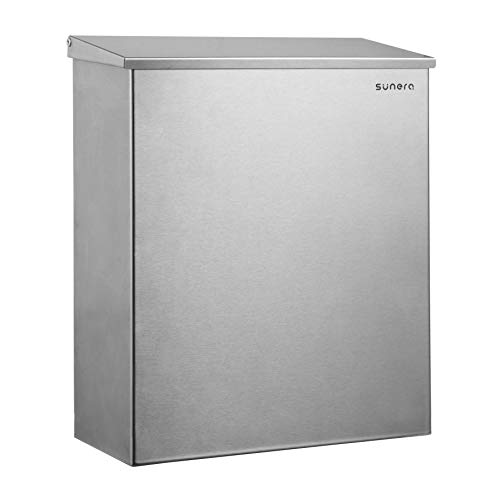
Choose the SUNERA Wall-Mount Stainless Steel Sanitary Napkin Receptacle should you need a durable, low-profile indoor disposal solution that fits busy public restrooms. You’ll get a 304 stainless steel, brushed American Standard finish unit measuring 11L x 9.4W x 4H and tipping the scale at 3.49 pounds. It mounts to the wall, holds tampons and sanitary napkin waste, and provides a 2-gallon capacity with a manual-lift opening. It’s intended for indoor bathroom use, installs easily, and suits commercial settings. Manufactured through SUNERA (ASIN B082V2KVJS, UPC 760939138815), it’s a practical, compact choice for feminine hygiene disposal.
- Mounting:Wall-mounted
- Material:304 stainless steel
- Opening Mechanism:Manual lift (lid)
- Odor Control:Lid (manual) for odor control
- Removable Inner Bin / Bag Support:Internal container suitable for sanitary waste (removal implied)
- Intended Location / Use:Indoor bathrooms (commercial)
- Additional Feature:304 stainless construction
- Additional Feature:Brushed American finish
- Additional Feature:Higher 2-gallon capacity
Hospeco Feminine Hygiene Receptacle White ABS Plastic 250-201W
Should you need a discreet, compact option for restroom disposal, the Hospeco 250-201W offers a D-shaped, open-top ABS plastic receptacle that fits tight spaces and pairs with Hospeco feminine dispensers. You’ll appreciate its white powder-coated finish and one-cubic-foot capacity for feminine hygiene disposal in commercial restrooms. It’s lightweight (about 1.1 lb), wall-mount compatible, and sold as a single unit-ideal where space and cleanliness matter. Dimensions are listed minimally; confirm fit before mounting. The model (250-201W) remains available from HOSPECO, rated in commercial sanitary categories, and designed for straightforward, sanitary waste handling.
- Mounting:Wall-mounted (designed for restroom mounting)
- Material:ABS plastic
- Opening Mechanism:Top opening (open‑top)
- Odor Control:Top opening; designed for sanitary disposal (implied odor control)
- Removable Inner Bin / Bag Support:Designed for dispenser compatibility; easy waste removal (compact design)
- Intended Location / Use:Restroom/bathroom applications (commercial)
- Additional Feature:Open-top D-shape design
- Additional Feature:Powder-coated ABS finish
- Additional Feature:Hospeco dispenser compatible
Stainless Steel Wall-Mounted Sanitary Napkin & Tampon Receptacle
Should you manage high-traffic restrooms and need a durable, low-maintenance sanitary disposal, this stainless steel wall-mounted receptacle is built to stand up to frequent use while keeping spaces tidy. You’ll appreciate premium 304 stainless steel construction with thickened material and metal hinges for long service life and resistance to rust and corrosion. The lid minimizes odors and promotes hygiene, while the built-in trash bag frame makes liner changes quick. Wall-mounting saves floor space, and versatility lets you use it in public restrooms, offices, homes, or laundry rooms for lint or sanitary waste. It’s practical, sturdy, and low-maintenance.
- Mounting:Wall-mounted
- Material:304 stainless steel (premium)
- Opening Mechanism:Lid (reduces odor; manual)
- Odor Control:Lid reduces odor for cleaner experience
- Removable Inner Bin / Bag Support:Built‑in trash bag frame for easy bag installation/removal
- Intended Location / Use:Home, office, public restrooms, laundry rooms (high‑traffic)
- Additional Feature:Thickened heavy-duty steel
- Additional Feature:Built-in bag frame
- Additional Feature:Metal lid hinges
Tioncy Stainless Steel Wall-Mounted Sanitary Napkin Receptacle
Whenever managing high-traffic restrooms and want a durable, low-maintenance disposal solution, the Tioncy stainless steel wall-mounted receptacles are a smart pick-each compact unit mounts quickly and keeps odors contained with a fitted lid. You get a 4-piece set in silvery white, with supplied mounting screws and one extra unit for replacement. Each stainless steel bin is corrosion-resistant, easy to clean, and built for long service. At 9.45 × 3.66 × 7.87 inches, they save space while offering ample capacity. They suit offices, restaurants, medical facilities, and schools where discreet, hygienic disposal matters.
- Mounting:Wall-mounted (mounting screw fittings included)
- Material:Stainless steel
- Opening Mechanism:Fitted lid (manual)
- Odor Control:Fitted lids for odor containment
- Removable Inner Bin / Bag Support:Internal receptacle with lid; designed for easy cleaning/maintenance
- Intended Location / Use:High‑traffic bathrooms (offices, restaurants, medical, educational)
- Additional Feature:Four-unit pack
- Additional Feature:Supplied mounting fittings
- Additional Feature:Compact standardized dimensions
Factors to Consider When Choosing Commercial Sanitary Products Receptacles
Upon selecting a commercial sanitary receptacle, you should prioritize material and durability to guarantee it withstands heavy use and cleaning. Consider capacity and size, odor-control features, and how the unit mounts so it fits your space and traffic patterns. Also factor in how easy it is to maintain and clean to keep costs and downtime low.
Material And Durability
Choose materials that match your facility’s traffic, cleaning regimen, and aesthetic needs, because durability directly affects long-term performance and sanitation. You’ll find stainless steel-especially 304 grade-offers superior corrosion and rust resistance, making it ideal for high-moisture public restrooms and frequent cleaning. ABS plastic is lightweight, impact-resistant, and cost-effective, but it can scratch or discolor and might wear faster under heavy use. Look for thicker gauge metals and reinforced hinges to reduce deformation and failure in high-traffic areas. One-piece or seamless constructions minimize crevices where dirt and bacteria collect, improving sanitation and cleaning ease. Removable inner buckets and corrosion-resistant fasteners simplify maintenance and prevent premature degradation from moisture and cleaning chemicals.
Capacity And Size
Durability and materials set the stage, but capacity and size determine how well a receptacle performs day-to-day in your facility. Match capacity to traffic: high-traffic restrooms need 2–6 gallon (7.6–22.7 L) units, while low-traffic or single-user stalls can use 1–1.6 gallon (3.8–6 L) bins. Check internal versus external dimensions so the external footprint fits the mounting space while the internal volume reduces emptying frequency. Account for lid and hinge space-flip-top or manual-lift lids can add height or depth that affects usable capacity and clearance. Balance bin size with maintenance resources; choose larger units only provided staff can safely handle heavier lifts. For multi-unit installs, standardize sizes to simplify bags, parts, and service planning.
Odor Control Features
Because odors affect user comfort and facility perception, you’ll want receptacles that contain and neutralize smells before they escape. Choose models with tight-sealing lids or flip-top covers to physically block airborne escape. Prefer internal removable liners or buckets with snug-fitting lids for a second sealed barrier that’s easy to service. Select stainless steel or non-porous plastics that resist odor absorption and clean up without trapping smells. Look for built-in charcoal or activated-carbon filters and replaceable odor-absorbing cartridges; they cut volatile compounds but need scheduled swaps. Finally, plan regular maintenance: empty based on traffic, use odor-neutralizing bag liners, and clean with disinfectants. Together, these features keep odors controlled and improve restroom hygiene and user perception.
Installation And Mounting
After you’ve selected odor-control features, consider how the unit will be installed and accessed - improper mounting undermines performance and maintenance. Verify wall type and load capacity (drywall, concrete, metal stud) and pick hardware rated for receptacle weight plus expected contents to prevent failure. Confirm clearance and ergonomic height - typically 40–48 inches from finished floor to top - so users reach it comfortably and ADA circulation stays intact. Choose a mounting method compatible with substrate and maintenance policy: surface screws/anchors, through-bolts, or no‑drill adhesive/clip systems. Plan for maintenance access so lids or inner buckets remove easily without detaching the whole fixture, enabling quick bag changes. Finally, account for proximity to plumbing, partitions, and traffic to avoid obstructions.
Maintenance And Cleaning
Whenever you pick a receptacle, prioritize models with removable inner buckets or liners and smooth, non‑porous surfaces (like stainless steel or ABS) so staff can empty and disinfect quickly with minimal contact. Choose units with rounded interior corners to simplify wiping and cut odor traps. Set a cleaning schedule based on traffic: daily for high‑use restrooms, weekly for low‑use, and log every service to guarantee consistency. Clean with EPA‑registered disinfectants or approved sanitizers, follow label contact times, and never use abrasive cleaners that can damage surfaces and harbor bacteria. During each cleaning, inspect mounting hardware, hinges, and lids for wear or corrosion; replace damaged parts promptly to preserve secure installation and hygienic containment.
Aesthetic And Finish
While aesthetic choices could seem secondary to function, they shape how your restroom feels and how well receptacles blend with the general design. You should pick finishes-polished, satin/brushed, or powder-coated-that coordinate with existing fixtures to create a cohesive look and reduce visual clutter. Stainless steel reads premium and modern; powder-coated ABS gives colored or textured options for themed interiors. Keep in mind polished surfaces show fingerprints and water spots more than satin or matte, so match finish to your cleaning cadence. Consider shape and edge detailing-rounded versus squared profiles and visible hinges-since small design elements affect perceived quality and fit with contemporary or traditional decor. Favor neutral tones like stainless, black, or white for long-term versatility; use accents only as part of a deliberate scheme.
Cost And Value
Aesthetic choices set the tone for a restroom, but you’ll get the most value whenever you pair style with a clear cost viewpoint. Calculate total cost of ownership by adding purchase price to expected lifespan, maintenance frequency, replacement parts, and disposal or recycling costs. Compare upfront unit cost against capacity (liters or gallons) and mounting type to determine cost per volume and space-efficiency value. Factor in installation expenses-labor, hardware, and no‑drill alternatives-and any facility downtime for retrofits or compliance upgrades. Include hygiene-related operational costs like cleaning time, liners, and odor-control supplies whilst estimating long-term expense. Finally, weigh durability and material quality (plastic vs. stainless steel) against your budget, since higher-grade materials often lower replacement and maintenance costs.
