

You’ll want smart thermostats that combine app control, easy installation, and energy savings for 2026. The Mysa Smart Thermostat LITE suits line-voltage electric heaters with Wi-Fi and voice assistants. Heagstat’s WiFi thermostat offers single-stage control with simple scheduling. Honeywell’s RTH9600WF and X2S models provide flexible programming, ENERGY STAR certification, and broad ecosystem support. Amazon’s Smart Thermostat integrates well with Alexa and Ring. Keep going to uncover key features, compatibility, and what fits your home best.
| Mysa Smart Thermostat LITE for Electric Heaters |
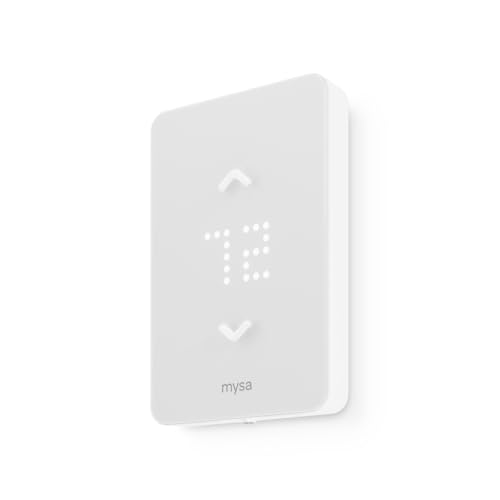
| Best for Electric Heaters | Connectivity Type: Wi-Fi and Bluetooth | Control Methods: App, touch, voice | Power Requirement: Line voltage 120V–240V (4-wire junction box) | VIEW LATEST PRICE | Read Our Analysis |
| Heagstat WiFi Thermostat Single-Stage with App Control |

| Simple App Control | Connectivity Type: Wi-Fi | Control Methods: App | Power Requirement: 24V AC (C-wire required) | VIEW LATEST PRICE | Read Our Analysis |
| Honeywell Home RTH9600WF Smart Wi-Fi Thermostat |
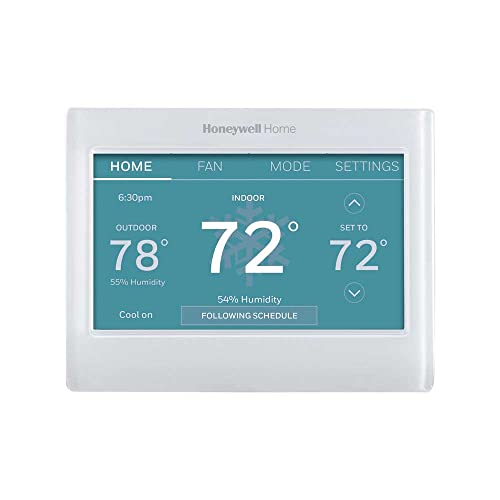
| Feature-Rich Color Display | Connectivity Type: Wi-Fi | Control Methods: App, voice | Power Requirement: 24V AC (C-wire required) | VIEW LATEST PRICE | Read Our Analysis |
| Amazon Smart Thermostat with Alexa and Ring Compatibility |

| Alexa-Optimized | Connectivity Type: Wi-Fi (via Alexa app) | Control Methods: Alexa app, voice | Power Requirement: C-wire required | VIEW LATEST PRICE | Read Our Analysis |
| Honeywell Home Smart WiFi Thermostat X2S Gray |

| Matter-Enabled Smart Hub | Connectivity Type: Wi-Fi and Matter | Control Methods: App, push button, voice | Power Requirement: 24V AC (C-wire required) | VIEW LATEST PRICE | Read Our Analysis |
More Details on Our Top Picks
Mysa Smart Thermostat LITE for Electric Heaters
In case you rely on electric baseboard or wall heaters, the Mysa Smart Thermostat LITE is built to fit your needs perfectly. It’s designed for line-voltage electric heating systems such as baseboard heaters, fan-forced heaters, and convectors, supporting 120V to 240V setups. You’ll appreciate its easy 4-wire DIY installation and sleek wall-mount design. With Wi-Fi and Bluetooth, you can control it via app, touch, or voice through Siri, Alexa, or Google Assistant. The free app offers scheduling, geofencing, and runtime reports. Plus, it’s UL-certified, backed with a 2-year warranty, and highly rated by users.
- Connectivity Type:Wi-Fi and Bluetooth
- Control Methods:App, touch, voice
- Power Requirement:Line voltage 120V–240V (4-wire junction box)
- Display Type:LCD
- Voice Assistant Compatibility:Apple HomeKit/Siri, Amazon Alexa, Google Assistant
- Programmable Scheduling:Auto-scheduling, geofence, vacation mode
- Additional Feature:Supports line-voltage heaters
- Additional Feature:4-wire DIY installation
- Additional Feature:Monthly runtime email reports
Heagstat WiFi Thermostat Single-Stage with App Control
You’ll appreciate the Heagstat WiFi Thermostat STN701W provided you want simple, single-stage heating and cooling control with the convenience of app programming. This off-white, matte thermostat offers precise temperature management via an easy-to-use smartphone app. You can set 7-day or one-day customizable schedules to fit your routine. It requires a single-stage system with a C-wire for power, so check your wiring carefully before installation. The wall-mounted device features a clear LCD display and measures 4.72″ × 3.86″. With a solid 4.3-star rating, it’s a reliable choice for straightforward, app-controlled temperature comfort.
- Connectivity Type:Wi-Fi
- Control Methods:App
- Power Requirement:24V AC (C-wire required)
- Display Type:LCD
- Voice Assistant Compatibility:Not explicitly stated, but Wi-Fi and app controlled (likely compatible)
- Programmable Scheduling:7-day or 0-day programmable schedules
- Additional Feature:Single-stage heating/cooling only
- Additional Feature:Requires C-wire for power
- Additional Feature:Includes cable label
Honeywell Home RTH9600WF Smart Wi-Fi Thermostat
Learn how the Honeywell Home RTH9600WF Smart Wi-Fi Thermostat can simplify your home climate control with its customizable high-definition color touchscreen and seamless compatibility with Alexa and other smart assistants. This ENERGY STAR certified thermostat offers remote control via the app, flexible programming, and on-screen weather updates. It supports most HVAC systems, including forced air and heat pumps, but requires a C-wire for power. Installation includes everything you need, from wall plates to wire labels. Plus, you can access rebates through energy providers. Should you want smart, energy-efficient climate control with easy app management, this Honeywell model is a solid choice.
- Connectivity Type:Wi-Fi
- Control Methods:App, voice
- Power Requirement:24V AC (C-wire required)
- Display Type:Color touchscreen LCD
- Voice Assistant Compatibility:Amazon Alexa, Google Assistant, Microsoft Cortana
- Programmable Scheduling:Flexible programming options
- Additional Feature:ENERGY STAR certified
- Additional Feature:Customizable color touchscreen
- Additional Feature:Displays outdoor weather forecast
Amazon Smart Thermostat with Alexa and Ring Compatibility
The Amazon Smart Thermostat with Alexa and Ring compatibility is perfect should you want a seamless way to control your home’s temperature while integrating with your existing smart devices. Built on Honeywell Home technology, it requires a C-wire and offers ENERGY STAR certification to save you about $50 annually. You can control it remotely via the Alexa app and set routines with Alexa+ voice commands. It also supports comfort zones with select Echo devices or the Smart Air Quality Monitor. Installation is straightforward with the Alexa app guiding you, and customer support is readily available should it be required.
- Connectivity Type:Wi-Fi (via Alexa app)
- Control Methods:Alexa app, voice
- Power Requirement:C-wire required
- Display Type:Not specified (Alexa app controlled)
- Voice Assistant Compatibility:Alexa
- Programmable Scheduling:Automatic switching based on preferences and routines
- Additional Feature:Alexa home comfort zones
- Additional Feature:Energy provider rebate emails
- Additional Feature:Step-by-step Alexa app install
Honeywell Home Smart WiFi Thermostat X2S Gray
Whenever you want a thermostat that seamlessly fits into a smart home ecosystem, the Honeywell Home Smart WiFi Thermostat X2S Gray has you covered. It’s Matter certified, working with Alexa, Google Assistant, and Apple HomeKit for easy voice control. You can manage it via the Initial Alert app or push buttons. Compatible with conventional and heat pump systems, it requires a C-wire or adapter. ENERGY STAR certified, it offers flexible scheduling, auto-away mode, humidity display, and filter notifications. With a sleek LCD and interchangeable accents, this reliable, programmable thermostat keeps your home comfortable and efficient.
- Connectivity Type:Wi-Fi and Matter
- Control Methods:App, push button, voice
- Power Requirement:24V AC (C-wire required)
- Display Type:LCD
- Voice Assistant Compatibility:Amazon Alexa, Google Assistant, Apple HomeKit (Matter certified)
- Programmable Scheduling:5-1-1 day, 5-2 day, 7 day programmable options and non-programmable mode
- Additional Feature:Matter certified cross-platform
- Additional Feature:Auto-away energy saving
- Additional Feature:Interchangeable decorative accents
Factors to Consider When Choosing App Control Programmable Thermostats
Upon selecting an app-controlled programmable thermostat, you’ll want to check whether it’s compatible with your HVAC system and meets your power and wiring needs. Consider the connectivity options and whether it supports scheduling, automation, and voice assistant integration. These factors will guarantee seamless control and convenience for your home.
Compatibility With HVAC Systems
Although choosing an app-controlled programmable thermostat could seem straightforward, guaranteeing compatibility with your HVAC system is essential to avoid installation headaches and functionality issues. Initially, match the thermostat’s voltage and wiring type with your system—most smart thermostats use 24 VAC with a C-wire, while electric baseboard heaters require 120–240 V line-voltage. Confirm your equipment type, whether it’s single-stage, multi-stage, heat pump, or hydronic, since each needs specific control logic. Check whether the thermostat requires a common (C) wire or power adapter for continuous 24 V power, as many Wi-Fi models can’t run on batteries alone. Also, verify support for additional functions like fan control or humidifiers. Always review manufacturer compatibility lists and wiring diagrams to guarantee a smooth installation without rewiring.
Power Requirements And Wiring
Ensuring your thermostat matches your HVAC system’s power and wiring setup prevents installation issues and device malfunctions. To begin, verify whether your thermostat needs a 24VAC C-wire, line-voltage (120–240VAC), or battery power. Many smart models require a constant C-wire, while some line-voltage thermostats won’t work with low-voltage systems. Check your system type—single-stage, multi-stage, heat pump, or baseboard—as wiring terminals and control logic vary. Inspect your existing wires for terminals like R, Rc, Rh, C, W, Y, and G; missing wires could mean running new cable or using adapters. Also, measure circuit voltage and breaker size to confirm compatibility with your thermostat’s voltage and wattage. For DIY installs, verify junction box depth, presence of neutral wires, and always shut off power before wiring.
Connectivity Options Available
How do you decide which connectivity option suits your programmable thermostat best? In case you want full remote control and cloud features like voice assistant integration, Wi-Fi is the way to go, but make sure your home network is stable, preferably 2.4 GHz or dual-band. Bluetooth works well for quick, local control without internet but won’t give you remote access. For seamless compatibility across ecosystems like HomeKit, Alexa, and Google, look for thermostats supporting Matter or other IP-based protocols. Zigbee and Z-Wave use low-power mesh networks ideal for battery-powered hubs but need a compatible hub for remote control. Should Wi-Fi be unreliable, cellular or proprietary RF options can help, though they could require subscriptions and might add latency or extra costs. Choose based on your network setup and control preferences.
Scheduling And Automation Features
Once you’ve settled on the connectivity options that fit your home network and control style, it’s time to look at scheduling and automation features. Choose a thermostat that supports multiple scheduling modes like 7-day, 5-2, or custom daily plans, so you can tailor temperatures for weekdays, weekends, or specific days. Make sure the app offers flexible options such as time-of-day setpoints, temperature setbacks, and vacation modes to save energy during absences. Geofencing and presence-based automation let the thermostat adjust automatically based on your phone’s location. Prioritize devices with auto-scheduling or learning capabilities that optimize settings from your usage patterns. Also, look for trigger-based automations and conditional rules that integrate sensors or weather data, helping you fine-tune comfort and efficiency effortlessly.
Voice Assistant Integration
Upon choosing a programmable thermostat with app control, pay close attention to its voice assistant integration. Confirm which voice platforms it natively supports to enable direct voice commands and seamless device linking without extra hubs. Check whether you need to link accounts or grant cloud permissions for remote voice control. Evaluate the range of voice commands available—can you set temperatures, change modes, start schedules, or just perform basic tasks? Look for support of multi-user voice profiles when you want personalized routines or access control for different household members. Finally, make certain compatibility with home automation routines and third-party triggers like geofencing or sensors. This lets you integrate voice commands into broader automated scenes, enhancing convenience and energy efficiency throughout your home.
Installation Complexity Level
Don’t overlook installation complexity whenever picking an app-controlled programmable thermostat, as it can make or break your setup experience. To begin, verify whether your HVAC system needs a C-wire or line-voltage hookup, since wiring differs between 24V and 120–240V systems. Check your wall’s junction box for enough space and standard terminals; cramped or two-wire setups often require adapters or electrical work. Consider whether the mounting and wiring are DIY-friendly with simple labeling and guides or whether you’ll need an electrician for multi-stage or relay modules. Also, factor in whether the device requires extra parts like a power adapter or C-wire kit, which add steps. Basic installations take 15–30 minutes, but complex setups could need hours or professional help.
Energy Savings And Incentives
After considering how complex installation could be, it’s just as essential to look at the energy savings and incentives while choosing an app-controlled programmable thermostat. ENERGY STAR–certified models can cut your heating and cooling energy use by 8–15% annually, lowering your bills noticeably. Many utility companies and state programs offer rebates ranging from $25 to several hundred dollars, but they often require features like remote scheduling or ENERGY STAR certification. Be sure to check whether pre-approval, proof of purchase, or certified installation documentation is needed. Since rebates might be limited to one per household and have funding windows, apply promptly. Beyond upfront savings, programmable thermostats can optimize energy use during peak periods, helping you save more with time‑of‑use utility pricing.
