

About 60% of homeowners say smart devices make daily life easier, so you’ll likely get real value from a simple Alexa smart switch. You can control lights via voice, set schedules, and keep your existing fixtures—if you pick the right model for your wiring and load. I’ll compare six reliable, hub‑free options, show what specs matter, and point out tradeoffs so you can pick the best fit for your setup.
| Smart Switch WiFi Wall Light Switch Compatible with Alexa Google Home |

| Simple & Reliable | Wi‑Fi Frequency: 2.4 GHz only | Neutral Wire Requirement: Neutral wire required | Circuit Type: Single‑pole (1‑way) only | VIEW LATEST PRICE | Read Our Analysis |
| TREATLIFE Smart WiFi Light Switch 4-Pack (Neutral) |

| Best for Multi-Room | Wi‑Fi Frequency: 2.4 GHz only | Neutral Wire Requirement: Requires neutral wire | Circuit Type: Single‑pole (1‑way) only | VIEW LATEST PRICE | Read Our Analysis |
| Kasa HS200 Smart Wi‑Fi Light Switch (White) |

| Trusted Performance | Wi‑Fi Frequency: 2.4 GHz only | Neutral Wire Requirement: Requires neutral wiring | Circuit Type: Single‑pole (1‑way) only | VIEW LATEST PRICE | Read Our Analysis |
| GHome Wi‑Fi Smart Light Switch (Single‑Pole Alexa) |

| Feature-Rich Choice | Wi‑Fi Frequency: 2.4 GHz only | Neutral Wire Requirement: Neutral wire required | Circuit Type: Single‑pole (1‑way) only | VIEW LATEST PRICE | Read Our Analysis |
| Belkin WeMo Light Switch Wi-Fi Enabled Compatible with Amazon Echo |

| Most Integrated | Wi‑Fi Frequency: Wi‑Fi (2.4 GHz implied) | Neutral Wire Requirement: (Implied/standard smart switch requires neutral) | Circuit Type: Single‑pole light switch (standard) | VIEW LATEST PRICE | Read Our Analysis |
| Smart Wi‑Fi Light Switch with App Remote & Alexa |
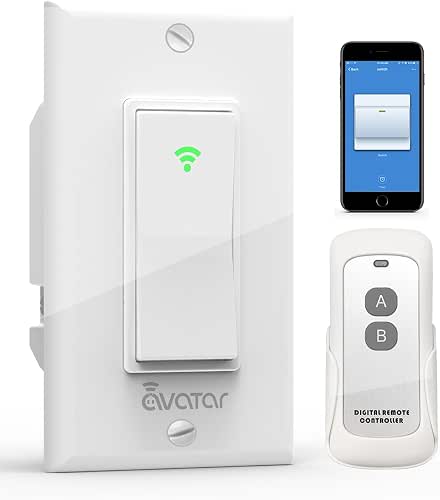
| Easy Setup Option | Wi‑Fi Frequency: 2.4 GHz only | Neutral Wire Requirement: Neutral wire required | Circuit Type: Single‑pole (1‑way) only | VIEW LATEST PRICE | Read Our Analysis |
More Details on Our Top Picks
Smart Switch WiFi Wall Light Switch Compatible with Alexa Google Home
Should you want a straightforward, app- and voice-controlled upgrade for a standard light circuit, the Smart Switch WiFi Wall Light Switch is a great choice — it replaces single-pole switches, works with Alexa and Google Assistant, and gives you remote control and scheduling via the Smart Life app. You’ll need a neutral wire and a single-pole circuit; it won’t work in 3-way/multi-switch setups. It’s not a dimmer and supports only 2.4 GHz Wi‑Fi. You can control lights remotely, set schedules and timers, group switches, and share access with family. Follow proper single-pole wiring procedures and verify neutral presence before installing.
- Wi‑Fi Frequency:2.4 GHz only
- Neutral Wire Requirement:Neutral wire required
- Circuit Type:Single‑pole (1‑way) only
- Voice Assistant Compatibility:Amazon Alexa, Google Assistant
- App Control / Remote Access:Smart Life app (remote control anywhere)
- Scheduling & Automation:Schedules and timers (scheduling/automation)
- Additional Feature:Neutral wire required
- Additional Feature:Single-pole replacement only
- Additional Feature:2.4 GHz Wi‑Fi only
TREATLIFE Smart WiFi Light Switch 4-Pack (Neutral)
In case you’ve got neutral wiring and want reliable, no-frills smart control for standard bulbs, the TREATLIFE 4-pack is a strong pick — it connects via 2.4 GHz Wi‑Fi, works with Alexa/Google/SmartThings, and lets you turn lights on or off remotely without fuss. You’ll install single-pole switches (not for 3-way) and wire the neutral as required. They’re on/off only—no dimming—but handle standard bulbs up to 1250 W/10 A. Use the Smart Life app for remote control, real-time status, schedules, timers, groups, and device sharing. FCC certified and backed by dedicated support for troubleshooting.
- Wi‑Fi Frequency:2.4 GHz only
- Neutral Wire Requirement:Requires neutral wire
- Circuit Type:Single‑pole (1‑way) only
- Voice Assistant Compatibility:Amazon Alexa, Google Assistant (also SmartThings)
- App Control / Remote Access:Smart Life app (remote control anywhere)
- Scheduling & Automation:Schedules, timers, occupancy simulation
- Additional Feature:FCC listed/certified
- Additional Feature:Includes screwless wall plate
- Additional Feature:Rated 1250W, 10A
Kasa HS200 Smart Wi‑Fi Light Switch (White)
Should you want a straightforward, hub‑free smart switch that works with Alexa and other voice assistants, the Kasa HS200 is a solid pick—its 2.4 GHz Wi‑Fi connectivity and app‑guided setup let you replace a single‑pole switch and control lights (or compatible fans) remotely, on schedules, or via voice. You’ll need a neutral wire and basic wiring knowledge (or an electrician). The HS200 supports Android/iOS apps, Alexa, Google Assistant and more, handles 100–120 VAC at 15 A (600 W), uses screw terminals with copper contacts, and is UL certified. It offers timers, away mode, remote status checks, and weighs 5.3 ounces.
- Wi‑Fi Frequency:2.4 GHz only
- Neutral Wire Requirement:Requires neutral wiring
- Circuit Type:Single‑pole (1‑way) only
- Voice Assistant Compatibility:Amazon Alexa, Google Assistant (plus Cortana, Vera)
- App Control / Remote Access:Kasa app (remote control anywhere)
- Scheduling & Automation:Timers, schedules, away mode (automation)
- Additional Feature:UL certified safety
- Additional Feature:15 A current rating
- Additional Feature:Works with Vera/Cortana
GHome Wi‑Fi Smart Light Switch (Single‑Pole Alexa)
Should you want an easy, hub‑free way to add Alexa voice control to a standard lighting circuit, the GHome SW5 single‑pole Wi‑Fi smart switch is a solid pick—it’s designed for 2.4 GHz networks, requires a neutral wire, and supports Alexa and Google Assistant for straightforward voice and app control. You’ll install a UL/FCC‑listed, white switch rated 120V AC, 60Hz, 15A (up to 1800W) using screw terminals. The GHome App lets you toggle, schedule, group, and monitor status; it’s not for smart bulbs. Dimensions fit standard boxes, it’s IP00, and no hub is needed for voice automation.
- Wi‑Fi Frequency:2.4 GHz only
- Neutral Wire Requirement:Neutral wire required
- Circuit Type:Single‑pole (1‑way) only
- Voice Assistant Compatibility:Amazon Alexa, Google Assistant
- App Control / Remote Access:GHome app (remote control, status)
- Scheduling & Automation:Scheduling, timers, sunrise/sunset automation
- Additional Feature:1800W, 15A max
- Additional Feature:Sunrise/sunset scheduling
- Additional Feature:UL and FCC listed
Belkin WeMo Light Switch Wi-Fi Enabled Compatible with Amazon Echo
Should you want a straightforward, voice‑controlled upgrade for your home lighting, the Belkin WeMo Light Switch delivers Wi‑Fi connectivity and Alexa compatibility so you can control lights hands‑free and from anywhere. You’ll connect it to your home Wi‑Fi, link it to Amazon Echo, Google Assistant or Nest, then control lights via voice or from the free WeMo app. Use the app to schedule lights, set scenes, and enable Away Mode so lights turn on/off automatically for added security. Installation is simple for single‑pole circuits, and integration with other smart devices keeps your setup cohesive and flexible.
- Wi‑Fi Frequency:Wi‑Fi (2.4 GHz implied)
- Neutral Wire Requirement:(Implied/standard smart switch requires neutral)
- Circuit Type:Single‑pole light switch (standard)
- Voice Assistant Compatibility:Amazon Echo (Alexa), Google Assistant (also Nest)
- App Control / Remote Access:WeMo app (remote control, scheduling)
- Scheduling & Automation:Scheduling and Away Mode automation
- Additional Feature:Integrates with Nest
- Additional Feature:Away Mode feature
- Additional Feature:Free WeMo app
Smart Wi‑Fi Light Switch with App Remote & Alexa
Provided you want simple, hub-free voice control and remote access for standard single-pole lighting, this Smart Wi‑Fi Light Switch is a great fit—it connects directly to your 2.4 GHz network, works with Alexa and Google Home, and gives you phone, remote, and voice control while requiring a neutral wire for installation. You’ll use the app to switch lights on/off, set timers, and create routines like away mode or a baby sleep schedule to save energy. Installation follows a clear manual; customer support replies via Amazon Message within 24 hours. The switch carries necessary certifications and focuses on reliable, user-friendly performance.
- Wi‑Fi Frequency:2.4 GHz only
- Neutral Wire Requirement:Neutral wire required
- Circuit Type:Single‑pole (1‑way) only
- Voice Assistant Compatibility:Amazon Alexa, Google Home
- App Control / Remote Access:Manufacturer app (remote control, timers/schedules)
- Scheduling & Automation:Timer and schedule functions (routines)
- Additional Feature:24‑hour Amazon support
- Additional Feature:Emphasizes certifications
- Additional Feature:Routine examples included
Factors to Consider When Choosing an Alexa Smart Switch
At the time of picking an Alexa smart switch, you’ll want to confirm it’s fully compatible with Alexa and supports the Wi‑Fi band your home uses. Check the wire requirements for installation, what voice control features it offers, and whether it supports scheduling and automation that fit your routines. These factors will help you choose a switch that’s easy to install, responsive to voice commands, and smart enough for daily automation.
Compatibility With Alexa
In case you want Alexa to control your lights smoothly, start checking explicit Alexa compatibility, the Wi‑Fi band, hub requirements, control type (on/off vs. dimmer), and whether the switch can be detected, named, and grouped in the Alexa app — these factors determine voice-command reliability, routine integration, and how much setup you’ll need. Make sure the product explicitly says “Works with Alexa” so the vendor provides the Alexa skill and guaranteed voice-command support. Verify the switch uses the same Wi‑Fi band as your Echo—many switches are 2.4 GHz only. Note whether a hub is required; hub‑based devices use the hub’s skill, while hub‑less Wi‑Fi devices pair directly. Choose a dimmer‑capable switch should you want Alexa to dim lights, and confirm discovery, naming, grouping, and routine support in the Alexa app.
Wire Requirements Needed
After you’ve confirmed Alexa compatibility and feature support, check the wiring in your wall box to make sure the smart switch can be installed and powered. Most smart switches need a neutral wire to supply continuous power—look for bundled white wires before buying. Verify whether the model supports single‑pole or 3‑way setups; many only work in single‑pole circuits unless explicitly rated for multi‑switch wiring. Confirm the switch’s voltage and current/wattage ratings (typically 120 VAC, 10–15 A) so they meet your load, and observe whether the unit is on/off only or dimming, since non‑dimming switches can cause LED/CFL flicker. Finally, check terminal type and wire gauge compatibility (usually 14–16 AWG) to guarantee safe, secure connections.
Wi‑Fi Band Support
Because your smart switch relies on Wi‑Fi for voice control and routines, check which bands it supports and how your router is configured so you don’t end up with connectivity problems. You’ll want 2.4 GHz support for better range and wall penetration, especially for switches placed far from the router. Should you need higher throughput, confirm 5 GHz compatibility, but take into account many switches only handle 2.4 GHz. Check whether your router uses band‑steering or separate SSIDs—some switches can only join a distinct 2.4 GHz network. Verify the switch’s expected signal strength and maximum range at the installation spot to avoid drops or needing a mesh/extender. Finally, consider congestion: 2.4 GHz is busier with IoT devices and can affect latency and reliability.
Voice Control Features
Good Wi‑Fi support sets the stage, but voice control is what makes an Alexa smart switch truly hands‑free. Make sure the switch understands native commands — on, off, toggle, and named-device control — so you don’t need odd phrasing. Prefer devices that offer local voice control or at least minimize cloud hops to cut latency and keep basic control during internet outages. Check multi-room and group command compatibility so one instruction can control multiple switches at once. Verify voice-triggered scenes or routines are supported so switches can act with other devices whenever you issue a single command. Finally, look for clear feedback — voice confirmations or app status — so Alexa can report current on/off states and confirm your commands.
Scheduling And Automation
Whenever you want lights and appliances to behave predictably without deliberating about them, check the switch’s scheduling and automation capabilities carefully. Confirm the switch and app support one-time, recurring daily/weekly, and sunrise/sunset offset schedules so routines and seasonal changes stay accurate. Make certain timers, countdowns, and randomized “away” schedules are available to simulate occupancy for security. Look for scene or group scheduling so a single schedule controls multiple devices together. Verify remote/cloud scheduling and whether schedules run locally in case your internet or cloud service fails. Guarantee integration with Alexa routines and support for conditional triggers—time, sunset/sunrise, device state, or sensor input—for more advanced automation. These features keep your home responsive without constant input.
Load And Circuit Rating
Scheduling and automation keep your lights running whenever you need them, but you also need to match the smart switch to the electrical load and circuit it’s controlling. Check the switch’s current rating (amps) and make certain it equals or exceeds the breaker rating—common options are 10 A, 15 A, or higher; underspecifying risks overheating. Verify maximum wattage for the load type: resistive (incandescent/LED) and inductive (fans/motors) have different limits. For motors or transformers, pick a switch with a higher inrush or explicit inductive/motor rating to handle startup currents. Confirm single‑pole versus multi‑way compatibility—using the wrong type won’t work and could damage the device. Finally, make sure the switch matches your circuit voltage and frequency and never exceed its rated voltage.
Installation And Safety
Because smart switches connect directly to your home’s wiring, you should prioritize safe installation and correct wiring before you buy or install one. To begin, verify the circuit type and confirm the switch is for a single‑pole circuit and that a neutral wire is present. Turn off power at the breaker and use a non‑contact voltage tester to confirm the circuit is de‑energized before touching wires. Check the switch’s electrical ratings—voltage, current/amps, and wattage—and make certain they meet or exceed your circuit and load. Confirm the wall box has enough space and ventilation for the switch and secure all screws or terminals to prevent arcing. Follow local electrical codes, and should you be uncertain about wiring or 3‑way setups, hire a licensed electrician.
App And Ecosystem Integration
Once your switch is safely wired and tested, you’ll want to make sure the software side fits your needs: check Alexa compatibility, the companion app’s features (remote control, scheduling, grouping, and family access), and how automations and triggers can interact with other smart devices. You should confirm the switch joins your existing ecosystem—routines, voice commands, and scenes—without extra obstacles. Verify whether the app supports schedules, timers, sunrise/sunset events, occupancy simulation, and cross-device triggers. Check connectivity: 2.4 GHz Wi‑Fi support or hub requirements will determine network fit. Finally, weigh cloud versus local control and account-sharing policies to assess privacy, latency, and whether basic controls function if the internet’s down. These points keep automation reliable and secure.
Frequently Asked Questions
Do Alexa Smart Switches Work During Internet Outages?
Yes—you can often control local smart switches without internet provided they support local processing or connect via a local hub. You’ll lose cloud features and voice over Alexa unless the hub and Alexa are also on the LAN.
Can Smart Switches Be Used With Dimmable LEDS?
Yes — you’ll likely get softer lighting bliss; many smart switches support dimmable LEDs, but you’ll want compatible switches and dimmable bulbs, check specs for LED support and minimum load, and avoid mixing non-dimmable lamps.
Do Smart Switches Require a Hub for Automation Routines?
Usually you don’t need a hub for basic automation unless the smart switch supports Wi‑Fi or directly integrates with Alexa or Google Assistant, but you may want one for Zigbee/Z‑Wave switches, broader device coordination, or advanced routines.
Are There Privacy Risks From Voice-Activated Light Switches?
Yes — they can snoop; picture your lamp gossiping with a cloud. You should read privacy policies, disable always-listening features, use local processing whenever possible, and update firmware so your lights don’t betray you.
Can Multiple Users Control the Same Smart Switch Simultaneously?
Yes — multiple users can control the same smart switch simultaneously provided your hub or platform supports multi-user access; you’ll need shared accounts or linked profiles, and permissions or voice recognition help avoid conflicts or accidental overrides.
Final Thoughts
You’ve narrowed great options, but pause—before you tap “buy” check wiring, amp ratings, and whether you need a neutral; one wrong choice can stall your whole setup. Imagine effortless voice control, routines that actually save time, and lights that obey without fuss—then pick the switch that matches your home and habits. Ready? Make that last safety check, choose the model that fits, and enjoy smart lighting that just works.
