


You often overlook your basement access points. These areas are crucial for both aesthetics and functionality. Well-designed basement door ideas and hatchways can transform your basement from simple storage into a valuable part of your home. You gain increased home value and enhanced safety. This also brings improved functionality to your basement space. Consider your basement access as a chance for design and practical improvement. This home improvement project will improve basement access.
Key Takeaways
Well-designed basement doors and hatchways make your basement safer and more useful. They also make your home look better.
You can choose between interior doors for easy access from inside your home or exterior hatchways for direct outdoor access and moving big items.
For exterior basement entrances, pick strong materials like aluminum or steel. Make sure they have good security, drainage, and waterproofing to protect your home.
Always check local building codes and get permits before you start any basement door project. This ensures safety and proper construction.
Basement Access Types
You have two main ways to get into your basement. These are interior doors and exterior hatchways. Each type serves a different purpose. They also offer unique benefits for your home. Understanding these differences helps you choose the best solution for your needs.
Interior Doors
Interior doors connect your main living space directly to the basement. You use these doors often. They make your basement feel like a natural part of your home. This type of access is common in finished basements. It allows you to move between floors easily. An interior door provides convenient access for daily use. It also helps integrate your basement into your home’s overall design.
Exterior Hatchways
Exterior hatchways provide direct outdoor access to your basement. These are also known as bulkheads or Perma Entry. They are very useful for moving large items. You can bring furniture or appliances into your basement without going through your house. This type of exterior basement entrance also serves as an emergency exit.
You can find many types of exterior basement entrance options. They come in various sizes. You can install them on new foundations or existing homes. Some feature a strong one-piece concrete casting with a steel exterior door.
Consider these common types of hatch doors:
Classic Series Basement Doors: These give you direct basement access. They allow full use of your home space. You can move large items through their wide openings. They come with a factory powder coat finish in many colors.
Ultra Series Basement Doors: These offer safe, code-compliant access. They perform well in all weather. They are easy to use and need little care. They are made from polyethylene. This material stops rust and rot. You never need to paint them. They have a wood texture and a driftwood color. This helps them match your home’s outside look. They also have side panels you can change. These panels let in light or air.
Classic Series Sloped Wall Basement Doors: You install these on sloped walls. These walls are part of your home’s foundation. You can put them on brick, stone, block, or concrete walls. They come with instructions and hardware. They also have a factory powder coat finish. This finish matches your home’s exterior colors.
Interior Basement Door Design
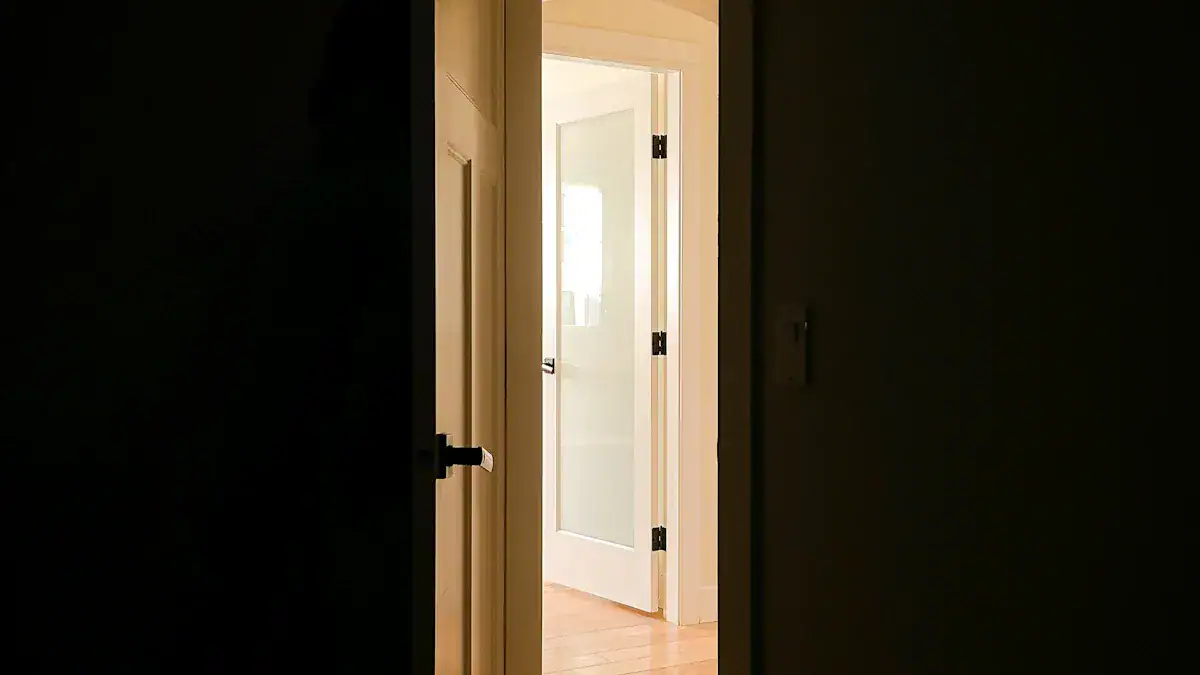
You choose materials and styles for your interior basement door carefully. These choices impact your home’s look and the door’s durability.
Material and Style Choices
For strength, consider solid core doors. They have a robust core of particleboard or wood fiber. This makes them very durable. Solid wood doors also offer great durability. They resist wear and tear. With proper care, solid wood doors can last for decades. Steel doors provide high durability and strength. They resist damage and dents. Steel does not absorb moisture. This helps them last longer.
When you think about style, modern design often features sleek finishes and clean lines. You see neutral color palettes and smart storage solutions. This creates a sophisticated and functional space. You can find doors specifically for ‘BASEMENTS | FLEX SPACE’ that fit this aesthetic.
Space-Saving Solutions
Sometimes, you have limited space for your interior basement door. Space-saving solutions are very helpful here. Sliding barn doors are a great option. They slide open instead of swinging. This saves a lot of space. Traditional hatch doors can also save space. You can install them flush with the floor. This makes them good for small basements with limited room. Pocket doors slide into a wall. Bifold doors fold in half. Both save floor space.
Hidden Door Concepts
You can make your basement access even more unique with hidden door concepts. These creative ideas enhance your basement’s style and functionality. Hidden doors blend seamlessly with your walls or shelving. They use concealed hinges. These hinges are inside the door and frame. You do not see any hardware. A hidden unlock mechanism can trigger the latch. This might be a statue, a button, or a book. A compression system ensures the door fits tightly when closed. This keeps it hidden.
For security, you can use concealed latches or magnetic locks. Electronic control systems allow only authorized access. Some hidden doors even have motorized mechanisms. These use gear motors, pressure sensors, or optical sensors for automatic opening and closing. You can also choose a sliding system for hidden doors. This works well in tight spaces. A pivoting system uses retractable rods. It rotates the door around its axis. These advanced options make your basement door ideas truly special.
Exterior Basement Entrance Design
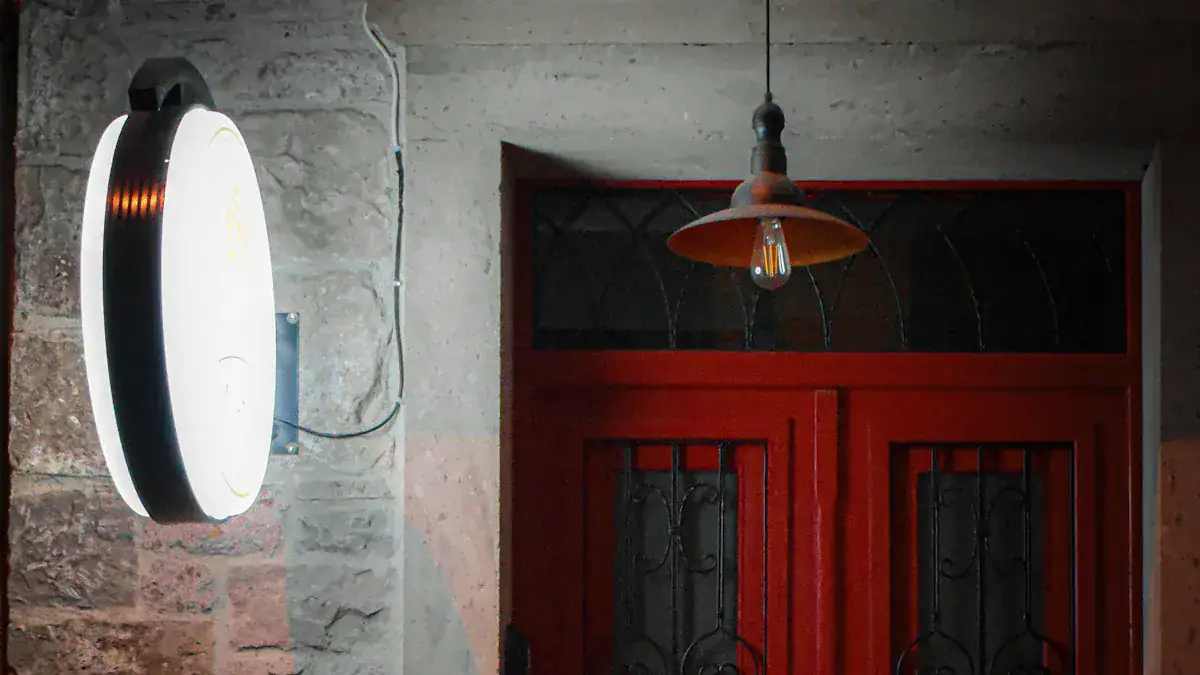
You want your exterior basement entrance to be both functional and secure. This section helps you understand the best choices for your home. Good design for your exterior basement entrance protects your home. It also adds to its curb appeal. Consider these basement door ideas for a strong and safe entry.
Hatchway Material Durability
Choosing the right material for your basement hatch is very important. The material must withstand weather and heavy use. Aluminum is a wise long-term choice for residential projects. It naturally resists rust. This makes it easier to keep looking good over time. Aluminum hatch doors are also lighter to operate. Steel offers strength and security. However, aluminum is often better for homes because it resists rust and needs less care.
Manufacturers use top-grade materials for basement doors. These materials provide strength and weather resistance. They stand up to moisture, heavy use, and tough weather conditions. Cellar doors often feature heavy-duty materials and rust-resistant finishes. This ensures long-lasting security. These doors stand up to the elements. They provide years of dependable use. You can also use reinforced concrete for robust exterior structures. This material is very durable for demanding applications like drainage and utility access.
Security and Safety Features
Your exterior basement entrance needs strong security. This protects your home and family. You should install Grade 1 deadbolt locks. Double-cylinder deadbolts offer maximum security. They resist forced entry, drilling, bumping, and picking. Smart locks give you convenience. You can control them with your smartphone. Some even use fingerprint recognition. Keyless entry systems remove the need for physical keys. This reduces the risk of key duplication.
High-security cylinder locks, like Medeco or Mul-T-Lock, have complex keyways. They use reinforced materials to resist picking or drilling. Multipoint locking systems secure the door at several points along the frame. This makes it much harder to force open. These are great for larger doors. You can add security bars and grilles over doors and windows. They provide an extra layer of protection. Door reinforcement hardware, like door jamb armor, strengthens your door frame. Hinge bolts prevent kick-ins.
For metal basement hatchways, a single slide bolt lock is common. This lock has internal mounting flanges for a secure door. You must maintain your basement hatchways. This prevents rodents, rain, and surface drainage water from entering. Hatchways that lead to living spaces need devices to secure occupants and property. If you rent out a unit, the basement entrance must have devices to prevent unauthorized entry. Motion-activated lights deter intruders. Security cameras provide evidence if a break-in occurs. Alarm systems with motion detectors and contact sensors offer immediate alerts.
Drainage and Weatherproofing
Proper drainage and waterproofing are critical for any exterior basement entrance. They prevent water damage and keep your basement dry. Exterior French drains and curtain drains are good first defenses. These systems use a gravel-filled trench with a perforated pipe. They redirect groundwater away from your foundation. Curtain drains intercept water before it reaches your house.
Traditional exterior drain tile systems are installed at the deepest point of your foundation. They combine perforated PVC pipes with gravel and a waterproof membrane. This creates a complete water barrier. These are most cost-effective during new construction. Trench and threshold drains capture surface water at specific entry points. These include basement stairwells, garage-to-basement transitions, and walkout basement doorways. Some even prevent radon gas backflow.
You can use basement waterproofing materials like stucco and sealed joints. These block moisture effectively. A bulkhead entrance with a secure door also prevents rain and snow from entering your basement. Good drainage is essential for a dry and safe walkout basement. You must ensure proper drainage around your walkout basement entrance to avoid flooding. Effective drainage and waterproofing protect your home’s foundation.
Functionality and Safety
You want your basement access points to be both safe and easy to use. This section shows you how to improve the overall functionality and safety of your basement entrance.
Lighting and Visibility
Good lighting is essential for safety. It helps you see clearly, especially on stairs. For basement access points like stairways, you need about 100 lux of illumination. This level ensures clear visibility of steps. It minimizes accident risks. While general living spaces might use bulbs with 800–1,100 lumens per fixture, focus on stairwells, storage nooks, and hallways. These areas benefit greatly from proper light. Consider LED lights for energy efficiency. Motion-sensor lights turn on automatically. This is convenient and saves energy.
Accessibility Enhancements
Making your basement more accessible benefits everyone. An exterior basement entrance can greatly improve accessibility. A dedicated staircase or bulkhead provides easy outside access. This is helpful for accessibility and emergencies. Doorways should be at least 36 inches wide. Headroom above the entrance should typically be at least 6 feet 8 inches. You can automate entrance doors, especially if they are heavy. If not automated, set door closers to the minimum force. This makes opening easier. Remember, a basement designed for human occupancy counts as a story under ADA Standards. Accessible ramps offer an alternative to elevators. Platform lifts can be used if ramps or elevators are not possible.
Integrated Storage Solutions
Smart storage around your basement access can maximize space. You can use modular wall systems. These have customizable hooks, shelves, and baskets. They use wall space efficiently. Under-stair storage transforms unused areas. You can add drawers, cubbies, or pull-out shoe racks. Vertical storage solutions like wall-mounted hooks and floating shelves clear floor space. Multi-functional furniture, such as storage benches, offers seating and hidden storage. Built-in storage, like custom cabinetry, provides excellent solutions for coats, shoes, and umbrellas. These creative ideas enhance your basement’s functionality.
Planning & Installation
Building Codes and Permits
You must understand local building codes before starting any basement remodeling. These codes ensure safety and structural stability. For example, if you add an egress window, you will need permits. Projects that involve cutting into foundation walls also require permits. Charlie Silva, a TOH home builder, advises, “Always check with your local building department before planning an egress project. Municipal codes and required safety measures can vary widely.”
For a space to be considered habitable, it needs specific features. You need proper lighting. Windows or glass door frames must cover at least 8% of the floor area. You also need ventilation. Operable windows should be at least 4% of the floor space. Heating equipment is necessary, like extending your existing system. Space heaters do not count. Insulation requirements vary, especially in colder areas. You need a moisture barrier to prevent mold. Pressure-treated wood might be required for framing not touching concrete.
If a door serves as an emergency escape and rescue opening (EERO), it must be a side-hinged door or a slider. If an EERO is below ground, you need an area well or a bulkhead enclosure. These bulkhead enclosures must provide direct access from the space. They need a clear opening equal to the door when fully open. You generally do not need an EERO for existing areas unless you create new sleeping rooms.
Moisture Control and Waterproofing
Effective moisture control and waterproofing are vital. They protect your home from water damage. You must prevent water from entering your foundation. Proper drainage and waterproofing keep your basement dry. This protects your home’s foundation. Without good drainage, you risk foundation issues. You need to ensure proper drainage around any exterior basement entrance, especially for a walkout basement. This prevents flooding. Good waterproofing protects your foundation from moisture. For a walkout basement, effective drainage is key. You also need to consider drainage for any walkout basement entrance.
Cost and Professional Help
Consider the costs involved. You can choose between professional installation or a DIY approach. Professionals can handle complex tasks like cutting into your foundation. They also help with permits. A licensed general contractor can install an exterior basement entrance and get the necessary permits. This ensures your project meets all safety standards. For a walkout basement, professional help can be very beneficial.
Thoughtful design for your interior basement door ideas and exterior hatch doors is crucial. These improvements make your basement safer and more functional. They also enhance your home’s aesthetics. Good access contributes to a better living space. You can improve your basement access and unlock its full potential. Assess your current setup. Apply these ideas, whether you DIY or hire professionals. This boosts your home’s overall functionality.
FAQ
What are the benefits of a well-designed basement entrance?
A good entrance increases your home’s value. It makes your basement safer. You can use your basement space better. It integrates your basement into your home.
How do I choose between an interior door and an exterior hatchway for my basement?
Choose an interior door for daily access from inside your home. Select an exterior hatchway for direct outdoor access. This is good for moving large items. It also serves as an emergency exit.
What are important considerations for exterior basement hatchways?
You need durable materials like aluminum or steel. Ensure strong security features. Proper drainage and waterproofing protect your home’s foundation. This prevents water damage to your foundation. Your home’s foundation stays dry.
Do I need a permit to install a new basement door or hatchway?
Yes, you often need permits. Check local building codes before you start. This is especially true if you cut into your home’s foundation. Permits ensure safety and structural stability for your foundation. Your foundation remains secure.