


As of January 1, 2023, new national minimum SEER2 requirements are in effect for heat pumps. Split system units now require a minimum of 14.3 SEER2 and 7.5 HSPF2. Single packaged units need 13.4 SEER2 and 6.7 HSPF2. These updated standards are crucial for you. They help you save money on energy bills. They also reduce your environmental impact. A higher SEER rating means greater efficiency. Understanding the minimum SEER for heat pumps and other SEER ratings helps you choose the right system. This ensures compliance and smart purchasing decisions.
Key Takeaways
New rules started in 2023 for heat pumps. They must meet higher energy efficiency levels called SEER2 and HSPF2. This helps you save money and protects the environment.
SEER2 measures how well a heat pump cools. HSPF2 measures how well it heats. Higher numbers mean the heat pump uses less energy to do its job.
Many things affect how well a heat pump works. These include the type of heat pump, if it is the right size for your home, and how good your home’s insulation is.
You can get money back or tax credits for buying a new, energy-efficient heat pump. This helps with the cost and saves you money on energy bills over time.
Understanding Heat Pump Efficiency
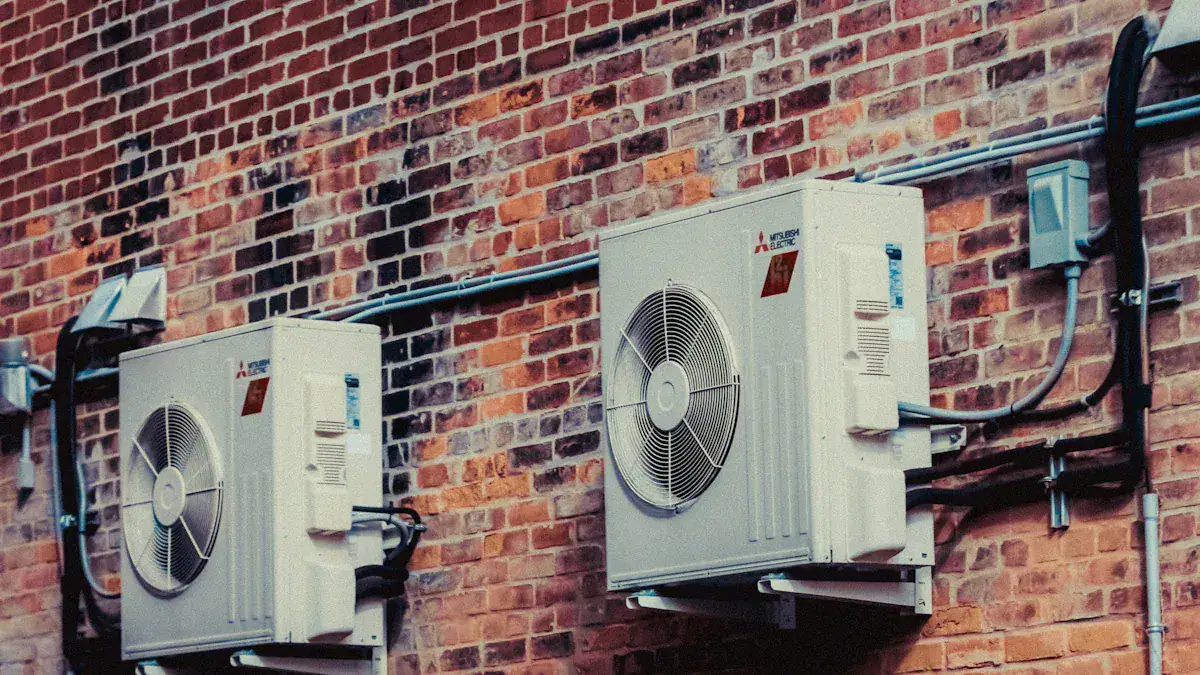
SEER and SEER2 Explained
You need to understand how heat pumps measure efficiency. SEER and SEER2 are key metrics. SEER stands for Seasonal Energy Efficiency Ratio. It measures a system’s cooling output over a typical cooling season. It divides this by the energy it uses in Watt-Hours. On January 1, 2023, SEER2 replaced SEER. SEER2 is an updated version of the SEER calculation. It uses a new blower testing procedure. This procedure increases external static pressure. It better reflects real-world conditions of installed equipment. This makes SEER2 the new standard. SEER2 represents the cooling output of a system. It divides this by the energy it consumes during a typical cooling season. Higher SEER2 ratings show greater efficiency. They convert energy into cooling power better. SEER2 includes more stringent testing methods. These methods account for real-world conditions. This includes ductwork losses and airflow resistance. The original SEER testing did not fully consider these. This change ensures a more accurate representation of a unit’s energy efficiency ratings. It aligns with updated Department of Energy regulations.
HSPF2: Heating Performance
HSPF2 measures a heat pump’s heating efficiency. HSPF2 stands for Heating Seasonal Performance Factor 2. It calculates the total heat output in BTUs. It divides this by the total electricity consumed in watt-hours. This covers an entire heating season. A higher HSPF2 rating means a more efficient system. For example, a heat pump produces 15,000,000 BTUs of heat. It consumes 1,200,000 Watt-hours of electricity. Its HSPF2 is 3.66. This means it provides 3.66 BTUs of heat for every Watt-hour used. HSPF2 ratings typically range from 7.5 to 13 or more. A higher HSPF2 rating means lower electricity bills. It also means a reduced carbon footprint. Upgrading from an HSPF2 of 8 to 10 can greatly reduce energy use. It lowers operating costs. The federal minimum HSPF2 is 7.5. A ‘good’ rating is usually 9 or 10. In colder areas, a high HSPF2 saves you money on winter energy bills.
EER2 and COP: Other Metrics
You will also encounter other important metrics. EER2 and COP are two of them. EER2, or Energy Efficiency Ratio 2, measures cooling efficiency at a single, specific outdoor temperature. It is useful for comparing performance under peak conditions. COP, or Coefficient of Performance, measures heating efficiency at a specific temperature. It shows how much heat a system delivers for each unit of energy it consumes. These ratings give you a more complete picture of a heat pump’s performance.
Calculating Efficiency Ratings
Understanding these calculations helps you make informed choices. You can compare different models. You can see which one offers the best long-term savings. These ratings guide you. They help you select a heat pump that performs well in your climate. They also help you save on utility bills. Always look at all relevant ratings. This includes SEER and HSPF2.
Minimum SEER Requirements
National Minimum SEER2 Standards
You need to know the national minimum standards. Heat pumps in any region must meet specific efficiency levels. They now require 14.3 SEER2. This is equivalent to 15.0 SEER. They also need 7.5 HSPF2. This equals 8.8 HSPF. This is a change from previous standards. Before 2023, the national split-system heat pump minimum efficiency standard was 14.0 SEER and 8.2 HSPF. All heat pumps were mandated to have at least an 8.2 HSPF. The heating seasonal performance factor (HSPF) for air-source heat pumps was 8.2 before the increase. This new minimum SEER for heat pumps ensures greater energy savings.
Regional SEER Requirements
You need to understand the regional SEER2 requirements for minimum SEER for heat pumps. The United States has different standards based on region. The Department of Energy divides the country into three regulatory regions: North, Southwest, and Southeast. Each region has unique climate and heating/cooling needs. These new standards impact each region differently. Compliance in the North is based on the date of manufacture. Compliance in the two southern regions (Southwest and Southeast) is based on the date of installation for air conditioning products. It is based on the date of manufacture for heat pump products.
For cooling systems, the minimum SEER2 varies by region.
In the North, all AC systems need 13.4 SEER2.
In the South, AC systems under 45,000 BTU/hr need 14.3 SEER2.
AC systems 45,000 BTU/hr or more need 13.8 SEER2.
Here is a visual representation of these regional cooling requirements:
Even with these regional differences for cooling, heat pumps still adhere to the national 14.3 SEER2 standard. For example, in the Southwest region, California’s SEER2 minimum requirement for heat pumps is 14.3. This was 15 under the old SEER rating system. The southeast region regulations for split-system ACs below 45,000 BTU/hr require 14.3 SEER2.
Split System Heat Pump Requirements
Split system heat pumps have specific national minimum efficiency standards. These units must meet a minimum SEER rating of 14.3 SEER2. They also need 7.5 HSPF2. This applies to all sizes of split system heat pumps. Some split systems have even higher standards. These require 7.8 HSPF2, 15.2 SEER2, and 11.7 EER2. You should check these higher standards if you are looking for top efficiency.
Packaged Heat Pump Requirements
Packaged heat pumps also have specific efficiency standards. These units must have a minimum of 15.2 SEER2. They also need 7.2 HSPF2 and 10.6 EER2. You should consider these ratings when choosing a packaged unit.
Factors Affecting Heat Pump Efficiency
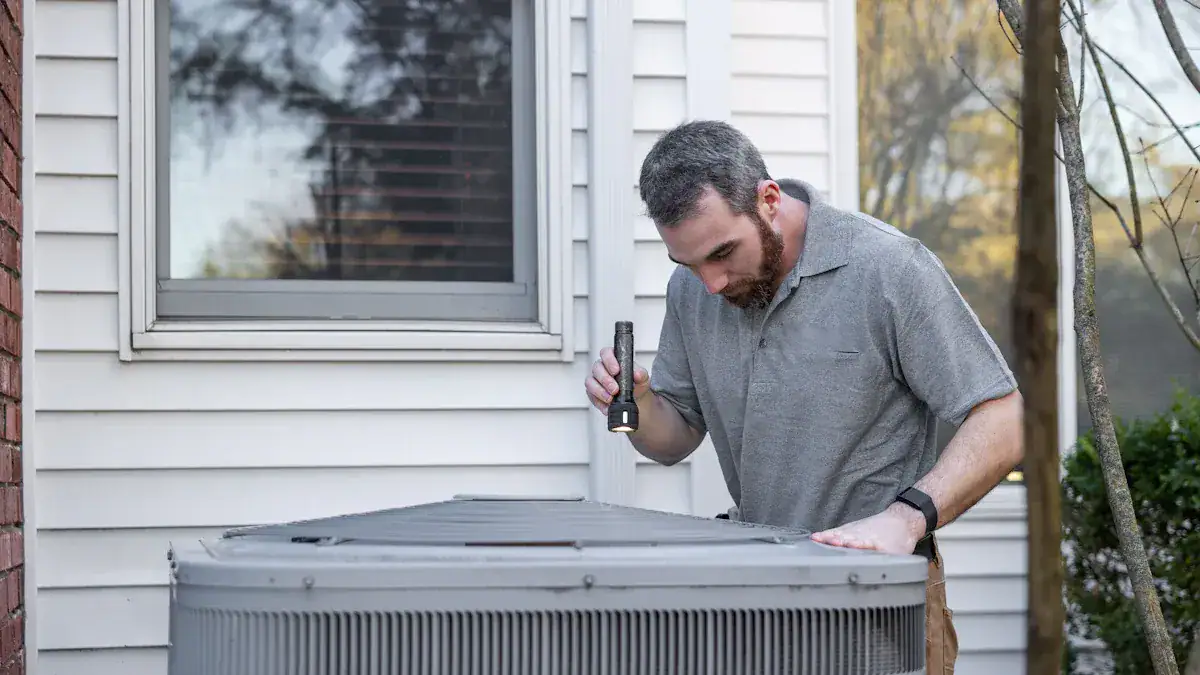
Many elements influence how efficiently your heat pump operates. Understanding these factors helps you maximize your system’s performance.
Heat Pump Type and Technology
The type of heat pump you choose greatly impacts its efficiency.
Single-stage heat pumps operate at 100% capacity when running. They are either fully ON or fully OFF.
Variable-speed heat pumps use inverter-driven compressors. These adjust capacity from 30% to 100%. They precisely match your heating or cooling demands.
Variable-speed units achieve higher SEER2 ratings. They adjust power consumption to the load. This leads to lower overall energy usage. Inverter systems optimize performance across various conditions. They consume less energy by smoothly ramping up and down. This can save you 30% to 50% on energy bills compared to older, single-stage units.
Proper Sizing and Installation
Correct sizing and professional installation are crucial. An incorrectly sized unit, whether too large or too small, leads to inefficiencies. An oversized heat pump may short-cycle. It turns on and off too frequently. This increases energy consumption. It also causes rapid wear on components. An undersized unit struggles to meet demands. It runs continuously. This leads to higher energy use and increased strain.
A correctly sized and professionally installed heat pump is the absolute cornerstone of durability. It ensures the system operates exactly as it was designed to, avoiding the kind of mechanical stress that leads to expensive repairs and an early replacement.
Aspect | Impact on Lifespan |
|---|---|
Proper Sizing | Essential to prevent stress from frequent cycling; incorrect sizing can lead to moisture issues or compressor burnout. |
Heat Load Calculations | Necessary to determine the correct heating capacity for efficiency and longevity. |
Ductwork and Air Distribution
Your home’s ductwork plays a big role in efficiency. Typical air-duct systems can lose between 25% to 40% of heating or cooling energy due to leaks. This leakage forces your HVAC system to work harder. It increases utility bills. A typical home can experience about 20% conditioned air loss from ductwork leaks. Uninsulated ducts, especially in attics, also contribute to energy loss. Insulating them improves system efficiency.
Climate and Geographic Location
The climate where you live affects your heat pump’s real-world efficiency. In mild cold climates, standard air-source heat pumps achieve a heating Coefficient of Performance (COP) between 2 and 3. This happens for temperatures as low as -10°C. In extreme cold climates, cold-climate heat pumps still provide heat efficiently. Their efficiency may decline during extreme cold. They may need backup heating. However, they still offer substantial energy benefits. For example, EnergyStar mandates that cold-climate heat pumps achieve a COP greater than 1.75 at 5°F. This means they transfer at least 175% of the energy they consume.
Temperature Range | Mean COP (All Systems) |
|---|---|
5°C to -10°C | 2.74 |
-25°C (Alaska Field Test) | 2 |
Home Insulation and Air Sealing
Good home insulation and air sealing are vital. They prevent conditioned air from escaping. They also stop outside air from entering. This reduces the workload on your heat pump. Your system does not need to work as hard to maintain desired temperatures. This directly translates to lower energy consumption and better overall efficiency.
Incentives and Cost-Effectiveness
You can save money when you choose a new heat pump. Many programs offer financial help. These programs make upgrading more affordable.
Federal Tax Credits
The federal government offers tax credits for efficient heat pumps. These credits reduce your tax bill.
Energy Efficient Home Improvement Credit (Section 25C): You can get a 30% tax credit on installation costs. The maximum credit is $2,000 per year. Your system must be ENERGY STAR Most Efficient certified starting in 2025. This applies to your main home. You need a Product Identification Number (PIN) for tax filing.
Geothermal Heat Pump Tax Credit (Section 25D): This offers a 30% tax credit. It covers ENERGY STAR certified geothermal heat pumps. This includes both equipment and installation. It applies to your main home and a second home. The credit percentage will go down in future years.
State and Local Rebates
Many states and cities also offer rebates. These programs give you money back after you install a heat pump.
Region | State | Rebate Range |
|---|---|---|
Northeast | Maine | $2,000–$5,500 |
Northeast | Massachusetts (Mass Save) | $1,250–$10,000 |
West Coast | California | $2,000–$4,000 |
Midwest & Mountain | Minnesota | $500–$2,000 |
Southern | Texas | $250–$1,000 |
Many cities also have their own programs. These include Denver, Boston, and San Francisco. Amounts often range from $200 to $2,500. Forty-nine states and Washington, D.C., offer state or utility-level heat pump incentives.
Savings vs. Upfront Costs
High-efficiency heat pumps cost more upfront. However, they save you money over time. You will see lower energy bills each month. The savings often make up for the higher initial cost. Consider the long-term benefits.
When to Upgrade
You might wonder if it is time to upgrade your system. Look for these signs:
Your current system is inefficient. You notice uneven heating or cooling. Your energy bills are higher.
Your system breaks down often. You pay for frequent repairs.
Your HVAC system is old. It is usually 10 to 15 years old or more.
You want better home comfort. You desire consistent temperatures.
You want to reduce your carbon footprint. Heat pumps are a greener choice.
Your energy bills keep climbing. An old system works harder.
Understanding the minimum SEER for heat pumps and other energy efficiency ratings is crucial for smart decisions. Remember, SEER standards evolve and differ by region and system type. Investing in high-efficiency heat pumps offers long-term savings and helps the environment. Always consult qualified HVAC professionals. They ensure your system meets the correct minimum SEER for heat pumps and performs optimally.
FAQ
What is the main difference between SEER and SEER2?
SEER2 uses a new testing method. This method includes higher external static pressure. It better reflects real-world conditions. This makes SEER2 ratings more accurate. You get a clearer picture of a heat pump’s actual efficiency.
What happens if you install a heat pump below the minimum SEER2?
You cannot legally install a heat pump below the minimum SEER2. Manufacturers cannot sell them. Installers cannot put them in your home. This ensures all new systems meet current energy efficiency standards.
What does HSPF2 mean for your heat pump?
HSPF2 measures your heat pump’s heating efficiency. It tells you how well your unit converts electricity into heat during the colder months. A higher HSPF2 rating means your heat pump uses less energy to heat your home.
What are the benefits of a higher SEER2 rating?
A higher SEER2 rating means your heat pump uses less electricity. This saves you money on your energy bills. It also reduces your home’s carbon footprint. You get more efficient cooling and heating.
What is a good SEER2 rating for a heat pump?
A good SEER2 rating is typically 15.0 or higher. The minimum is 14.3 SEER2. Systems with ratings above 16.0 SEER2 offer excellent efficiency. They provide significant long-term energy savings for you.


