

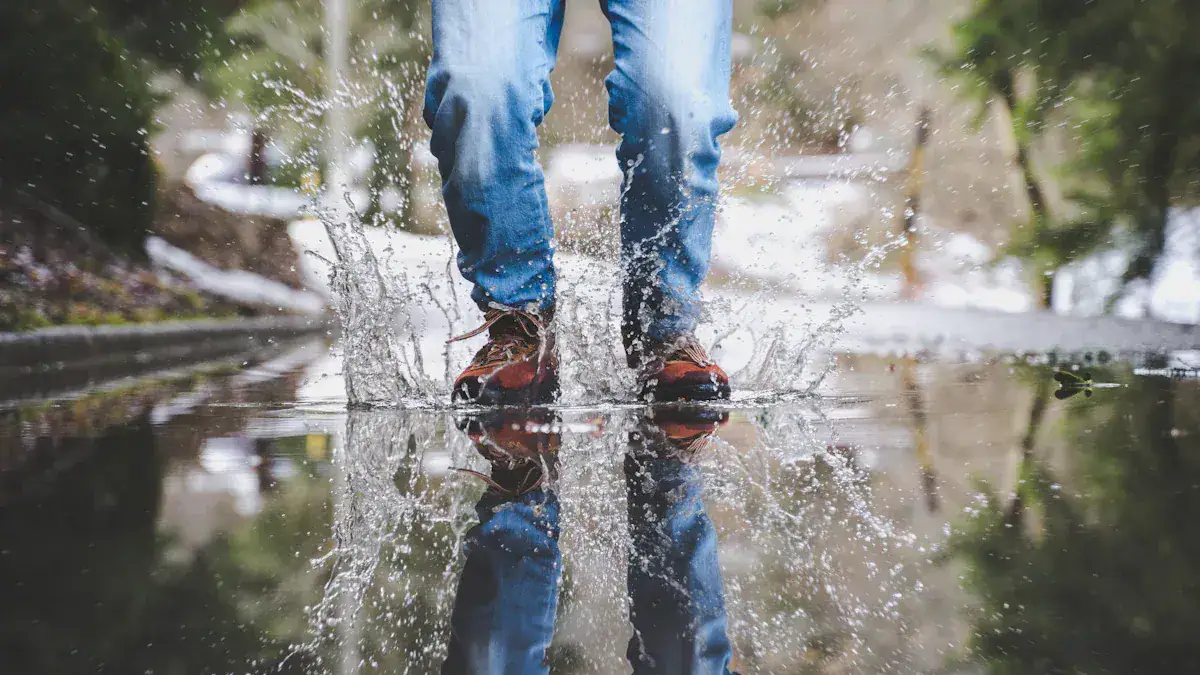
You often find standing water after rain. This common issue leads to significant patio damage. It causes:
Deterioration of the concrete surface
Damage to the waterproofing membrane
Leaks
Structural damage to the building
Algae or mold growth
Efflorescence (white streaks or stains)
These problems make surfaces slippery and attract mosquitoes. Understanding the root cause is key to effectively addressing this problem. This guide will help you identify why water pooling occurs. It will then provide practical solutions on how to stop water pooling on patio, from simple fixes to more complex drainage improvements.
Key Takeaways
Water pooling on your patio can cause damage and attract pests. It is important to fix this problem.
Check your patio’s slope and drainage. Water should flow away from your house, not towards it.
You can fix small water spots by drilling holes or sealing the patio. For bigger problems, install drains like channel or French drains.
Use plants and soil to help. Create small hills or ditches to guide water away. Plant trees and shrubs that soak up water.
Identify Causes of Patio Water Pooling
You need to understand why water collects on your patio. Several factors contribute to this problem. Identifying the root cause helps you choose the right solution for how to stop water pooling on patio.
Improper Patio Grading
Your patio needs a slight slope. This slope directs water away from your house and the patio surface. If your patio is flat or slopes towards your home, water will collect. The recommended slope for a patio is 1 inch for every 4 to 8 feet. A steeper slope could be 1 inch for every 4 feet. A less steep slope could be 1 inch for every 8 feet. Without this proper grade, you will see standing water after rain.
Clogged or Inadequate Drainage
Sometimes, your patio drainage system is not working correctly. It might be clogged with debris or simply too small for the amount of water it handles. Common signs of inadequate patio drainage systems include water pooling near your home’s foundation, even without recent rain. This indicates a clogged, broken, or ineffective system. You might also notice:
Oversaturation
Soil erosion
Swampy conditions
Dead grass
Insect infestation
Mildew
Structural cracks These issues show your drainage cannot handle excess rainwater.
Compacted Soil
The soil beneath and around your patio plays a role. Compacted soil becomes extremely dense. It loses its natural porous qualities. This density prevents water from infiltrating the ground. Water then accumulates on the surface, creating standing water on your patio.
Impermeable Patio Materials
Some patio materials do not allow water to pass through them. Impervious surfaces, including patios, do not allow water to penetrate into the soil. Concrete is an example of an impermeable patio material. It does not absorb water. Instead, it displaces water to the sides. This displacement can lead to increased runoff and water pooling if the patio is uncovered or improperly sloped.
Runoff from Adjacent Areas
Water can flow onto your patio from surrounding areas. This includes your lawn, garden beds, or even your roof. Heavy gutter and downspout runoff can overwhelm your patio. If these adjacent areas are higher than your patio, gravity will direct water towards it. This adds to the amount of water your patio needs to manage.
Address Patio Surface Issues
You can fix problems with your patio surface to stop water from collecting. These solutions range from simple adjustments to more involved resurfacing.
Regrade Patio Surface
You need to create a proper slope on your patio. This slope directs water away from your house. A slight slope of 1/4 inch per foot is ideal. This means for every foot your patio extends, it should drop by 1/4 inch. This ensures water flows off the surface.
💡 Tip: A minimum slope of 1:40 is good for garden paving. If you live in an area with heavy rainfall, a slope of 1:60 to 1:100 works better. This prevents water from pooling. Also, the cross slope (slope across the width) should be about half of the end slope (slope along the length). This helps water drain evenly.
When you pour a new concrete patio, always make sure you set the correct grade. This prevents future water pooling problems.
Overlay Patio to Raise Level
Sometimes your patio sits too low, like a bowl. You can raise its level by adding an overlay. This method adds a new layer of material on top of your existing patio.
Materials like Param 5500 are good for this. This is a self-leveling, cement-based overlay. You can apply it in layers from 1/4 inch to 1-1/2 inches thick. You can even go up to 5 inches thick if you add aggregate. Self-leveling polishable cement coating is another good choice for concrete overlays. These materials help you raise the patio level and create a new, properly sloped surface.
Drill Drainage Holes for Minor Pooling
If you have small, isolated spots where water collects, you can drill drainage holes. This is a simple fix for minor pooling. You should make these drainage holes about 3 centimeters in diameter. These holes allow water to seep through the patio surface. Remember, this solution works best for small areas of standing water, not widespread issues.
Apply Waterproof Sealant
Applying a waterproof sealant helps prevent water from soaking into your patio surface. This reduces water retention. Sealants create a barrier that repels water.
There are many effective waterproof sealants:
Foundation Armor AR350 Wet Look Sealer (Acrylic): This gives a glossy finish and protects against UV rays. It works well for decorative concrete.
Seal-Krete Clear-Seal Urethane Sealer (Urethane): This provides a clear, low-gloss protective layer. It resists yellowing and you can make it slip-resistant.
ToughCrete Concrete Sealer (Siloxane): This offers long-lasting protection, often for over 10 years. It keeps the concrete’s natural look.
Ghostshield Lithi-Tek 9500 (Water-based): This is an eco-friendly option. It gives industrial-strength protection without changing the patio’s appearance.
Eagle Supreme Seal (Solvent-based): This is an affordable choice. It protects against UV and gives a satin finish.
For stone patios, Thompson’s® WaterSeal® Multi-Surface Waterproofers are a good option. Stone is porous and can absorb water. This can lead to cracks or stains, especially in cold weather. Sealing stone creates an invisible barrier. This barrier keeps moisture out and helps maintain the stone’s look.
Install Patio Drainage Systems
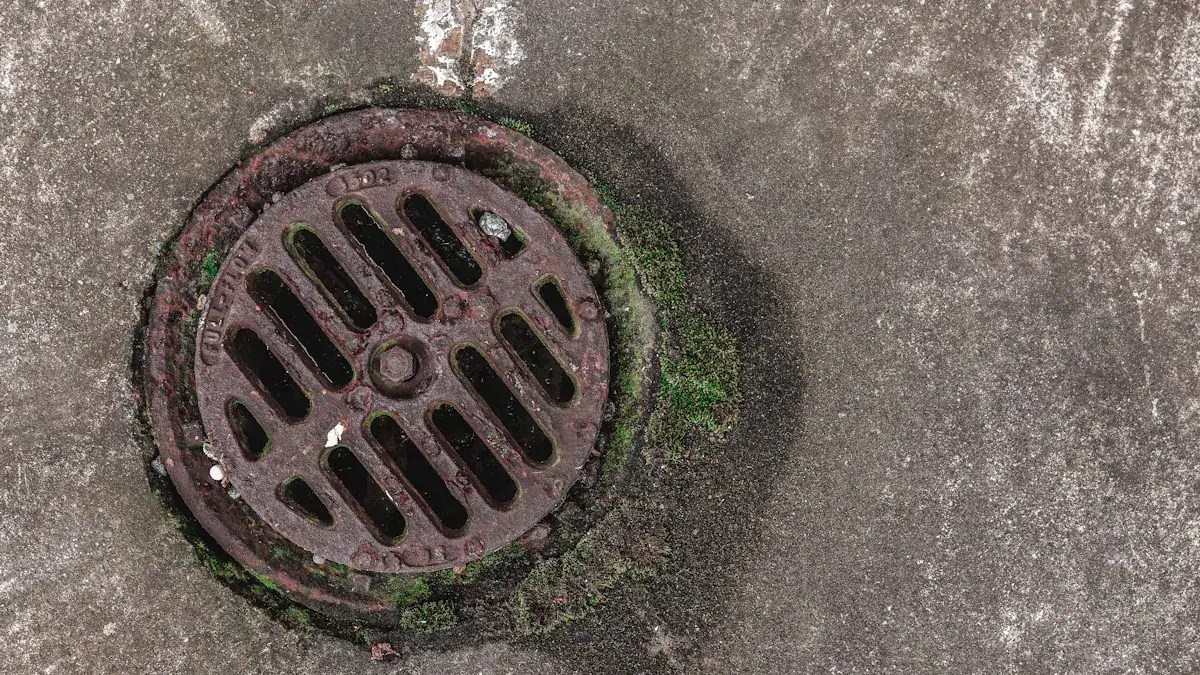
Sometimes, surface fixes are not enough. You need more robust solutions to manage significant water issues. Installing a dedicated patio drainage system provides a long-term answer. These systems actively collect and divert water away from your patio and home.
Install Channel Drains
Channel drains offer a reliable way to prevent standing water on your patio. They are long, narrow grates that collect water across a wide area. These systems transform problematic outdoor spaces into safe, functional areas you can enjoy all year. Effective drainage gives you immediate peace of mind. You will not worry about water seeping into garages or avoiding patio areas after storms. Professional channel drain installation also improves curb appeal. It solves practical water management issues.
Channel drainage works well for hardscape areas like patios that flood after storms. If you live in a region with freeze-thaw cycles, proper channel drainage is crucial for water safety. It prevents ice dams and eliminates ponding. This reduces dangerous slip hazards and protects your hardscape investment. Installing channel drains helps prevent damage to finished locations. It ensures efficient drainage. This avoids mildew, concrete discoloration, structural damage, and the deterioration of asphalt or concrete. For example, using channel drains around a residential patio removes excess water flow. This protects the hardscape surface and surrounding landscape from water runoff.
Channel drains offer significant design versatility. They come in various sizes, grate colors, and styles. This allows you to incorporate premium finishes that match your home’s architecture. They still meet essential flow standards. For instance, a new home build might choose a channel drain system with a tan botanical pattern grate. This blends seamlessly with a custom concrete pool and patio.
You might wonder about the cost to install drainage. Here is a general idea for trench drains, which are similar to channel drains:
System Type | Average Cost per Linear Foot | Average Total Cost |
|---|---|---|
Trench drain | $30–$70 | $2,500–$8,000 |
Install French Drains
A French drain is another effective solution to install drainage. It directs subsurface water away from your patio. You dig a shallow trench. You line this trench with fabric. Then, you fill it with gravel and a perforated pipe. This system collects water before it reaches your patio surface.
A functional French drain system requires several components:
Drainage Materials: This includes a perforated pipe. It collects and directs water. Gravel or crushed stone surrounds the pipe. This allows water to flow freely.
Geotextile Fabric: This protective layer wraps around the gravel or stone. It prevents dirt and debris from clogging the pipe.
Catch Basin: You install this at the entry point. It acts as a primary defense against leaves, dirt, and other debris. It prevents them from entering and blocking the perforated pipe. Regular emptying keeps water flowing freely.
High-Quality Landscape Fabric: This fabric prevents soil from seeping into the gravel. It stops the pipe from clogging. It is a durable, water-permeable barrier. It allows moisture through but blocks fine particles. This keeps the system clean and functional.
Common pipe materials for French drains include durable plastic. You can find corrugated (flexible) and PVC (stronger, more rigid) variations. The pipe must have slots or perforations at regular intervals. This allows water to enter. Alternatives like the EZflow system offer a pre-assembled pipe. It is high-density polyethylene, corrugated, and perforated. It comes surrounded by aggregate and a fabric mesh. The pipe’s diameter is also important. Four-inch pipes usually work for residential use. Larger diameters may be necessary for significant water collection or commercial applications.
A properly installed French drain typically lasts between 30 to 40 years. Its effectiveness may begin to diminish after this time. With proper maintenance, French drains generally have a lifespan of 30 to 40 years. Environmental conditions, component quality, and installation quality influence this duration. A well-installed and maintained French drain can typically last for 20 to 30 years. The quality of materials, the installation process, and consistent maintenance significantly affect its longevity. If you install a French drain, you invest in long-term patio drainage.
Install Catch Basins
Catch basins are capture devices. They collect excess stormwater. They direct this collected water to drain pipes. This process prevents water accumulation and potential mess. They effectively manage stormwater runoff from various surfaces, including patios and walkways.
Here is how catch basins effectively collect and divert patio water:
Water flows into the catch basin through a grated opening.
The grate traps large debris like branches and trash.
Heavier materials like sand, dirt, and leaves settle at the bottom of the basin.
Water then flows out through an outlet pipe.
The outlet pipe connects to a larger drainage network. This diverts the water away.
Catch basins are very effective. In some scenarios, two catch basins can collect more water than 40 feet of French drain. This shows their power in concentrated areas.
Extend Downspouts
Your roof collects a lot of water. Downspouts direct this water away from your house. If your downspouts release water too close to your patio, it can contribute to pooling. You need to extend them.
The absolute minimum distance downspouts should extend from your home is 4 feet. This 4-foot minimum is a starting point. You should consider other property factors. Extensions should discharge water at least 6-10 feet away from your foundation. The minimum recommended distance is 6 feet. Ten feet provides optimal protection against water damage and soil erosion. Extending downspouts is a simple yet effective way to improve your patio drainage and how to stop water pooling on patio.
Use Landscaping for Water Diversion
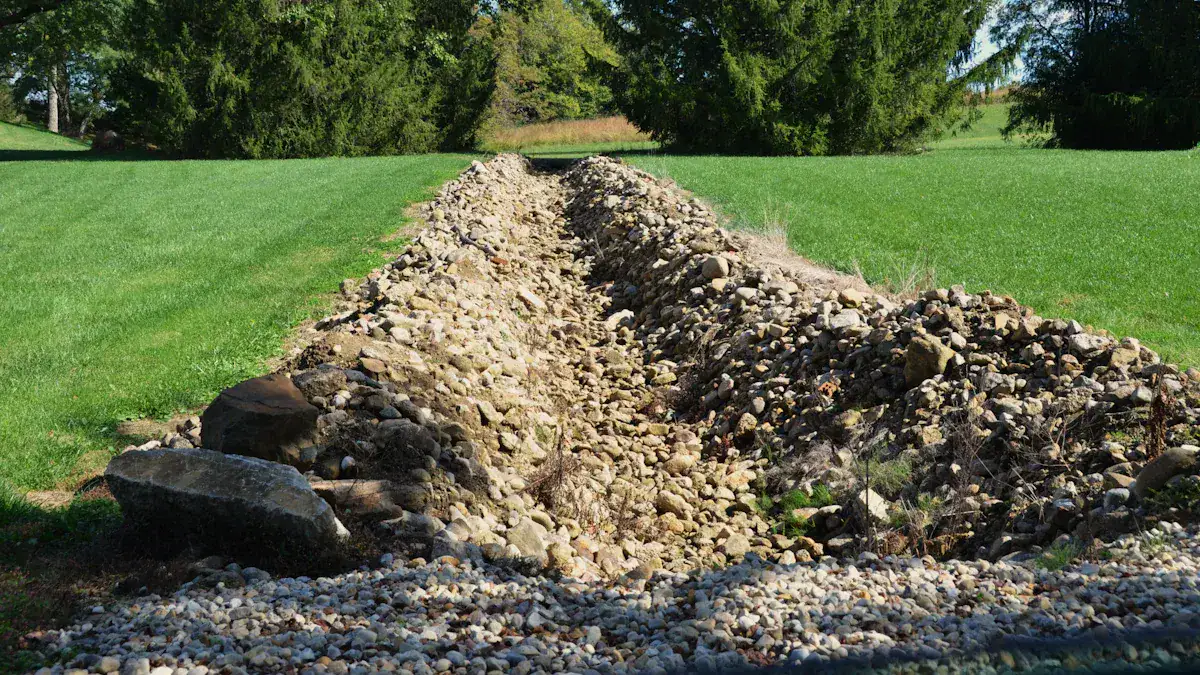
You can use natural landscaping elements to manage water around your patio. These methods help divert water and reduce pooling.
Create Swales and Berms
Swales and berms are effective tools. They divert water from problem areas. Berms are raised mounds of earth. They guide water. Swales are shallow ditches. They have a berm on the downhill side. This design helps convey water to a different part of your landscape. Diversion swales are slightly off-contour. They create a channel for water to flow down a gentle slope. This prevents erosion. This method redirects water that would otherwise flow to low spots. It protects your patio from water accumulation and potential damage.
Plant Water-Absorbing Plants
You can use plants to soak up water. Choose plants that thrive in wet conditions. These plants help manage excess rainwater.
Trees: Red maple, Weeping willow, Ash, River birch.
Shrubs: Inkberry, Button bush, Summersweet, Red twig dogwood.
Other Plants: Daylily, Purple coneflower, Bee balm, Japanese iris.
Improve Soil Permeability
Your soil’s ability to absorb water is important. You can improve it around your patio.
Dry-set brick: Bricks are placed over a sand and gravel base. This allows water to pass through gaps.
Permeable flagstone: Natural stone pieces are set with wide joints. These joints are filled with gravel or sand. Water soaks into the ground.
Gravel and stone mix: This is an affordable option for water management.
Permeable interlocking concrete pavers: These pavers have wide joints. They allow water to pass into a crushed stone base.
Install Rain Gardens
Rain gardens are special planted areas. They collect and absorb runoff. You should position rain gardens at least 10 feet (3 meters) away from any building foundation. This protects your home. Locate the rain garden in a low area on your property. This helps it intercept runoff from roofs and paved surfaces. Avoid areas with underground utilities or septic systems. Do not place rain gardens in areas that are always wet. Also, avoid steep slopes. Smart drainage for patios is crucial. It protects your investment. It ensures surfaces remain beautiful, safe, and stable all year.
Quick Fixes and Maintenance
You can take immediate steps to manage water on your patio. These quick fixes and regular maintenance help prevent bigger problems. They also keep your patio usable.
Clear Gutters and Downspouts
Your gutters and downspouts direct water from your roof. If they are clogged, water can overflow onto your patio. You should clean your gutters at least twice a year. Do this once in the spring and again after fall leaves drop. If many trees are near your home, clean them three to four times a year. Always check them after severe storms for debris. This simple task prevents much water pooling.
Sweep and Clean Patio
Regular sweeping and cleaning remove debris. Leaves, dirt, and other items can block small drainage paths. For effective cleaning, you can use specific tools. A VEVOR Outdoor Push Sweeper works fast on all surfaces. It gathers dirt and leaves. For tougher grime, a VEVOR Pressure Washer Surface Cleaner blasts away dirt, moss, and algae. A VEVOR 24 Inch Surface Cleaner Pressure Flat is good for big jobs. It covers more area and handles tough oil stains.
Repair Cracks and Unevenness
Cracks and uneven spots on your patio can trap water. Repair these areas to improve drainage. Use an outdoor-rated concrete patching product for cracks. This prevents water from settling in low spots. It also stops further damage to your patio surface.
Temporary Water Removal
Sometimes you need a quick solution for standing water. For small areas, you can use outdoor rugs or mats. These soak up minor puddles. Remember, this is not a permanent fix. For foundations near your patio, you can apply a waterproof sealant like Drylok. This helps prevent water from seeping into the foundation as a short-term measure.
Addressing water pooling is crucial for your patio’s longevity, safety, and enjoyment. You need a systematic approach to solve this problem. First, identify the root cause of the water collection. Then, choose the most appropriate solution. This helps you effectively stop water pooling on patio. Start with simpler fixes. You can escalate to more involved projects if necessary. You will achieve a dry, functional, and beautiful patio space.
FAQ
❓ Why does water pool on my patio?
Water pools due to several reasons. These include improper patio grading, clogged drainage systems, compacted soil, or impermeable patio materials. Runoff from adjacent areas also contributes to this problem.
🛠️ How can I quickly fix small pooling spots on my patio?
For small, isolated pooling spots, you can drill drainage holes. You can also use outdoor rugs or mats to absorb minor puddles temporarily. Remember to clear your gutters and sweep your patio regularly.
💧 What is the best long-term solution for severe patio water pooling?
For severe pooling, you should install a dedicated drainage system. Consider channel drains or French drains. Regrading your patio surface to create a proper slope away from your home is also a very effective long-term solution.
🌳 Can landscaping help prevent water from pooling on my patio?
Yes, landscaping helps manage water. You can create swales and berms to divert water. Plant water-absorbing plants. Improve your soil’s permeability. You can also install rain gardens to collect and absorb runoff.