

You often find your favorite jeans have a persistent wet smell. This issue goes beyond simple cleanliness. Specific environmental factors and your care routines often create a musty smell. You can easily banish this unpleasant odor. We offer practical, effective solutions to keep your denim fresh.
Key Takeaways
Incomplete drying and humid storage cause wet smells in jeans. Bacteria and mold grow in damp conditions.
Use white vinegar, baking soda, or borax to remove existing wet smells. These items neutralize odors and clean fabrics.
Dry jeans completely to prevent odors. Maximize airflow and use clotheslines or racks for best results.
Wash jeans every 3 to 5 wears. Store them in a dry place to stop future wet smells.
Clean your washing machine regularly. This prevents odor buildup inside the machine itself.
Causes of Wet Smell in Jeans
You often wonder why your jeans develop that unpleasant wet smell. Several factors contribute to this common problem. Understanding these causes helps you prevent the odor.
Incomplete Drying and Bacterial Growth
You might pull your jeans from the dryer, and they feel almost dry. However, even a little remaining moisture creates a perfect breeding ground for bacteria. This incomplete drying allows microorganisms to thrive. Specific bacteria love damp clothing. For example, Micrococci often appear on synthetic shirts. Enhydrobacter and Propionibacterium spp. grow well on polyester, turning sweat compounds into bad odors. Staphylococcus epidermidis grows on both cotton and polyester.
Staphylococcus hominis often becomes dominant on cotton. A common Staphylococcus strain, with 43 species, thrives on both polyester and cotton garments. These bacteria break down substances from your body, causing a distinct wet smell. Corynebacteria, surprisingly, do not grow much on clothing, so other bacteria are the main cause of fabric odors.
Mildew and Mold Formation
When your jeans stay damp for too long, mildew and mold can form. These are types of fungi that grow in moist, warm environments. You will notice a strong, earthy mildew smell. This smell is not just unpleasant; mold can also affect your health. Exposure to mold on clothing can cause wheezing, coughing, and nasal congestion. If you have asthma, your symptoms can worsen. People with allergies might experience skin rashes. If your immune system is weak, you could feel fatigue or headaches.
Children who are prone to allergies might even develop asthma from mold exposure. Mold produces toxic compounds called mycotoxins, which can cause more serious respiratory problems. Cleaning moldy clothes can release spores into the air, increasing your risk of breathing them in or getting them on your skin.
Sweat and Body Oil Accumulation
Your body naturally produces sweat and oils. These substances transfer to your jeans as you wear them. Over time, these oils and sweat accumulate in the fabric fibers. This creates a prime environment for bacteria to break down these compounds, leading to a sweaty smell. Different fabrics hold onto odors differently.
Fabric Type | Chemical Interaction / Property | Odor Retention / Release |
|---|---|---|
Polyester | Lipophilic; attracts oily compounds and odorants that don’t dissolve in water; no hydrogen bonding groups; easily attracts long-chain fatty acids. | Higher odor retention; highest release of isovaleric acid after 3h and 20h; higher release of VOCs. |
Cotton | Hydrophilic; absorbs more water; less oily, odor-causing compounds. | Low release of VOCs. |
Wool | Hydrophilic; absorbs more water; less oily, odor-causing compounds; hydroxyl and amino acid groups offer sites for adsorption of ammonia and acidic molecules. | Low release of VOCs; increased adsorption of ammonia/acetic acid/butyric acid with increased wool ratio; better odor-controlling ability. |
Nylon | Initially takes in many odorants, but dissipates them more quickly than polyester. | Lower intensities of odorants after 24 hours, similar to cellulosic fibers. |
Polyester, for example, is lipophilic, meaning it loves oil. It attracts oily compounds and odorants that do not dissolve in water. This makes polyester hold onto odors more. Cotton and wool are hydrophilic, meaning they love water. They absorb more water but fewer oily, odor-causing compounds. Hydrophobic fabrics like polyester can also create a small environment where bacteria grow faster, breaking down your body secretions into more odorous compounds.
Humid Storage Conditions
Where you store your jeans also plays a big role. If you keep your jeans in a humid place, like a damp basement or a crowded closet with poor air circulation, you invite trouble. The constant dampness in the air can transfer to your clothes. This creates an ideal environment for mold to grow, even if your jeans were completely dry when you put them away. This leads to a musty smell that permeates the fabric. You might notice this mildew smell when you pull out jeans you have not worn in a while.
Overloaded Washing Machine
You might think stuffing your washing machine full saves time. However, an overloaded washing machine cannot clean your clothes properly. When you overload the machine, water cannot circulate well. Detergent also cannot distribute evenly. This means your jeans do not get thoroughly cleaned or rinsed. Dirt, sweat, and detergent residue can remain trapped in the fabric. This leftover moisture and residue can lead to a mildew smell. It can also leave a lingering sweaty smell because the clothes are not truly clean. Overloading also makes proper drying harder, as clothes come out wetter.
Most washing machines work best when you load them to about 70-80% capacity. This allows enough room for clothes to move freely during the wash cycle. Too much detergent, often used with an overloaded machine, can create excessive suds. These suds trap dirt and prevent proper rinsing, leaving your clothes dingy and with detergent streaks. This residue can also affect the color and texture of your fabrics over time.
Quick Fixes for Wet Smell
You can take immediate action when your jeans already have that unpleasant wet smell. These quick fixes help eliminate the odor and restore freshness to your denim.
Wash in White Vinegar for Odor Removal
White vinegar is a powerful ally against fabric odors. Its acidic properties neutralize smells. The acidity of vinegar breaks down the molecular bonds that hold odor and stain molecules together. This process makes these molecules much easier to wash away from the fabric. You get enhanced cleanliness and odor removal without harsh synthetic chemicals. Acetic acid (CH3COOH), a key component of vinegar, is a small, polar carboxylic acid. It interacts differently with textile fabrics compared to other odorants. This means it needs specific neutralization approaches.
You can add white vinegar to your wash cycle. Pour 1/2 cup of white vinegar into the fabric softener dispenser of your washing machine. You can also add it directly to the wash water during the rinse cycle. For a stronger treatment, you can pre-soak your jeans. Mix one part white vinegar with two parts water in a basin. Let your jeans soak for 30 minutes to an hour before washing them as usual.
Baking Soda Treatment for Musty Odors
Baking soda is another excellent odor absorber. It works wonders on musty smell. For general musty areas, you can sprinkle baking soda directly on the affected parts of your jeans. Let it sit for several hours or even overnight. The baking soda absorbs the odors. Then, you simply shake off the excess or vacuum it away before washing.
For heavy odor problems, you can create a pre-soak solution. Mix 1/2 cup of baking soda for a regular load in your washing machine. You should increase the amount of baking soda for larger or more heavily soiled loads. Make sure you dissolve the baking soda completely in water before adding your clothes for soaking. Pre-soak your jeans in this solution for a few hours.
You can also use a dry method for heavily scented items. Place your jeans in a large plastic bag with about a cup of baking soda. Seal the bag, shake it vigorously, and let it sit overnight. The baking soda will absorb the persistent odor.
Borax Soak for Stubborn Smells
Borax is a natural mineral that helps remove stubborn smells and enhances detergent effectiveness. It is very effective against mold and mildew. Its properties disrupt the cellular structure and growth of these fungi. This natural cleaner not only removes surface mold but also sanitizes the fabric.
It does this by stabilizing the enzymes within the detergent that break down stains and odors. This leads to cleaner clothes.
To use borax, you can add 1/2 cup to your washing machine along with your regular detergent. For a more intense treatment, you can create a borax soak. Dissolve 1/2 cup of borax in a gallon of warm water. Soak your jeans in this solution for a few hours before washing them. This helps tackle any lingering mildew smell.
Enzyme Cleaner for Deep Odors
Sometimes, odors are deeply embedded in the fabric fibers. This is especially true for a sweaty smell. Enzyme cleaners are designed to break down organic matter that causes these deep odors. These cleaners contain specific enzymes that target and digest odor-causing molecules.
You can find various enzyme cleaners on the market. Funk Away Laundry Detergent Booster uses odor-fighting enzymes to target tough odors and stains in activewear and heavily soiled items. Biz Laundry Detergent contains enzymes among other stain-fighting ingredients to boost cleaning power. It works on tough stains like grass, sweat, and coffee. Loni Bio Laundry Detergent Active uses plant-based enzymes to actively target and break down stains throughout the wash cycle. It aims for complete stain removal without harsh chemicals. You typically add enzyme cleaners to your wash cycle as a booster or use them as a pre-treatment for specific spots.
Airing Out Jeans Outdoors
Sometimes, fresh air and sunlight are the best remedies for a wet smell. Airing out your jeans outdoors can help dissipate odors naturally. Sunlight is effective for drying clothes outdoors during summer. Strong winds also contribute to drying clothes by providing airflow.
To prevent odors, you must ensure clothes dry quickly and avoid high humidity. Maximize airflow by hanging clothes with space between them in well-ventilated areas. You can use fans if needed. Sunlight, specifically UV rays, helps eliminate bacteria and stains. Wind significantly reduces drying times by increasing airflow. Position your items perpendicular to the wind. In humid conditions, prioritize maximizing airflow. You can use cross-ventilation on a balcony or deck. Hang clothes during early morning or late afternoon in humid settings when humidity levels are typically lower. Bring clothes indoors before evening to prevent them from absorbing overnight moisture.
You can also wash your jeans at 60°C (140°F) for persistent smells. Always test a small, hidden area of the fabric first to ensure it can withstand the higher temperature without damage.
How to Dry Clothes Properly
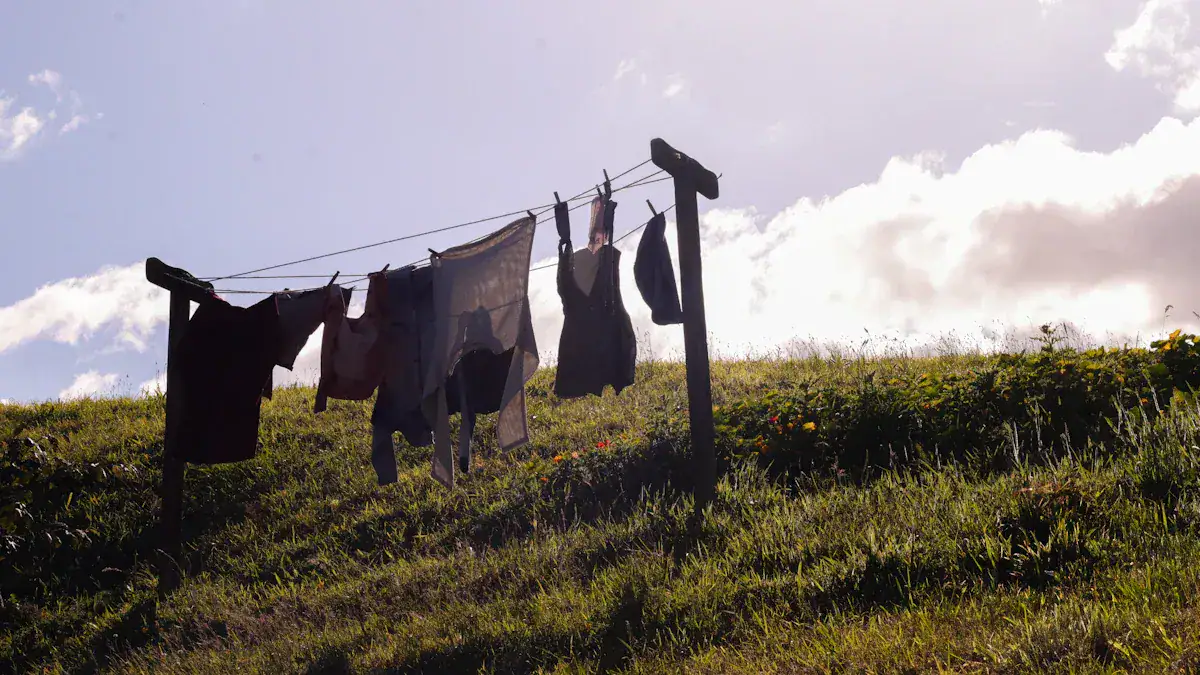
You must learn how to dry clothes properly to prevent that wet smell. Correct drying methods keep your jeans fresh and extend their life.
Maximize Airflow During Drying
You need to give your jeans space when you dry them. This helps air move around each item.
Leave space between items to allow for proper airflow.
This prevents overcrowding. It also ensures even drying. Overlapping clothes slow down the drying process. You should let garments hang with a bit of space between them.
Avoid Over-Drying in Machines
You should avoid over-drying your jeans in a machine. High heat can damage fabric.
Choose a low-heat or delicate cycle. This reduces the risk of too much heat. High temperatures can shrink jeans and make them stiff.
Limit drying time. This keeps the fabric from too much heat exposure. You should monitor the drying process. Remove jeans promptly. This prevents too much moisture evaporation.
Tumble-drying can damage clothes. It causes shrinkage, color transfer, and tears. Studies show drying shrinks clothing more than washing. Tumble-drying shrinks more than air-drying. Mechanical agitation and forced air cause this shrinkage. Microscopic damage builds up with each laundry cycle. This damage appears as lint.
Utilize Clotheslines and Racks
Using clotheslines and racks offers many benefits. This method is gentle on your jeans.
It maintains the quality of clothes. It extends their lifespan.
It saves on electricity costs. You use no energy beyond buying the equipment.
Sunlight naturally brightens whites. It also kills bacteria. Clothes dried outdoors often smell fresher.
Line drying is environmentally friendly. It uses no energy. It is gentle on fabrics. It prevents shrinkage, fading, and wear. It preserves garments. It improves longevity. It maintains shape, texture, and color.
Ensure Complete Dryness Before Storing
You must ensure your jeans are completely dry before you store them. Even a little moisture can lead to mildew. This creates a musty smell. Always check seams and pockets for dampness. If you store damp jeans, you invite odor-causing bacteria.
Harness Sunlight’s Deodorizing Power
Sunlight is a natural deodorizer. It helps sanitize fabrics.
The UV rays in sunlight have natural antimicrobial properties. They neutralize odor-causing bacteria.
Fresh air works with sunlight. It carries away lingering smells from fabrics.
The ultraviolet light from the sun disinfects. It helps kill bacteria. This sanitizes fabrics. Sunlight can kill bacteria like tuberculosis and E. coli. It also inactivates viruses.
Preventing Future Wet Smell
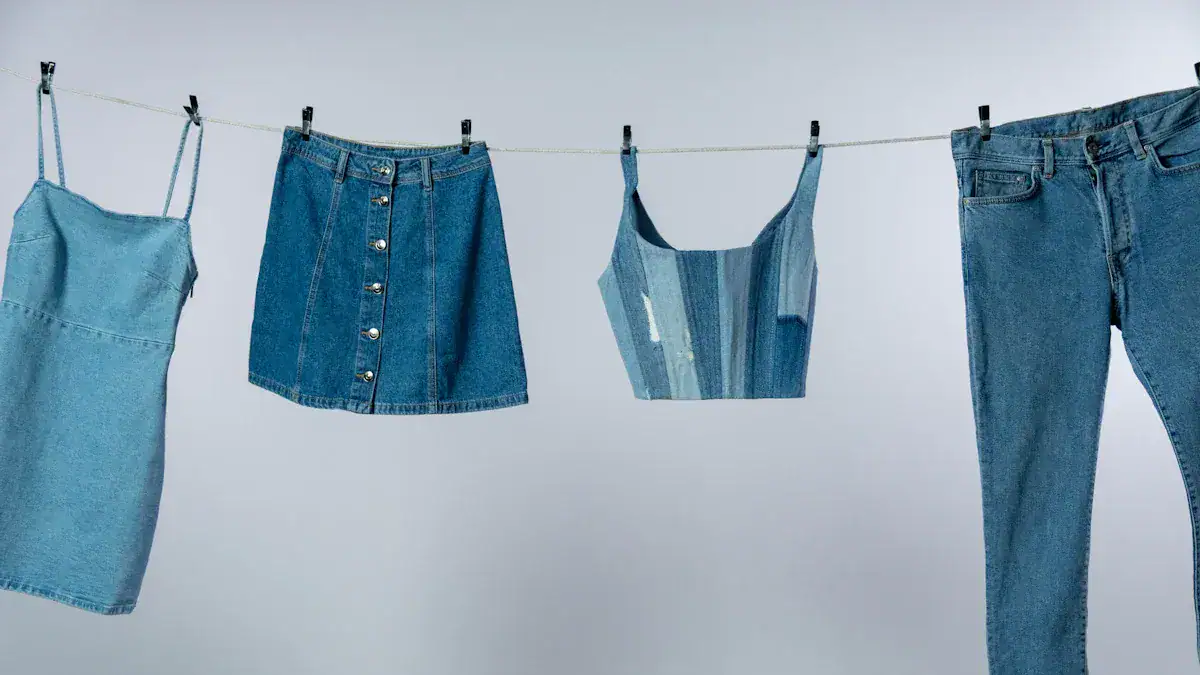
You can adopt several long-term strategies to keep your jeans fresh. These methods stop that unpleasant wet smell before it starts.
Optimal Washing Frequency and Load Size
You should wash your jeans at the right time. This prevents odor buildup without causing too much wear. Experts like Ilyas suggest washing jeans between every three and five wears. Not washing jeans often enough leads to bacteria and odor. Many people wash jeans three to four times before cleaning. For raw denim, you might wash them every two to six months. Designers advise against washing jeans after every wear or two. Mary Pierson from Madewell recommends at least three wears. Stephen Powell notes that you can go up to a year between washes if you are in clean situations. Bahzad Trinos suggests six months to a year for normal weekend wear. Robert McMillan recommends washing as infrequently as possible. He suggests you use the “smell test” as your guide. You should also avoid overloading your washing machine. This ensures proper cleaning and rinsing.
Store Clothes in a Dry Place
You must store clothes in a dry place. This is crucial for preventing musty odors. Damp environments encourage mold and mildew growth. Always ensure your jeans are completely dry before putting them away.
Use Dehumidifiers in Storage Areas
High humidity can lead to moisture in your clothes. You can use a dehumidifier to control this. For general indoor spaces, aim for a relative humidity (RH) between 40% and 50%. In basements, which are often cooler, set your dehumidifier to maintain an RH of 45-50%. If humidity levels go above 70%, you must dry the area. Then, use a dehumidifier to prevent mold and dust mites.
Incorporate Scent Boosters
You can add scent boosters to your laundry. These products help keep your jeans smelling fresh. They often contain fragrances for a vibrant scent. Some boosters also include sodium bicarbonate, or baking soda. This acts as an “Odor Blaster.” It eliminates tough odors like sweat, body odor, and musty smells.
Clean Your Washing Machine Regularly
Your washing machine can develop odors. Residue from detergent and fabric softener builds up. This creates a breeding ground for bacteria. You should clean your washing machine regularly. Use a washing machine cleaner with a descaler. Run it on a hot cycle. This eliminates odor sources and keeps your machine fresh.
When to Address Persistent Mildew Smell
You need to know when a wet smell in your jeans becomes a serious problem. Sometimes, quick fixes are not enough. You must address the issue more directly.
Odor Remains After Multiple Treatments
You have tried many methods. You used vinegar, baking soda, and borax. If the mildew smell still lingers, your jeans have a deeper issue. This means the odor source is deeply embedded. You might need stronger treatments or professional cleaning. Do not ignore a persistent smell. It indicates a problem that needs more attention.
Visible Mold or Mildew Presence
You should inspect your jeans closely. You might see visible signs of mold or mildew. These are clear indicators of a problem.
Characteristic | Mildew | Mold |
|---|---|---|
Appearance | Powdery, flat patch, gray or white fuzz | Fuzzy or slimy, splotches |
Color | White or gray | Black, green, red, or blue |
Penetration | Remains on surface, less invasive | Penetrates deeper into fabric, more aggressive, irregular spread |
Texture | Powdery, dusting | Thicker, furry texture |
Visible mold growth on clothes can also appear as irregular spots or stains. These spots can be white, bluish, greenish, grayish, or black. They might also look ‘fuzzy’ or ‘powdery’.
Fabric Damage or Discoloration
Mold and mildew do more than just smell bad. They can cause lasting damage to your jeans.
Mildew actively breaks down clothing materials. This weakens the fabric structure.
It often creates permanent discoloration. You cannot reverse these stains.
You might see small dark spots. These are usually black, brown, or green.
Long exposure to mildew shortens the lifespan of your clothes.
Look for noticeable discoloration of fabric fibers. You might also see whitish-grey spots on surfaces. Mildew growth can “eat plant-based fibers like cotton.” This leads to “permanent discoloration and damage.”
Health Concerns from Lingering Odor
A strong mildew smell is not just unpleasant. It can also affect your health. Exposure to mold spores can cause respiratory issues. You might experience coughing, sneezing, or wheezing. People with allergies or asthma are especially vulnerable. Do not ignore a persistent odor. It is important to address it for your well-being.
You can easily fix a wet smell in your jeans. This common problem has straightforward solutions. Remember, proper washing, thorough drying, and smart storage are crucial. Implement these tips for lasting freshness. You will enjoy your favorite denim without unpleasant odors. Maintaining a fresh wardrobe is simple with correct drying.
FAQ
What causes the wet smell in jeans?
Incomplete drying allows bacteria to grow. These bacteria break down body oils and sweat. This creates the unpleasant wet or musty odor. Mildew and mold also form in damp conditions.
Can I use fabric softener to get rid of the wet smell?
Fabric softener only masks odors. It does not remove them. It can also build up on fabric. This makes the problem worse. Use vinegar or baking soda instead.
How often should I wash my jeans to prevent odors?
Wash your jeans every 3 to 5 wears. This prevents sweat and body oil buildup. Always check for visible dirt or lingering smells. Over-washing can also damage your denim.
Is white vinegar safe for all denim types?
Yes, white vinegar is generally safe for most denim. It helps remove odors and softens fabric. Always test a small, hidden area first. This ensures no discoloration occurs.
What if the wet smell does not go away after washing?
If the smell persists, you might have a deeper issue. Try a borax soak or an enzyme cleaner. Visible mold or fabric damage means you need stronger treatment. Consider professional cleaning.