

You want speed, you want privacy, you want simple setup — and you shouldn’t have to compromise. You’ll find routers that pair Wi‑6/7 performance with built‑in WireGuard/OpenVPN, multi‑gig ports, and solid security features. This roundup compares top picks for home use, from budget‑friendly Wi‑6 models to portable Wi‑7 options, so you can pick the right balance of throughput, features, and ease of use — keep going to see which fits your needs.
| TP-Link Archer AX55 AX3000 Wi‑Fi 6 Router |

| Best Value | Wi‑Fi Standard: Wi‑Fi 6 (AX3000) | VPN Support: VPN server & client supported | Dual‑Band Support: Dual‑band (2.4 GHz + 5 GHz) | VIEW LATEST PRICE | Read Our Analysis |
| TP-Link Archer BE3600 Wi‑Fi 7 Dual-Band Router |

| Best Performance | Wi‑Fi Standard: Wi‑Fi 7 | VPN Support: VPN support (clients/management via firmware) | Dual‑Band Support: Dual‑band (2.4 GHz + 5 GHz) | VIEW LATEST PRICE | Read Our Analysis |
| Aircove Wi‑Fi 6 VPN Router for Home |

| Best for Whole‑Home VPN | Wi‑Fi Standard: Wi‑Fi 6 | VPN Support: Built‑in ExpressVPN (requires subscription) | Dual‑Band Support: Dual‑band (2.4 GHz + 5 GHz) | VIEW LATEST PRICE | Read Our Analysis |
| GL.iNet Flint 2 (GL-MT6000) WiFi 6 Gaming Router |

| Best for Gamers | Wi‑Fi Standard: Wi‑Fi 6 | VPN Support: WireGuard & OpenVPN supported | Dual‑Band Support: Dual‑band (Wi‑Fi 6 multi‑stream) | VIEW LATEST PRICE | Read Our Analysis |
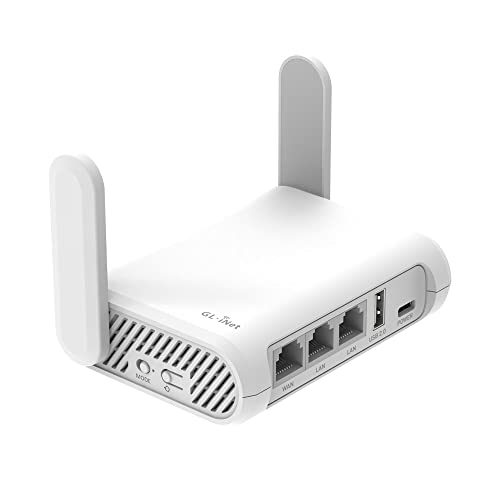
| GL.iNet GL-SFT1200 Opal Portable Dual-Band Travel Router |
| Best for Travelers | Wi‑Fi Standard: AC (dual‑band) — AC1200 | VPN Support: OpenVPN & WireGuard pre‑installed | Dual‑Band Support: Dual‑band (2.4 GHz + 5 GHz) | VIEW LATEST PRICE | Read Our Analysis |
| GL.iNet Slate 7 GL-BE3600 Portable Wi‑Fi 7 Router |

| Best for Power Users | Wi‑Fi Standard: Wi‑Fi 7 | VPN Support: OpenVPN & WireGuard pre‑installed (VPN client/server) | Dual‑Band Support: Dual‑band (2.4 GHz + 5 GHz) | VIEW LATEST PRICE | Read Our Analysis |
More Details on Our Top Picks
TP-Link Archer AX55 AX3000 Wi‑Fi 6 Router
Should you want a fast, reliable home router that can handle multiple devices and run a VPN without breaking a sweat, the TP‑Link Archer AX55 (AX3000) is a solid pick — it pairs Wi‑Fi 6 speeds (up to 2402 Mbps on 5 GHz and 574 Mbps on 2.4 GHz) with OFDMA/MU‑MIMO for smooth multi‑user performance and built‑in VPN server/client support so you can route traffic securely from day one. You’ll get four high‑gain antennas and beamforming for wider, focused coverage, Target Wake Time to extend device battery life, a USB 3.0 port, improved cooling, EasyMesh and Alexa compatibility, plus HomeShield security features. Technical support’s available should you require setup help.
- Wi‑Fi Standard:Wi‑Fi 6 (AX3000)
- VPN Support:VPN server & client supported
- Dual‑Band Support:Dual‑band (2.4 GHz + 5 GHz)
- Ethernet Ports (Gigabit or higher):Gigabit LAN ports (plus USB 3.0) — external antennas (exact LAN count not listed)
- Parental / Security Features:TP‑Link HomeShield (security, parental controls)
- Portable / Travel Friendly Capability:Desktop/home router (less portable) but typical home form factor
- Additional Feature:Four external antennas
- Additional Feature:USB 3.0 port
- Additional Feature:EasyMesh compatible
TP-Link Archer BE3600 Wi‑Fi 7 Dual-Band Router
Provided that you want blazing local speeds for multi‑device 4K/8K streaming and AR/VR gaming, the TP‑Link Archer BE3600 delivers with Wi‑Fi 7 features like Multi‑Link Operation and 4K‑QAM plus dual 2.5 Gbps ports that break the 1 Gbps ceiling for demanding home setups. You’ll get dual‑band throughput (5 GHz up to 2882 Mbps, 2.4 GHz up to 688 Mbps), a 2.0 GHz quad‑core CPU, and three additional 1 Gbps LAN ports to handle multiple high‑bandwidth devices. Coverage reaches about 2,000 sq. ft. for up to 60 devices, with EasyMesh support, HomeShield security, USB 3.0, and Tether app setup.
- Wi‑Fi Standard:Wi‑Fi 7
- VPN Support:VPN support (clients/management via firmware)
- Dual‑Band Support:Dual‑band (2.4 GHz + 5 GHz)
- Ethernet Ports (Gigabit or higher):Dual 2.5 Gbps ports (one WAN/LAN configurable) + three 1 Gbps LAN ports
- Parental / Security Features:TP‑Link HomeShield (network protection, parental controls)
- Portable / Travel Friendly Capability:Home router (desktop) designed for whole‑home use (not travel)
- Additional Feature:Dual 2.5 Gbps ports
- Additional Feature:2.0 GHz quad-core
- Additional Feature:Supports 60 devices
Aircove Wi‑Fi 6 VPN Router for Home
Should you want whole‑home VPN protection that covers smart devices and streaming boxes without installing apps on each gadget, the Aircove Wi‑Fi 6 VPN Router is built for you. You get ExpressVPN’s built‑in VPN (30‑day trial for new users) to protect unlimited devices and keep the VPN always on for gadgets that can’t run client apps. Aircove‑AX1800 delivers Wi‑Fi 6 dual‑band speeds (up to 600 Mbps on 2.4 GHz, 1,200 Mbps on 5 GHz) across about 1,600 sq ft. You can group devices, assign distinct VPN locations or exempt devices, and use parental controls, ad‑blocking, tracker and malicious‑site protection.
- Wi‑Fi Standard:Wi‑Fi 6
- VPN Support:Built‑in ExpressVPN (requires subscription)
- Dual‑Band Support:Dual‑band (2.4 GHz + 5 GHz)
- Ethernet Ports (Gigabit or higher):Ethernet ports (standard home router ports; specific speeds not listed)
- Parental / Security Features:Built‑in ad‑blocking, tracker/malicious site protection, parental controls
- Portable / Travel Friendly Capability:Home router intended for whole‑home VPN protection (compact enough for homes)
- Additional Feature:Built-in ExpressVPN
- Additional Feature:Device-group VPN routing
- Additional Feature:Free 30‑day trial
GL.iNet Flint 2 (GL-MT6000) WiFi 6 Gaming Router
Provided you need a compact, high-speed router that can handle 4K streaming, low-latency gaming and more than 100 connected devices, the GL.iNet Flint 2 (GL-MT6000) is built for that role. You’ll get Wi‑Fi 6 with 8‑stream tech and up to 6 Gbps combined throughput in a 5.39 x 2.09 x 9.17‑inch chassis with 1GB DDR4 and 8GB eMMC. Dual 2.5G Ethernet ports suit fiber modems. WireGuard (~900 Mbps) and OpenVPN (~880 Mbps) deliver strong VPN speeds; AdGuard Home and plugin support let you block ads and customize security. Update firmware during setup and consult GL.iNet warranty info.
- Wi‑Fi Standard:Wi‑Fi 6
- VPN Support:WireGuard & OpenVPN supported
- Dual‑Band Support:Dual‑band (Wi‑Fi 6 multi‑stream)
- Ethernet Ports (Gigabit or higher):2 x 2.5G Ethernet ports
- Parental / Security Features:AdGuard Home support (DNS ad/tracker blocking); VPN privacy features
- Portable / Travel Friendly Capability:Suitable for home, small business, travel‑friendly form factor for flexible use
- Additional Feature:6 Gbps combined throughput
- Additional Feature:DDR4 1GB / eMMC
- Additional Feature:2 x 2.5G Ethernet
GL.iNet GL-SFT1200 Opal Portable Dual-Band Travel Router
Should you travel often and need a pocket-sized VPN router that still handles streaming and gaming, the GL.iNet Opal (GL-SFT1200) is a strong pick—its AC1200 dual-band radios deliver up to 867 Mbps on 5 GHz for bandwidth-heavy tasks while the built-in OpenVPN and WireGuard (with a physical VPN toggle) make it simple to keep your connections private on the go. You get two Gigabit LAN and one Gigabit WAN port, IPv6 support, Cloudflare encryption, and compatibility with 30+ VPN providers. At 145 g with retractable antennas, it’s ultra-portable. Setup is straightforward; toggle requires admin configuration.
- Wi‑Fi Standard:AC (dual‑band) — AC1200
- VPN Support:OpenVPN & WireGuard pre‑installed
- Dual‑Band Support:Dual‑band (2.4 GHz + 5 GHz)
- Ethernet Ports (Gigabit or higher):2 x Gigabit LAN, 1 x Gigabit WAN
- Parental / Security Features:VPN privacy features; supports DNS/encryption options (Cloudflare); parental controls available
- Portable / Travel Friendly Capability:Specifically a portable travel router (pocket‑friendly)
- Additional Feature:Retractable antennas
- Additional Feature:Physical VPN toggle
- Additional Feature:Pocket‑friendly lightweight
GL.iNet Slate 7 GL-BE3600 Portable Wi‑Fi 7 Router
Provided that you travel often and need a compact router that doubles as a powerful VPN gateway, the GL.iNet Slate 7 (GL-BE3600) is a solid pick — its touchscreen and dual 2.5G Ethernet ports let you set up fast wired connections and switch VPNs on the fly. You’ll get Wi‑Fi 7 speeds (688 Mbps on 2.4 GHz, 2882 Mbps on 5 GHz), USB 3.0, and modes for tethering, repeater, and cellular. OpenWrt 23.05 lets you install plugins and customize behavior. Built‑in OpenVPN and WireGuard support (up to ~540 Mbps for WireGuard) plus WPA3, DoH/DoT, and IPv6 secure your traffic.
- Wi‑Fi Standard:Wi‑Fi 7
- VPN Support:OpenVPN & WireGuard pre‑installed (VPN client/server)
- Dual‑Band Support:Dual‑band (2.4 GHz + 5 GHz)
- Ethernet Ports (Gigabit or higher):Dual 2.5G Ethernet (1x WAN, 1x LAN) + USB 3.0
- Parental / Security Features:WPA3, DoH/DoT, VPN privacy features; AdGuard/HomeGuard‑style toggles
- Portable / Travel Friendly Capability:Portable Wi‑Fi 7 router (plug‑in form factor for travel use)
- Additional Feature:Built-in touchscreen interface
- Additional Feature:Preinstalled OpenWrt firmware
- Additional Feature:Dual 2.5G Ethernet ports
Factors to Consider When Choosing a VPN Router for Home
Upon choosing a VPN router for your home, you’ll want to prioritize VPN performance and the router’s hardware specs so encryption doesn’t bottleneck your speeds. Check supported VPN protocols and privacy/security features to make sure your data stays protected. Also consider how many devices and what coverage area the router can handle to keep every corner of your home connected.
VPN Performance
You’ll want to prioritize the router’s raw VPN performance because encryption and decryption are CPU‑intensive and directly limit the speeds you’ll actually get. Check multi‑core CPUs and hardware acceleration (AES/NIC offload) so the router can handle sustained encrypted transfers without bogging down. Compare measured VPN throughput for the protocol you’ll use—WireGuard usually outpaces OpenVPN on the same hardware. Verify maximum concurrent VPN tunnels and per‑tunnel throughput in case you run many clients or host a VPN server; aggregate load can exceed single‑connection numbers. Make certain adequate RAM and, ideally, dedicated crypto modules to reduce latency and maintain packet rates. Finally, factor in real‑world caps—Wi‑Fi bands, wired port speeds, and your ISP uplink will limit effective VPN performance.
Router Hardware Specs
Start via matching the router’s hardware to the load you expect: prioritize a multi‑core CPU (ideally 1.5–2.0 GHz or faster) and at least 512 MB of RAM so encryption and multiple VPN tunnels don’t become bottlenecks, and prefer models with hardware‑accelerated crypto or VPN offload to sustain hundreds of Mbps instead of throttling to tens. Also pick a router with a 2.5 Gbps or multi‑gig Ethernet port when your ISP or local devices exceed 1 Gbps. Verify enough LAN ports and USB 3.0 (or faster) for NAS, storage, or cellular modems, and inspect cooling and thermal design to avoid throttling under sustained load. Finally, match radio/antenna configuration and Wi‑Fi standard (Wi‑Fi 6/7, spatial streams) to your device density and target wireless speeds.
VPN Protocol Support
Although hardware and throughput matter, the VPN protocols a router supports will largely determine your real‑world speed, latency, and security—so prioritize modern, efficient options like WireGuard and OpenVPN, and confirm the device can run VPN in both client and server modes. You should favor WireGuard for higher throughput and lower latency thanks to its lightweight design, but keep OpenVPN for compatibility. Check for hardware or firmware encryption acceleration and a multi‑core CPU (around 1.5+ GHz) to avoid bottlenecks while pushing full internet speeds. Look for routers that handle simultaneous VPN tunnels and offer split‑tunneling so you can route device groups differently. Finally, verify up‑to‑date protocol implementations and regular firmware updates to maintain compatibility with advancing VPN standards.
Privacy And Security
Having the right protocols on your router lays the groundwork, but privacy and security are what keep your whole network safe—so look for a device that not only runs WireGuard or OpenVPN as a client/server but also encrypts at line speed, enforces WPA3 for Wi‑Fi, and offers secure management (HTTPS/SSH) plus automatic firmware updates. You’ll want hardware that sustains VPN throughput matching your plan to avoid slowdowns, plus DNS security (DoH/DoT) and DNS‑leak protection so queries never escape the tunnel. Prefer routers that let you create per‑device or per‑group VPN rules and split‑tunneling to isolate IoT gear and route sensitive traffic through the VPN while exempting services needing local or geo‑specific access. These features keep privacy intact and reduce attack surface.
Device And Coverage Capacity
When you pick a VPN-capable router, match its device capacity, Wi‑Fi standard, and coverage to how your household actually uses the network so performance doesn’t collapse whenever everyone’s online. Count every client—phones, laptops, streaming boxes, IoT sensors, and smart appliances—and choose a router rated for tens to 100+ simultaneous devices to avoid congestion. Favor Wi‑Fi 6/7 and multi‑stream radios to sustain high aggregate throughput during concurrent transfers. Verify advertised coverage and beamforming suit your floorplan; larger or multi‑story homes usually need higher range or a mesh system. Pick multi‑band (2.4 GHz plus 5 GHz or tri‑band) so low‑bandwidth IoT stays off the busy high‑speed radios. Should you employ lots of wired devices, get multi‑gig or multiple Gigabit LAN/WAN ports and wired backhaul support.
Ease Of Setup
Because a VPN router can be more complex than a standard home gateway, you’ll want one that guides you through setup with clear wizards (web or mobile) that handle WAN settings, Wi‑Fi SSIDs, and firmware updates; one‑touch toggles or hardware buttons for VPN and parental controls; straightforward import of .ovpn or WireGuard configs; and both a polished web UI plus a syncing mobile app so routine management is fast and predictable. You should confirm guided setup walks you through credentials, DNS, and firewall basics to cut initial time. Check for preconfigured VPN profiles or simple import options so you don’t enter keys manually. Look for concise documentation, screenshots or videos, easy firmware access, and app/web sync for remote management.
