
You often confuse roof windows and skylights. Many people use these terms interchangeably. They actually have distinct purposes and characteristics. This article will clarify the roof window vs skylight debate. We will define the difference between skylights and roof windows. This helps you choose the best option for your needs. Homebuyers highly value natural light. Over 80% consider it essential. We will explore key distinctions like functionality, installation, and design. This guides your decision for a roof window or a skylight.
Key Takeaways
Roof windows open wide for fresh air and views. They sit flat with your roof.
Skylights mainly bring in light. They can sit above your roof.
Roof windows are good for rooms needing air flow. Skylights brighten dark spaces.
Check your roof type and budget. This helps you choose the right one.
Always hire a professional for installation. This prevents leaks and problems.
What is a Roof Window
Defining Roof Windows
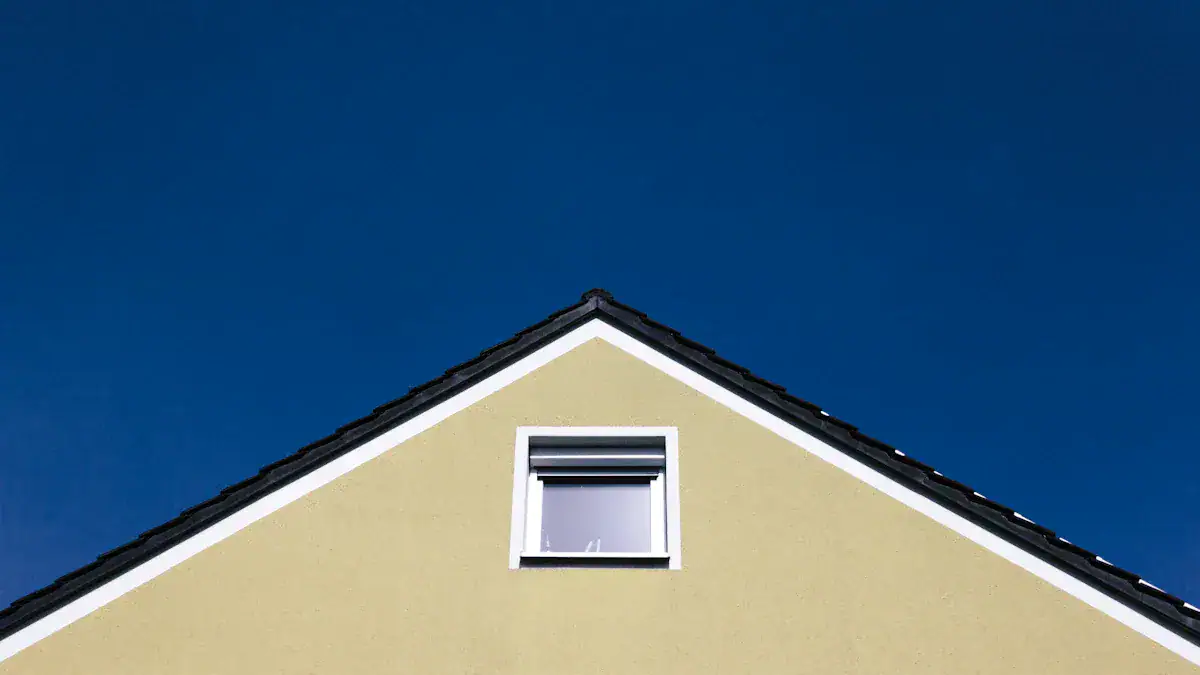
A roof window is a window you install directly into your home’s roof. You can typically open these windows for ventilation. Install them on a sloped plane. They must sit “in plane” with the surrounding roof material.
Key Characteristics
Roof windows often combine with light wells or shafts. This happens in homes with flat ceilings. They bring light down into the room below. You get both light and fresh air.
Types of Roof Windows
Many types of roof windows exist. You can find pivot windows. These open in a center pivot method. They rotate 180 degrees for easy cleaning. Other types have a raised axis of rotation. This gives you good illumination and a wide view. Some even have a lower transom. This means two sashes in one frame. The upper sash opens like a pivot window. The lower sash is fixed. Top hung and pivot windows offer two ways to open. You can open them outward for easy access. Or you can use the center pivot for cleaning. Side hung egress windows provide safe roof access. They also act as escape windows. Balcony windows are innovative. Sashes open to create a balcony. The upper sash opens upwards. The lower sash tilts forward.
Benefits of Roof Windows
The benefits of roof windows are significant. They enhance aesthetic appeal. Your rooms become brighter and more inviting. This adds to your interior design. You get an open, airy feel. They also improve your health and well-being. More natural light improves moods. It boosts mental health. These windows offer energy efficiency. You use less artificial lighting. This lowers electricity costs. Some designs also provide ventilation. This reduces the need for air conditioning. Homes with these windows often have higher market value. They are a premium addition. This attracts potential buyers. Natural light from a roof window makes small spaces feel larger.
Ideal Applications
Roof windows are perfect for many situations. They are a standard solution in modern construction. They bring light, views, and ventilation to lofts. You can use them for attic conversions. They suit homes needing good ventilation. They also work well for those seeking views. The installation of roof windows can transform a windowless room. It makes it a bright and breezy retreat. They add outdoor living space to converted upper levels. You can use roof windows for bonus rooms. They are great during renovations of older homes. They help you finish more space.
What is a Skylight
Defining Skylights
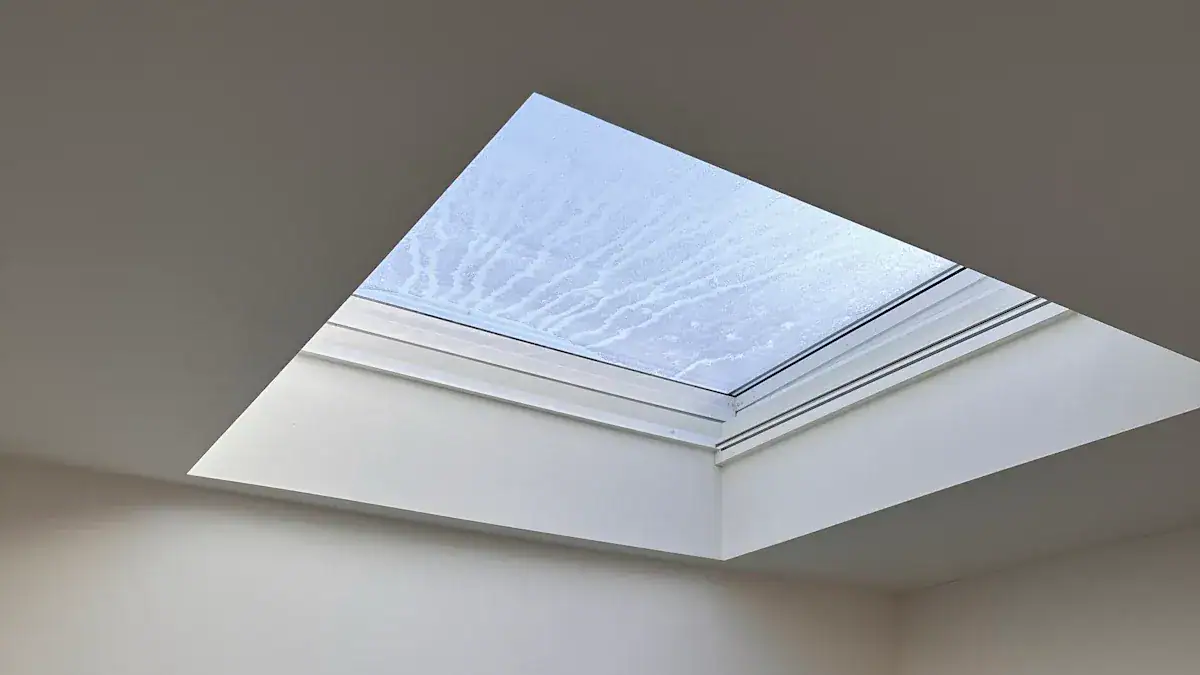
A skylight is primarily a light-transmitting element. You often find them as fixed panes of glass. They can also be operable. This means you can open them.
Key Characteristics
Skylights are sometimes called a rooflight. They can be a window or a fixed pane of glass. You can mount them to a curb. This offers more installation flexibility. You can install them “out of plane” with the surrounding roof. This means they can sit above the roof surface.
Types of Skylights
You can choose from many types of rooflights. Fixed skylights are common. They do not open. You can use them in areas like hallways or stairwells. Ventilated skylights open. They let fresh air in. These are good for kitchens and bathrooms. They help manage moisture. Tubular skylights are another option. They use a small dome on the roof. A reflective tube brings natural light into the room below. Curb-mounted skylights are popular. You can install them in new or old buildings. Ridge skylights integrate with your roofline. They follow the roof’s pitch.
Benefits of Skylights
The benefits of skylights are many. They provide increased natural light. This creates a warm and inviting space. You use less artificial lighting. This saves energy. Ventilated skylights improve air circulation. They let hot air rise and escape. This is called the ‘stack effect’. It draws cooler air in. This helps cool your home. It also improves indoor air quality. Modern skylights offer smart controls. You can program them with smart home systems. They can close automatically when it rains. A skylight window can also include LED lighting. This ensures your space stays bright day or night. Exposure to natural light through a skylight helps regulate your body’s sleep patterns. This improves your health and well-being.
Ideal Applications
Skylights are great for many building designs. They are essential for energy efficiency. They enhance natural light distribution. This reduces your need for artificial lighting. You can use them on flat roofs. They fit well with modern designs. They diffuse light to illuminate an entire room. Fixed skylights are perfect for brightening spaces without needing airflow. Ventilated skylights work well in kitchens and bathrooms. They control humidity. Skylights also add aesthetic appeal. They introduce dynamic natural light. They frame views of the sky. This merges indoor and outdoor spaces. You can place south-facing skylights in living areas for abundant sunlight. North-facing options give consistent, diffuse light.
Roof Window Vs Skylight: Direct Comparisons
You need to understand the core distinctions between these two options. This section offers direct comparisons. It helps you see the key differences between skylights and roof windows. This will guide your decision for your home.
Operational Differences
Roof windows and skylights operate differently. You can open most roof windows wide. Some models even qualify as emergency exits. This makes them useful if you need roof access. Most venting skylights, however, open only a few inches. They primarily let in fresh air.
Consider how you will operate them. You typically operate roof windows manually. They work best in places you can easily reach. Skylights offer more options. You can find solar-powered, electric, or manual models. You can operate these with remote controls or sturdy rods. This is helpful for installations you cannot easily reach.
Skylights also offer more installation choices. You can mount them to a curb. Roof windows need installation in the same direction and flat with your roof. They also need a minimum 15-degree pitch.
Feature | Roof Windows | Skylights (Rooflights) |
|---|---|---|
Popularity | Very popular, widely used, adopted by builders | N/A |
Robustness | Robust, reliable | N/A |
Cost | Offer value for money | Tend to be more expensive due to bespoke nature |
Availability | Usually available ‘off the shelf’ | Usually built to order, lead time of several weeks |
Flexibility/Scale | Limited scope for larger sections of glazing | Wider range of shapes, sizes, specification, function |
Natural Light Impact
Both roof windows and skylights bring natural light into your home. However, they do it in different ways. A skylight often provides an unobstructed view of the sky. You can admire stars, the moon, or the sun. Skylights are usually larger and higher. They capture more direct and indirect sunlight. This brightens your living spaces more effectively. A rooflight can transform a dark room. It fills the space with abundant natural light.
Roof windows also provide natural light. They are great for attic conversions. They bring light into rooms that might otherwise be dim. The choice depends on how much light you want and the type of view you desire.
Ventilation Capabilities
Ventilation is a key difference between skylights and roof windows. Roof windows allow fresh air to enter your home. They can open up to a full 90 degrees. This significantly improves air circulation. Some even let air in when it rains.
Ventilating skylights are different. They are designed to open and close. This allows air to circulate naturally. They act like a natural exhaust system. They use a ‘chimney effect’. Hot air rises and escapes through the skylight. This draws cooler air in from lower windows. This helps cool your home. It also improves indoor air quality.
Types of ventilating skylights include:
Manual: You operate these with a crank or a pole.
Electric/Solar-powered: You control these with a remote or wall switch. Some are automated.
Top-hinged: These open from the top.
Center-pivot: These pivot in the middle.
Vented roof windows: These are ideal for attics or loft conversions.
Fixed skylights do not open. They do not provide ventilation. A vented skylight is not the same as a roof window. It lacks the pivoting, awning-style opening mechanism.
Installation and Roof Pitch
Installation requirements vary significantly. This depends on your roof’s pitch.
Roof Windows: You install roof windows in-plane with your roof. They sit flush with the surface. They need a minimum roof pitch of at least 15 degrees. Installers use a flashing or skirt for weatherproofing.
Skylights (Rooflights): You can install skylights on roofs with pitches between 0 and 60 degrees. For flat roofs, you typically fit rooflights out of plane. They sit on an upstand or kerb system. This supports them and provides a weatherproof surface. Flat roof skylights often have a curb mount and flashing. This raises the glass above the roof deck for weatherproofing. For very low pitches (0-15 degrees), a CurveTech Fixed Flat Roof Skylight is a good choice. Its curved shape helps with drainage and light capture.
Feature | Roof Windows | Rooflights (on flat roofs) |
|---|---|---|
Installation | In-plane with the roof, flush with surface | Out of plane, on an upstand or kerb |
Minimum Pitch | At least 15 degrees (EN 14351-1:2006) | Minimum 3 degrees (for drainage) |
Drainage | Follows existing roof pitch | Achieved by upstand/kerb and product pitch |
CE Marking | CE marked against EN 14351-1:2006 | Cannot be CE-marked (installed ‘out of plane’) |
Pitched roofs with vaulted ceilings are ideal for installing a skylight. They offer great natural light and drainage benefits.
Cost Considerations
Cost is an important factor in the roof window vs skylight decision. Roof windows generally offer good value for your money. They are often available “off the shelf.” This makes them more accessible.
Skylights, especially custom ones, tend to be more expensive. They are often built to order. This means you might wait several weeks for delivery. The wider range of shapes, sizes, and functions for a skylight can also add to the cost.
Design and Aesthetics
Both options enhance your home’s design. They bring in natural light.
Roof Windows: These open outward. They have a pivoting awning-style mechanism. You install them on sloped surfaces. They sit ‘in plane’ with your roof.
Skylights: These are typically fixed. Venting skylights open slightly. You can install them on flat surfaces. A skylight offers an unobstructed view of the sky. You can admire stars, the moon, or the sun. They are larger and higher. They capture more direct and indirect sunlight. This brightens your living spaces. Skylights integrate well into various spaces. These include condo units, small rooms, bedrooms, and open-floor plans. They enhance natural light where you need it most.
Feature | Roof Window | Skylight |
|---|---|---|
Opening Mechanism | Outward opening, pivoting awning-style | Typically fixed, venting skylights open slightly |
Installation | Sloped surfaces, ‘in plane’ (min 15° pitch) | Flat surfaces |
Glazing Options | Single or double pane glass | Glazing products for tinting |
View | N/A | Unobstructed view of the sky |
Safety and Egress
Safety and egress requirements are critical. Especially for residential buildings. An egress window provides an emergency escape and rescue opening (EERO).
Roof Windows: Some roof windows qualify as egress exits. A top-hinged roof window can open wide enough. It has a top control bar and a bottom handle. You can install it lower for better views. A roof access roof window is for regular roof access. It opens wide and has a locking device. You can hinge it left or right. It also includes a ventilation flap.
Skylights: For flat roofs, a Flat Roof Exit Skylight can act as an egress. It opens up to 60 degrees. It is manually operated. It has a polycarbonate dome and an insulated PVC frame.
Egress windows must meet specific sizing requirements:
Minimum net clear opening area: 5.7 square feet (5 square feet for grade-floor EEROs).
Minimum net clear opening height: 24 inches.
Minimum net clear opening width: 20 inches.
These dimensions must be achievable without changing the window’s normal operation. For basement egress windows, you need area wells. These must be at least 9 square feet. They need minimum dimensions of 36 inches in both length and width. The area well must be large enough for the EERO to open fully. If the area well is deeper than 44 inches, you need a ladder or steps. The open window must not block these.
Additional Factors to Consider
Climate and Weather
Your local climate greatly influences your choice of roof window or skylight. Extreme weather conditions demand specific glazing. For superior protection, consider triple-glazed options. Triple Glazed LoE3 366 (Temp/Temp/Laminated) blocks 99% of UV rays and adds security. Triple Glazed LoE3 366 (Temp/Temp/Temp) offers the best U-Value and includes a 10-year hail warranty. Polycarbonate is the toughest material for extreme strength needs. Acrylic (Triple Glazed Dome/Pyramid) sheds snow and rainwater effectively. Tempered glass is five times stronger than ordinary glass, protecting against hail. Laminated glass adds safety, blocks UV rays, and reduces sound.
Room Purpose
The function of your room guides your decision. Roof windows are excellent for:
Rooms surrounded by other buildings, gaining natural light and ventilation.
Bathrooms, enhancing the bathing experience and venting steam.
Stuffy areas like attics, lofts, or bathrooms, improving air circulation.
Rooms needing both light and ventilation, such as loft conversions or bedrooms.
Skylights work well in different spaces:
Hallways, closets, powder rooms, laundry rooms, and pantries benefit from VELUX Sun Tunnel® skylights.
Open-plan living rooms use skylights to break up large ceilings and bring natural light deeper into the space.
Energy Efficient Glazing Options
Choosing energy efficient glazing saves you money on utility bills. U-value measures how well a window insulates. A lower U-value means less heat loss. SHGC (Solar Heat Gain Coefficient) measures how much solar heat passes through. Lower SHGC is better for hot climates.
Window Type | U-value Range | SHGC | R-Value |
|---|---|---|---|
Single-pane windows | 1.0 – 1.20 | 0.70 to 0.80 | 1.0 or lower |
Double-pane windows | 0.80 to 0.30 | 0.58 to 0.76 | 1.7 to 3.0 |
Triple-pane windows | 0.20 to 0.15 | 0.37 to 0.69 | 4.0 to 6.0 |
For cold climates, aim for a U-Factor ≤ 0.25. Hot climates need a U-Factor ≤ 0.30 and SHGC ≤ 0.25. Mixed climates benefit from a U-Factor between 0.25–0.30 and SHGC between 0.25–0.40. This ensures your choice is truly energy efficient. Triple-pane windows offer superior energy efficient performance.
Building Codes and Regulations
Always check local building codes before installation. In California, Title 24 governs skylight installation. This code covers energy, electrical, and plumbing standards. It defines a skylight as “fenestration installed on a roof less than 60 degrees from the horizontal.” Title 24 sets rules for U-factors, SHGCs, visible transmittance, and air leakage. You can meet Title 24 using a prescriptive or performance method. Exemptions exist for small skylights or those meeting specific U-factor and SHGC limits. Always verify your local regulations.
Maintenance and Cleaning
Regular cleaning keeps your roof window or skylight clear and functional. Invisible Glass is a recommended cleaner. It contains no soaps, dyes, or scents that cause haze. Spray it onto a microfiber bonnet or directly onto the surface. Use long, overlapping strokes. For tough spots, reapply the cleaner and let it sit briefly. You can mist with clean water for a second pass. Dry with a clean, dry bonnet to prevent water spots.
Flat skylights gather more debris. Gently scrub them with soft-bristled brushes.
Dome-shaped skylights require cleaning in sections, following their curve.
A mixture of mild dish soap and warm water works for everyday dirt.
Avoid ammonia-based cleaners; they can damage seals or cloud glass.
Making the Right Choice
Choosing between a roof window and a skylight requires careful thought. You need to consider several factors. This helps you make the best decision for your home.
Assessing Your Needs
First, think about what you want to achieve. Do you need more natural light? Do you also need fresh air? Consider your room’s current ventilation. High CO2 levels indicate poor airflow. This increases health risks. You also want thermal comfort. Maintain indoor temperatures between 19°C and 21°C. Keep relative humidity between 40% and 60%. Natural ventilation can impact energy use. For example, open windows with heating systems increase diesel consumption.
Think about your building type and climate. Different approaches work for hot, dry or warm, humid areas. Architectural elements like clerestories, vented skylights, and wind towers improve airflow. Attic ventilation reduces heat transfer. Fan-assisted cooling provides effective temperature drops with less energy.
Evaluating Your Roof Structure
Your roof’s structure significantly impacts installation. Not all roofs suit skylights. Flat roofs and very steep pitches can present challenges. Beams, rafters, and HVAC systems dictate placement. You should consult a roofing professional. They assess your roof’s suitability.
Some roofing materials are easier to cut. Asphalt shingle and metal roofs cut without much damage. Tile or stone roofs can accommodate skylights. However, they are more prone to cracking. Professional installation is always advisable for these. Structural modifications may be necessary. You might need to support the skylight’s weight. Its location and size can affect roof integrity. Reinforcement may prevent sagging. A qualified contractor assesses your roof’s strength. They determine if it needs modifications. Flat roofs might need additional curbs or flashing for proper drainage.
Budget and Long-Term Value
Consider your budget and the long-term value. Improper installation or aging seals can lead to leaks. This causes water damage over time. Skylights can increase indoor temperatures in summer. They can also cause heat loss in winter. This impacts energy bills. Older or poorly insulated units are especially problematic. Prolonged sunlight can fade floors and furniture. Modern models often include UV-blocking coatings.
Installation complexity adds to costs. You might need structural changes or utility rerouting. Privacy can be an issue depending on placement. You might need blinds or tinting. Skylights are harder to clean than traditional windows. They collect dirt and debris. Rain or hail can sound louder on skylights. Choose ENERGY STAR rated skylights. Look for modern glazing like double or triple-pane glass. Low-E coatings and argon gas are also good. Understand U-value and SHGC for long-term energy savings. Strategic placement, like north-facing for indirect light, impacts performance.
The choice in the roof window vs skylight debate hinges on your specific needs. You now understand the fundamental difference between skylights and roof windows. Roof windows offer full ventilation and views, installing in-plane. A skylight primarily brings in natural light, often fixed or with limited venting, and installs out-of-plane.
Consider your room’s function, desired airflow, roof structure, and budget. This helps you make the best decision.
For personalized advice and proper installation, consult professionals. They ensure your choice enhances your home.
FAQ
Can I install a roof window or skylight myself?
You should hire a professional for installation. Proper installation prevents leaks and ensures energy efficiency. Professionals understand building codes and structural needs. They guarantee your new window or skylight functions correctly and safely.
Do roof windows and skylights increase home value?
Yes, they often increase your home’s value. They add natural light and improve ventilation. This makes your home more appealing to buyers. Energy-efficient models also offer long-term savings, which is a big plus.
How do I choose between a fixed and venting option?
Choose a fixed option if you only need light. Select a venting option if you also want fresh air. Venting models are great for kitchens and bathrooms. They help remove moisture and odors.
What is the best way to clean my roof window or skylight?
Use a mild soap and water solution or a specialized glass cleaner. Avoid harsh chemicals. A soft cloth or squeegee works best. For hard-to-reach areas, use an extension pole. Clean regularly to maintain clarity.
Will a skylight make my room too hot in summer?
Modern skylights come with energy-efficient glazing. This includes low-E coatings and argon gas. These features reduce heat gain in summer. You can also add blinds or shades for extra heat control.