
Twine is a simple yet essential item. You find twine everywhere, from your home to large industries. This versatile cord helps with many daily tasks. Selecting the correct type of twine for your specific job is crucial. This ensures efficiency, safety, and the best results. The global cordage and twine market shows significant growth, projected to expand from $3.1 billion in 2023 to about $4.4 billion by 2032. This growth highlights the increasing demand for durable materials across many sectors. This guide will help you understand different types of twine. You will learn about their material, strength properties, and many uses.
Key Takeaways
Twine comes in two main types: natural and synthetic. Natural twine comes from plants and is eco-friendly. Synthetic twine is man-made and resists water better.
Choose twine based on your project. Cotton is soft for crafts. Jute is good for gardening. Nylon is strong for heavy tasks. Polypropylene floats for water use.
Understand twine strength for safety. Tensile strength is how much force twine can handle before breaking. The Working Load Limit (WLL) is the safe amount of weight you can use every day.
Proper care makes twine last longer. Store twine away from sun and moisture. Clean and dry it well. Check for wear like cuts or fraying to know when to replace it.
Always use food-safe twine for cooking. Look for certifications like HACCP-Compliant. This ensures the twine is safe to touch food.
Exploring Twine Materials
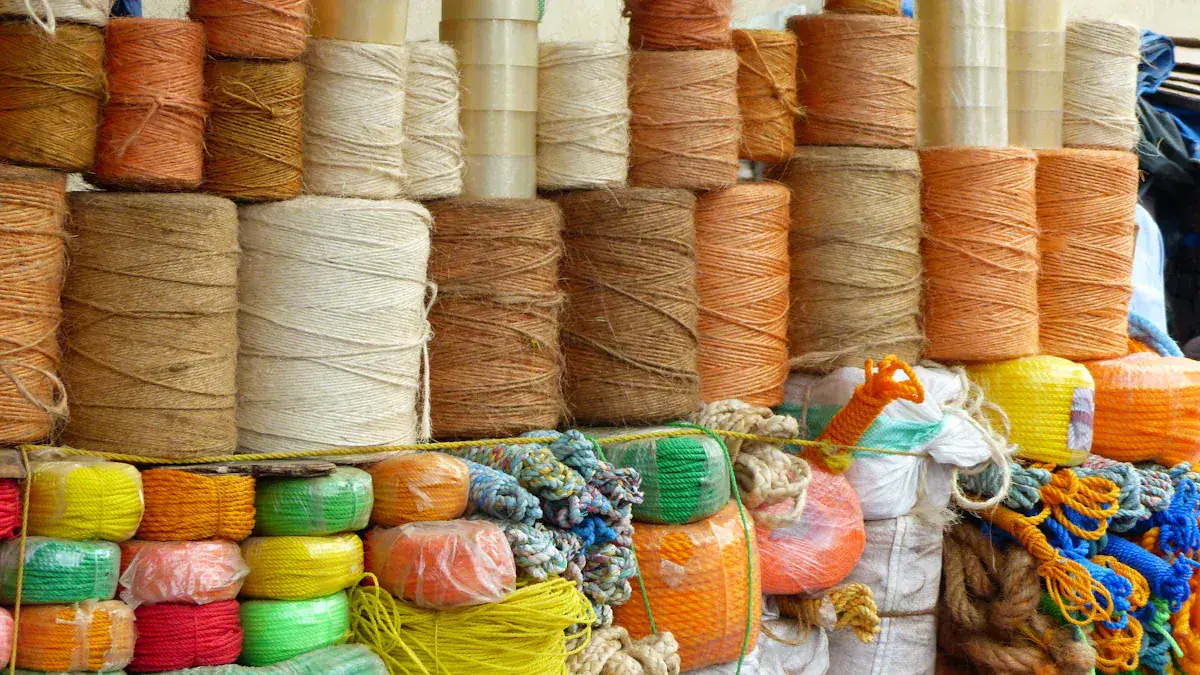
When you choose twine for a project, understanding its material is key. The type of twine you pick directly affects its strength, durability, and how you can use it. You will find two main categories of twine material: natural fiber twines and synthetic fiber twines. Each offers unique benefits for different tasks.
Natural Fiber Twines
Natural fiber twines come from plants or sometimes animals. These materials are often biodegradable, which means they break down naturally over time. You might choose natural twine for its rustic look or eco-friendly properties.
Cotton: This soft twine is gentle on hands and surfaces.
Jute: Jute twine offers a rougher texture and good strength for general use.
Hemp: Hemp twine is known for its exceptional strength and durability. People have used hemp for centuries because it resists rot and mildew well. You can find hemp twine in many thicknesses. This strong hemp material is also sustainable.
Sisal: Sisal twine is very strong and stiff, often used in agriculture.
Linen: Linen twine is smooth and strong, perfect for fine crafts.
Synthetic Fiber Twines
Synthetic fiber twines are man-made. Manufacturers create these materials from chemicals. This process gives synthetic twine specific advantages. They often resist water, chemicals, and UV light better than natural options. This makes them ideal for outdoor or industrial applications.
Polypropylene: This versatile twine resists water and floats.
Nylon: Nylon twine is very strong and resists abrasion well.
Polyester: Polyester twine offers high strength and low stretch.
Polyethylene: This twine is durable and resists many chemicals.
Choosing the right twine material ensures your project succeeds. Consider where and how you will use the twine to make the best selection.
Natural Twine Types and Uses
You will find many natural fiber twine options. Each type comes from different plants or natural sources. They offer unique properties and uses for your projects.
Cotton Twine
Cotton twine is a popular choice. You will find it soft and gentle. This makes it easy to handle. It also absorbs liquids well. People often choose cotton twine for its natural feel and biodegradability.
You can use cotton twine in many ways. For example, you use it for wrapping or tying items in food service. It also works well in advertising and toy industries. Many packaging industries rely on cotton twine too.
Jute Twine
Jute twine is a very versatile natural fiber. It is eco-friendly and biodegradable. This twine is also durable and strong, even when it is thin. You will notice its natural, warm, golden-brown color. This gives it the nickname “Golden Fiber.” Jute has a natural shine, and you can dye it many colors. Its long fibers give it great strength and resistance to tearing. Jute fabric lets air pass through easily, which is good for items needing ventilation. Jute fibers soak up moisture, helping them take dye well. Jute is also a renewable resource. New crops are ready in just a few months. Growing jute needs less water, pesticides, and fertilizers than other crops. Jute plants absorb carbon dioxide and improve soil quality.
You can use jute twine for many tasks. It works well as cordage or rope. In the garden, you use it to train climbers and support plants. You can tie bundles of herbs for firestarters or hang garlic to cure. Use it to hold up unruly tomato bushes or make pea trellises. For crafts, you can make hanging teacup planters, twine-wrapped lampshades, or monogram wreaths. You can even create DIY twine pendant lights. It is great for gift wrapping and as a natural ribbon. You can also use it for macrame projects like pot hangers, bracelets, and wall hangings. Green jute twine is non-toxic and biodegradable, making it perfect for garden use. You can use it to mark straight planting rows or bundle herbs for drying.
Hemp Twine
Hemp twine is known for its incredible strength. It is one of the strongest natural fibers available. This makes it suitable for heavy-duty applications. Hemp is also eco-friendly and biodegradable. It decomposes naturally without waste. You will find hemp maintains its durability and flexibility even when exposed to sunlight because it is UV-resistant. This twine is highly versatile. You can use it in crafting, gardening, and industrial applications. You can find hemp in waxed, polished, dyed, or raw forms. This helps meet various needs. Hemp is also hypoallergenic and chemical-free. It is breathable, non-toxic, and lacks harmful additives. Artisans love its earthy tones and natural texture.
Hemp is stronger and more durable than other natural fabrics like linen. Studies show it can be 3 to 8 times stronger. It stretches less than other natural fibers. This prevents distortion in things like upholstery. Hemp does not fade or disintegrate from sunlight quickly. Some products achieve a UPF of 50+. Historically, people used hemp extensively in marine applications for ropes, twine, sails, and rigging. It resists rotting, mildew, mold, and saltwater. Hemp is fully biodegradable and recyclable. Its naturally round shape makes it easy to work with in the garden. It prevents cutting plants or your hands.
Sisal Twine
Sisal twine is very strong and stiff. You will find it useful in many agricultural settings. Its most common use is for baling hay and straw. Farmers use sisal twine to bind hay and straw into compact bales. This makes handling, storage, and transport easier. Its strength ensures bales stay together, reducing waste. It is also biodegradable, which fits eco-friendly farming. You can use it to secure silage covers and wrap feed stacks. This helps keep feed nutritious longer.
You also use sisal twine in landscape and nursery applications. It works for general industrial tying and in foundry operations. In marine and shipping, people use sisal. You can weave sisal fiber into matting and rugs. Sisal yarns serve as cores for wire ropes, especially elevator cables. They hold and release oil to lubricate steel rope. You can use sisal twine for erosion control and soil stabilization. It anchors biodegradable mats on slopes. This prevents erosion and helps plants grow. Artisans and packaging companies use sisal twine for decorative purposes. Its rustic look appeals to eco-conscious consumers. In construction, you use it to secure lightweight materials or temporary fencing.
Linen Twine
Linen twine is smooth and strong. It also has antibacterial properties. This makes it a great choice for many uses.
In the kitchen, you use linen twine to seal jars or wrap gifts. You can make rustic centerpieces. It is food-safe, so you can truss roasts or bind sausages. In the garden, you use linen twine to tie and support plants like tomatoes and cucumbers. You can make trellises for roses or clematis. Use it to mark out garden sections or planting lines. For arts and crafts, you can make DIY home décor like woven lampshades or macramé wall hangings. Model builders use it for realistic rigging on historic ships. You can also knit and weave with linen to make coasters or baskets.
Industries use linen for fashion accessories like biodegradable handbags. It is used in textiles for cordage, damask, lace, and sheeting. You can find linen in eco-friendly event décor for rustic weddings. It is safe for kids’ learning materials and toys like rope ladders. For outdoor gear and survival, you use linen twine to build shelters, secure gear, or start fires. You can also use it for hanging meats for smoking. Its strength and antibacterial properties make it useful in shipping facilities, storage areas, and warehouses.
Synthetic Twine: Durability and Performance
Synthetic twine offers superior durability and performance for many demanding tasks. Manufacturers create these types of twine from man-made fibers. This process gives them specific advantages over natural options. You will find synthetic twine resists water, chemicals, and UV light very well. This makes them perfect for outdoor or industrial uses.
Polypropylene Twine
Polypropylene twine is a highly versatile synthetic option. You will find it light enough to float in water. This makes it ideal for marine applications. It offers similar strength to polyester rope for equal mass and construction. Polypropylene also costs less than most other synthetic fibers. This makes it a cost-effective choice for many projects. You can rely on its resistance to rot, mildew, and many chemicals.
You can use polypropylene twine for many tasks. People often use it for rigging garden trellises. You can also use it for tying down cargo. Crafting fishing nets is another common application. It provides excellent support for plants, such as greenhouse trellises and tree ties in your garden. For fishing, you use it for pot and marker lines that need to float. This twine is a great choice for general-purpose tying and bundling.
Nylon Twine
Nylon twine is famous for its exceptional strength and durability. It resists abrasion very well. This means it can withstand rubbing and friction without breaking down. Nylon also offers good elasticity, allowing it to absorb shock loads effectively. You will find it resists rot, mildew, and many chemicals. This makes it a reliable choice for harsh environments.
You can use nylon twine in many ways. It is popular for crafting and DIY projects. You will find it useful in gardening and landscaping for trellising plants, tying branches, and securing fences. Packaging and bundling tasks often use nylon twine. For fishing and marine activities, you can use it for trotlines, decoy lines, and repairing gear. Upholstery and upholstery repair benefit from its strong threads. Construction and masonry work also rely on nylon twine for mason and construction lines. You can use it for securing tents, tying up gear, and creating clotheslines for outdoor and recreational activities.
Polyester Twine
Polyester twine offers high strength and very low stretch. This makes it excellent for applications where you need minimal elongation. It provides great resistance to UV rays, dampness, and mold. This ensures its durability in outdoor conditions. Polyester twine also resists abrasion and many chemicals. You will find it maintains its integrity even under heavy loads.
You can use polyester twine for many demanding uses. It is a common choice for ropes, sails, and tents due to its protection against sun and dampness. You can use it in gemstone and jewelry making because of its inherent strength. For clothing applications, such as tote purses, its high-grade, tight structure can withstand heavy loads. People use it for outdoor furniture covers and garden covers because it is waterproof, blocks UV rays, and resists mold. You will find it in carpets and rugs, especially in high-traffic areas, due to its durability and ease of cleaning. It is also suitable for hanging wall items and macrame, where you need a thin yet strong thread to maintain patterns. Sailing and boating, lifting applications, towing, rigging, and general tie-down applications all benefit from polyester twine.
Polyethylene Twine
Polyethylene twine is a lightweight material that floats. It offers excellent resistance to mildew and rot. You will find it has good chemical resistance and fair UV resistance. Its specific gravity of 0.95 means it is less dense than water, so it floats. This makes it useful for water-based applications. It has an elongation of 16-24%, providing some flexibility.
Here are some specific properties of polyethylene twine:
Property | Polyethylene |
|---|---|
Strength (Grams per denier) | 6 |
Shock Load Absorption | Fair |
Elongation (Percent on Break) | 15-20% |
Creep | High |
Specific Gravity | 0.95 |
Floats | Yes |
Water Absorption | None |
Dielectric Properties | Excellent |
Resistance to Ultra Violet | Fair |
Resistance to Rot & Mildew | Excellent |
Melts at | 275 F |
Resistance to Acids | Excellent |
Resistance to Alkalis | Excellent |
Resistance to Oil and Gas | Very Good |
You can use polyethylene twine for many practical applications. It works well as trellis string for plants like tomatoes, peppers, and cucumbers in your garden. You can use it as masonry line marking string for layout purposes in construction. It is also crucial in fish net production, forming the main body of fish nets, floats, and lead lines. You will find it in agriculture, construction, packaging, and creative DIY projects. This garden twine is a reliable choice for supporting your plants.
Understanding Twine Strength
When you choose twine for any task, understanding its strength is very important. The strength of twine tells you how much force it can handle before it breaks. This knowledge helps you pick the right type for safety and effectiveness.
Tensile Strength Explained
Tensile strength is a key measure for twine. You also know it as breaking strength. This value tells you the amount of weight, tension, or force needed to break the twine. Manufacturers measure tensile strength in pounds or kilograms. For twine, it specifically means the Kilogram Force (Kgf) that a single, unknotted length of twine can withstand before it breaks.
Testing methods vary depending on the type of fiber. For multi-filament thread, technicians use rope grips. They measure how much the thread stretches with an optical long-travel system. This follows Standard DIN EN ISO 2062. If you test monofilaments, you follow ISO 11566. Testers use spring-loaded grips with a paper frame because monofilaments are small and sensitive. When testing rovings, they use 270° capstan grips until the material breaks. The results appear in a force-displacement diagram. Double capstan grips create a two-step force gradient. This ensures the specimen breaks at the correct length without slipping. A force-strain diagram shows these results. Aramid yarn tensile tests follow DIN EN 12562. These tests also use capstan grips, and results show in a force-strain diagram. For two-ply thread, pneumatic capstan grips are used according to EN ISO 2062. They measure elongation by how far the crosshead travels.
Factors Affecting Twine Strength
Many things influence the overall twine strength. The material it comes from plays a big role. Twine can be made from natural materials like linen, hemp, cotton, and jute. It can also come from synthetic materials such as polyester and polypropylene. Polypropylene twine, for example, offers great strength and durability. It has minimal stretch and resists rot, mildew, and moisture well.
Manufacturers can add special ingredients to twine. These additives improve its strength and durability. They can make it more resistant to rubbing and wear. UV inhibitors protect the twine from sunlight. This stops it from breaking down too soon. The way manufacturers make and wind the twine onto a spool also matters. The first few meters might look uneven or kinked. This is normal. The twine straightens out when you pull it tight. It also gets tensioned through spring clamps and twine brakes before it reaches the knotter. You just need to make sure these brakes are set correctly.
Tying a knot in twine reduces its overall strength. The type of knot you use changes how much strength you lose. A Cormick knot keeps 75% of the twine’s original strength. A Deering knot, however, only saves 55%. The thickness of the twine also affects how well it forms secure knots. Thicker twine, especially older types, might struggle to make long-tailed, secure knots. This can cause the knot to open after a bale is ejected. Other factors like alloying elements, impurities, and how fine the grain size is (improved by heat treatments) can also change a material’s tensile strength.
Breaking vs. Working Load
You need to understand the difference between breaking strength and working load limit (WLL). These terms are crucial for safe use of any twine.
Feature | Breaking Strength | Working Load Limit (WLL) |
|---|---|---|
Definition | Force at which a new rope fails under controlled tests | Maximum safe load a rope should carry in actual use |
Measurement | Laboratory benchmark, ideal conditions | Real-world standard, accounts for various factors |
Usage Guideline | Not a safe guideline for everyday use | Deliberately conservative number for safety |
Calculation | Measured directly | Breaking strength divided by a safety factor |
Factors Accounted For | Ideal conditions (no knots, bends, wear) | Wear, bending, knots, shock loads, environmental factors |
Purpose | Upper limit of performance | Protects people and equipment in practical applications |
Breaking strength is the point where a new piece of twine breaks in perfect lab conditions. You should never use twine at or near its maximum breaking strength, except in extreme emergencies. If you subject a product to forces near its breaking strength, you should retire it. Even if you see no damage, it is designed to withstand such force only once. When you choose gear, pick a product with a breaking strength much higher than the force you expect.
The Working Load Limit (WLL) is different. It is the maximum safe load your twine should carry in real-world use. The WLL is a deliberately conservative number for your safety. You can repeatedly use products at their WLL. This is the true value you should consider for regular use. It ensures reliability and longevity. The WLL is a fraction of the breaking strength. A ‘safety factor’ determines this fraction, and it changes based on the material. This safety factor accounts for wear, bending, knots, shock loads, and environmental factors.
Choosing Twine for Specific Uses
You need to select the right types of twine for your project. Consider factors like strength, durability, and how it resists the environment. Your specific needs, such as whether it must be food-safe or strong enough for heavy objects, will guide your choice. This section helps you match the perfect twine to your task.
Craft and Decorative Uses
Crafting and decorating often call for twine that adds charm and texture. You have many options for these creative uses.
Jute Twine: This twine offers a natural, earthy look. It works well for rustic plant hangers, macramé wall hangings, and wrapping vases. Jute twine is versatile for craft projects. You can find it in various thicknesses. Thin 3-ply and thicker jute twine both create shapes for home decor. Thicker twine finishes projects faster, but thinner twine often gives a more refined look.
Sisal Rope: This twine has a sturdier, coarser texture. It is perfect for doormats, coasters, and robust baskets.
Cotton Rope: You will find this twine softer and more delicate. It is excellent for bohemian wall art, intricate plant holders, and elegant curtain tiebacks.
Hemp Cord: This hemp option is thinner yet sturdy. It is great for intricate knotting and weaving. You can use it for keychains, drawer pulls, and delicate dreamcatchers.
Sash Cord: This thicker, braided rope adds vintage charm. It works well for curtain tiebacks, handrails, and decorative rope ladders.
Baker’s Twine: This thin, colorful twine suits smaller, delicate crafts. Use it for wrapping candles, gift tags, and embellishing picture frames.
Manila Rope: Its distinctive golden-brown hue makes bold statements. It is useful for eye-catching wall art, unique shelving, or rustic stair railings.
Garden Twine and Agricultural Uses
Your garden needs reliable twine to support plants and manage crops. Choosing the right garden twine ensures your plants thrive.
Natural Garden Twine:
Hemp Twine: This hemp garden twine is naturally water-resistant and durable. You can find it as all-purpose spring hemp garden twine or thicker hemp rope. Use it for hanging pots or creating decorative borders in your garden.
Jute Twine: This garden twine is 100% natural and biodegradable. It comes in thin or heavyweight sizes for different strength needs. It is a great choice for general gardening tasks.
Sisal Twine: This thick, rugged, un-oiled twine is biodegradable. It is useful for bundling crops without contamination. It is a perfect string for plants that need strong support.
Synthetic Twine: Natural garden twine types are often preferred. However, synthetic materials like polyester or nylon offer more control. Blended options, such as cotton pea twine (a mix of cotton and polyester), are also available. These garden twine types provide extra durability for your garden. You can use garden twine for trellising plants, tying up vegetables, or marking rows in your garden. Many gardening enthusiasts find garden twine essential for their plants.
Industrial and Packaging Needs
Industrial and packaging applications demand twine with high strength and durability. You need industrial twine that performs under pressure.
Twine Material | Industrial/Packaging Application |
|---|---|
Polypropylene | Bundling, packaging, shipping |
Jute | Packaging |
Sisal | Warehouse bundling |
Polypropylene industrial twine, including multi-color and baler types of twine, is specifically designed for industrial packing, baling, and lifting uses. Examples include PP lashing twine and elephant lashing twine. You can also find it UV-treated for enhanced durability. This makes it a robust choice for demanding industrial environments.
Marine and Outdoor Applications
Marine and outdoor environments require twine that withstands harsh conditions. You need twine with strength and durability against water, sun, and abrasion.
Polypropylene Rope: This twine is lightweight and floats on water. It resists mildew. It is popular for boating, camping, and utility uses.
Nylon Rope: This twine is strong, elastic, and abrasion-resistant. It is great for climbing, towing, and heavy loads.
When UV-treated or tarred, nylon resists sun damage. It maintains tensile strength longer in exposed settings.
Tightly twisted construction distributes wear across all three strands. This extends service life on rough dock surfaces.
Predictable elongation helps absorb shock. It maintains a firm hold, typically around 4–5% under working loads.
Polyester Rope: This twine is UV-resistant, low-stretch, and long-lasting. It is perfect for marine, industrial, and outdoor applications.
Food-Safe Twine Selection
When twine comes into contact with food, it must be food-safe. You need to choose kitchen twine that meets specific standards.
Food-safe twine meets international food safety standards for professional kitchens. It is HACCP-Compliant.
You can find food-safe twine that is BPI® Certified Compostable (Biodegradable Products Institute).
Some food-safe twine meets ASTM 6400 Standards.
GOTS (Global Organic Textile Standard) Certified food-safe twine is also available.
USDA BioBased certifications also define food-safe twine.
Always look for these certifications when selecting kitchen twine or butcher’s twine. This ensures the twine is safe for cooking, trussing meats, or tying herbs. Baker’s twine can also be food-safe, making it suitable for decorating baked goods or packaging treats.
Twine Care and Maintenance
Proper care extends the life of your twine. You can ensure its reliability and performance for many projects. Follow these simple steps to keep your twine in top condition.
Proper Storage
Storing your twine correctly prevents damage and tangles. You can even build a simple rack to organize your spools. First, saw a square dowel slightly smaller than your frame’s width. Nail this dowel into place. This dowel prevents the frame from sitting flush against the wall. It allows your spools of twine to rotate freely. You can spray paint the frame if you like. Screw cup hooks into place on either side of the frame, ensuring even spacing. Saw circular dowels slightly longer than the frame opening. Then, slide them onto the hooks and add your spools of twine. This design also holds flat notecards and business cards, giving it dual purpose. Proper storage protects your twine from dust, moisture, and sunlight. This maintains its strength and durability.
Cleaning and Drying
You should clean your twine if it gets dirty. Gently wash natural fiber twine with mild soap and water. Rinse it thoroughly. Allow it to air dry completely before storing. Do not store wet twine. Wet twine can develop mold and mildew, which weakens the fibers. Synthetic twine often resists water better. You can wipe it clean with a damp cloth. Always ensure your twine is fully dry to prevent degradation. This keeps it ready for your next garden project.
Recognizing Wear
You need to inspect your twine regularly for signs of wear. Look for abrasions, cuts, or broken strands. Notice any discoloration, brittleness, or melted fibers. Feel the twine for unevenness or rough spots. Braided ropes should feel supple and bend easily. If you open the strands, look for powdered fiber. This indicates internal wear. Heavily used ropes can become compacted or hard, showing reduced strength. Avoid chemical exposure, as it weakens rope. Overheating seriously affects strength, melting synthetic fibers or burning natural ones. Prolonged UV exposure also weakens some synthetic twine, causing discoloration and splinters. Check for inconsistent diameter or protruding strands. Recognizing these signs helps you know when to replace your twine. This ensures safety and continued durability in your garden and other uses.
You have now explored the vast diversity of twine types. The right material and strength are critical for its many uses. Natural twine offers eco-friendly options and rustic charm. Synthetic twine provides superior durability and weather resistance. You can now confidently select the ideal twine for your future projects. This guide helps you make informed choices for every task.
FAQ
What is the main difference between natural and synthetic twine?
Natural twine comes from plants. It is often biodegradable. Synthetic twine is man-made. It resists water and chemicals better. You choose based on your project needs.
How do I know if twine is food-safe?
You should look for specific certifications. These include HACCP-Compliant or USDA BioBased. These labels ensure the twine is safe for food contact. You can use it for cooking or packaging.
What is tensile strength?
Tensile strength is the force needed to break twine. You also call it breaking strength. It tells you how much weight the twine can hold. You must pick twine with enough strength for your task.
Can I use any twine in my garden?
No, you should choose carefully. Biodegradable natural twines like jute or hemp are best. They support plants and break down naturally. Synthetic options offer more durability for some tasks.
Why is proper twine storage important?
Proper storage protects your twine. It prevents tangles and damage. You should keep it away from dust, moisture, and sunlight. This helps your twine last longer.