
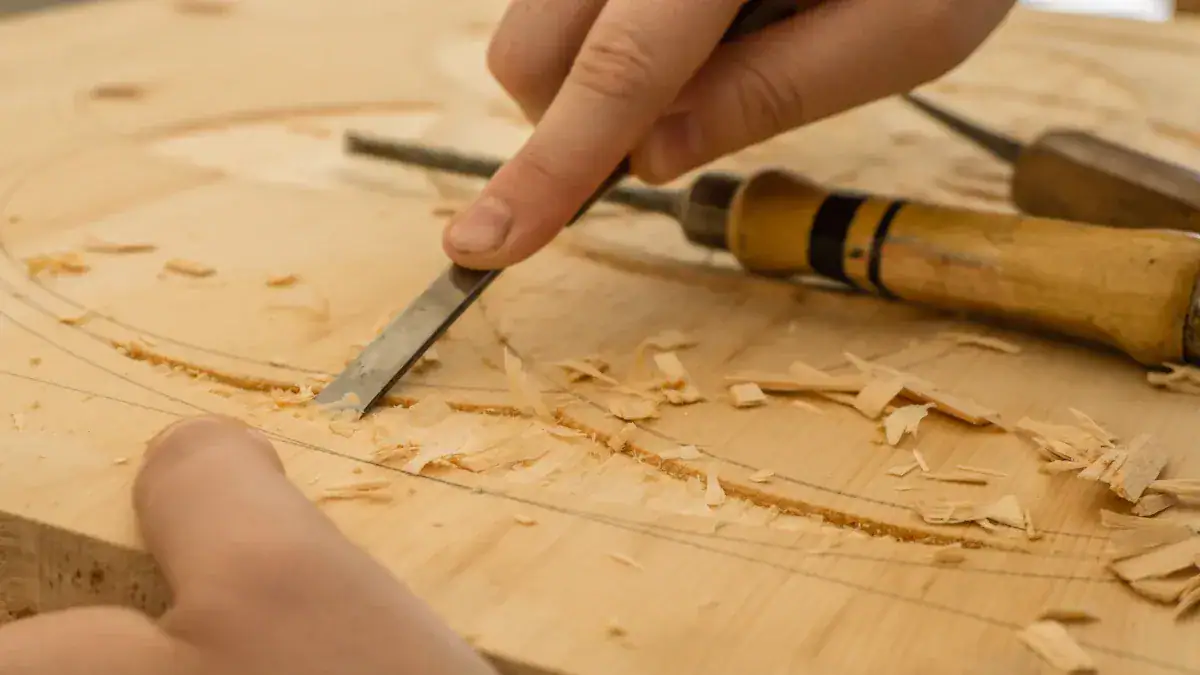
Wood carving offers immense satisfaction. You can easily start this creative hobby. Free designs make wood carving accessible to everyone. Many free wood carving patterns exist. These patterns empower beginners to try new projects. Experienced carvers also find exciting new projects. You can explore various wood carving projects without cost. These free wood carving patterns open up a world of carving possibilities. You will discover many beautiful designs for your wood. Carving wood is a rewarding experience.
Key Takeaways
You can find many free wood carving patterns online. Look on social media, YouTube, and special carving websites.
Local places like libraries and carving clubs also offer free patterns and help.
Choose patterns that match your skill level. Start with simple designs and use soft wood like basswood.
Always use safety gear like gloves and goggles. Keep your carving tools sharp to prevent accidents.
You can change free designs to make them your own. This adds your creative touch to your carvings.
Finding Free Wood Carving Patterns
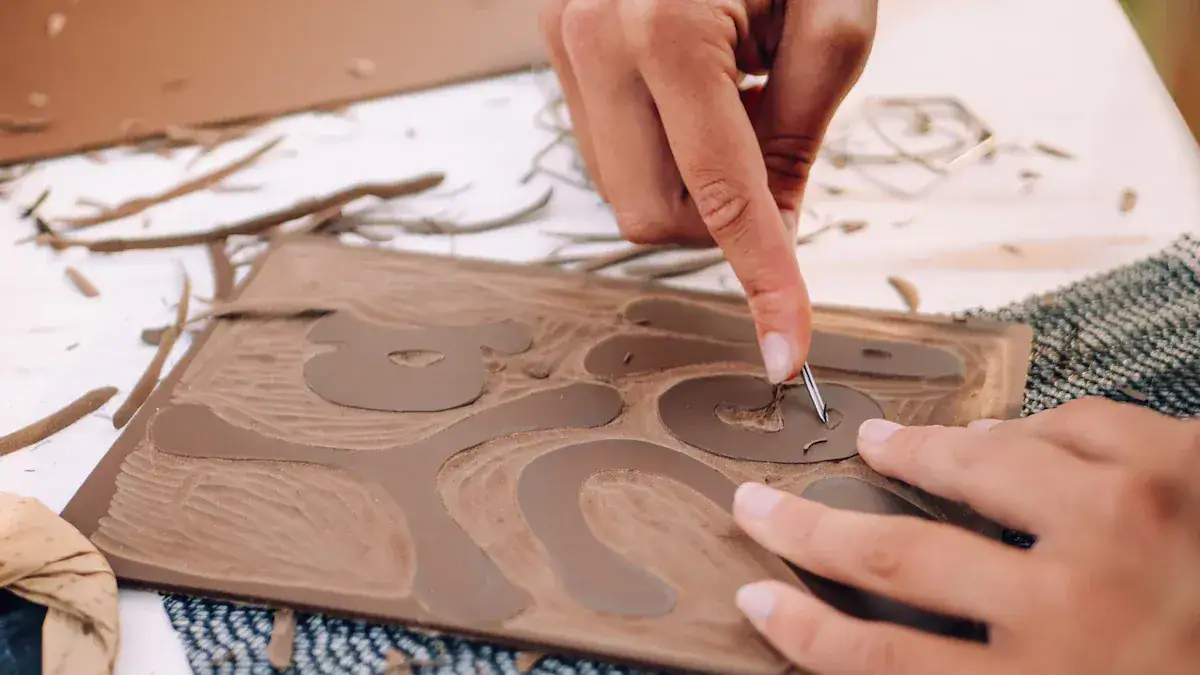
You can find many free wood carving patterns. These resources help you start new projects. They also let you explore different carving styles. You will discover many places to get these patterns.
Online Resources and Communities
The internet offers a vast collection of free designs. Many online communities share their work. You can find inspiration and patterns on various platforms.
Social Media and Forums: Explore Reddit threads like r/woodcarving and r/Spooncarving. You will find many ideas there. Facebook groups dedicated to wood carving also share patterns. The Woodcarving Illustrated Forum and Sawmill Creek – Woodcarvers Forum are great places to connect. You can ask questions and find shared patterns.
Video Platforms: YouTube channels provide free wood carving tutorials. Channels like Charly Brunet Sculpture, Woodcraft Hamster, Linker (@dougLinker), Korvin, and The Artisan Life offer visual guides. These videos often include links to free patterns. You can learn new carving techniques while watching.
Dedicated Websites: Websites like Carving Is Fun and BeaverCraft offer many patterns. AdamPrintables.com also provides various designs. Pinterest boards are excellent for visual searches. You can save many patterns to your own boards. Carving blogs often share free patterns too. The Spoon Club is another good resource for specific carving patterns. These sites make finding free wood carving patterns easy.
Public Domain Archives
Public domain archives hold historical treasures. These archives contain old books and art collections. You can find antique pattern books there. These books often have beautiful, classic designs. Historical art collections also offer inspiration. You can adapt these old images into new wood carving patterns. This gives your carving a unique, timeless feel. You can discover many unique patterns for your wood.
Manufacturer Websites
Tool manufacturers often provide free patterns. They do this to promote their products. These patterns help you try out new tools. BeaverCraft Tools offers a free collection of wood carving patterns. You can request these patterns in PDF format via email. These patterns are great for beginners. They include many easy and fun designs.
You can also find downloadable templates on other sites. For example, Carving Is Fun provides several free templates:
Project Name | Download Template (Letter) | Download Template (A4) |
|---|---|---|
Ball in Cage | Download | Download |
Bear 1 | Download | Download |
Bear 2 | Download | Download |
Comfort Bird | Download | Download |
Bunny 1 | Download | Download |
Bunny 2 | Download | Download |
These examples show you the variety of carving patterns free for download.
Local Resources
Your local community can also provide valuable resources. Libraries often have books on wood carving. These books contain many patterns. You can borrow them for free. Community centers sometimes offer workshops. These workshops might provide handouts with patterns.
Carving Schools and Clubs: BeaverCraft suggests looking for carving schools and clubs. These groups often share patterns among members. They also offer guidance and support.
Local Libraries: The East Lake Library, sponsored by Hennepin County Library, offered a free ‘Watercolor Woodblock Carving and Printing’ class. This class was free for everyone. It shows how libraries can be a source for learning and patterns. You can find similar opportunities in your area. These local spots help you connect with other carvers and find new patterns.
Exploring Free Downloadable Carving Patterns
You can find a wide variety of free downloadable carving patterns. These patterns cater to every skill level. You will discover many exciting projects.
Beginner-Friendly Designs
If you are just starting, many beginner-friendly designs are available. These simple wood carving patterns help you learn basic techniques. You can find patterns for functional items like spoons and utensils. These projects teach you shaping and hollowing. Simple animal shapes, such as birds, fish, rabbits, or turtles, focus on basic forms and smooth curves. Geometric designs like stars, triangles, or spirals improve your precision and control. Nature-inspired patterns, including leaves or flowers, help you learn fine lines. Abstract shapes, like waves or curves, teach you how different forms interact. These wood carving patterns for beginners are perfect for developing your skills. You will find many beginner carving ideas to start your journey.
Intermediate Patterns
As your skills grow, you can explore intermediate patterns. These designs offer more detail and complexity. You will find intricate patterns for decorative coasters or lettering. These projects require precision and fine details. Detailed relief carvings, such as wall-hanging panels, involve leaving the main design raised. You will use smaller chisels and gouges for these patterns. Intermediate patterns also focus on creating depth and texture. You will learn to carve recessed areas deeper and add subtle textures. Refining edges and smoothing transitions are crucial for these projects.
Advanced Carvings
Advanced carvings feature complex figures and intricate designs. These patterns often depict detailed scenes or realistic sculptures. They demand a high level of skill and patience. You can find advanced wood carving patterns that challenge your abilities. These projects allow you to create truly unique pieces of wood art.
Specific Carving Styles
You can also find free designs for specific carving styles. Chip carving involves removing small pieces of wood to create geometric patterns. Relief carving creates a three-dimensional figure on a flat piece of wood. This style is popular for decorative panels and furniture. Round carving, or carving in-the-round, creates fully three-dimensional objects. You can view these carvings from any angle. Whittling templates are also popular, offering designs for animals, whales, or even Nordic skiers. Many platforms, like BeaverCraft, offer over 200 easy wood carving ideas and popular wood carving patterns. You will find many carving templates for Dremel projects too. These carving patterns free resources help you explore different techniques.
Choosing the Right Wood Carving Patterns
Selecting the right wood carving patterns is crucial for a successful and enjoyable experience. You need to consider several factors before you begin your carving projects. These considerations help you match the pattern to your abilities and resources.
Assessing Your Skill Level
You should always choose wood carving patterns that match your current skill level. Starting with overly complex designs can lead to frustration. Beginners benefit from simpler patterns. These patterns help you learn basic carving techniques. As you gain experience, you can move to more intricate projects.
Here is a guide to help you assess which patterns suit your skill:
Pattern Type | Suitability for Beginners | Key Characteristics/Tips |
|---|---|---|
General Beginner Patterns | Ideal for initial training | Minimum small details, simple geometric shapes, clear structure, can be done with basic tools, medium-sized (15-20 cm), clear contrast, symmetrical, repeating elements, detailed instructions. |
Simple Wooden Spoon | Excellent for mastering basic techniques | Combines functionality and aesthetics, practices shaping contours, creating recesses, smooth transitions, and surface finishing. Recommended woods: basswood or aspen. |
Animal Figurines (Bear, Bird) | Popular for creating recognizable images | Bear: rounded shape simplifies carving. Bird: practices smooth lines and fine details. Develops spatial thinking. Start small. |
Wooden Gnomes | Good for mastering proportions and detail work | Simple geometric body, practices textures (beard, hat), and small details (face). |
Decorative Leaves or Feathers | Classic for mastering relief creation | Leaves: smooth lines, contour carving (veins). Feathers: precision for fine lines. Start with large, simple shapes. |
Wooden Mushrooms | Great for 3D carving and working with planes | Simple, recognizable shape. Practices rounded shapes (cap) and cylindrical surfaces (stem). Allows experimentation with surface texture. |
Basic Pendants or Ornaments | Combines carving practice with functional objects | Simple geometric designs for contour carving, develops precision for small details, symmetrical patterns for spatial planning. Focus on finish quality. |
Wooden Flower Designs | Variety of techniques for expressive compositions | Petals: precision for flowing lines. Heart: fine details. Stems/leaves: different cuts. Start with simple flowers with large petals. |
Chess Pieces (Pawns, Knights) | Good for turning and volume carving | Pawns: basic symmetrical shapes. Knights: complex curvilinear surfaces. Develops sense of proportion and precision. Start with pawns. |
Simple Keychains | Compact for practicing various techniques | Small size for quick completion, practices flat and 3D carving, allows experimentation with shapes/patterns. Consider wood strength and fastener reliability. |
Basic Animal Faces (Fox, Cat) | Fun for developing portrait carving skills | Characteristic features easily recognizable. Teaches conveying character/expression. Focus on symmetry and proportion. Start with flat relief. |
You will find many wood carving patterns for beginners. These patterns help you build confidence. They also teach you fundamental carving skills.
Considering Wood Type
The type of wood you choose significantly impacts your carving experience. Different woods have different characteristics. These characteristics affect how easily you can carve and the level of detail you can achieve.
Softwoods: Softwoods like pine, cedar, and fir are easier to carve. They are also more affordable. These woods are good for hobbyists and beginners. However, softwoods are less durable. They are prone to wear and damage. You can use them for whittling, small crafts, and outdoor decorative pieces.
Hardwoods: Hardwoods such as oak, maple, and walnut are durable. They resist wear. These woods often have intricate grain patterns. They are suitable for fine detail and polished finishes. Hardwoods are denser and harder to carve. They also require more effort from your tools. You can use them for detailed relief carving, functional utensils, and sculptural art.
Consider the wood’s grain structure. Straight grain allows for consistent carving. It minimizes splitting. Fine grain lets you achieve intricate detailing. It prevents tearing or chipping. Tight grain ensures a smoother surface finish. This reduces sanding. Wood quality also matters. Minimal knots reduce interruptions. Consistent density prevents uneven tool resistance. This makes carving easier and more precise. Softer to medium hardness woods facilitate easier cuts. They maintain durability for fine details. This makes them good for intricate and beginner patterns. Low grain contrast ensures a uniform appearance. This is especially true when you paint or finish the wood. Stable drying behavior reduces cracking or warping. This preserves the integrity of your carved pieces. You must choose the right wood for your chosen patterns.
Project Size and Scale
The size and scale of your chosen patterns directly influence your carving projects. A small pattern might be quick to complete. It often requires more precision and smaller tools. Larger patterns take more time. They might need bigger pieces of wood and different tools. You should consider the space you have for carving. Also, think about where you will display the finished piece. Some patterns are better suited for small, intricate pieces. Other patterns are ideal for grand, sculptural works. Always match the pattern’s scale to your intentions for the final wood art.
Required Tools
You need the right tools for your chosen wood carving patterns. Different patterns demand specific tools. Understanding tool functions helps you select the correct ones.
Chisels:
Flat chisels have a flat edge. You use them for caricature and relief carving.
Straight chisels have a bevel on both sides. They remove excess wood quickly.
Skew chisels have an angled blade. You use them for working with hardwood and cleaning corners.
Dog-let chisels and micro chisels have small blades. They create delicate shapes and lines. You use them for tight spaces.
Gouges:
Semicircular gouges have blades bent into a semicircle. They make deep, round cuts. You use them for sculpture, relief carving, and whittling.
U-gouges have a blade slightly bent on each side. They make deep cuts. You use them for bowl carving, removing surface on round shapes, and roughing out.
V-gouges have a specific rectangular shape. They part projects from woodblocks. You use them for relief carving, whittling, letters, symbols, and outlines.
Spoon gouges have a particular shape. They help with awkward cuts.
Shallow gouges are for fine work. Deeper gouges remove more material.
V-Chisels: You use V-chisels for creating deep grooves and sharp angles. They are also good for fine details, lettering, and textures.
You must ensure you have the necessary tools before starting any carving. The right tools make your carving process smoother and more enjoyable.
Tips for Using and Adapting Free Designs
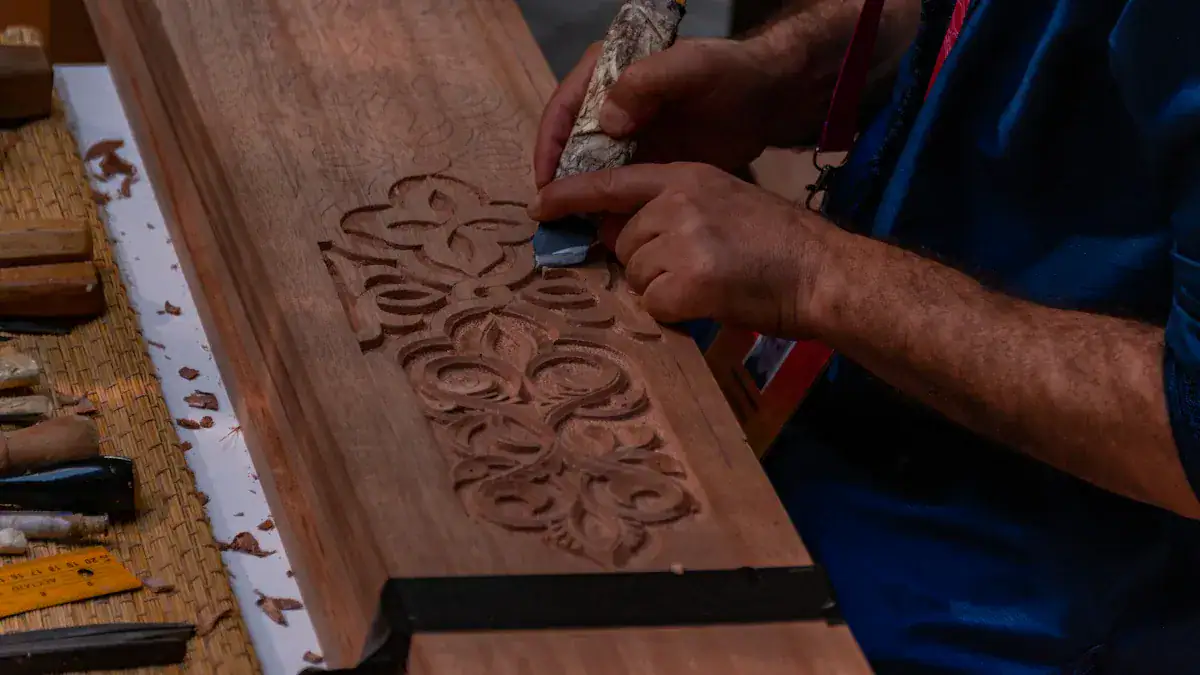
You found many great free designs. Now you need to use them effectively. These tips help you get the most from your chosen carving patterns.
Pattern Transfer Methods
You need to get your chosen patterns onto the wood. Several methods help you do this.
Stamping: You use a stamp and light-colored ink. Prepare your wood first. Select your stamp. Ink it lightly. Stamp a piece of paper to remove extra ink. Then, stamp the wood firmly and evenly. This method is fast. You can erase mistakes with a sanding pen. However, image options are limited. Ink might bleed. Uneven wood surfaces are hard to stamp.
Ironing: You need an iron and a pattern printed with toner. Inkjet printers do not work for this. Prepare your wood. Place the toner-printed image face down. Tape it in place. Iron it on a cotton setting with no steam. Slowly peel back the paper to check the transfer. This method is easy and fast. The image will reverse. Erasing can cause smearing. Thin wood might buckle.
Tracing: Many carvers prefer this method. You need a pattern on thin paper. You also need a transfer medium. This can be carbon paper, graphite paper, charcoal, or a graphite pencil. Prepare your wood. Coat the back of your pattern with the medium. Position and tape the pattern. Trace it with firm pressure. Slowly peel back the paper. You have full control over the transfer. It is easy to erase. This method is cost-effective. It takes more time than other methods.
Scaling Patterns
You might need to change the size of your carving patterns. You can make them bigger or smaller. The grid method works well for this.
Calculate the final size you want for your pattern.
Create a grid on your original design. For example, use 1/2-inch by 1/2-inch squares. Number each square.
On new paper, create another grid. Make the squares proportionally sized. For example, use 1/4-inch by 1/4-inch squares for a 50% reduction. Number these squares too.
Transfer the design square by square. Use the numbering system as a guide.
Draw the lines of the design within each square on the new paper. Focus on one square at a time. Continue until you scale the entire pattern. This helps you adapt carving templates to your wood.
Personalizing Designs
You can make free designs your own. Change small details. Add new elements. Combine parts from different carving templates. This makes your carving unique. You can alter facial expressions on figures. You can add textures to animal patterns. Personalizing your designs adds your creative touch.
Safety First
Safety is very important when you are carving. Always protect yourself.
Wear protective gear: You need gloves to prevent cuts. Goggles shield your eyes from flying wood chips.
Maintain sharp tools: Dull tools can slip easily. This increases your risk of injury. Keep your carving tools sharp.
Employ proper technique: Control your tools well. Beginners should start with simple projects. This helps you get familiar with your tools. You build confidence before trying complex carving.
Take regular breaks: Carving involves repeating motions. Take frequent breaks. This prevents fatigue and strain. Breaks help you avoid accidents.
You now see the immense value and accessibility of free wood carving patterns. These free designs empower your carving journey. You can embark on your next carving adventure using the resources discussed. Explore many wood carving patterns. This carving offers creative freedom. Bringing a free design to life provides great satisfaction. Start your wood carving today! Discover new patterns. Enjoy the art of carving wood. Your next carving project awaits. This carving hobby is rewarding. You will love the process of carving. This carving is for you. Find your perfect wood carving patterns.
FAQ
What is the best wood for beginner carving patterns?
Basswood is excellent for beginners. It is soft and has a fine grain. This makes carving easier. You can achieve good detail with basswood. It is a popular choice for many carving projects.
What tools do I need for free carving patterns?
You need basic carving tools. A sharp knife is essential. Gouges and chisels help with different cuts. Safety gloves protect your hands. Always keep your tools sharp for safe carving.
What is the difference between relief carving and in-the-round carving?
Relief carving creates a raised design on a flat wood surface. In-the-round carving creates a fully three-dimensional object. You can view it from all sides. Both styles use different carving techniques.
How do I transfer a pattern to wood?
You can use carbon paper. Place it between your pattern and the wood. Trace the lines firmly. You can also iron toner-printed patterns onto the wood. This transfers the design for your carving.