

Should you want smarter climate control without wasted energy, these seven internet thermostats are worth a look. They cover everything from heat‑pump and baseboard systems to Alexa‑first budget options, offer useful energy tracking, and fit a range of DIY or pro installs. I’ll outline what each does best and which setups they suit, so you can spot the right pick for your home and habits.
| Vine WiFi Smart Thermostat (Alexa & Google Compatible) |

| Best Smart Integration | Connectivity: Wi‑Fi | Voice Assistant Compatibility: Alexa & Google Assistant | Scheduling / Modes: 7‑day, 8‑period programmable; Auto Home/Away; Vacation Mode | VIEW LATEST PRICE | Read Our Analysis |
| Mysa Smart WiFi Thermostat for Heating & Cooling |

| Best for Heat Pumps | Connectivity: Wi‑Fi | Voice Assistant Compatibility: Alexa/Google/HomeKit support coming (Matter soon) | Scheduling / Modes: 7‑day scheduling; Vacation Mode; Geofencing | VIEW LATEST PRICE | Read Our Analysis |
| Honeywell Wi‑Fi Smart Color Programmable Thermostat (RTH9585WF) |
| Best Feature-Rich | Connectivity: Wi‑Fi | Voice Assistant Compatibility: Alexa & Google Home | Scheduling / Modes: 7‑day programmable; flexible utility/peak pricing schedules | VIEW LATEST PRICE | Read Our Analysis |
| Like-New Amazon Smart Thermostat (Alexa Ring Compatible) |

| Best Alexa Companion | Connectivity: Wi‑Fi (Alexa/Ring integration; Honeywell tech) | Voice Assistant Compatibility: Alexa (works with Ring/Echo sensors) | Scheduling / Modes: Alexa automatic comfort; schedule via Alexa app (comfort zones) | VIEW LATEST PRICE | Read Our Analysis |
| Mysa Smart Thermostat LITE for Electric Baseboard Heaters |
| Best for Electric Heaters | Connectivity: Wi‑Fi | Voice Assistant Compatibility: Apple HomeKit, Alexa, Google Assistant | Scheduling / Modes: Programmable schedules per day; runtime scheduling | VIEW LATEST PRICE | Read Our Analysis |
| Honeywell TH5320R1002 FocusPRO Wireless Non-Programmable Thermostat |

| Best Simple Control | Connectivity: Wireless (RedLINK/Wi‑Fi gateway) | Voice Assistant Compatibility: Integrates via RedLINK gateway (works with Honeywell remote ecosystems) | Scheduling / Modes: Non‑programmable (manual) but supports remote scheduling via gateway ecosystems — (manual control emphasized) | VIEW LATEST PRICE | Read Our Analysis |
| Honeywell Prestige IAQ RedLINK Internet Gateway Thermostat Kit |

| Best for Whole-Home IAQ | Connectivity: RedLINK internet gateway (wireless internet connectivity) | Voice Assistant Compatibility: Works with Honeywell remote/RedLINK ecosystem (gateway for smart integrations) | Scheduling / Modes: Smart Schedule / interview‑based programming | VIEW LATEST PRICE | Read Our Analysis |
More Details on Our Top Picks
Vine WiFi Smart Thermostat (Alexa & Google Compatible)
Should you want an affordable, Energy Star–certified smart thermostat that’s easy to install and works with Alexa and Google, the vine WiFi Smart Thermostat is a great choice — it supports most 24V systems, uses geofencing and 7-day/8-period scheduling, and fits in about 20 minutes with clear guides. You’ll get a compact square LCD unit with touch buttons, a trim plate, and wiring labels; C‑wire is required. Control it via Vine or Smart Life apps on iOS/Android, or with voice. It offers Auto Home/Away, vacation mode, alerts, filter notifications, and broad system compatibility.
- Connectivity:Wi‑Fi
- Voice Assistant Compatibility:Alexa & Google Assistant
- Scheduling / Modes:7‑day, 8‑period programmable; Auto Home/Away; Vacation Mode
- Energy / Efficiency Features:ENERGY STAR certified; energy alerts & reminders
- C‑Wire / Power Requirement:Requires C‑wire (corded electric)
- Mobile / Remote App Control:Vine Thermostat App; Smart Life App (iOS & Android)
- Additional Feature:Geofence technology
- Additional Feature:Child lock feature
- Additional Feature:Filter change reminders
Mysa Smart WiFi Thermostat for Heating & Cooling
Provided you want a thermostat built for modern heat pumps and true energy savings, the Mysa Smart WiFi Thermostat is a top choice — it’s optimized to balance primary and auxiliary stages for comfort and lower bills, and typically pays for itself in under a year. You’ll get Energy Star savings, Smart Geofencing, and detailed energy charts in the app. It connects directly to Wi‑Fi (Matter support coming), supports 7‑day schedules, Vacation Mode, and shared access without subscriptions. DIY installation is guided in-app; a C‑wire is required. Built‑in temp and humidity sensors send instant alerts; five‑year hardware protection included.
- Connectivity:Wi‑Fi
- Voice Assistant Compatibility:Alexa/Google/HomeKit support coming (Matter soon)
- Scheduling / Modes:7‑day scheduling; Vacation Mode; Geofencing
- Energy / Efficiency Features:ENERGY STAR certified; energy charting & optimized heat‑pump staging
- C‑Wire / Power Requirement:Requires C‑wire (sold separately if needed)
- Mobile / Remote App Control:Mysa App (iOS & Android)
- Additional Feature:Real-time humidity sensing
- Additional Feature:Detailed energy charting
- Additional Feature:5-year hardware protection
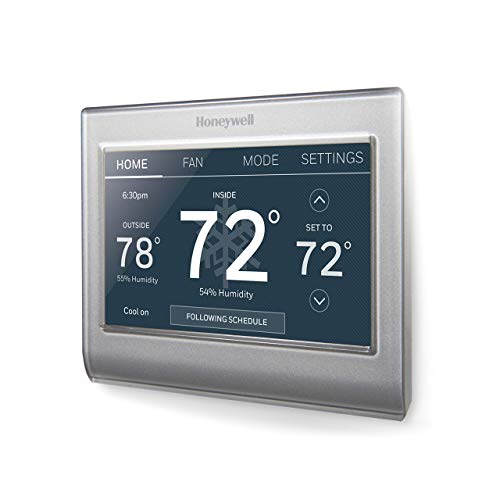
Honeywell Wi‑Fi Smart Color Programmable Thermostat (RTH9585WF)
In case you want a programmable thermostat with a bright touchscreen and broad smart‑home support, the Honeywell RTH9585WF is a strong choice—especially for homes with forced‑air systems or heat pumps that already have a C‑wire. You get a 7‑day programmable gray touchscreen that’s ENERGY STAR certified and Wi‑Fi enabled for remote control via app. It works with most forced‑air, hot‑water, steam, and heat‑pump systems but not electric baseboard heat; a C‑wire is required. Use fan On/Auto/Circulate modes, enroll in utility demand‑response programs, view monthly energy reports, and potentially qualify for rebates from your provider.
- Connectivity:Wi‑Fi
- Voice Assistant Compatibility:Alexa & Google Home
- Scheduling / Modes:7‑day programmable; flexible utility/peak pricing schedules
- Energy / Efficiency Features:ENERGY STAR certified; monthly energy reports & demand‑response eligibility
- C‑Wire / Power Requirement:C‑wire required (adapter may be needed)
- Mobile / Remote App Control:Honeywell mobile app (remote control & reporting)
- Additional Feature:Color touchscreen display
- Additional Feature:Utility demand-response eligible
- Additional Feature:Fan circulate option
Like-New Amazon Smart Thermostat (Alexa Ring Compatible)
Should you want a budget-friendly, smart thermostat that plays nicely with Alexa and Ring, the like-new Amazon Smart Thermostat is a strong pick: it’s a refurbished, certified unit built on Honeywell Home technology, so you get proven reliability and the same limited warranty as a new device while saving money. You’ll need a C-wire and might get generic Amazon packaging. Use Alexa or compatible Echo devices and the Smart Air Quality Monitor for temperature sensors, comfort zones, presence detection, and remote control via the Alexa app. ENERGY STAR efficiency, guided installation, post-purchase rebate info, and customer support round out the value.
- Connectivity:Wi‑Fi (Alexa/Ring integration; Honeywell tech)
- Voice Assistant Compatibility:Alexa (works with Ring/Echo sensors)
- Scheduling / Modes:Alexa automatic comfort; schedule via Alexa app (comfort zones)
- Energy / Efficiency Features:ENERGY STAR certified; claims energy savings and rebate info
- C‑Wire / Power Requirement:C‑wire required (refurbished Amazon thermostat)
- Mobile / Remote App Control:Alexa app (remote control & guided install)
- Additional Feature:Echo temperature sensors
- Additional Feature:Guided Alexa installation
- Additional Feature:Refurbished certified warranty
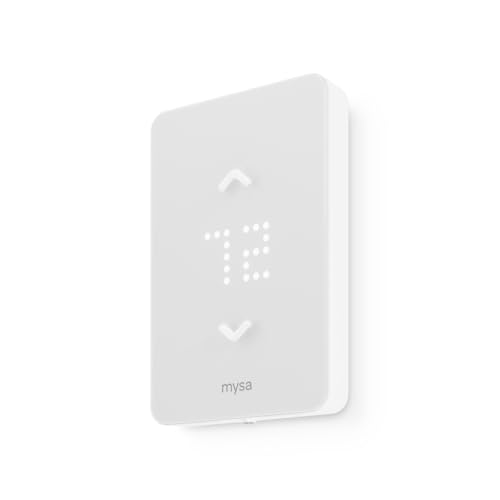
Mysa Smart Thermostat LITE for Electric Baseboard Heaters
In case you rely on electric baseboard or wall heaters and want smart control without rewiring, the Mysa Smart Thermostat LITE is built for you — it works with 120V, 208V, and 240V systems (single- or double-pole) and bolts onto baseboards, fan-forced heaters, and convectors to give remote app control, voice assistant compatibility, and simple 4‑wire DIY installation. You’ll get Wi‑Fi remote access, scheduling, runtime monitoring, and HomeKit/Alexa/Google Assistant support. Expect quick 15‑minute installs using the video guide, North America-based support, UL certification, a two-year warranty, and up to 26% heating cost reduction with smart schedules.
- Connectivity:Wi‑Fi
- Voice Assistant Compatibility:Apple HomeKit, Alexa, Google Assistant
- Scheduling / Modes:Programmable schedules per day; runtime scheduling
- Energy / Efficiency Features:Up to ~26% savings with schedules; runtime monitoring
- C‑Wire / Power Requirement:Line‑voltage product (120/208/240 V) — requires appropriate wiring (4‑wire installation)
- Mobile / Remote App Control:Mysa app / Wi‑Fi app (remote control & runtime monitoring)
- Additional Feature:Line-voltage support (120–240V)
- Additional Feature:UL safety certified
- Additional Feature:26% heating savings claim
Honeywell TH5320R1002 FocusPRO Wireless Non-Programmable Thermostat
Should you need a simple, relocatable thermostat that lets you check and adjust heating or cooling from anywhere, the Honeywell TH5320R1002 FocusPRO Wireless is a strong pick because it pairs the FocusPRO’s manual control with RedLINK connectivity for remote access via a gateway. You get non‑programmable, push‑button temperature control with a backlit digital display and battery power, so installation’s wire‑free and flexible. It supports RedLINK peripherals like Portable Comfort Control and an outdoor sensor, shows outdoor temperature and humidity, and works with heat pump systems. Should you want basic, reliable remote control without schedules, this fits the bill.
- Connectivity:Wireless (RedLINK/Wi‑Fi gateway)
- Voice Assistant Compatibility:Integrates via RedLINK gateway (works with Honeywell remote ecosystems)
- Scheduling / Modes:Non‑programmable (manual) but supports remote scheduling via gateway ecosystems — (manual control emphasized)
- Energy / Efficiency Features:Aimed at efficient control of heat pump systems via gateway (reduces wasted runtime)
- C‑Wire / Power Requirement:Battery powered but typically used with RedLINK gateway; specific systems (230 V noted)
- Mobile / Remote App Control:RedLINK internet gateway + Honeywell remote apps (remote monitoring/control)
- Additional Feature:RedLINK gateway compatible
- Additional Feature:Relocatable without rewiring
- Additional Feature:Battery powered operation
Honeywell Prestige IAQ RedLINK Internet Gateway Thermostat Kit
Should you want all-encompassing indoor air quality control alongside smart scheduling, the Honeywell Prestige IAQ RedLINK kit is a strong choice because it combines RedLINK wireless communication with three Universal IAQ contacts for humidification, dehumidification, and ventilation—plus an internet gateway for remote access. You’ll program smart schedules in seconds using Honeywell’s patented interview-based setup, which also streamlines installer configuration. The unit supports reliable wireless communication across your system and operates between 0 and 48.9 °C, suitable for most homes. With IAQ contacts and remote connectivity included, you’ll manage comfort and air quality from home or away without adding separate controllers.
- Connectivity:RedLINK internet gateway (wireless internet connectivity)
- Voice Assistant Compatibility:Works with Honeywell remote/RedLINK ecosystem (gateway for smart integrations)
- Scheduling / Modes:Smart Schedule / interview‑based programming
- Energy / Efficiency Features:IAQ controls and smart scheduling to improve efficiency (gateway enables remote/utility integration)
- C‑Wire / Power Requirement:Uses RedLINK gateway and typical HVAC wiring (installer/contractor setup; common wiring for IAQ controls)
- Mobile / Remote App Control:Internet gateway enables remote access (Honeywell remote connectivity/apps)
- Additional Feature:IAQ humidification contacts
- Additional Feature:IAQ dehumidification contacts
- Additional Feature:Included internet gateway
Factors to Consider When Choosing an Internet Thermostat
Before you pick a Wi‑Fi thermostat, check that it’s compatible with your HVAC system and that your wiring and power setup support it. Consider how it will integrate with your smart home, what energy‑saving features it offers, and whether installation help and ongoing support are available. Those factors will determine performance, savings, and how much hassle you’ll have getting it up and running.
Compatibility With HVAC
Because your thermostat has to talk to your heating and cooling equipment, check that it supports your system’s voltage, wiring, and control features before you buy. Verify it supports your system type—conventional furnaces/AC, heat pumps (including multi‑stage and aux/emergency heat), or hydronic/boiler and steam systems. Most smart thermostats need a 24V C‑wire and won’t work with high‑voltage (120–240V) baseboard systems unless specifically designed for line voltage. Match terminal labels (R, Rc, Rh, C, W, Y, G, O/B, Aux/E) and confirm it handles your heat/cool stages (single, 2‑stage, multi‑stage plus aux). Should you have zoning, variable‑speed blowers, or manufacturer‑specific communicating controls, make certain the thermostat supports variable fan control, communicating thermostats, or zone‑controller integration. Use compatibility checkers before buying.
Power And Wiring
Assuming your thermostat doesn’t have a reliable power source and correct wiring, it won’t run its Wi‑Fi radio or control your HVAC reliably, so check power and terminal compatibility initially. Confirm whether your system supplies a C‑wire (common 24V); most Wi‑Fi thermostats need continuous 24V for radios and displays. Provided there’s no C‑wire, run a new conductor, use a power‑extender kit, or pick a model designed to work without one. Verify control voltage and type: most smart units expect 24VAC, while line‑voltage baseboard heaters need dedicated 120–240V thermostats. Check terminal labels (R, Rc, W, Y, G, O/B, AUX/E) for stage and accessory compatibility. During replacing an old thermostat, label and photograph wires, then match counts and terminals to avoid miswiring.
Smart Home Integration
Wiring and power get your thermostat running, but smart-home integration determines how it fits into your daily routines and automation. Check that the thermostat supports the ecosystems you already use—voice assistants and platform protocols—so it can be controlled and automated with other devices. Prefer devices that use widely adopted connectivity standards (Wi‑Fi, Thread, Matter, Zigbee/Z‑Wave) to maximize hub and future-device compatibility. Verify multi-user and shared-access permissions in the companion app so household members or guests can be allowed or restricted as needed. Confirm support for automations you plan to use—geofencing, schedules, scenes, and remote triggers from sensors or presence—so climate control joins broader routines. Should you run custom systems, look for open APIs or local control (or Matter) support.
Energy Savings Features
Upon choosing an internet thermostat, prioritize features that actually cut HVAC energy use rather than just smart-sounding gimmicks. Look for ENERGY STAR certification and utility rebate eligibility — they signal verified efficiency and can lower upfront cost. Use geofencing and occupancy sensing to automatically shift setpoints whenever nobody’s home, trimming wasted runtime. Prefer units with multi-stage and heat-pump optimization so the system uses primary stages instead of costly auxiliary heat. Choose flexible scheduling (7-day, multiple periods) to reduce conditioning during predictable away or sleep hours. Real-time energy reporting, runtime charts, and temperature/humidity alerts let you spot wasteful patterns and make data-driven adjustments. Together these features materially reduce energy without compromising comfort.
Installation And Support
Because a smooth setup keeps your smart thermostat working reliably, check power needs, wiring complexity, and support before you buy. Verify whether your HVAC requires a common C‑wire or external adapter—many internet thermostats need a constant 24V supply. Determine whether you can DIY or need a licensed HVAC/electrician; line‑voltage (120–240V) and multi‑stage heat‑pump systems usually require pros. Confirm estimated installation time and whether the manufacturer supplies step‑by‑step guides, videos, and wiring diagrams to reduce errors. Make certain technical support channels (phone, chat, email) have suitable hours and clear warranty or lifetime support terms. Finally, ask whether the thermostat accepts firmware updates and offers remote diagnostics so issues can be fixed without an on‑site visit.
Security And Privacy
Good installation and ongoing support keep your thermostat running, but you also need to guard it and your network against misuse. Check that the model uses strong, regularly updated firmware and secure protocols like WPA3 and TLS to reduce remote‑compromise risk. Require unique, strong passwords and enable multi‑factor authentication on the account so attackers can’t hijack home controls or data. Review the privacy policy: minimize devices that collect data, confirm retention limits, and see whether telemetry or voice transcripts are stored off‑device or shared with third parties. Isolate the thermostat on a guest or IoT VLAN to limit lateral movement when it’s breached and protect sensitive devices on your primary network. Regularly apply updates and disable unused features such as remote access, microphones, or cloud integrations.
Frequently Asked Questions
Do Internet Thermostats Increase My Energy Bill Due to Constant Connectivity?
Worried your thermostat’s Wi‑Fi is secretly spiking bills? No, it usually won’t—its connectivity uses minimal power, and you’ll save more via smarter scheduling and remote control, so in general energy costs typically drop, not rise.
Can I Use Smart Thermostats With Multi-Zone HVAC Systems?
Yes, you can use smart thermostats with multi-zone HVAC systems. You’ll typically install a smart thermostat or sensor per zone, confirm compatibility with your zoning controller or dampers, and configure each zone for independent schedules and sensors.
Are There Privacy Risks From Voice Assistant Integrations?
Yes — you face data collection, potential eavesdropping, and third‑party sharing risks. You’ll need strong passwords, updated firmware, and careful privacy settings. You’ll limit exposure through turning off microphones, disabling unnecessary features, and auditing permissions.
Do Smart Thermostats Work During Power or Internet Outages?
Yes — smart thermostats usually keep basic HVAC control during power or internet outages provided they have battery backup or a wired connection, but remote app access and cloud features won’t work until power and connectivity are restored.
How Long Is Typical Manufacturer Support/Firmware Update Lifespan?
Manufacturers typically support smart thermostats with firmware updates for about 3–7 years, though some extend to 10 years; you should expect security patches and feature updates initially, then diminishing support as models age and get deprecated.
