

Like a backstage pass to a flawless stream, you want a modem that keeps movies and game nights smooth without drama. You’ll want DOCSIS 3.1+ or equivalent, multi‑gig Ethernet or link aggregation, OFDM/OFDMA and wide channel bonding, plus low‑latency firmware and solid ISP compatibility. Combo units with Wi‑Fi 6/6E are convenient, but a modem‑only multi‑gig paired with a strong router often delivers the most reliable performance—here’s how to pick.
| NETGEAR Nighthawk DOCSIS 3.1 Cable Modem (CM3000) |

| Best for Multi-Gig | DOCSIS version: DOCSIS 3.1 | Cable provider compatibility: Approved for major U.S. cable providers (Xfinity, Spectrum, Cox) | Multi-gig / high-speed support: Supports up to 2.5 Gbps download; 1 Gbps upload; 2.5GbE multi-gig port and link aggregation | VIEW LATEST PRICE | Our Analysis |
| NETGEAR Nighthawk CAX30 WiFi 6 Cable Modem Router |

| Best All‑In‑One | DOCSIS version: DOCSIS 3.1 | Cable provider compatibility: Certified with Spectrum, Cox, Xfinity (provider support/speeds may vary) | Multi-gig / high-speed support: Supports up to 2 Gbps internet speeds; multi‑gig capability and port aggregation | VIEW LATEST PRICE | Our Analysis |
| Motorola MG8702 DOCSIS 3.1 Cable Modem Router |
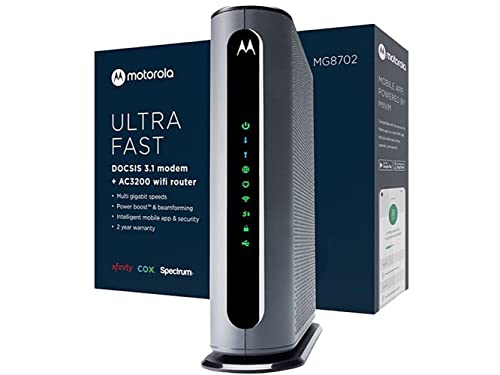
| Best for Coverage | DOCSIS version: DOCSIS 3.1 | Cable provider compatibility: Approved for Comcast Xfinity, Cox, Spectrum | Multi-gig / high-speed support: Supports fastest cable plans (future‑proof DOCSIS 3.1) — designed for gig+ speeds | VIEW LATEST PRICE | Our Analysis |
| Hitron CODA56 DOCSIS 3.1 Cable Modem (No WiFi) |

| Best Pure Modem | DOCSIS version: DOCSIS 3.1 | Cable provider compatibility: Compatible with Xfinity, Spectrum, Cox | Multi-gig / high-speed support: Supports up to 2.5 Gbps via 2.5 Gbps Ethernet port (multi‑gig) | VIEW LATEST PRICE | Our Analysis |
| NETGEAR Nighthawk CM1200 DOCSIS 3.1 Cable Modem |

| Best for Routers | DOCSIS version: DOCSIS 3.1 | Cable provider compatibility: Compatible with major cable providers including Xfinity, Spectrum, Cox | Multi-gig / high-speed support: Supports plans up to 2 Gbps; 32×8 channel bonding and port aggregation | VIEW LATEST PRICE | Our Analysis |
More Details on Our Top Picks
NETGEAR Nighthawk DOCSIS 3.1 Cable Modem (CM3000)
Should you stream 4K video, game online with others, or run multiple devices at once, the NETGEAR Nighthawk CM3000 delivers the multi-gig throughput and low latency you need—offering DOCSIS 3.1 speeds up to 2.5 Gbps downstream and options for 2 Gbps via link aggregation so your router won’t bottleneck high-bandwidth streams. You’ll get up to 1 Gbps upload, mid/high-split efficiency, and compatibility with major U.S. ISPs like Xfinity, Charter, and Cox. It pairs with existing or NETGEAR WiFi 6E/7 routers and Orbi systems, future-proofs performance, and can save rental fees through owning a high-performance modem.
- DOCSIS version:DOCSIS 3.1
- Cable provider compatibility:Approved for major U.S. cable providers (Xfinity, Spectrum, Cox)
- Multi-gig / high-speed support:Supports up to 2.5 Gbps download; 1 Gbps upload; 2.5GbE multi-gig port and link aggregation
- Router included / modem type:Modem only (no built‑in WiFi; pairs with router)
- Intended benefit — avoid rental fees:Ownership can reduce/eliminate ISP rental fees
- App/software management or security features:Designed to pair with modern routers/mesh (management varies; pairs with NETGEAR routers)
- Additional Feature:Mid/high‑split technology
- Additional Feature:2.5Gbps modem port
- Additional Feature:Link aggregation capable
NETGEAR Nighthawk CAX30 WiFi 6 Cable Modem Router
In case you want a single device that cuts cable box clutter and handles multi-gig streaming, the NETGEAR Nighthawk CAX30 is built for homes with high-bandwidth needs and up to about 25 connected devices. You get a DOCSIS 3.1 modem-router with dual-band WiFi 6 (AX2700), up to 2.7 Gbps combined throughput, and coverage to about 2,500 sq. ft. It supports up to 2 Gbps service (certified for Charter, Cox, Xfinity at listed speeds), 32×8 channel bonding, port aggregation, four Gigabit LAN ports, USB 3.0, WPA3, and NETGEAR Armor. Not compatible with DSL or fiber ISP voice bundles.
- DOCSIS version:DOCSIS 3.1
- Cable provider compatibility:Certified with Spectrum, Cox, Xfinity (provider support/speeds may vary)
- Multi-gig / high-speed support:Supports up to 2 Gbps internet speeds; multi‑gig capability and port aggregation
- Router included / modem type:Modem + built‑in Wi‑Fi router (gateway)
- Intended benefit — avoid rental fees:Replaces separate modem/router; potential rental savings
- App/software management or security features:Managed via Nighthawk app; supports WPA/WPA2/WPA3; NETGEAR Armor available
- Additional Feature:Built‑in USB 3.0 port
- Additional Feature:2.7 Gbps combined Wi‑Fi
- Additional Feature:Supports WPA3 security
Motorola MG8702 DOCSIS 3.1 Cable Modem Router
Assuming you stream 4K content, game online, or share heavy bandwidth across multiple devices, the Motorola MG8702 delivers the speed and future-proof DOCSIS 3.1 technology you need—plus an AC3200 Wi‑Fi router with AnyBeam beamforming to keep signals strong where you use them most. You’ll get provider compatibility with Xfinity, Cox, and Spectrum, support for the fastest cable plans, and Power Surge/Range Enhance to extend coverage. The mobile app simplifies setup, guest networks, monitoring, parental controls, speed tests, and security alerts. Owning this combo cuts rental fees, includes two years of expert support, and leans on Motorola’s reliable engineering.
- DOCSIS version:DOCSIS 3.1
- Cable provider compatibility:Approved for Comcast Xfinity, Cox, Spectrum
- Multi-gig / high-speed support:Supports fastest cable plans (future‑proof DOCSIS 3.1) — designed for gig+ speeds
- Router included / modem type:Modem + built‑in Wi‑Fi router (combo)
- Intended benefit — avoid rental fees:Eliminates provider rental fees
- App/software management or security features:Intelligent mobile app for setup, monitoring, parental controls, security alerts
- Additional Feature:AC3200 Wi‑Fi speeds
- Additional Feature:AnyBeam beamforming
- Additional Feature:2 years free support
Hitron CODA56 DOCSIS 3.1 Cable Modem (No WiFi)
Should you want multi‑gig streaming and gaming without paying rental fees, the Hitron CODA56 gives you a 2.5 Gbps Ethernet port and DOCSIS 3.1 performance—just pair it with your own router for whole‑home Wi‑Fi. You’ll use it only on cable networks (Xfinity, provider, Cox) and it’s backward compatible with DOCSIS 3.0. It’s a modem-only device, so you’ll need a separate router for wireless or multiple wired devices; otherwise one Ethernet device will connect. It’s optimized for low latency and 4K streaming on 1 Gbps+ plans. Verify ISP compatibility, activate service, and expect manufacturer support and warranty coverage.
- DOCSIS version:DOCSIS 3.1
- Cable provider compatibility:Compatible with Xfinity, Spectrum, Cox
- Multi-gig / high-speed support:Supports up to 2.5 Gbps via 2.5 Gbps Ethernet port (multi‑gig)
- Router included / modem type:Modem only (no Wi‑Fi)
- Intended benefit — avoid rental fees:Potential elimination of monthly modem rental fees
- App/software management or security features:ISP activation required; manufacturer support and firmware updates (management via router)
- Additional Feature:2.5 Gbps Ethernet port
- Additional Feature:Modem‑only (no Wi‑Fi)
- Additional Feature:Backward compatible DOCSIS3.0
NETGEAR Nighthawk CM1200 DOCSIS 3.1 Cable Modem
Provided that you need a cable modem that can handle multi-gig streaming and local Wi‑Fi without renting equipment, the NETGEAR Nighthawk CM1200 is built for that — DOCSIS 3.1 support and 32×8 channel bonding let it sustain ISP plans up to 2 Gbps while its AX2700 dual‑band Wi‑Fi covers about 2,500 sq. ft. and roughly 25 devices. You’ll get four 1 Gbps Ethernet ports with portaggregation, a USB 3.0 port, WPA3 security, and NETGEAR Armor with a 90‑day trial. It’s compatible with Xfinity, the cable provider, Cox, saves rental fees, and excludes DSL or bundled voice providers.
- DOCSIS version:DOCSIS 3.1
- Cable provider compatibility:Compatible with major cable providers including Xfinity, Spectrum, Cox
- Multi-gig / high-speed support:Supports plans up to 2 Gbps; 32×8 channel bonding and port aggregation
- Router included / modem type:Modem only (replaces cable modem; router separate)
- Intended benefit — avoid rental fees:Saves on equipment rental fees
- App/software management or security features:Nighthawk app setup/management; supports WPA/WPA2/WPA3; NETGEAR Armor (90‑day)
- Additional Feature:4x Gigabit Ethernet ports
- Additional Feature:Built‑in USB 3.0 port
- Additional Feature:Auto firmware updates
Factors to Consider When Choosing a Modem For Streaming
Upon picking a modem for streaming, you’ll want to match connection speed requirements to your streaming habits so you don’t hit buffering. Check network compatibility and how the modem pairs with your router, including channel bonding capacity and available Ethernet port options. These factors together determine whether your setup can handle multiple high‑bitrate streams smoothly.
Connection Speed Requirements
Because streaming needs vary with resolution and household use, match your modem’s max downstream throughput to your plan—about 25 Mbps for a single 4K stream and 100–200+ Mbps for multiple simultaneous 4K streams—while ensuring the modem can handle your ISP tier (300 Mbps, 1 Gbps, or multi‑gig) so it doesn’t become a bottleneck. Add a 20–30% buffer for overhead and other devices to avoid saturation during peak usage. For low‑latency live or game streaming, verify consistent upload capacity—aim for 5–10+ Mbps for 1080p and 25+ Mbps for 4K uploads. In the event you plan link aggregation or multi‑gig Ethernet, choose a modem and downstream gear rated for combined ports or native multi‑gig throughput to sustain those speeds.
Network Compatibility Checks
To avoid surprises, start matching the modem with your ISP and plan: confirm the network type (cable, fiber, DSL, or fixed wireless), that the modem is ISP‑approved, and that its supported speeds and wired port(s)—including any 2.5G or multi‑gig and link‑aggregation features—can handle your subscribed tier and any future upgrades. Next, verify the modem supports the provider’s required technology (DOCSIS for cable; none for native fiber/DSL) and is on your ISP’s compatibility list so you’ll reach advertised download/upload rates. Check wired port speeds and link aggregation to match a multi‑gig router or high‑bandwidth device. Assure backward compatibility (e.g., DOCSIS 3.0) during network transitions. Finally, confirm whether it’s modem‑only or a combo unit and pick Wi‑Fi accordingly.
Router And Modem Pairing
Should you pair a modem whose Ethernet port tops out at 1 Gbps with a router that has a 2.5 Gbps WAN port (or vice versa), you’ll create a bottleneck that keeps high‑bandwidth streams from hitting your plan’s full speed. Match the modem’s Ethernet speed to your router’s WAN/multi‑gig port so your connection won’t be limited. Assuming your modem has multiple Gigabit ports, confirm the router supports link aggregation (LACP) to combine throughput. Prefer separate modem and router during times you need advanced Wi‑Fi features, QoS, or mesh expansion—gateways can restrict flexibility and upgrades. Verify your router’s Wi‑Fi standard and device capacity to prevent wireless congestion. Place the router centrally and raised, link it with Cat5e for ≤1 Gbps or Cat6/Cat6a for 2.5–10 Gbps.
Channel Bonding Capacity
Now that you’ve matched your modem and router speeds, look at channel bonding capacity next: it determines how many downstream and upstream DOCSIS channels your modem can combine to deliver higher aggregate throughput and better performance under congestion. You’ll want higher downstream counts (e.g., 32+) to handle heavy streaming loads and multiple concurrent HD or 4K streams without buffering. DOCSIS 3.1 adds OFDM/OFDMA channels alongside bonded QAM, enhancing spectral efficiency and enabling multi-gigabit throughput for demanding setups. Also check upstream bonding: multiple bonded upstream channels lower latency and increase reliability for live broadcasts and cloud gaming. In short, pick a modem with ample downstream channels and DOCSIS 3.1 capability (or 2+ Gbps aggregate potential) to keep streams smooth during peak usage.
Ethernet Port Options
Pick a modem with the right Ethernet ports so your wired streams don’t become the weak link. You’ll want at least one Gigabit (1 Gbps) port to handle typical streaming bitrates without LAN bottlenecks. Should your ISP plan exceeds 1 Gbps or you push multiple 4K HDR streams, choose a modem with a 2.5 Gbps (or higher) port to deliver full ISP speeds to a single device. Prefer devices that offer multiple Gigabit LAN ports or support link aggregation so you can connect several wired streamers or consoles without buying a separate switch. Use wired connections for primary streaming devices whenever possible. Lastly, verify full-duplex support and Ethernet features like Jumbo frames and flow control for heavy local transfers.
Latency And Stability
Because streaming responds to tiny delays, you should prioritize low latency and rock‑solid stability while choosing a modem. Aim for under 20 ms round‑trip to keep live streams and interactive services responsive, and watch jitter—keep it under about 10 ms to avoid buffering and sync issues. Favor modems built to newer DOCSIS standards with more channel bonding; their hardware handles load with steadier, lower latency. Should you run multiple high‑bandwidth devices, pick one with link aggregation or a multi‑gig Ethernet port to reduce congestion. Finally, check firmware quality and update cadence: well‑maintained devices suffer fewer spikes and drops. Prioritizing these factors lets you maintain consistent, low‑delay streaming during peak usage.
Future‑Proof Technology
Low latency and steady uptime matter, but you also want a modem that stays capable as streaming progresses. Choose a modem with the latest DOCSIS standard (DOCSIS 3.1 or newer) so you get higher throughput, lower latency, and better handling of congested networks. Prioritize multi‑gig Ethernet (2.5 Gbps+ or link aggregation) to avoid bottlenecks for high‑bitrate 4K/8K streams. Wide channel bonding plus OFDM/OFDMA support increases capacity and stability once multiple devices stream simultaneously. Confirm the manufacturer provides ongoing firmware updates to maintain compatibility with advancing cable standards. Check backward compatibility with older DOCSIS versions and common ISP provisioning so the modem stays usable across network upgrades and provider changes.
Security And Management
While fast throughput keeps your streams smooth, you also need a modem that protects and lets you manage the devices using your bandwidth. Choose one with updatable firmware and automatic updates so vulnerabilities get patched without you having to intervene. Prefer integrated security — firewall and intrusion detection/prevention — to block malicious traffic aimed at streaming devices. Make sure it supports modern encryption (WPA3 whenever paired with a router) and secure management protocols like HTTPS and SSH for safe local or remote admin. Pick a modem with clear controls and logging: device access lists, connection logs, and parental controls let you monitor and limit who can stream. Should it be possible, get compatibility with centralized apps or APIs for role-based access, alerts, and easy device revocation.
