

About 80% of household lighting energy can be saved through swapping to efficient LEDs, so your next bulb choice really matters. You’ll want options that balance brightness, color, and longevity without breaking the bank, and I’ll point out the best value packs and specs to watch. Stick around should you want practical picks that fit common fixtures and budgets—there’s a clear winner depending on what room you’re outfitting.
| 24-Pack 14W A19 LED Bulbs 5000K Daylight |
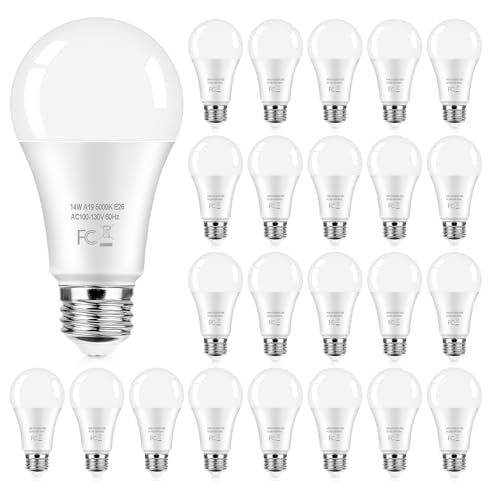
| Brightest Bulk Pick | Bulb Shape/Base: A19, E26 medium screw base | Light Source Type: LED | Color Temperature: 5000K (Daylight) | VIEW LATEST PRICE | Read Our Analysis |
| TJOY 12-Pack A19 9W Soft Warm White LED Bulbs |
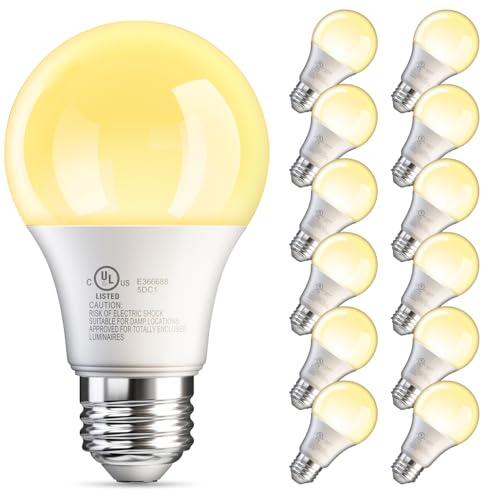
| Cozy Warm Choice | Bulb Shape/Base: A19, E26 medium screw base | Light Source Type: LED | Color Temperature: 2700K (Soft Warm White) | VIEW LATEST PRICE | Read Our Analysis |
| LE 9W LED A19 Bulbs 60W Equivalent Daylight |
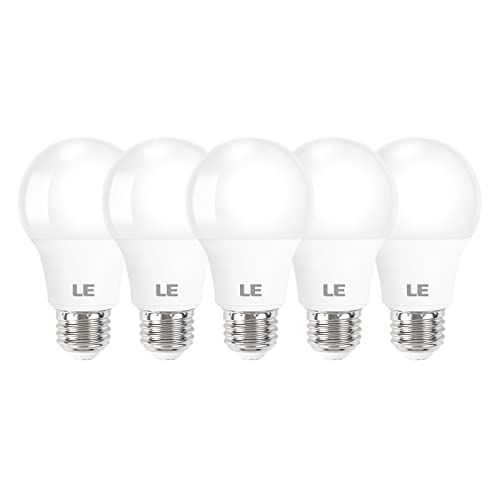
| Daylight Workhorse | Bulb Shape/Base: A19, E26 medium screw base | Light Source Type: LED | Color Temperature: 5000K (Daylight) | VIEW LATEST PRICE | Read Our Analysis |
| Best to Buy 10-Pack G4 3W Warm White LEDs |

| Low-Voltage Specialty | Bulb Shape/Base: G4 bi-pin (T4 tower) | Light Source Type: LED (SMD 5730) | Color Temperature: 2700K (Warm White) | VIEW LATEST PRICE | Read Our Analysis |
| Yochoice 12-Pack A19 100W Equivalent 5000K LEDs |
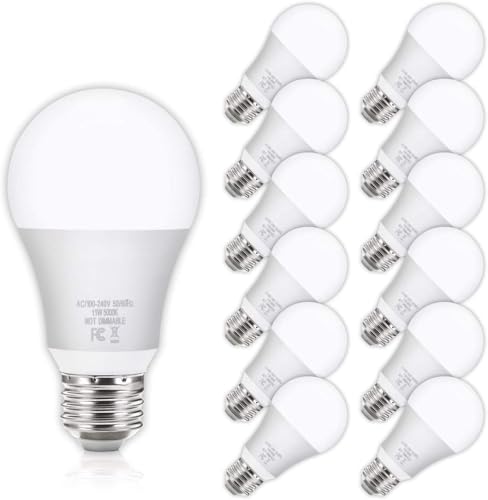
| Energy-Saving Standard | Bulb Shape/Base: A19, E26 medium screw base | Light Source Type: LED | Color Temperature: 5000K (Daylight) | VIEW LATEST PRICE | Read Our Analysis |
More Details on Our Top Picks
24-Pack 14W A19 LED Bulbs 5000K Daylight
Should you want bright, daylight-white illumination for workspaces or homes, these 24-pack 14W A19 LEDs are a smart pick—they deliver 1,600 lumens (100W equivalent) at 5000K with a high 90+ CRI, so colors stay true and details pop. You’ll get long life—25,000+ hours—and instant, flicker-free light from Kondras A19-14-50/B1BF/14/7J bulbs. The shatter-resistant plastic housing and no UV/IR output make them safer and eye-friendly. They’re non-dimmable, E26 base, 100–120V, 60Hz, and fit most indoor fixtures. With 280° beam angle and high efficiency, they cut energy use without sacrificing brightness.
- Bulb Shape/Base:A19, E26 medium screw base
- Light Source Type:LED
- Color Temperature:5000K (Daylight)
- Wattage / Power:14W
- Non-dimmable:Non-dimmable
- Estimated Lifetime:25,000+ hours
- Additional Feature:Shatter-resistant plastic housing
- Additional Feature:1600 lumens output
- Additional Feature:90+ CRI
TJOY 12-Pack A19 9W Soft Warm White LED Bulbs
Provided you want reliable, warm lighting for multiple rooms without swapping bulbs often, the TJOY 12-pack A19 9W LEDs are a strong choice—each 9W bulb delivers 800 lumens at a cozy 2700K, replacing a 60W incandescent while cutting energy use about 85%. You’ll get soft, non-flickering light with 80 CRI, immediate full brightness, and no lead or mercury. They’re non-dimmable, fit standard E26 sockets, and run on 120V. Expect about 13.7 years at three hours daily and roughly $1.08 annual energy cost. UL, RoHS, and FCC listings back safety, plus a one-year replacement or refund policy.
- Bulb Shape/Base:A19, E26 medium screw base
- Light Source Type:LED
- Color Temperature:2700K (Soft Warm White)
- Wattage / Power:9W
- Non-dimmable:Non-dimmable
- Estimated Lifetime:Up to ~13.7 years (at 3 hrs/day) — implied multi-year life
- Additional Feature:UL, RoHS, FCC listed
- Additional Feature:2700K cozy warm white
- Additional Feature:85% estimated energy savings
LE 9W LED A19 Bulbs 60W Equivalent Daylight
Provided you want bright, crisp light for tasks like reading or detailed work, these LE 9W A19 bulbs deliver 800 lumens at a daylight 5000K color that mimics natural daylight. You get five non-dimmable bulbs with standard E26 bases, so they screw into table lamps, floor lamps, open pendants, and most medium-screw fixtures easily. Each uses 9W—about 85% less energy than a 60W incandescent—while offering a rated 10,000-hour lifespan (roughly nine-plus years at three hours per day). Note they’re not dimmable and can’t be shipped to California, but they’re a straightforward, efficient option for bright room lighting.
- Bulb Shape/Base:A19, E26 medium screw base
- Light Source Type:LED
- Color Temperature:5000K (Daylight)
- Wattage / Power:9W
- Non-dimmable:Non-dimmable
- Estimated Lifetime:10,000 hours
- Additional Feature:Not eligible for CA shipment
- Additional Feature:10,000-hour rated life
- Additional Feature:5000K daylight white
Best to Buy 10-Pack G4 3W Warm White LEDs
Should you’re swapping out halogen G4 bulbs in tight fixtures or mobile setups, this 10-pack of Best to Buy 3W G4 LEDs gives you long life and warm, 2700K light without the heat and frequent replacements of halogens. You’ll get 3W per bulb (about a 40W halogen equivalent), 280 lumens and a wide 120° beam from nine SMD 5730 LEDs. They run on 12–30 V AC/DC, aren’t dimmable, and boast a 50,000-hour rated life for real energy and maintenance savings. Packaged as ten, they suit outdoor lighting fixtures, RVs, boats, appliances and other G4 replacements.
- Bulb Shape/Base:G4 bi-pin (T4 tower)
- Light Source Type:LED (SMD 5730)
- Color Temperature:2700K (Warm White)
- Wattage / Power:3W
- Non-dimmable:Not dimmable
- Estimated Lifetime:50,000 hours
- Additional Feature:G4 bi-pin (T4) base
- Additional Feature:50,000-hour rated life
- Additional Feature:12–30V AC/DC input
Yochoice 12-Pack A19 100W Equivalent 5000K LEDs
In case you want bright, daylight‑white lighting for workspaces or whole‑home replacement without high energy bills, the Yochoice 12‑pack delivers 1100 lumens at just 11W each (100W incandescent equivalent) and cuts energy use as much as 90%. You’ll get A19 bulbs with 5000K daylight color, 85 CRI, 280° beam angle, and an E26 base suitable for standard fixtures. They’re rated ~25,000 hours, run cool, and use ABS/aluminum for durability. Not dimmable but app-controlled, flicker‑free, and toxin‑free. Each pack contains 12 bulbs; YoChoice offers a 30‑day return and pre‑shipment testing.
- Bulb Shape/Base:A19, E26 medium screw base
- Light Source Type:LED
- Color Temperature:5000K (Daylight)
- Wattage / Power:11W
- Non-dimmable:Not dimmable
- Estimated Lifetime:~25,000 hours
- Additional Feature:1100 lumens output
- Additional Feature:ABS + aluminum construction
- Additional Feature:30-day return guarantee
Factors to Consider When Choosing Price On Led Light Bulbs
If you shop for LED bulbs, weigh brightness against price so you get the light output you need without overpaying. Check energy efficiency ratings and lifespan estimates to predict long-term cost and replacement frequency. Also confirm color temperature options and fixture compatibility so the bulb performs where you plan to use it.
Brightness Versus Price
Although price often grabs your attention initially, compare lumens—not watts—to judge brightness and value; a 1600-lumen bulb shines the same whether it uses 11W or 14W, so focus on price per lumen (or price per 1,000 lumens) to find the best deal. Calculate cost-effectiveness through dividing price by lumens to see which bulb gives the most light for your money. Also weigh lumens-per-watt: a higher lm/W cuts energy use for identical brightness, potentially offsetting a higher upfront cost over time. Factor in rated lifetime to compute cost per lumen-hour—longer life can justify a pricier purchase. Finally, account for color temperature and CRI needs; bulbs with better color rendering or specific temps often cost more per lumen but deliver superior usable light.
Energy Efficiency Ratings
Efficiency matters while you’re comparing LED prices, so focus on lm/W (lumens per watt) as your primary metric—higher lm/W (typical modern LEDs range 70–160 lm/W) gives more light for less electricity. Check published efficacy and energy labels like ENERGY STAR rather than trusting “equivalent” watt claims. Compare a bulb’s wattage to its incandescent replacement to estimate savings: a 9–14W LED often replaces a 60–100W incandescent, cutting consumption roughly 75–90%. Factor rated lifetime (10,000–50,000+ hours) into cost projections—longer life reduces replacement frequency and lifecycle energy. Keep in mind perceived brightness varies with color temperature, so use lm/W and certifications to judge real-world efficiency. Prioritize bulbs with verifiable lm/W figures and reputable certifications for best long-term value.
Color Temperature Options
Color temperature, measured in Kelvins (K), tells you whether a bulb will cast warm, cozy light (about 2000–3000K), neutral to cool white (around 4000–5000K), or daylight-like blue tones (5000–6500K), and you should pick it based on the room’s function and desired mood. Choose warm white (2700–3000K) for inhabited rooms and bedrooms to promote relaxation; pick cool white (4000–5000K) for kitchens and workspaces where tasks demand clarity. Use daylight (5000–6500K) for reading, detail work, or commercial areas whenever you need contrast and alertness, but avoid it in cozy spaces. Keep in mind cooler temperatures often seem brighter at equal lumens; match fixtures within about 200K to prevent visible shifts. Consider CRI and lumens for accurate color and output.
Bulb Lifespan Estimates
Longevity matters while you’re evaluating LED prices, so look beyond the sticker price and check rated hours, lumen maintenance, and warranties. Manufacturers list lifespans in hours—commonly 10,000–50,000+—so compare ratings against your daily use to estimate real replacement intervals. Convert hours to years (divide rated hours against your average daily hours; 25,000 hours ≈ 22.8 years at 3 hours/day) to see practical longevity. Pay attention to lumen maintenance metrics like L70, which tell you at what point output falls to 70% of initial brightness. Longer-rated bulbs usually have better thermal management and build quality; inspect heat-dissipation features and materials. Finally, use warranty length as a proxy for expected durability—longer warranties often signal stronger manufacturer confidence.
Compatibility With Fixtures
Lifespan and warranties tell you how long a bulb could last, but you also need to make sure it fits and works safely in your fixtures. Check the base type (E26, GU10, G4) so the pins or screw match the socket. Confirm shape and size (A19, BR30, PAR38) to avoid crowding enclosed shades or recessed cans and blocking ventilation. Verify the fixture’s rated voltage and transformer type—line-voltage 120 V versus low-voltage 12 V, and electronic versus magnetic drivers—so the LED gets the correct power. For dimmable fixtures, pick LEDs labeled dimmable and use compatible dimmer switches or drivers to prevent flicker and poor dimming. Finally, choose LEDs with proper enclosure and wet/damp ratings for enclosed or outdoor use.
Warranty And Support
While price often drives your choice, warranties and support determine how much risk you actually keep provided a bulb fails—so check the warranty length (commonly 1–5 years) and whether it matches the bulb’s rated lifespan, what remedy you’ll get (full replacement, pro‑rated refund, or partial credit), and any exclusions like misuse, improper fixtures, or voltage surges that could void coverage. Also verify whether color shift, premature lumen depreciation, or premature failure are covered, not just total burn‑out. Confirm proof requirements (receipt, serial) and channels for service—phone, email, or online claim portal—and note typical response or turnaround times. A clear, generous warranty plus responsive support lowers your effective risk and future costs.
Safety And Certifications
Because safety defects can turn a cheap bulb into an expensive hazard, always check for recognized certifications like UL, ETL, or CSA and regulatory marks such as RoHS and FCC before you buy. These prove the lamp and components passed electrical safety, fire-risk, hazardous-substance, and EMI tests. Match the bulb’s voltage and frequency ratings (e.g., 100–120 V, 60 Hz or 100–240 V, 50/60 Hz) to your supply to avoid overheating or premature failure. For damp or outdoor fixtures, verify IP ratings (IP44+ for splash resistance). Favor shatter-resistant housings, no-UV/no-IR claims whenever available, and documented lifetimes plus heat-dissipation specs to lower overheating risks. Certs and specs protect you and extend real-world bulb life.
Pack Size Economics
A larger pack can cut your per‑bulb cost, but don’t judge value based on sticker price alone: divide the pack price into the number of bulbs to get cost per bulb, then factor in brightness (cost per useful lumen), rated lifetime (cost per 1,000 hours), warranty length, and your immediate versus future needs to decide whether bulk savings outweigh the risk of changing specs or wasting unused bulbs. You should compare cost per useful lumen so lower‑priced, dimmer bulbs don’t mislead you. Calculate cost per 1,000 hours using price ÷ (lifetime/1,000) to value longevity. Weigh warranty length and expected failure rates—longer coverage and lower failures reduce long‑term costs. Buy bulk only provided specs match current and likely future needs.
