

You’ll want cooling that actually fits your motor, moves air, and survives hard use; this list points out compact 30×30×10 mm fans for 540/550 motors, twin‑fan setups for high‑power rigs, two‑packs for spares, and sturdy alloy heatsinks with vibration mounts. I’ll show mounting specs, voltage needs, and what to avoid so you can pick the right option for your build—starting with the most common 30mm setups.
| 30mm RC Motor Heatsink with Cooling Fan (Black/Silver) |

| Reliable Cooling | Compatibility: 1/8, 1/10, 1/12 RC cars; fits 540/550 motors; brackets with 24 mm mounting holes | Cooling Method: Active fan + heatsink (air cooling) | Heatsink Material: High-quality material (aluminum alloy implied) | VIEW LATEST PRICE | Read Our Analysis |
| 30mm RC Brushless Motor Cooling Fan (Black/Red) |
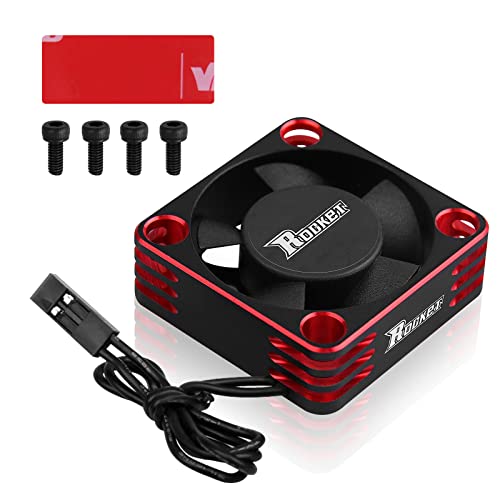
| High-Performance Pick | Compatibility: 1/8, 1/10, 1/12 RC cars; fits 540/550 motors and ESCs; brackets with 24 mm mounting holes | Cooling Method: Air cooling (fan + heatsink) | Heatsink Material: Aluminum alloy + plastic | VIEW LATEST PRICE | Read Our Analysis |
| RC Car Brushless Motor Cooling Fan Heatsink (2-Pack) |

| Two-Pack Value | Compatibility: 1/8, 1/10, 1/12 RC cars; fits 540/550 motors and ESCs; brackets with 24 mm mounting holes | Cooling Method: Active fan + heatsink (air cooling) | Heatsink Material: High-quality materials (aluminum alloy implied) | VIEW LATEST PRICE | Read Our Analysis |
| Hobby Twin RC Motor Cooling Fans with Metal Heatsink |

| Heavy-Duty Dual | Compatibility: 1/8 and 1/7 RC cars; fits motors with 40–42 mm diameters (models like 4068, 4076, 4082, 4092, 4274) | Cooling Method: Air cooling (dual fans + metal heatsink) | Heatsink Material: Aluminum alloy heatsink (metal) | VIEW LATEST PRICE | Read Our Analysis |
| ShareGoo Alloy Heatsink with 5V Cooling Fan for RC Motors |

| Compact 5V Solution | Compatibility: 1/10 RC cars (540, 550, 3650-size brushless motors) | Cooling Method: Active fan + aluminum fins (air cooling) | Heatsink Material: Aluminum alloy | VIEW LATEST PRICE | Read Our Analysis |
More Details on Our Top Picks
30mm RC Motor Heatsink with Cooling Fan (Black/Silver)
Should you push your 1/8–1/12 scale RC car hard or run 540/550 brushless motors frequently, this 30mm heatsink with an integrated fan is for you — it delivers up to 28,000 RPM cooling to prevent overheating while fitting any bracket with 24mm mounting holes. You’ll appreciate the black body with red patterns that looks sharp on 1/8, 1/10, and 1/12 models. It’s built from quality materials with fine workmanship for long-term durability. Installation’s easy; bear in mind the plug isn’t polarized, so a reversed connection won’t damage anything but the fan simply won’t run. It’s compact, effective, and reliable.
- Compatibility:1/8, 1/10, 1/12 RC cars; fits 540/550 motors; brackets with 24 mm mounting holes
- Cooling Method:Active fan + heatsink (air cooling)
- Heatsink Material:High-quality material (aluminum alloy implied)
- Fan Size / Dimension:30 mm heatsink (30 mm fan implied)
- Power / Voltage Range:Fan (no explicit voltage listed; compatible with typical RC receiver power)
- Installation / Connector Notes:Easy to install; plug not polarized (wrong connection won’t damage but fan won’t run)
- Additional Feature:30 mm heatsink size
- Additional Feature:Black with red styling
- Additional Feature:Non-polarized plug
30mm RC Brushless Motor Cooling Fan (Black/Red)
In case you run 1/8 to 1/12 scale RC cars with 540 or 550 brushless motors, this 30mm black-and-red cooling fan is a compact way to keep temps down during hard use. You’ll fit it to motors or ESCs with 24mm mounting holes; it’s 30×30×10mm, about 18g, and connects to your receiver via an 18cm cable. It spins up to 28,000 RPM, draws up to 1.5 A at 5–8.45 V, and lists 1.5 W output with ~50 dB noise. Made of aluminum alloy and plastic, it’s easy to install—watch polarity or it won’t run.
- Compatibility:1/8, 1/10, 1/12 RC cars; fits 540/550 motors and ESCs; brackets with 24 mm mounting holes
- Cooling Method:Air cooling (fan + heatsink)
- Heatsink Material:Aluminum alloy + plastic
- Fan Size / Dimension:30 × 30 × 10 mm (30 mm fan)
- Power / Voltage Range:5–8.45 V (power 1.5 W; current up to 1.5 A)
- Installation / Connector Notes:Easy install; powers from receiver; plug has polarity—incorrect polarity prevents operation
- Additional Feature:5–8.45 V range
- Additional Feature:18 cm cable length
- Additional Feature:50 dB noise level
RC Car Brushless Motor Cooling Fan Heatsink (2-Pack)
Should you run 1/8–1/12 scale RC cars with 540 or 550 brushless motors and want reliable cooling, this 2-pack fan heatsink fits motors and ESCs with 24 mm mounting holes and delivers high airflow at up to 28,000 RPM to prevent overheating. You’ll appreciate its excellent heat dissipation and simple installation; the plug isn’t polarized, so wrong polarity won’t harm it but won’t spin the fan either. Built from high-quality materials with precise workmanship, the heatsink promises long-term durability. Its black body with red patterns gives a unique, cool look that complements most builds while keeping temps under control.
- Compatibility:1/8, 1/10, 1/12 RC cars; fits 540/550 motors and ESCs; brackets with 24 mm mounting holes
- Cooling Method:Active fan + heatsink (air cooling)
- Heatsink Material:High-quality materials (aluminum alloy implied)
- Fan Size / Dimension:30 mm fan / heatsink
- Power / Voltage Range:Fan (no explicit voltage listed; compatible with typical RC receiver power)
- Installation / Connector Notes:Easy to install; plug not polarized (incorrect polarity won’t damage but unit won’t operate)
- Additional Feature:Two-pack set
- Additional Feature:Black with red pattern
- Additional Feature:Non-polarized plug
Hobby Twin RC Motor Cooling Fans with Metal Heatsink
Should you run 1/8 or 1/7 scale brushless rigs with 40–42mm motors, this twin-fan heatsink combo gives you compact, high-speed airflow that’ll keep temps down and extend motor life. You get dual 30×30×10mm fans mounted on a 46×38mm aluminum-alloy heatsink, fitting 40mm–42mm diameters and models like 4068–4274. Fans spin up to 27,000 RPM at 8.4V, draw up to 1.5A (12.6W), and output about 50 dB. Package includes two fans, carbon covers, a 40mm heatsink, and an ~18cm extension cable. It’s lightweight, easy to install, and runs from your receiver’s 2-pin port.
- Compatibility:1/8 and 1/7 RC cars; fits motors with 40–42 mm diameters (models like 4068, 4076, 4082, 4092, 4274)
- Cooling Method:Air cooling (dual fans + metal heatsink)
- Heatsink Material:Aluminum alloy heatsink (metal)
- Fan Size / Dimension:Dual 30 × 30 × 10 mm fans (two 30 mm fans)
- Power / Voltage Range:8.4 V (input current up to 1.5 A; wattage 12.6 W)
- Installation / Connector Notes:Easy install; powers from receiver (2-pin); wiring polarity matters—incorrect connection prevents operation
- Additional Feature:Dual 30mm fans
- Additional Feature:Carbon fan covers included
- Additional Feature:Fits 40–42 mm motors
ShareGoo Alloy Heatsink with 5V Cooling Fan for RC Motors
Choose the ShareGoo Alloy heatsink with 5V cooling fan provided you run 1/10-scale RC cars, trucks, buggies, or crawlers and want a compact, easy-to-install way to cut motor temps and extend runtimes. You’ll fit it to 540, 550, or 3650-size brushless motors; the aluminum-alloy body and fin array handle passive dissipation while the integrated 5V fan adds active airflow. The fan’s hard-plastic housing is blue and plugs into a receiver spare port for straightforward power and control. The kit includes the heatsink and fan assembly so you can quickly protect your motor, control temperatures, and prolong service life.
- Compatibility:1/10 RC cars (540, 550, 3650-size brushless motors)
- Cooling Method:Active fan + aluminum fins (air cooling)
- Heatsink Material:Aluminum alloy
- Fan Size / Dimension:Designed for 5V fan sized for 540/550/3650 motors (comparable small fan for 1/10 motors)
- Power / Voltage Range:5 V fan (powered from receiver spare port)
- Installation / Connector Notes:Simple plug-in connection to receiver spare port (5V)
- Additional Feature:Blue anodized body
- Additional Feature:Integrated 5V fan
- Additional Feature:3650-size motor fit
Factors to Consider When Choosing Rc Motor Cooling Fan
While picking an RC motor cooling fan, you’ll want to check fit and compatibility with your motor and heatsink to avoid mounting problems. Consider cooling performance, power/voltage requirements, and the fan’s size and weight so it meets your cooling needs without overloading the system. Also evaluate build material quality for durability and heat resistance.
Fit And Compatibility
Because your motor’s speed and longevity depend on proper mounting and power, check fit and compatibility before buying a cooling fan: measure the fan/heatsink outer diameter and mounting hole spacing (540/550 motors commonly use 24 mm centers; larger motors could require 40–42 mm), confirm the assembly thickness and total dimensions (for example 30×30×10 mm) will clear the chassis, pinion, and nearby components, verify the fan’s voltage and current match your receiver/ESC (typical small fans run 5–8.4 V and can draw up to ~1.5 A), and guarantee the connector type, wiring polarity, and heatsink mounting pattern suit your motor case and scale (1/8, 1/10, 1/12) or that you have the right adapter.
Measure precisely, compare datasheets, and mock-fit before purchase to avoid clearance issues, electrical overloads, or incompatible connectors.
Cooling Performance
Often you’ll find that cooling performance comes down to matching fan speed, power, and heatsink design to your motor’s needs. You should prioritize higher rotational speeds (some fans reach ~28,000 RPM) when you need maximum airflow, but bear in mind airflow only matters provided the fan, heatsink, and motor are compatible. Combine active airflow with a large-surface-area aluminum heatsink to maximize convective and conductive transfer. Make certain the heatsink contacts the motor body tightly and the fan is aligned with unobstructed airflow paths. Balance noise and power draw against cooling gains: louder, higher-current fans move more air but tax your battery and receiver. Finally, confirm fan voltage and current ratings match your system so the fan can deliver intended airflow without overloading the supply.
Power And Voltage
Should you’re picking a fan, match its voltage and current to your RC power source so it runs reliably without stressing the receiver or battery. Check common voltages — 5 V for receiver ports or up to ~8.4 V for battery-fed fans — and never under‑ or over‑drive the unit. Verify current draw (small brushless fans often pull up to ~1.5 A) and confirm your receiver or ESC can supply that without browning out. Calculate watts (V × A) to gauge cooling capability versus power cost: higher wattage usually gives more airflow but increases draw and motor heat. In case running from the pack, confirm the fan’s voltage range and add wiring or a regulator as needed. Finally, observe whether the fan expects constant voltage or PWM control and confirm compatibility.
Size And Weight
Whenever you pick a fan, match its diameter, thickness, and weight to your motor, heatsink, and mounting space so it fits cleanly and doesn’t upset balance or clearance. Match fan diameter and heatsink footprint to your motor and bracket—common fan sizes include 30 mm and heatsink diameters typically range 30–46 mm—to guarantee full airflow coverage. Watch thickness and total height; small RC fans are often about 10 mm thick and can conflict with cowling or body clearance. Consider combined fan and heatsink weight—small units usually weigh ~15–25 g—since extra mass affects balance and rotational inertia. For high‑performance or scale models pick lighter, compact designs to keep center of gravity low. Finally confirm cable length and connector placement for clean routing and fit.
Build Material Quality
Because your cooling assembly takes the brunt of heat, pick materials and construction that maximize thermal transfer and resist vibration. Prefer aluminum alloy heatsinks for high thermal conductivity, light weight, and durability. Choose fan housings and covers made from impact‑resistant plastics or carbon fiber to protect blades and maintain shape. Inspect fan bearings and motor quality — high‑RPM rated brushless or quality sleeve bearings last longer under sustained use. Verify tight construction tolerances and workmanship: well‑machined mounting holes and a secure mate to motor casings prevent gaps that reduce cooling efficiency. Finally, check assembly sturdiness: firm soldered or crimped wiring, good cable insulation, and strain relief reduce failure risk from movement and connector wear.
Noise And Vibration
Good material choices and solid mounting set you up for effective cooling, but noise and vibration will determine how usable that cooling is in practice. You’ll want dB ratings—small 30 mm fans often hit ~50 dB at peak—if quiet operation matters. Higher RPM fans cool faster but usually make more noise and can produce annoying tonal frequencies during long runs. Check for smooth spin and balanced blades; imbalanced or poorly mounted fans can transmit vibration into the motor and chassis, degrading handling and loosening fasteners. Choose fans and heatsinks with firm, vibration-damping mounts or optional covers to reduce resonance. Also consider electrical drive: higher current draw and motor cogging can add electrical noise and perceived vibration, so match fan specs to your system.
