

You want multi‑gig speeds but don’t want flaky firmware or a modem that chokes your mesh. You’ll need a gateway with 2.5–10 Gbps WAN options or solid link aggregation, DOCSIS 3.1 (or native Ethernet WAN), plus bridge mode and signed updates to avoid headaches — and there’s a shortlist that balances those needs with mesh readiness, QoS, IPv6, and IGMP handling that keeps your TV and voice calls smooth, so let’s walk through the top picks.
| TP-Link Deco 7 BE23 Wi‑Fi 7 Mesh System (3-Pack) |

| Best Overall Performance | Wi‑Fi Generation: Wi‑Fi 7 | Mesh Capable: Yes — Deco mesh system (3‑pack) | Dual‑Band Support: Dual‑band | VIEW LATEST PRICE | Read Our Analysis |
| TP-Link Archer AX21 AX1800 WiFi 6 Router |

| Budget-Friendly Router | Wi‑Fi Generation: Wi‑Fi 6 | Mesh Capable: Yes — EasyMesh support (single router) | Dual‑Band Support: Dual‑band | VIEW LATEST PRICE | Read Our Analysis |
| Amazon eero 7 Dual-Band Mesh Wi‑Fi 7 Router (3-Pack) |

| Best for Simplicity | Wi‑Fi Generation: Wi‑Fi 7 | Mesh Capable: Yes — eero mesh system (3‑pack) | Dual‑Band Support: Dual‑band | VIEW LATEST PRICE | Read Our Analysis |
| Tenda AX3000 Nova MX12 Mesh WiFi System (3-Pack) |

| Best Coverage Value | Wi‑Fi Generation: Wi‑Fi 6 | Mesh Capable: Yes — Nova mesh system (3‑pack) | Dual‑Band Support: Dual‑band | VIEW LATEST PRICE | Read Our Analysis |
| Amazon eero 6 Mesh WiFi Router (1-Pack) |
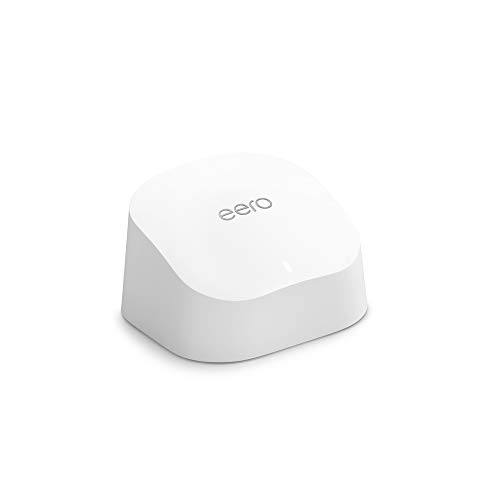
| Best for Smart Homes | Wi‑Fi Generation: Wi‑Fi 6 | Mesh Capable: Yes — eero mesh (single node, expandable) | Dual‑Band Support: Dual‑band | VIEW LATEST PRICE | Read Our Analysis |
More Details on Our Top Picks
TP-Link Deco 7 BE23 Wi‑Fi 7 Mesh System (3-Pack)
Should you want top-tier wireless speed and future-proofing for a busy smart home, the TP‑Link Deco 7 BE23 3‑pack is a strong pick—its Wi‑Fi 7 core (MLO, 4K‑QAM, Multi‑RUs) and 4‑stream dual‑band radios deliver multi‑gig wireless throughput and stable multi-device performance across up to 6,500 sq. ft., while dual 2.5 Gbps ports and simultaneous wired/wireless backhaul make it easy to integrate with a modem and high‑speed wired gear. You’ll get up to 2882 Mbps on 5 GHz, 688 Mbps on 2.4 GHz, support for 150 devices, and extended range from four high‑gain antennas per node. HomeShield, WPA3, VPN client/server, and AI‑Roaming keep management, security, and seamless handoffs simple.
- Wi‑Fi Generation:Wi‑Fi 7
- Mesh Capable:Yes — Deco mesh system (3‑pack)
- Dual‑Band Support:Dual‑band
- Multi‑Gig Wired Port(s):Two 2.5 Gbps WAN/LAN ports per unit
- Parental / Security Features:HomeShield (parental controls, IoT protection, WPA3)
- Coverage / Device Capacity (stated):Coverage up to 6,500 sq. ft; supports up to 150 devices
- Additional Feature:Multi-Link Operation (MLO)
- Additional Feature:AI‑Roaming self‑learning
- Additional Feature:Private IoT network
TP-Link Archer AX21 AX1800 WiFi 6 Router
Should you want affordable Wi‑Fi 6 performance for a busy home, the TP‑Link Archer AX21 (AX1800) delivers faster, more reliable connections with OFDMA and beamforming to handle multiple devices at once. You’ll get dual‑band 802.11ax with up to 1.8 Gbps (1200 Mbps on 5 GHz, 574 Mbps on 2.4 GHz), four high‑gain antennas, and an FEM chipset to extend range—though walls and distance still affect throughput. It supports EasyMesh, Gigabit wired ports, OpenVPN/PPTP server, Alexa, and major ISPs, but needs a separate modem. TP‑Link’s Secure‑by‑Design stance and free support help keep firmware and security current.
- Wi‑Fi Generation:Wi‑Fi 6
- Mesh Capable:Yes — EasyMesh support (single router)
- Dual‑Band Support:Dual‑band
- Multi‑Gig Wired Port(s):Gigabit wired ports (1 Gbps)
- Parental / Security Features:Built‑in security; supports VPN server (OpenVPN, PPTP)
- Coverage / Device Capacity (stated):Coverage unspecified (home use); supports typical home capacity (improved multi‑device handling) — AX1800
- Additional Feature:EasyMesh support
- Additional Feature:Alexa voice compatibility
- Additional Feature:OpenVPN & PPTP server
Amazon eero 7 Dual-Band Mesh Wi‑Fi 7 Router (3-Pack)
Provided that you need a simple, future‑proof mesh that handles multi‑gig internet and lots of devices, the Amazon eero 7 (3‑pack) is a strong choice because it supports up to 2.5 Gbps plans, offers Wi‑Fi 7 with multi‑link operation for better throughput and reliability, and covers about 6,000 sq. ft. You’ll get wireless speeds up to 1.8 Gbps, two auto‑sensing 2.5 GbE ports, and support for 120+ devices. TrueMesh, TrueRoam, and TrueChannel cut dead spots and improve roaming. It’s backward compatible with prior eeros, integrates with select Echo devices, and includes a three‑year warranty and optional eero Plus security.
- Wi‑Fi Generation:Wi‑Fi 7
- Mesh Capable:Yes — eero mesh system (3‑pack)
- Dual‑Band Support:Dual‑band
- Multi‑Gig Wired Port(s):Two auto‑sensing 2.5 GbE ports
- Parental / Security Features:Optional eero Plus security suite (parental controls, VPN)
- Coverage / Device Capacity (stated):Coverage up to 6,000 sq. ft; supports 120+ devices
- Additional Feature:TrueMesh/TrueRoam/TrueChannel
- Additional Feature:eero Built‑in Echo integration
- Additional Feature:Three‑year warranty
Tenda AX3000 Nova MX12 Mesh WiFi System (3-Pack)
Should you need reliable whole-home Wi‑Fi for heavy streaming, gaming, and lots of smart devices, the Tenda AX3000 Nova MX12 (3‑pack) is a strong fit — it delivers Wi‑Fi 6 speeds across dual bands with MU‑MIMO and OFDMA to keep dozens of devices responsive, and its distributed mesh design covers up to 7,000 sq. ft. so you can walk around your house without drops. You’ll get AX3000-class throughput (up to 2976 Mbps combined), separate 2.4/5 GHz SSIDs, and support for 160+ devices. Setup uses the Tenda app or Web GUI; add nodes via the Mesh button for fast expansion.
- Wi‑Fi Generation:Wi‑Fi 6
- Mesh Capable:Yes — Nova mesh system (3‑pack)
- Dual‑Band Support:Dual‑band
- Multi‑Gig Wired Port(s):Gigabit wired connectivity (likely 1 Gbps)
- Parental / Security Features:Standard security features; management via app/GUI (parental controls implied)
- Coverage / Device Capacity (stated):Coverage up to 7,000 sq. ft; supports over 160 devices
- Additional Feature:Mesh button expansion
- Additional Feature:Separate SSID band selection
- Additional Feature:Distributed low‑latency architecture
Amazon eero 6 Mesh WiFi Router (1-Pack)
Should you want a compact, easy-to-expand mesh that handles many smart-home devices, the Amazon eero 6 (1‑pack) is built for you — it covers about 1,500 sq. ft., supports Wi‑Fi 6 and roughly 75+ connected devices, and includes a built‑in Zigbee hub so you can hook up compatible smart gadgets without another bridge. You’ll get up to 900 Mbps internet, TrueMesh routing for fewer drop-offs during 4K streaming, gaming, and conferencing, and easy setup via the eero app with remote management. Expand with other eero units, receive automatic updates, and contact US support seven days a week.
- Wi‑Fi Generation:Wi‑Fi 6
- Mesh Capable:Yes — eero mesh (single node, expandable)
- Dual‑Band Support:Dual‑band
- Multi‑Gig Wired Port(s):Gigabit wired ports (1 Gbps)
- Parental / Security Features:Automatic updates + app management; built‑in smart hub with security/controls via eero app
- Coverage / Device Capacity (stated):Coverage up to 1,500 sq. ft; supports 75+ devices
- Additional Feature:Built‑in Zigbee hub
- Additional Feature:Automatic firmware updates
- Additional Feature:22‑ft radius coverage
Factors to Consider When Choosing a Modem For Mesh Wifi
Upon choosing a modem for your mesh WiFi, you’ll want to check ISP compatibility and the modem’s speed class to match your plan. Make sure it has enough Ethernet ports for your router or nodes and supports the latest DOCSIS version for stability and performance. Also look for future-proof features like multichannel bonding and firmware updates so your network stays fast over time.
ISP Compatibility
Because your modem is the gateway between your ISP and your mesh network, you need to confirm it matches your service type and speed so it won’t become the weak link. Check that the modem supports your plan’s maximum WAN rate (e.g., 1 Gbps, 2.5 Gbps) so it won’t bottleneck multi‑gig mesh throughput. Verify connection type: DOCSIS 3.1 for most cable, GPON/ONT for fiber, or Ethernet WAN for fixed‑wireless. Look for a multi‑gig Ethernet port or link‑aggregation if your mesh needs higher wired backhaul. Confirm your ISP allows third‑party modems and whether activation or provisioning is required to avoid support issues. Finally, make sure the modem can enter bridge/passthrough mode so your mesh handles routing and avoids double‑NAT complications.
Modem Speed Class
Although your mesh Wi‑Fi determines wireless performance, the modem’s speed class sets the ceiling for internet throughput, so choose one rated at or above your plan (for example, a ≥1 Gbps modem for a 1 Gbps service). Match the modem’s WAN tech to your connection: DOCSIS 3.1 for many multi‑gig cable plans, or gigabit Ethernet for fiber/DSL. Look for multi‑gig ports or link aggregation in case you’ll bond connections or feed a 2.5+ Gbps mesh backhaul so the modem doesn’t become the bottleneck. Check throughput and session handling—higher speed ratings usually mean better CPUs and lower latency with many devices. Finally, buy with headroom for future Wi‑Fi 6/7 or multi‑gig upgrades to avoid replacing the modem soon.
Ethernet Port Count
Consider how many wired connections you’ll need and pick a modem with enough Gigabit or multi‑gig LAN ports to match—one gigabit port can handle a single primary mesh node, but wired backhaul, extra switches, and directly connected devices quickly eat up ports. Make sure the modem has at least one Gigabit Ethernet LAN port; 100 Mbps ports will bottleneck modern Wi‑Fi. Should you use wired backhaul or multiple wired devices, choose two or more Gigabit or multi‑gig ports to avoid adding a switch. For 1 Gbps+ plans, prefer a native 2.5 Gbps or 10 Gbps port so your mesh node gets full ISP throughput. Also check for link aggregation (LACP) support and a bridge/passthrough mode with enough LAN ports for your mesh and other wired gear.
DOCSIS Version Support
After you’ve matched LAN ports to your mesh nodes and wired backhaul needs, check the modem’s DOCSIS version to make sure it won’t bottleneck your network. DOCSIS defines max PHY rates: 3.0 can reach aggregated downstream near 1.2 Gbps using multiple channels, while 3.1 delivers multi‑Gbps capacity with much higher spectral efficiency. Should your mesh must serve gigabit or multi‑gig internet and multiple simultaneous clients, pick at least a DOCSIS 3.1 modem so the modem doesn’t cap throughput. 3.1 also adds OFDM/OFDMA, lower latency, and improved noise resilience—beneficial for gaming and video calls. Confirm the modem’s DOCSIS profile and that its WAN/LAN ports support your ISP’s multi‑gig plan. Keep in mind 3.1 is backward compatible with 3.0 deployments.
Future-Proof Features
Provided you’re planning a mesh setup that should last several years, pick a modem with multi‑gig WAN support (2.5 Gbps or higher) and DOCSIS 3.1 (or equivalent) so the modem won’t become the weakest link as speeds and device counts grow. Also choose link aggregation or multiple Ethernet ports plus 2.5/5 Gbps LAN options so you can dedicate wired backhaul or hook multi‑gig mesh nodes without speed loss. Make sure the modem handles IPv4 and IPv6 simultaneously, has large NAT table capacity and hardware acceleration to sustain many concurrent sessions. Finally, prioritize vendors with a clear firmware‑update policy and security features like secure boot and signed firmware to maintain compatibility and protect against developing vulnerabilities over the device’s lifetime.
Voice And Cable Support
Whenever you rely on ISP phone service or cable TV, make certain your modem and mesh setup handle voice and video signaling properly so calls stay clear and live TV doesn’t stutter; check VoIP support—SIP passthrough or built‑in ATA/phone ports—so your mesh router can carry voice without dropouts. For cable TV, pick a DOCSIS version and channel bonding that supports multiple high‑bandwidth streams alongside data. Decide whether you’ll keep the gateway in router mode or bridge it to your mesh router; bridging affects NAT, QoS, and voice signaling. Verify both modem and mesh can prioritize RTP/SIP via QoS or DSCP to cut latency and jitter. In case your provider uses set‑top boxes or managed IP video, make certain multicast and IGMP snooping/querier are supported to avoid network floods.
Security And Firmware
Handling voice and cable needs is only part of the equation; you also need a modem that keeps your network secure and up to date. Choose one with a clear firmware update cadence so you get timely patches for known vulnerabilities. Verify it uses secure management interfaces (HTTPS, SSH) and disables insecure protocols like Telnet by default. Prefer devices that implement modern encryption and authentication—TLS for the web UI, strong password requirements, and role-based access where offered. Confirm the vendor publishes CVE fixes or advisories and maintains a documented vulnerability disclosure process so you can track critical issues. Finally, make certain the modem coexists smoothly with your mesh system, letting the mesh run in router/AP mode while still receiving firmware security updates.
