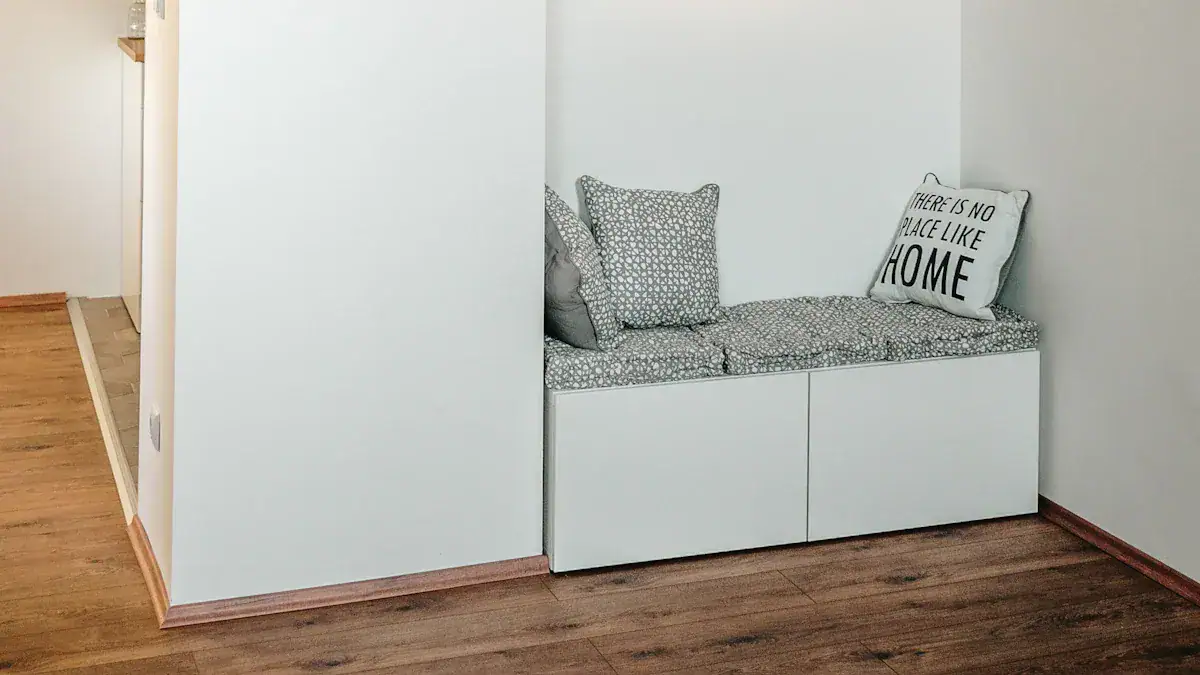
A custom-built piece offers both practical seating and valuable hidden storage. You gain extra seating and reduce clutter in any room. Building your own provides immense satisfaction and cost savings. You can save 70% to 90% compared to buying quality, long-lasting furniture from a store. These diy storage bench plans guide you through creating a sturdy, stylish diy seating bench. You achieve a custom solution perfectly tailored to your needs. This guide helps you build your own functional diy storage bench.
Key Takeaways
Add cushions to your bench for comfort. Choose strong foam and fabrics that resist stains.
Decorate your bench with trim or molding. You can also upgrade handles for a better look.
Include drawers or cubbies for better organization. Drawers help store small items neatly.
Pick the right drawer slides for heavy items. This makes drawers open smoothly and last longer.
Why a DIY Storage Bench?

DIY Storage Benefits
A diy storage bench offers many advantages for your home. It significantly boosts storage space in various rooms. You can store throws and board games in the living room or extra bedding in the bedroom. These benches help create a clutter-free environment. They provide a hidden space for items, keeping your home tidy and calm. Storage benches also serve multiple purposes. They act as seating, coffee tables, or even room dividers, optimizing space in smaller homes.
Multi-functional furniture like a storage bench enhances home organization. It offers integrated storage solutions such as under-seat compartments. These features keep clutter out of sight. They maintain a clean, organized environment. This type of furniture maximizes space and supports dynamic living. You can adapt rooms for different occasions. This optimizes every square foot, especially in apartments or homes with compact layouts.
Customization Options
Building your own storage bench allows for complete customization. You can choose a style that perfectly matches your home decor. Popular design styles include classic wooden, upholstered, or rustic. You can also opt for a modern, industrial, or boho-chic look. You decide the dimensions to fit your specific space. For example, entryway benches often have a standard height of about 18 inches. Their seat sizes range from 36 to 48 inches wide. This ensures your bench fits perfectly in its intended spot.
Cost Savings
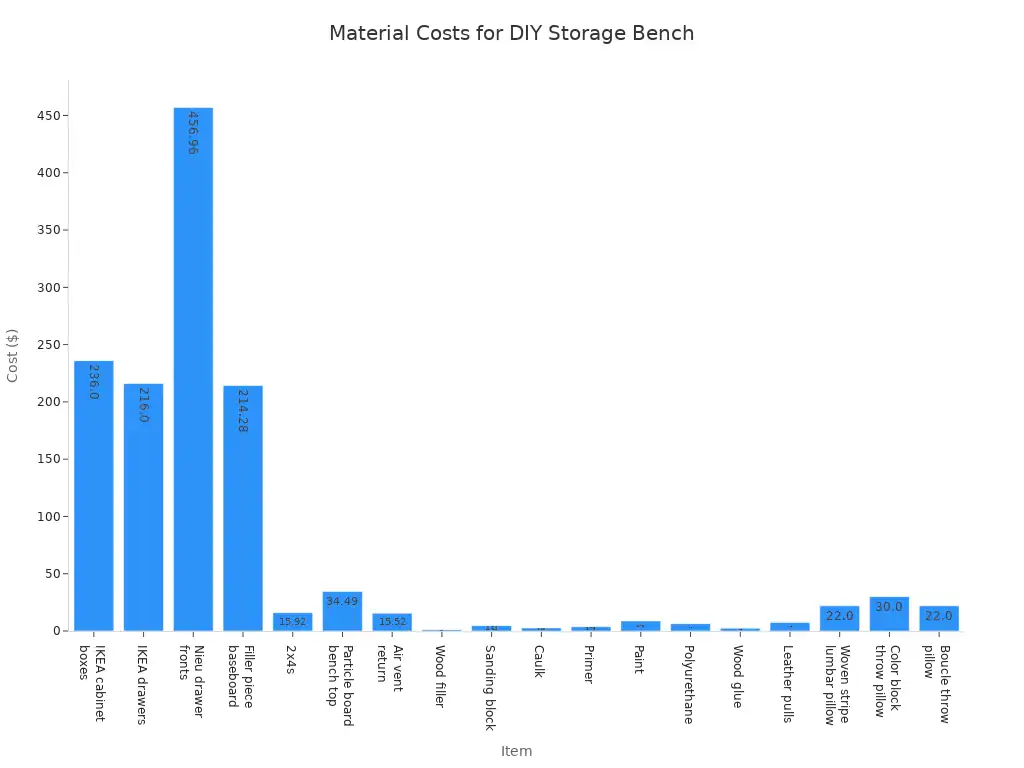
Creating your own storage bench saves you money compared to buying pre-made furniture. You control the material choices and labor costs. While some components can add up, the overall expense is often much lower. For instance, a project might involve cabinet boxes, drawer fronts, and wood. Even with these items, you often spend less than purchasing a similar quality piece from a store. This makes a diy storage bench a smart financial choice.
DIY Storage Bench Plans: Get Started
Before you begin building, careful planning ensures your project’s success. These diy storage bench plans help you create a functional and beautiful piece. You need to consider several factors. Think about where your bench will go and what you will store inside.
Design Considerations
First, decide on the location for your bench. Will it be an entryway bench for shoes, a mudroom catch-all, or a cozy window seat? The location dictates its size and style. For a window bench seat, consider optimal dimensions. A standard depth of 18 inches provides comfortable seating. If you add a slanted backrest, the total depth increases to 22 inches. For reading or relaxing, aim for a height of 2 feet to 2 feet 6 inches, or 3 feet if it’s a dining nook with an angled back. If you prefer sitting with your feet on the ground, a height of around 1 foot 6 inches is ideal. Remember to account for cushion height, typically 1 to 4 inches, to avoid overlapping the window.
Next, choose your style. Do you prefer modern, rustic, farmhouse, or traditional? This influences your material and finish choices. Think about the type of storage you need. A lift-top design offers simple, large storage. A storage bench with drawer options provides organized compartments. Open cubbies are great for easy access. For custom options, consider banquette seating. This requires precise measurements for a critical fit. Standard widths for banquette seating range from 48 to 96 inches. A recessed base is recommended for durability and easy cleaning. It protects the fabric from shoes and cleaning appliances. The seat height should be 18-19 inches from the floor for universal comfort.
Tools and Materials
Gathering the right tools and materials is crucial for your diy storage bench project. You will need essential tools like a saw (circular or miter saw), a tape measure, a square, a drill, and a driver. A staple gun and a framing square are also helpful. For materials, you will typically use plywood, pine, or MDF. You also need hinges, screws, and possibly drawer slides if you build a storage bench with drawer options. Don’t forget sandpaper for smoothing, paint or stain for finishing, and a protective sealer. For lift-top lids, consider Lid Stays and Spring Assist Hinges. These heavy-duty hinges ensure smooth, controlled movement. They prevent slamming and keep the lid securely open for safe access.
Wood and Hardware
Choosing the right wood ensures durability and a beautiful finish. For the main structure, 3/4-inch cabinet-grade plywood is an excellent choice. Birch or maple plywood works well for both painted and stained finishes. For the seat top, you can use a pre-made butcher block countertop or 2x material.
Feature | Plywood |
|---|---|
Durability | Generally more durable and resistant to damage than MDF. It holds screws very well, making it suitable for projects requiring strong joints. It is also more resistant to moisture than MDF, especially exterior-grade plywood, which is designed to withstand outdoor conditions. |
Pros | Stronger and more durable than MDF. Better screw-holding ability. More resistant to moisture (especially exterior grades). Lighter weight than MDF. |
Cons | Can be more expensive than MDF. Edges can splinter when cut. Can have voids or knots that affect appearance or strength. Not as smooth as MDF, requiring more prep work for a smooth finish. |
Plywood is stronger than MDF. You should use plywood because it is more durable. It can take daily wear and tear better.
Feature | MDF | Plywood |
|---|---|---|
Screw Holding | Does not hold screws well, especially on the edges. Screws can strip out easily, and repeated screwing and unscrewing can damage the material. | Holds screws very well, making it suitable for projects requiring strong joints. |
Water Resistance | Swells and warps easily when exposed to water or high humidity. Not suitable for outdoor use or areas with high moisture. | More resistant to moisture than MDF, especially exterior-grade plywood, which is designed to withstand outdoor conditions. However, prolonged exposure to water can still cause damage. |
Select hardware that matches your chosen style and provides functionality. Hinges for a lift-top bench should be robust. If you are creating built-in storage, ensure all hardware is suitable for long-term use. Drawer slides should be smooth and durable. Handles and pulls add a decorative touch.
How to Build a Storage Bench: Step-by-Step
This section provides a detailed, step-by-step tutorial for a lift-top storage bench design. You will learn how to build a storage bench from start to finish. Follow these instructions carefully to create a sturdy and functional piece. This guide makes the process clear and easy to understand.
Cut Wood Pieces
First, you need to cut all your wood pieces accurately. Precision is very important for furniture assembly. You must make clean, square cuts. Use a miter saw for precise cuts on your boards. This ensures all parts fit together perfectly.
Here is a general cut list for a 48-inch long lift-top storage bench:
Part | Quantity | Dimensions |
|---|---|---|
4×4 | 4 | 16 3/4″ |
2×4 | 4 | 39″ |
2×4 | 6 | 13″ |
1×4 | 4 | 39″ |
1×4 | 4 | 46″ |
2×6 | 4 | 48″ |
For a more detailed full cut and materials list, consider these dimensions:
Part | Quantity | Dimensions |
|---|---|---|
1×5 back legs | 4 | 37 inches |
1×5 front legs | 2 | 16 inches |
1×3 ¾ front-leg side pieces | 2 | 16 inches |
1×6 base sides | 4 | 46½ inches |
1×6 base sides | 4 | 18¾ inches |
1×2 cleats | 2 | 44 inches |
1×2 cleats | 2 | 17 inches |
1×6 back rest | 2 | 48 inches |
1×5 hinge strip | 1 | 46½ inches |
1×6 seat lid | 3 | 48 inches |
1×6 seat battens | 2 | 12¾ inches |
Hardware cloth | 1 | 18¾ by 45 inches |
This chart shows the total length of wood you need for different parts. The 1×4 parts require the most length.
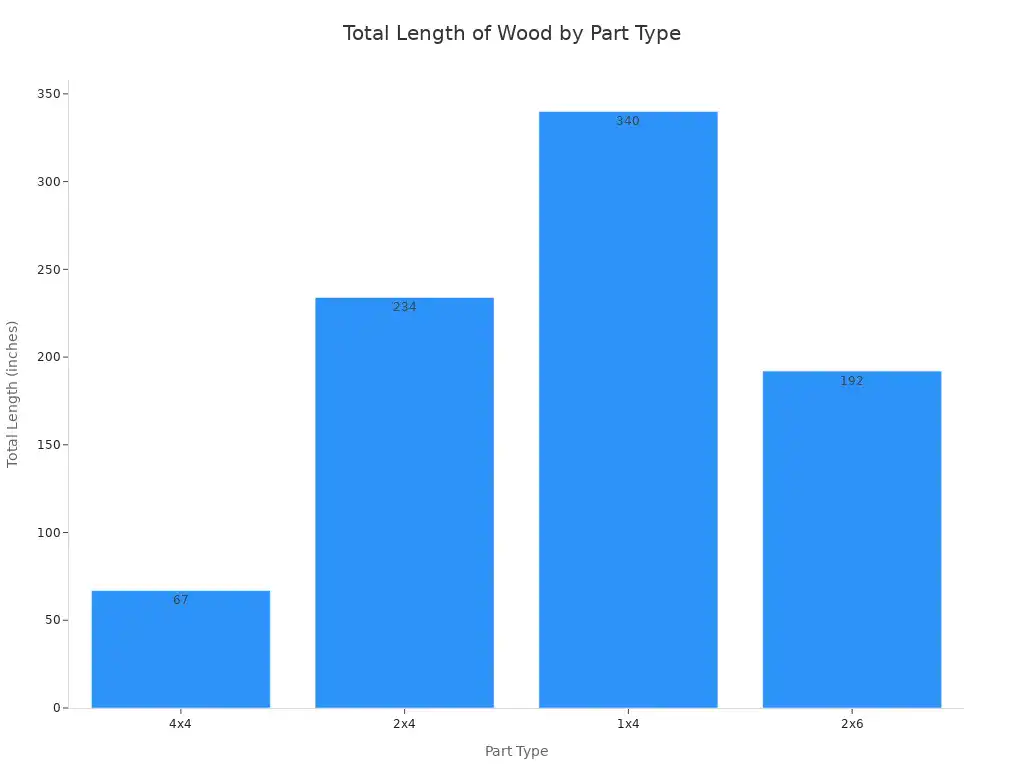
Master various cutting techniques for accurate wood cutting. Crosscuts go across the grain. Rip cuts go parallel to the grain. Miter cuts create angled corners. Bevel cuts make angled edges. Always align your blade precisely. Use proper marking and maintain steady control. These steps ensure clean and accurate results for your diy storage bench plans.
Assemble Frame
Now, you will assemble storage bench frame pieces. Join the base frame pieces using wood glue and screws. Apply wood glue to the joint surfaces. Then, secure them with screws. Ensure the frame is perfectly square. This is crucial for stability and proper alignment.
To ensure a square frame assembly:
Precise and Square Cuts: Use a miter saw for all cuts. Make sure every cut is precise and square. This makes assembly much easier.
Pocket Hole Joinery: Use a pocket hole jig. Drill holes in rails to join them to stiles. This creates strong, invisible connections.
Square and Flush Assembly: When you assemble storage bench parts with pocket screws, check that all components are square and flush. This step is vital for proper alignment with other bench parts. It also ensures overall stability.
Attach Panels
Next, attach the side, front, and back panels to the base frame. Apply wood glue to the edges that meet the frame. Secure the panels with screws. Reinforce all corners for extra strength. If your design includes internal supports or dividers, install them now. These supports create separate compartments inside your bench.
Install Lid and Hinges
Prepare the lid by sanding its edges smooth. This prevents splinters and gives a clean look. Install hinges to the back panel and the lid. You can use torsion hinges for heavy lids. These hinges allow the lid to stay open at any position. Manufacturers often provide formulas to calculate the correct hinge size. This depends on the lid’s length, width, and weight.
Consider adding lid support or safety hinges. These prevent the lid from slamming shut. This is especially important for toy boxes or if children will use the bench. Safety hinges protect fingers from serious injuries. A proper lid support system prevents dangerous incidents.
Sand and Finish
Finally, sand all surfaces of your bench. Start with a coarser grit sandpaper, then move to finer grits. This removes any imperfections and prepares the wood for finishing. For MDF, use a sanding belt with silicon carbide grains. Finish with P240/280 grit for the best result. Do not skip grits, like going from P80 directly to P180. This can leave scratches and an uneven finish.
Apply a primer if you plan to paint the bench. Then, paint or stain your bench in your chosen color. After the paint or stain dries, apply a protective topcoat. For high-traffic pieces like a storage bench, water-based polyurethane is highly recommended. It offers superior durability and protection. Wax can be used for aesthetics, but it does not offer the same protection as polyurethane. This step-by-step tutorial helps you create a beautiful and lasting piece.
Customize Your Storage Bench
You can personalize your new diy storage bench to perfectly match your home. Adding custom features makes it unique and more functional. These enhancements improve both its look and usability.
Add Cushions
Adding cushions makes your bench much more comfortable. You can choose fabrics that are fade and stain resistant. These durable options work well for both indoor and outdoor use. Many colors and patterns are available. You can create high-quality and very durable bench pads.
You also need to select the right foam for your cushions. Different foam densities offer varying levels of comfort and durability.
Foam Type | Density (lb/ft³) | ILD (lb) | Recommended Use | Lifespan (years) |
|---|---|---|---|---|
Poly Foam | 1.5 | 36 | Occasional use, cushion replacement, mattresses | 1-2 |
Super Soft Foam | 1.2 | 12 | Couch backing cushions, mattresses/toppers for bed sores | 5 |
HD36 Foam – Regular | 1.8 | 35 | Regular use for seats, chairs, cushions, benches, mattresses | 7 |
HD36 Foam – High Quality | 2.8 | 35 | Regular or heavy use for seats, chairs, cushions, benches, mattresses | 16 |
Lux Foam – Regular | 1.8 | 50 | Regular use for seats, chairs, cushions, benches, mattresses, dining seats | 7 |
Lux Foam – High Quality | 2.8 | 50 | Regular or heavy use for seats, chairs, cushions, benches, mattresses, dining seats | 16 |
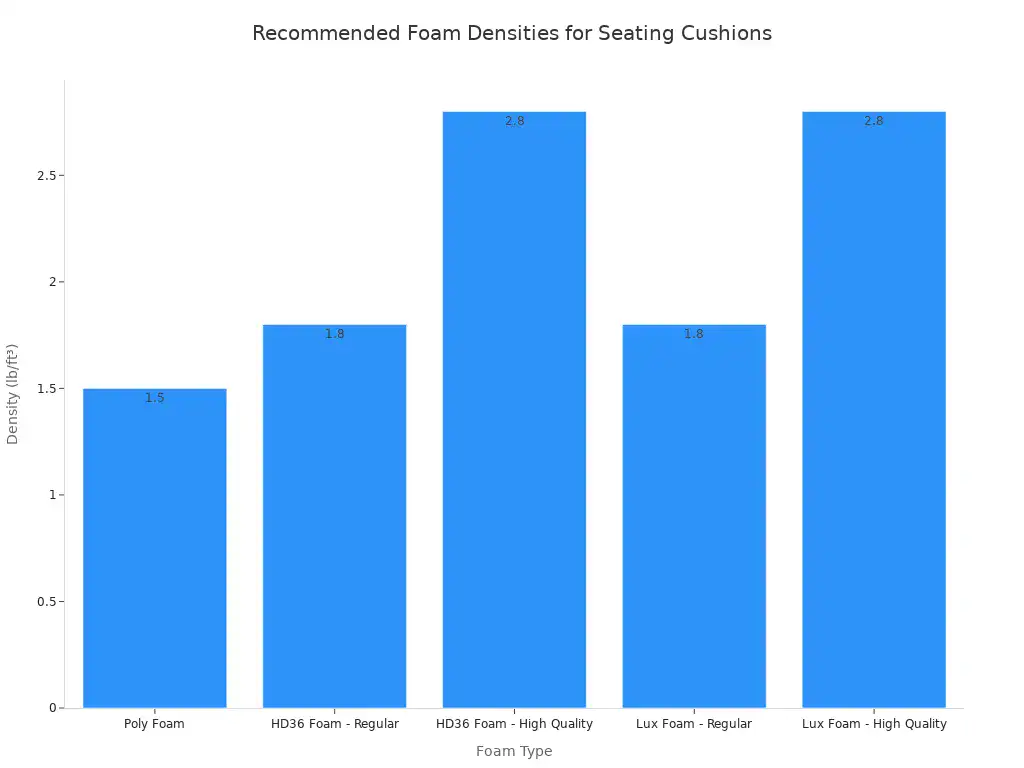
For regular use, consider HD36 or Lux Foam with a density of 1.8 lb/ft³ or higher. These foams provide good support and last longer.
Decorative Touches
You can enhance your bench’s appearance with decorative touches. Adding trim or molding creates a more finished look.
Reeded molding has small, convex, semicylindrical shapes carved into its surface.
Fluted molding offers a similar look with concave shapes.
You can also use simple 1×6 boards for baseboards. These offer an inexpensive, clean-lined, and thick appearance. They suit many styles. Base cap molding can create accent walls, adding subtle detail. Upgrading hardware also improves aesthetics. Industrial designs often feature metal frames with wood or leather tops. These are great for urban loft styles.
Industrial hardware, especially metal, complements modern storage bench designs.
An entryway bench can have an industrial touch with metal hardware. It can still maintain a subtle look with a wood tone frame.
Storage Bench with Drawer Options
A storage bench with drawer options provides excellent organization. You can incorporate drawers for smaller items. This is perfect for entryway storage. You can also add open cubbies for easy access. A storage bench with drawer design helps keep things tidy.
For heavy-duty drawers, choose the right slides.
Extra Heavy Duty Slides handle loads from 170 to 600 lbs. They ensure smooth movement for heavy items.
Full-Extension Drawer Slides let drawers extend 100% of their length. This gives you maximum access to contents.
Ball-Bearing Drawer Slides offer smooth and precise operation. They are very durable.
Friction Slides are self-lubricating and heavy-duty. They allow total drawer extension and need minimal maintenance.
Heavy-Duty Slides support loads from 75 to 100 lbs. They are ideal for large file drawers or pantry pull-outs.
A storage bench with drawer system makes your bench even more versatile. You can easily find what you need. This makes your storage bench with drawer a highly functional piece of furniture.
<<>>
Completing your diy storage bench project brings great satisfaction. You gain added functionality and a personalized style. This custom piece perfectly fits your home. It enhances your living space. We encourage you to start your own building journey. These plans help you create a unique storage solution.
FAQ
What wood should you use for a DIY storage bench?
You should use 3/4-inch cabinet-grade plywood for the main structure. Birch or maple plywood works well for painting or staining. For the seat top, consider a pre-made butcher block or 2x material. These choices ensure your bench is strong and durable.
What essential tools do you need to build a storage bench?
You need a saw, tape measure, square, drill, and driver. A staple gun and framing square are also helpful. These tools help you make precise cuts and secure connections. They ensure your building process is efficient.
What type of hinges work best for a lift-top storage bench?
Use robust hinges for a lift-top design. Torsion hinges allow the lid to stay open at any position. You should also add lid support or safety hinges. These prevent the lid from slamming shut, protecting fingers.
What are the benefits of adding cushions to your storage bench?
Cushions make your bench much more comfortable. You can choose fade and stain-resistant fabrics. Select high-density foam for durability and support. These additions enhance both the look and usability of your bench.