

Many adults wish to continue living in their own homes as they age. Surveys show almost 97% of Ontarians aged 65 or older strongly prefer to age at home. Similarly, the AARP reports nearly 90% of adults over 65 desire to remain in their current home. Achieving successful aging-in-place requires careful planning. Home modifications are crucial for making this aging in place reality safe, comfortable, and independent. These specific changes are essential for current needs and future well-being. They represent investments in long-term independence and quality of life for seniors who choose aging-in-place.
Essential Bathroom Safety for Seniors
The bathroom presents many potential hazards for seniors. Implementing crucial bathroom modifications significantly enhances safety and promotes independence for those aging in place. These changes help prevent falls and make daily routines easier.
Shower and Tub Accessibility
Making showers and tubs accessible is a top priority for bathroom safety. Zero-threshold showers, also known as roll-in showers, greatly reduce the risk of falls. They eliminate the need to step over a ledge, making entry and exit safer for seniors, especially those with balance issues or using assistive devices. The continuous floor design removes tripping hazards. Gently sloped floors prevent water pooling, further reducing slip risks. Accessible showers feature non-slip surfaces, preventing falls even when wet. Built-in seating allows for comfortable bathing without standing, reducing fall risk. Simple, reachable controls minimize bending or stretching. Grab bars offer essential support for stepping in, standing, or moving. These safety enhancements provide crucial stability. Many accessible units also include anti-scald valves, preventing sudden temperature spikes. Lever-style controls and handheld showerheads are easier to operate, especially for individuals with reduced grip strength.
Toilet and Grab Bar Installation
Taller toilets significantly improve comfort and safety for seniors. Most seniors benefit from a toilet seat height between 17 and 19 inches, measured from the floor to the top of the seat. This height range is often called “Comfort Height,” “Chair Height,” or “ADA Height.” This height reduces strain when sitting or standing. Taller individuals or those with advanced knee or hip problems may find extra-tall toilets (up to 21.8 inches) even more helpful. Strategic placement of grab bars around the toilet provides vital support. These grab bars assist with sitting down and standing up, offering stability and preventing falls.
Sink and Vanity Adjustments
Adjusting sinks and vanities also contributes to overall bathroom accessibility. Lever-style faucets are much easier to operate than traditional knob handles. They require less twisting motion, benefiting individuals with arthritis or limited dexterity. A slight push up, down, or sideways often turns the water on or off. This eliminates the need for twisting and gripping, which is easier on fingers and wrists. Accessible vanity heights allow seniors to use the sink comfortably, whether standing or seated. These modifications ensure the home remains functional and safe for aging individuals.
Kitchen Home Modifications for Independence
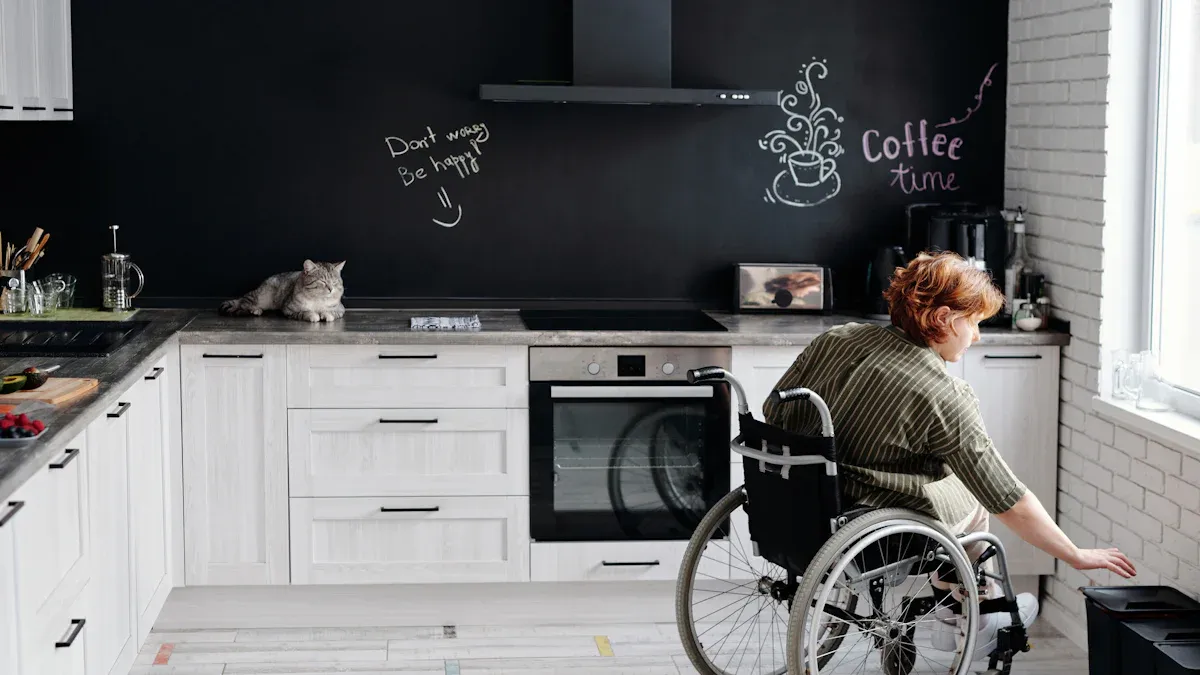
The kitchen is a central part of any home, and making it functional and safe is crucial for seniors maintaining their independence. Thoughtful kitchen modifications for seniors enhance daily living and prevent accidents.
Cabinet and Countertop Access
Adjusting cabinet and countertop access significantly improves kitchen accessibility. Lowering cabinets and installing pull-out shelves make items easier to reach without stretching or bending. Easy-to-grasp hardware also helps. For example, wide D-shape pulls are better than knobs because they do not require a grasped hand movement. They can be opened with just one finger, making them easier for elderly hands. Touch latch mechanisms allow cabinets to open with a gentle press. Countertop heights also need consideration. For manual wheelchair users, 34 inches is often more comfortable than the standard 36 inches. Lowering work surfaces to 30-32 inches can be very beneficial. Kitchens can incorporate ‘tiers’ with some countertops at 36 inches and others lowered in different locations. This helps reduce strain during various tasks.
Appliance Safety Features
Modern appliances offer many safety features beneficial for seniors. Induction cooktops, for instance, only heat when cookware is present, reducing burn risk and eliminating open flames. Side-opening ovens allow access to food without reaching over a hot door. Smart microwaves offer voice activation for control and app connectivity for remote activation. Stoves can feature inactivity sensors that automatically shut off when not in use. Dishwashers with easy-grip handles and visible digital displays are easier to operate. Raised dishwashers, installed higher than standard height, eliminate the need to bend when loading and unloading. These modifications enhance safety and ease of use in the home.
Kitchen Flooring and Lighting
Proper flooring and lighting are essential for kitchen safety. Non-slip surfaces prevent falls, even when floors are wet. Textured porcelain and ceramic tiles offer strong grip. Rubber flooring provides superior slip resistance and is shock-absorbent. Natural stone with anti-slip treatment also works well. Adequate task lighting helps prevent accidents. The FDA Food Code specifies minimum lighting levels to ensure staff can identify risks and hygiene issues. For food processing surfaces, 50 foot-candles (538 lux) are recommended. Preparation stations require 750-1000 lux. General storage rooms need 10 foot-candles (108 lux).
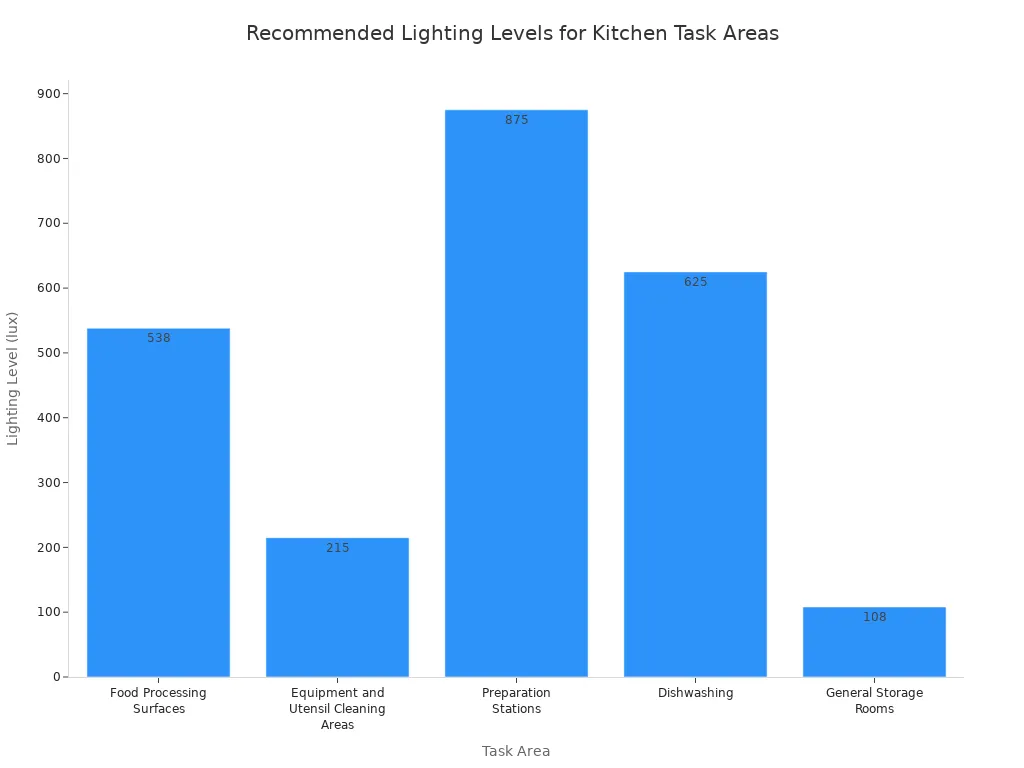
OSHA workplace standards mandate sufficient illumination to prevent accidents. This includes proper lighting for pathways and equipment operating areas.
General Home Accessibility and Safety
General home modifications for seniors apply across the entire home. These changes enhance safety and promote independence for individuals aging in place. They address common hazards and improve overall accessibility.
Safe Entryways and Doorways
Safe entryways and doorways are crucial for preventing falls. Ramps and step-free entrances eliminate tripping hazards. Doorways should have a clear width of 32 inches from the door’s face to the opposite stop. This accommodates most wheelchairs. The door itself should be 80 inches high. Hardware, such as handles and locks, should not be higher than 48 inches from the floor. Thresholds higher than ½ inch require ramps. Replacing round doorknobs with lever handles significantly improves accessibility. Lever handles require less grip strength and no wrist rotation, benefiting seniors with arthritis or limited mobility. Studies show lever-style doorknobs reduce effort by approximately 50%, requiring only 2 to 5 pounds of force. This aligns with ADA accessibility standards.
Hallway and Stairway Navigation
Clear pathways in hallways and safe stairways are essential for mobility. Remove clutter and secure loose rugs to prevent falls. Arrange furniture to create clear walkways between rooms. Handrails on both sides of stairs provide vital support. Handrails must be easy to grip, stable, and positioned approximately 30 to 36 inches above the ground. They should be strong enough to support a person’s weight and extend to the last step. These safety enhancements help seniors navigate their home confidently.
Home Lighting and Electrical
Proper lighting and easily accessible electrical outlets improve home safety. Diffused lighting sources minimize glare and harsh shadows, which helps older eyes. Frosted glass fixtures soften light. A three-layer lighting plan, including ambient, task, and accent lighting, provides comprehensive illumination. Warmer light (2700K to 3000K) works well for living areas. Adding night lights in pathways and bedrooms enhances safety during nighttime movement. Strategically place plug-in night lights near bedrooms, bathrooms, and hallways. Motion-sensor lights are also beneficial for nighttime safety.
Safe Flooring Throughout Home
Safe flooring throughout the home reduces the risk of falls. Non-slip, low-pile carpeting or smooth, even surfaces are ideal. Low-pile carpeting is less likely to trap walkers or canes, reducing tripping hazard. It also offers cushioning, which is easier on joints and helps prevent serious injury if falls occur. Skid-proof tile is another good choice. Secure area rugs with non-skid tape to prevent slipping. Avoid polishing hardwood floors, as slick surfaces pose a significant fall hazard. These modifications contribute to a safer home environment for aging individuals.
Technology for Aging-in-Place Support
Technology offers significant support for individuals choosing aging-in-place. It enhances safety, provides assistance with daily tasks, and connects seniors with caregivers or emergency services. These tools promote independence and peace of mind within the home.
Smart Home Automation
Smart home automation makes daily living easier and safer. Devices like voice assistants, smart lighting, and smart appliances simplify tasks. They also provide crucial safety features.
Device | Daily Task Assistance | Safety Benefits |
|---|---|---|
Amazon Echo (Alexa) | Voice-controlled helper for setting reminders, playing music, making calls, controlling smart home devices. | Makes emergency calls if a phone is unreachable; beneficial for seniors with vision or mobility issues. |
Apple Watch (with Fall Detection) | Tracks heart rate and steps, sets reminders for tasks (e.g., medication). | Detects hard falls and automatically calls for help. |
Hero Medication Dispenser | Provides alerts for medication doses, notifies caregivers if a dose is missed. | Prevents missed doses and mix-ups, ensuring medication adherence. |
Smart Light Bulbs | Control lights via smartphone or voice, schedule on/off times, customize lighting. | Prevents falls and injuries by quickly illuminating dark areas. |
Smart Outlets | Remotely turn devices (lights, coffee maker, appliances) on/off. | Prevents fire hazards by allowing remote shutdown of forgotten appliances. |
Smart Locks | Manipulate locks remotely, various authentication methods. | Allows easy access for care providers or first responders in emergencies without property damage; enhances home security. |
Despite the benefits, privacy concerns exist.
Participants feared data use against them, such as for denying insurance coverage.
Caregivers and care recipients were sensitive to information sharing boundaries.
Privacy is a significant concern for older adults considering smart home technology.
Sensors can monitor activities, potentially invading privacy.
Emergency Alert Systems
Emergency alert systems provide immediate help during critical situations. They offer a lifeline for seniors living alone. These systems connect users to assistance quickly.
In-home medical alert systems: These systems stay in a central home location. They feature a base station with a speakerphone and a help button. They use landline or cellular connections.
Mobile medical alert systems: These systems use a cellular connection. They allow seniors to move independently outside the home. Many include GPS tracking.
Monitored medical alert systems: These systems connect to a 24/7 emergency call center. Professionals dispatch EMS or contacts.
Unmonitored medical alert systems: These devices connect directly to pre-programmed emergency contacts. They do not have a monthly fee.
When selecting an emergency system, consider key features.
Pricing and Contract Terms: Evaluate payment plans and equipment costs.
Features: Ensure the system aligns with medical conditions. Consider GPS monitoring or automatic fall detection.
Experience and Reputation: Research the company’s history.
Ease of Use: Examine the equipment’s design. Avoid complicated instructions.
Waterproofing: Ensure wearable buttons are waterproof for bathroom safety.
Trained Operators: Inquire about monitoring center staff training.
24/7 Monitoring Services: Ensures constant availability of emergency support.
Communication and Monitoring Tools
Communication and monitoring tools help maintain well-being and connection. They offer remote oversight without being intrusive. These tools support aging individuals in their home.
The IST Vivago wristwatch monitors physiological signals and movement. It learns normal activities. It sends an alarm if significant changes occur.
An ECG and tri-axial accelerometer-based tool sends an alarm to healthcare providers. It detects abnormal activity.
Wi-Fi Sensing uses existing Wi-Fi signals. It detects movement patterns throughout the home. It tracks mobility, sleep, and social activity without wearables. This system provides early insights into potential health risks. It identifies subtle changes, like reduced movement. It sends alerts to caregivers. This technology enhances safety and provides valuable assistance for aging-in-place.
Planning Your Aging-in-Place Home
Planning for aging-in-place requires careful thought. This process ensures a home remains safe and comfortable for many years. It involves assessing needs, managing finances, and seeking expert advice.
Assessing Current and Future Needs
A thorough assessment of a home identifies potential hazards and future needs. Using a comprehensive checklist helps identify areas for improvement. Such a checklist includes home lighting, flooring, and pathways for safety. It also covers bathroom support, like grab bars and non-slip surfaces. Mobility aids and thoughtful furniture arrangement are important. Kitchen accessibility and safe appliance use also appear on the list. Entryway safety and outdoor maintenance are crucial. For example, interior doors need at least 32 inches of clear width. Counters can have adjustable heights. Appliances should feature easy-to-read controls. This detailed review helps create a plan for long-term independence.
Budgeting and Phased Implementation
Home modifications for aging can involve significant costs. The national average for aging-in-place renovations ranges from $3,000 to $15,000. Specific items like grab bars cost $150–$400 each. A barrier-free shower can cost $8,000–$18,000. Prioritizing modifications based on immediate safety concerns and financial capacity is wise. Some changes, like installing grab bars, offer immediate safety benefits. Others, like a full home remodel, require more planning and budget. Phased implementation allows homeowners to spread costs over time. Various financial assistance programs exist for seniors. These programs help fund necessary modifications.
Professional Guidance and Resources
Seeking professional guidance ensures effective home modifications. Occupational therapists understand how physical limitations affect daily tasks. They offer valuable insights into necessary changes. Certified Aging-in-Place Specialists (CAPS) possess specific training. They learn technical, business, and customer service skills for home modifications. A CAPS professional makes people comfortable during home assessments. They understand design concepts and solutions for livable homes. Accessible design experts and residential architects also provide valuable consultation. Organizations like the Paralyzed Veterans of America offer design assistance. These experts help create a safe and accessible home environment.
The home modifications discussed here enhance safety, comfort, and independence for aging-in-place. These changes in the home, from accessible bathrooms to smart technology, support seniors. They preserve dignity and improve quality of life for individuals aging in place. Planning early for these home modifications empowers people. It secures a fulfilling future in their own home.

