

Choosing the right flooring is a significant decision for any space. It impacts aesthetics, functionality, and your overall budget. When selecting flooring, a key question emerges: How do you balance initial cost, long-term lifespan, and ongoing maintenance? This guide, focusing on flooring types explained, will help you explore different types of flooring. We will examine flooring cost, expected lifespan, and required maintenance for various types of flooring. This information will lead to informed flooring choices. Making the best flooring choice is crucial. Good flooring improves any area. Think about your flooring needs carefully.
Flooring Cost: Initial vs. Long-Term
Choosing new flooring involves more than just picking a style. You must consider the overall financial commitment. This includes both the immediate expenses and potential future costs. Understanding the full flooring cost helps you make a smart decision.
Upfront Purchase and Installation
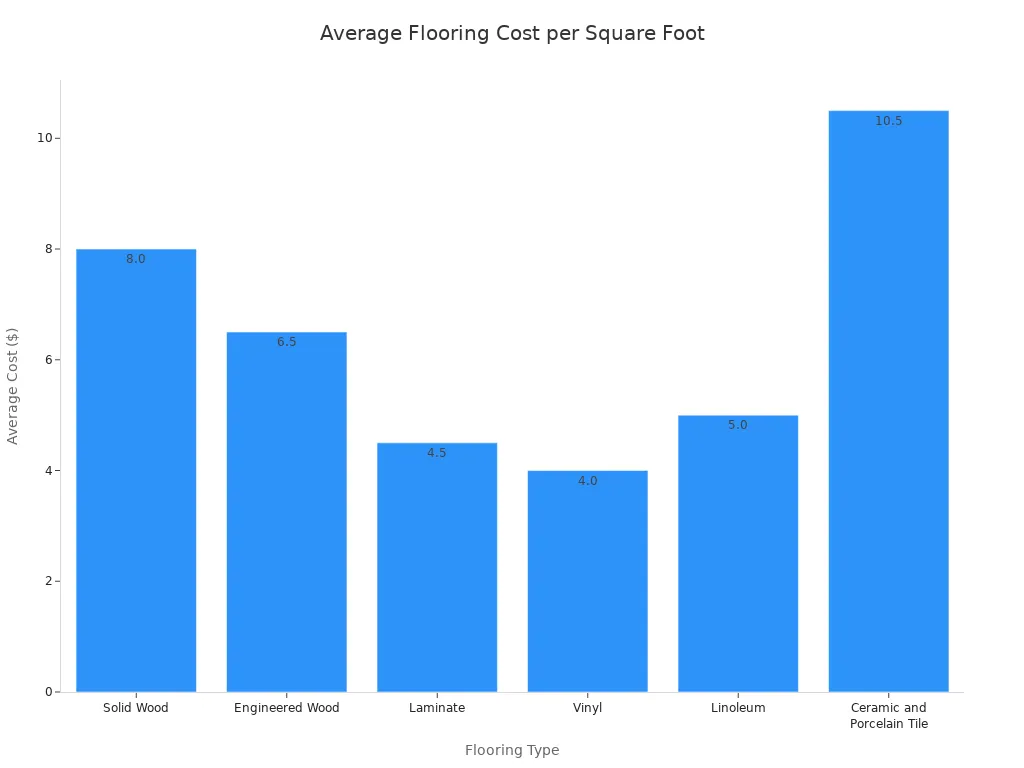
The first part of your flooring cost is the initial purchase and installation. Different types of flooring have different price points. This table shows average costs per square foot for various materials.
Flooring Type | Cost per Square Foot |
|---|---|
Solid Wood | $5 to $11 |
Engineered Wood | $4 to $9 |
Laminate | $2 to $7 |
Vinyl | $3 to $5 |
Linoleum | $4 to $6 |
Ceramic and Porcelain Tile | $6 to $15 |
This chart also illustrates the average cost for different flooring options.
Installation fees add to this initial cost. These fees vary based on the complexity of the job and the type of flooring.
Long-Term Value and Hidden Costs
The true cost of flooring extends beyond the initial purchase. Many hidden costs can arise during installation and over the lifespan of your flooring.
Subfloor Preparation: Your subfloor might need work. Minor repairs can cost $0.50–$2.00 per square foot. Heavier leveling can be $3.00–$6.00+ per square foot.
Moisture Barriers and Underlayment: These are often necessary. A basic vapor barrier costs $0.25–$1.00 per square foot. Premium acoustic underlayment can be $1.00–$3.00+ per square foot.
Hidden Supply Costs: Adhesives, fasteners, and extra materials are needed. Plan for 5–10% extra material for cuts. Complex layouts might need 10–15% more.
Stairs and Trim: Installing flooring on stairs is more expensive. It can cost $150–$300 per step for labor alone. Trim and transitions also add to the overall cost.
Detail Work: Cuts around vents or fireplaces require extra effort. This increases labor costs.
Sometimes, disputes over flooring quality can lead to significant legal fees. These can range from $50,000 to $250,000 per party. Remediation for floors not meeting standards also adds to the cost. Light grinding for minor issues costs $2-4 per square foot. Extensive grinding can be $5-10 per square foot. These unexpected expenses highlight the importance of considering the long-term value of your flooring.
Hardwood Flooring: Durability & Appeal
Hardwood flooring offers timeless beauty and lasting value. It is a popular choice for many homes. This type of flooring adds warmth and elegance to any room. Understanding its cost, lifespan, and maintenance helps in making an informed decision.
Hardwood Cost Factors
The initial flooring cost for hardwood can vary. Several factors influence the price.
Type of Hardwood: Different wood species, like oak or maple, have different prices. Exotic woods are often more expensive.
Square Footage: The size of the area affects material and labor needs. Larger projects might get discounts.
Subfloor Preparation: Old flooring removal and subfloor leveling add to the cost. Damaged sections need repair.
Installation Method: Nail-down, glue-down, or floating methods have different labor and material requirements.
Labor Rates: Installer experience and local market demand affect labor costs.
Finishing and Customization: Factory-finished wood costs differently than on-site finishing. Stains and patterns also add to the cost.
Additional Materials: Underlayment, trim, and adhesives are necessary supplies. They contribute to the total expense.
Hardwood Lifespan Expectations
Solid hardwood flooring is known for its long lifespan. With proper installation and care, this flooring can last 100 years or more. Some wood floors have been in service for over 300 years. This shows their incredible durability.
Floor Type | With Refinishing | Without Refinishing |
|---|---|---|
Solid Hardwood | 80–100+ years | 20–30 years |
You can refinish solid hardwood every 10-20 years. This process costs about $3-5 per square foot. Refinishing helps to extend the life of your flooring significantly.
Hardwood Maintenance & Care
Proper maintenance is key to a long-lasting hardwood floor. Regular care keeps your flooring looking new.
Routine Cleaning: Sweep, dust mop, or vacuum regularly. Use the bare floor setting on your vacuum. Clean spills immediately with a dry or slightly damp cloth. Avoid wet or steam mops.
Product Use: Use cleaners made for your floor’s finish. A flooring professional can recommend the best products.
Recoating: If floors look dull, apply a new coat of wood floor finish. This renews their appearance.
Do’s:
Wipe up spills quickly. Use coasters for furniture.
Dust often with a soft cloth. Sweep with a dust mop.
Limit sunlight exposure with blinds. Move rugs occasionally.
Maintain consistent indoor humidity (50-55%) and temperature (70-72°F).
Don’ts:
Do not use dripping wet cloths or mops.
Do not use feather dusters or vacuums with beater bars.
Do not mop sealed-and-waxed floors. Never wax urethane-finished floors.
Do not use rugs with rubber or vinyl backing.
Do not expose wood to plastics, oils, or solvents.
Engineered Hardwood: Stability & Style
Engineered hardwood offers a popular alternative to solid hardwood. This type of flooring provides both stability and style. It is a versatile choice for many homes. Engineered flooring combines real wood with a durable core. This construction makes it resistant to moisture changes.
Engineered Hardwood Cost
The flooring cost for engineered hardwood varies. It typically starts around $4.50 per square foot for certain styles and wood species. The general range for engineered hardwood flooring is $4.50 to $16 per square foot. This cost depends on the wood type and the thickness of the top layer. Installation adds to this initial cost. The average cost to install engineered flooring is approximately $3 to $16 per square foot. This makes the overall cost competitive.
Engineered Hardwood Lifespan
Engineered hardwood flooring offers a good lifespan. It typically lasts 20 to 30 years. Some engineered flooring can last even longer. This duration depends on several factors. The quality of materials used is important. Proper installation also plays a role. Consistent maintenance routines help. Environmental conditions in the home also affect its lifespan. High-quality engineered flooring with thicker wear layers can endure more wear. This extends its longevity. Neglecting proper care can shorten the life of this flooring.
Engineered Hardwood Maintenance
Proper maintenance keeps engineered flooring looking great. Regular care is simple. Sweep or vacuum the flooring often. This removes dirt and grit. Use a damp mop for cleaning. Avoid excessive water. Too much moisture can damage the wood layers. Wipe up spills immediately. Use cleaning products made for engineered hardwood flooring. Place mats at entryways. This helps prevent scratches. Felt pads under furniture also protect the engineered flooring. Good maintenance ensures your flooring stays beautiful for years.
Laminate Flooring: Versatility & Value
Laminate flooring offers a practical and stylish choice for many homes. It provides the look of natural materials without the higher price. This type of flooring is known for its versatility and value.
Laminate Cost Breakdown
Laminate flooring is often a budget-friendly option. It mimics the appearance of wood or stone. The initial flooring cost for laminate is typically lower than solid wood. Material costs usually range from $1 to $5 per square foot. Installation labor adds to this. A complete installation, including materials and labor, generally ranges from $3 to $13 per square foot. Labor costs can be 20% to 50% of the total bill. This means about $2 to $8 per square foot for labor. This depends on job complexity and installer experience. Different styles also have varying costs.
Laminate Flooring Style | Average Material Cost per Sq. Ft. | Total Installed Cost per Sq. Ft. |
|---|---|---|
Embossed Wood Grain | $1.00 – $3.00 | $2.50 – $5.00 |
High Gloss | $1.50 – $4.00 | $3.00 – $6.00 |
Hand-Scraped | $2.00 – $4.50 | $3.50 – $7.00 |
Wide Plank | $2.50 – $5.00 | $4.00 – $8.00 |
Textured | $3.00 – $6.00 | $4.50 – $9.00 |
Laminate Lifespan
Laminate flooring provides good durability. Its lifespan is generally 15 to 25 years. This applies under normal residential use. A well-made laminate, with proper care, can last even longer. It might reach 25 or 30 years. Several factors influence how long this flooring lasts. These include the quality of the laminate flooring, correct installation, and foot traffic. The thickness of the laminate also plays a role.
Laminate Maintenance Tips
Laminate flooring requires less maintenance than many traditional flooring types. Simple steps keep it looking good.
Regularly clean laminate floors. Use wiping, vacuuming, or sweeping with a soft broom. This prevents dirt and dust buildup.
For deeper cleaning, use a damp mop. Use warm water and mild detergent.
Place doormats at entrances. This minimizes tracking dirt and debris inside.
Use floor protectors under furniture legs. This prevents scratches and dents.
Avoid harsh scouring devices or cleaning products. They can wear down the top layer.
Immediately clean up spills. This prevents liquid penetration. Liquid can cause boards to swell. It can also make the top layer peel or bubble.
Do not drag or slide furniture. This avoids damage to the flooring.
Mop up spills as they happen. This prevents stains and severe damage.
Remove dust with a broom or vacuum cleaner. Do this whenever necessary.
Vinyl Flooring: Practicality & Style
Vinyl flooring offers practicality and style. It is a popular choice for many homes. This type of flooring provides a durable surface. It also comes in many designs.
Vinyl Flooring Cost Analysis
The flooring cost for vinyl varies. Sheet vinyl is generally less expensive. Luxury vinyl tile (LVT) and luxury vinyl plank (LVP) cost more than sheet vinyl. Luxury vinyl flooring is an affordable alternative. It costs less than natural stone, porcelain tile, or real wood. This makes it a good option for many budgets. The overall flooring cost for vinyl is often lower. This helps consumers choose within their budget.
Vinyl Lifespan & Wear
Vinyl flooring has a good lifespan. It varies by type. Sheet vinyl flooring typically lasts 10 to 20 years. Luxury vinyl plank (LVP) and luxury vinyl tile (LVT) last longer. They can last 15 to 25 years in homes. Commercial use shortens this to 10 to 15 years. This is due to heavy foot traffic. LVP and LVT have thicker wear layers. They also have more stable cores. This helps them last longer. Vinyl plank flooring cannot be refinished. It requires replacement when worn out.
Vinyl Flooring Type | Residential Lifespan |
|---|---|
Luxury Vinyl Plank (LVP) | 15 to 25 years |
Luxury Vinyl Tile (LVT) | 15 to 25 years |
Sheet Vinyl Flooring | 10 to 20 years |
Vinyl Maintenance Needs
Vinyl flooring needs simple maintenance. Regular cleaning is important.
Regular Cleaning: Sweep or vacuum often. Use a soft brush. This removes loose dirt. Damp mop with warm water. Use a mild dish soap. Avoid harsh chemicals. Do not use too much water.
Deep Cleaning: For stubborn stains, use special removers. A white vinegar solution can restore shine.
Preventive Measures: Use furniture pads. Place mats at entryways. This prevents scratches. Protect the flooring from direct sunlight.
Maintenance Tips: Always follow the manufacturer’s guidelines for maintenance. This ensures your vinyl flooring stays in good condition.
Tile Flooring: Resilience & Design
Tile flooring offers great resilience and design options. It is a popular choice for many areas. This flooring type combines durability with a wide range of aesthetic possibilities.
Tile Flooring Cost Factors
The flooring cost for tile varies greatly. Many factors influence the final price. High-quality materials, such as natural stone and porcelain, are often more expensive. This is due to their durability and look. Cheaper ceramic options exist, but they might lead to higher long-term costs from repairs. Installation is also a major part of the flooring cost. Tile installation requires skill and precision. Professionals prepare the subfloor by leveling and cleaning it. This prevents issues like tile cracking. Specialized tools and equipment also add to the overall cost. The type of tile also matters. Ceramic tiles are generally more affordable. Natural stone, like marble or granite, and high-end porcelain are more costly. Larger tiles or intricate patterns increase labor costs. The removal of old flooring also adds to the total cost.
Tile Lifespan & Durability
Tile flooring is known for its exceptional lifespan and durability. Porcelain tile flooring, when installed and maintained correctly, can last 50 years or more. Some premium-grade porcelain tile flooring can even last over a century. This makes it one of the most durable flooring options available. Ceramic and stone tiles also offer long-lasting performance. Their hard surfaces resist wear and tear. This makes them ideal for high-traffic areas. The long lifespan of tile flooring makes it a wise investment for any home.
Tile Maintenance & Grout
Tile flooring requires simple maintenance. Regular cleaning keeps it looking new. Sweep or vacuum the flooring often to remove dirt. For deeper cleaning, use a damp mop with a mild cleaner. Avoid harsh chemicals that can damage the tile or grout. Grout is a key part of tile flooring. It fills the spaces between tiles. Grout needs special care. It is porous and can absorb stains. Sealing the grout helps protect it from moisture and dirt. Re-sealing grout every few years is important. This helps maintain the appearance and integrity of your ceramic, porcelain, or stone tile flooring.
Carpet: Comfort & Sound
Carpet offers comfort and helps with sound absorption. It is a popular choice for bedrooms and living areas. This type of flooring adds warmth to any room.
Carpet Cost Variations
The initial flooring cost for carpet varies. Many factors influence the price. These include the type of fiber, pile height, and brand. Different carpet types have different price ranges.
Carpet Type | Price Range (per square foot) |
|---|---|
Wool Carpet | $8 to $25 |
Synthetic Carpets (Nylon, Polyester, Olefin) | $2 to $10 |
Installation fees add to the overall flooring cost. The complexity of the room also affects the price.
Carpet Lifespan & Replacement
Carpet has the shortest lifespan among common flooring types. It typically lasts 5 to 15 years. This depends on traffic and upkeep. Carpets in high-traffic areas wear out faster. They often need replacement every 5 to 10 years.
Several factors affect carpet durability and replacement frequency:
Quality of materials: Better quality carpets last longer.
Traffic patterns: Areas with constant foot traffic wear out quickly.
Maintenance routine: Regular cleaning extends the carpet’s life.
Type of carpet fibers: Nylon and polyester have different resilience levels.
Underlying padding: Good padding supports the carpet.
Carpet Type | Typical Lifespan |
|---|---|
Average Carpet | 5 to 15 years |
Nylon Carpets | 10 to 15 years |
Polyester Carpets | 5 to 10 years |
Wool Carpets | 8 to 20 years |
Signs of wear, like staining or matting, may appear after about 10 years. This indicates it is time for new flooring.
Carpet Cleaning & Upkeep
Proper carpet maintenance is important. It keeps your flooring looking good. Regular cleaning also extends its life.
Here are some professional cleaning methods:
Hot Water Extraction (Steam Cleaning): This method uses high-pressure water and cleaning solution. It flushes dirt from fibers. A strong vacuum then removes the dirty water. This is effective for deep cleaning.
Dry Foam Extraction: This uses an air compressor and foaming detergent. It attracts dirt particles. This method offers faster drying times.
You can also do some cleaning yourself:
Baking Soda: Sprinkle it on, wait 15 minutes, then vacuum. This helps remove odors.
Vinegar: Mix equal parts white vinegar and water. Spray on stains and blot.
Regular Vacuuming: Vacuum frequently. This prevents dirt buildup in your flooring.
Exploring Different Types of Flooring for Specific Needs
Choosing the right flooring goes beyond aesthetics. Specific areas in a home or commercial space demand particular qualities. Understanding these needs helps select the most functional and durable options. This section explores different types of flooring best suited for high-traffic zones and moisture-prone rooms.
Best Flooring Options for High-Traffic Areas
High-traffic areas require flooring that can withstand constant use. Durability is key for these spaces. Many different types of flooring offer superior resilience.
Terrazzo leads in durability. It combines cement or epoxy with marble and glass. This makes it perfect for large, busy areas like airports.
Quarry tile is another strong choice. Made from hard-fired clay, it resists spills and heavy foot traffic. Commercial kitchens often use this type of flooring.
Luxury vinyl tile (LVT) is versatile and tough. It has a strong wear layer. Hospitals, restaurants, and schools use this flooring. It can mimic wood or ceramic.
Epoxy flooring systems offer industrial strength. A resin is applied to concrete. This protects against wear, chemicals, and heavy traffic. Manufacturing facilities and retail spaces benefit from this flooring.
Carpet tiles are the best soft-surface option. They are easy to replace if damaged. Industrial-strength and water-resistant types are available.
Rubber flooring resists heavy loads. It cushions feet, reduces noise, and prevents slips. Gyms and hospitals often use this type of flooring. These flooring types explained offer long-lasting solutions for busy environments.
Moisture-Resistant Flooring for Wet Rooms
Rooms like bathrooms and kitchens need flooring that can handle water. Moisture resistance is crucial to prevent damage and mold. Several flooring options excel in wet conditions.
Waterproof Vinyl Plank Flooring has a special core. This core stops swelling or warping from water. It is ideal for humid and messy areas.
Ceramic Tile is highly water-resistant. It is made from clay with a glazed finish. Proper grout sealing is important to prevent water absorption.
Luxury Vinyl Flooring is 100% waterproof. Its extra layers prevent water from soaking in. This makes it very durable in wet spaces.
Waterproof Laminate Flooring has features to block water. Sealed edges are essential for its effectiveness. Modern versions can resist water for up to 72 hours.
Stone Tile Flooring like granite or slate is naturally water-resistant. Some types may need sealing for extra protection.
Porcelain Tile is naturally waterproof. Its non-porous material withstands steam and splashes.
Engineered Tile combines stone looks with waterproof strength. It uses composite materials.
New Engineered Hardwood options now have waterproof cores. These provide real wood beauty with moisture protection. These different types of flooring ensure your wet rooms stay protected.
Sustainable Flooring Choices
Choosing flooring involves more than just looks and cost. It also means thinking about the environment. Sustainable flooring options help protect our planet. They reduce waste and use fewer harmful chemicals.
Eco-Friendly Flooring Materials
Many materials offer eco-friendly benefits. These options come from renewable sources or use recycled content. They also often have certifications that show their environmental care.
Here are some examples of eco-friendly flooring materials:
Eco-Friendly Flooring Material | Key Characteristics | Sustainability Certifications |
|---|---|---|
Bamboo Flooring | Rapidly renewable (matures in 3-5 years), strength similar to hardwood. | GreenGuard, FloorScore, Cradle to Cradle |
Cork Flooring | Made from bark of cork oak trees (trees not cut down), renewable, comfortable underfoot. | GreenGuard, FloorScore, Cradle to Cradle |
Reclaimed/Salvaged Wood | Sourced from old structures, unique character, reduces demand for new timber. | FSC (Forest Stewardship Council) |
Natural Stone Flooring | Durable, recyclable, minimal environmental impact when sourced responsibly, no harmful VOCs. | N/A (sustainability depends on sourcing) |
Recycled Vinyl Flooring | Made from post-consumer waste, durable, low maintenance, replicates natural materials. | FloorScore, GreenGuard |
Eco-Friendly Laminate Flooring | Crafted from recycled wood fibers, low-VOC, replicates natural wood. | Forest Stewardship Council (FSC), Greenguard Gold |
These certifications help you choose wisely. For example, GreenGuard verifies products have low chemical emissions. This means better indoor air quality. FloorScore focuses on hard surface flooring materials. The Forest Stewardship Council (FSC) ensures wood comes from well-managed forests.
Environmental Impact Considerations
Some common flooring materials can harm the environment. For instance, Polyvinyl Chloride (PVC) creates a lot of emissions and toxic waste. Its chemicals can pollute water and air. This harms ecosystems and people. PVC is also a major source of dioxins, which are linked to health problems. Carpeting also poses issues. Four billion pounds of carpet go into U.S. landfills each year. These products often contain harmful dyes and adhesives. They release volatile organic compounds (VOCs) into the air.
However, many sustainable options exist. Cork is a great choice. It is renewable and helps reduce energy use. Linoleum is also making a comeback. It is biodegradable and made from natural ingredients like linseed oil. This means it does not release harmful VOCs. Recycled metal and glass tiles also help. They use reclaimed materials and reduce landfill waste. Engineered hardwood is another good option. It uses wood resources more efficiently than solid wood. These choices help create healthier homes and a healthier planet.
Flooring Comparison: Key Attributes
Choosing the right floor involves many factors. This section helps compare different types of flooring. We look at their cost, lifespan, and maintenance needs. Understanding these attributes is key. It helps you make an informed decision for your space.
Cost, Lifespan, Maintenance Matrix
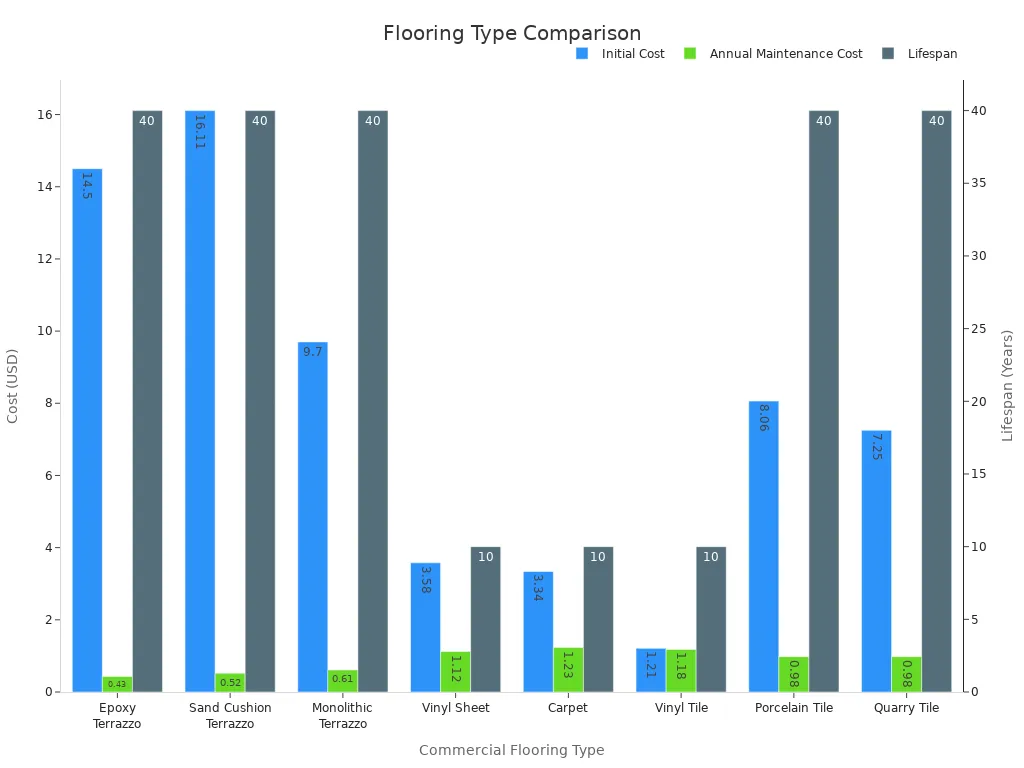
Different types of flooring offer varied performance. This table shows a comparison for commercial flooring types. It includes initial cost, annual maintenance, and replacement frequency.
Commercial Flooring Type | Cost (Per Sq. Ft Installed) | Annual Cost of Maintenance (Per Sq. Ft) | Frequency of Replacement |
|---|---|---|---|
Epoxy Terrazzo | $14.50 | $0.43 | 40 Years |
Sand Cushion Terrazzo | $16.11 | $0.52 | 40 Years |
Monolithic Terrazzo | $9.70 | $0.61 | 40 Years |
Vinyl Sheet | $3.58 | $1.12 | 10 Years |
Carpet | $3.34 | $1.23 | 10 Years |
Vinyl Tile | $1.21 | $1.18 | 10 Years |
Porcelain Tile | $8.06 | $0.98 | 40 Years |
Quarry Tile | $7.25 | $0.98 | 40 Years |
This chart further illustrates these comparisons across various commercial types.
For residential settings, the considerations are similar. This next table provides a matrix for common residential flooring types. It details initial cost, expected lifespan, and cleaning requirements.
Material | Initial Cost (per sqm) | Lifespan | Daily Cleaning | Deep Cleaning | Refinishing |
|---|---|---|---|---|---|
Hardwood | $60 – $180 | 75-100 yrs | Sweeping | Mopping | Every 10 yrs |
Engineered Wood | $35 – $120 | 30-50 yrs | Sweeping | Mopping | Less often |
Laminate | $12 – $60 | 10-25 yrs | Sweeping | Damp mopping | N/A |
LVT | $24 – $72 | 10-25 yrs | Wiping | N/A | N/A |
Tile | $30 – $120 | 50+ yrs | Wiping/Mopping | Grout cleaner | N/A |
This matrix helps visualize the trade-offs. For example, hardwood has a high initial cost. However, it offers a very long lifespan with regular refinishing. Laminate and LVT have lower initial costs. Their lifespans are shorter. They also require less intensive maintenance. Tile types are durable. They have a long lifespan. They need specific grout maintenance. These different types of flooring have unique profiles. Evaluating these attributes helps select the best option. It ensures your choice aligns with your budget and lifestyle. This comprehensive look at flooring types explained helps clarify your options.
Choosing the right flooring means aligning it with your specific needs, lifestyle, and budget. This guide on flooring types explained highlights the trade-offs. Different types offer varied costs, lifespans, and maintenance requirements. Consider what matters most to you. Do you prioritize low initial cost, long-term durability, or minimal maintenance? Evaluate these factors carefully. This will help you confidently select the best flooring solution for your project.