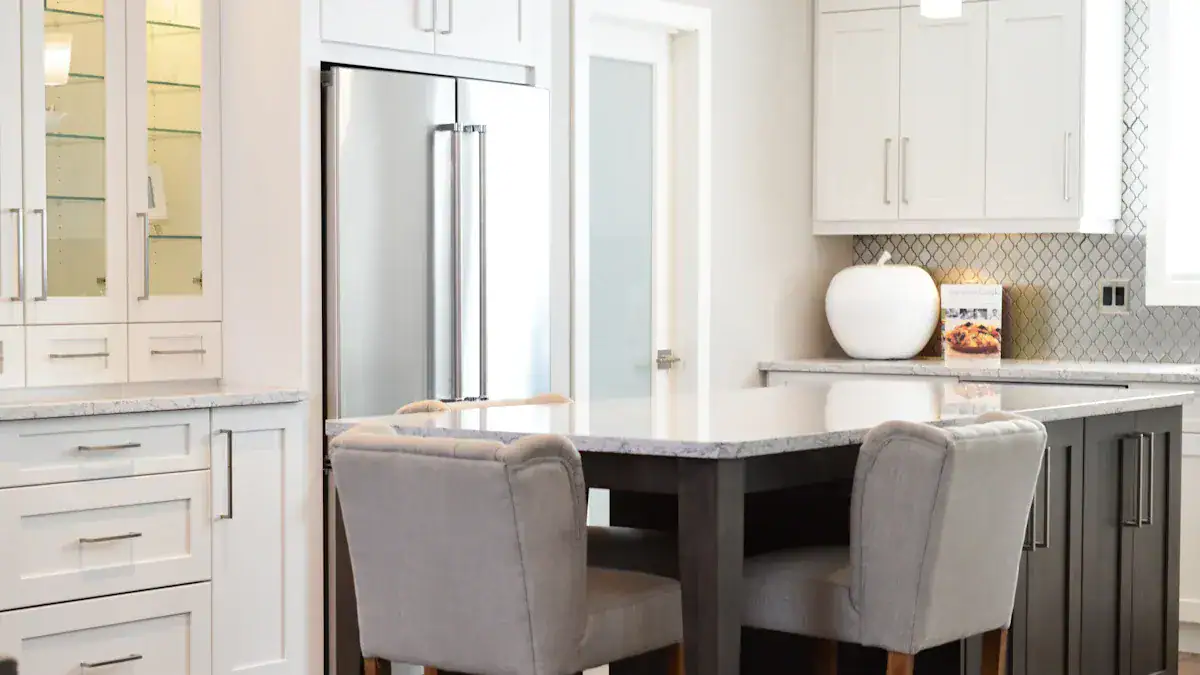
Face frame cabinets feature a solid wood frame on their front. This distinct frame creates a “picture frame” effect. This construction style is an “American tradition,” often called “American style.” It has been the dominant choice for kitchen cabinets in the U.S. since the early 20th century. Approximately two-thirds of professional kitchen cabinet installations use this type. Understanding this cabinet design is crucial for your home renovation design and proper installation.
Key Takeaways
Face frame cabinets have a solid wood frame on the front. This frame makes them strong and durable.
These cabinets offer many design choices. You can pick different door styles like full overlay, partial overlay, or inset doors.
Face frame cabinets are easier to install. The frame helps align doors and drawers correctly.
They have less inside storage space. The frame takes up some room, making drawers and openings a little smaller.
Face frame cabinets cost more than frameless ones. This is because they use more wood and need more work to build.
Defining Face Frame Cabinets

You often hear about face frame cabinets, but what exactly are they? This cabinet style is a cornerstone of American design. It offers a distinct look and robust construction.
What is a Face Frame
A face frame is a solid wood frame. It attaches to the front of a cabinet box. Think of it like a picture frame for your cabinet opening. This frame creates a finished edge. It also provides a sturdy surface. You attach cabinet doors to this frame. The frame also helps hide the inside corners of the cabinet box. This gives your cabinets a clean, finished appearance.
Face frames come in standard sizes. The typical width for framing is 1½ inches. You can find narrower options, with a minimum width of ¾ inch. The standard thickness for these frames is also ¾ inch. You can get 1-inch thick frames for an extra charge. The vertical pieces are stiles. The horizontal pieces are rails. Their widths can vary within one face frame. For example, a top rail might be 3 inches wide. A bottom rail could remain 1½ inches. A side stile might be 2¼ inches wide if it sits against a wall. Face frames can be quite large. They measure up to 96 inches by 48 inches in either direction.
Key Characteristics
Face frame cabinets have several key characteristics. They create a “picture frame effect” around each cabinet opening. This gives them a classic, traditional look. This design is often called “American style” cabinetry. It differs significantly from other cabinet types.
Characteristic | Face Frame Cabinets | Frameless Cabinets |
|---|---|---|
Face Frame | Present (covers the front of the cabinet box) | Absent |
Common Names | American Style, Traditional cabinetry | Full Access, European Style, Modern Cabinetry |
Door Attachment | Doors attach to the face frame | Doors attach directly to the box |
Overall Look | Can have contemporary and transitional door styles | Sleeker look with seamless lines, simple and modern appeal |
Door Overlay | Not specified, but implies various options | Only full overlay doors used |
Opening/Access | Smaller opening due to the frame | More ease of access and storage space |
You can see the face frame around the doors and drawers. This is a defining visual element. This construction allows for various door styles. You can choose full overlay, partial overlay, or inset doors.
Construction Overview
Building a face frame cabinet involves several steps. First, you construct the cabinet box. This box forms the main structure. Then, you build the face frame separately. This frame consists of stiles and rails. You then attach this frame to the front of the cabinet box.
Manufacturers make face frames from wood. You can get custom painted wood cabinet front face frames. These come with Colourtones Fine Paint Finishes. You can also order them in a stained finish. You can choose from over 1,000 paint colors. Assembled face frames are sanded. They receive color coats. Then, a conversion varnish topcoat finishes them.
Several methods join the face frame to the cabinet box. These methods ensure strength and durability.
Biscuits and Glue: This is a common method. You insert biscuits into slots on both the cabinet and face frame. Then, you glue them together. This method is easy. It provides strong, professional results. The slight flexibility in biscuit alignment helps in this application. You connect finished ends to face frames using biscuits and pocket screws. This happens before you attach them to the cabinets.
Pocket Screws: You use pocket screws with glue. They are especially useful where cabinets meet a wall or another cabinet. Some builders see screws as a backup. They provide extra security if the glue fails.
Splines in a Dado: Some manufacturers use this method. They cut a dado into the cabinet and face frame. Then, they insert splines into these dados. Glue is crucial for the strength of this connection.
Klicks/S-Klicks: These fasteners can also be used. They often have a bead of glue for added hold.
Dowels: Dowel construction is excellent for cabinet boxes. However, blind doweling for face frames is difficult. It requires precise alignment. Errors can occur without specialized CNC equipment.
These construction techniques ensure your face frame cabinet is sturdy. They also give it a long lifespan.
Advantages of Face Frame Cabinetry
You gain many benefits when you choose face frame cabinets for your home. These cabinets offer a blend of traditional appeal and practical advantages.
Enhanced Strength and Durability
Face frame cabinets provide superior structural support. The solid wood frame on the front adds significant rigidity to the cabinet box. This extra layer of wood makes the entire structure more stable. It helps prevent the cabinet box from racking or twisting over time. This construction method is time-tested. It has proven its durability for generations in American homes. You get a robust and long-lasting product. This means your kitchen cabinets will withstand daily use for many years.
Design Versatility
Face frame cabinets offer great flexibility in design. You can achieve various looks with different door styles. This allows you to match your personal aesthetic.
Overlay Type | Look | Best For |
|---|---|---|
Full Overlay | Doors cover almost the entire cabinet frame, creating a seamless appearance. | Modern and transitional kitchens |
Partial Overlay | Part of the cabinet frame is visible, giving a more traditional appearance. | Budget-friendly designs, Farmhouse Charm (with Shaker or beadboard) |
Inset | Doors sit flush with the frame for a clean, custom look. | High-end, traditional, or craftsman-style kitchens, Formal Dining Area (with raised panel) |
You can choose a sleek, modern look or a classic, traditional feel. A face frame cabinet adapts to your vision.
Easier Installation and Alignment
Installing face frame cabinets can be simpler for professionals. The face frame itself provides a sturdy surface for attaching doors and drawers. This makes alignment easier. Specialized tools also help streamline the process.
Integrated pilot hole drill guides allow drilling and screwing without removing clamps.
Thick protective pads prevent damage to cabinet surfaces.
Two face frame clamps help with precise vertical and horizontal alignment.
A one-step approach simplifies the installation process.
Hardened steel pilot hole drill guides flip out of the way, saving time.
Simple setup of tools contributes to faster installation.
These features help installers achieve a precise and secure fit. This ensures your cabinets look great and function perfectly.
Disadvantages of Face Frame Cabinets
Face frame cabinets have many benefits. They also come with some drawbacks. You should consider these points.
Reduced Interior Space
You might find less usable space inside face frame cabinets. The face frame itself takes up room. This frame causes a loss of 1 to 1.5 inches of usable interior space per cabinet. Drawers and rollouts are also slightly smaller. This reduces overall storage capacity. In kitchens with face frame cabinets, the total storage space can be less. It is typically no more than 4% less than frameless cabinetry. This is mainly due to a 6% loss in bottom cabinetry storage. Storage in tall and wall cabinets stays the same.
Wider Stiles and Rails
The stiles and rails of the face frame are visible. They can be wider than the cabinet box itself. This can sometimes make it harder to access items. You might find it difficult to pull out large pots or appliances. The frame can create a slight obstruction. This is especially true for wider items.
Cost Considerations
You might find face frame cabinets more expensive. The extra wood and labor for the frame add to the cost. Here is a comparison of average costs per linear foot:
Aspect | Framed Cabinets | Frameless Cabinets | Cost Difference (Frameless vs. Framed) |
|---|---|---|---|
Average Cost per Linear Foot | $100–$300 | $150–$350 (luxury options > $400) | Generally 30–40% more expensive |
A face frame cabinet can cost more than a frameless option. This is true even for comparable quality. You should budget accordingly for your project.
Face Frame Versus Frameless
You often compare face frame cabinets with frameless cabinets. Both offer distinct advantages. Understanding their differences helps you choose the best option for your home.
Structural Differences
Face frame cabinets feature a solid wood frame. This frame attaches to the front of the cabinet box. It adds significant rigidity and strength. This construction creates a sturdy, traditional build. Frameless cabinets, also known as European-style, do not have this front frame. The cabinet box itself forms the entire structure. The doors attach directly to the sides of the cabinet box. This design relies on thicker cabinet box material for stability.
Aesthetic Variations
The visual appeal of face frame and frameless cabinets differs greatly. You can choose a look that matches your personal style.
Feature | Framed Cabinets | Frameless Cabinets |
|---|---|---|
Visual Appeal | Classic, transitional, detailed, layered design; often features decorative elements like moldings or raised panels. | Sleek, modern, minimalist; flush fronts create a seamless look. |
Design Suitability | Ideal for high-end homes or projects aiming for a timeless aesthetic; suitable for traditional overlay or inset door styles. | Aligns with contemporary design trends; ideal for modern, contemporary, and Scandinavian kitchen styles. |
Face frame cabinets offer a classic, timeless appearance. They fit well with traditional, rustic, farmhouse, or transitional kitchen designs. Their visible frame shows craftsmanship. This contributes to a warmer, more detailed kitchen feel. You get a “homey” or classic Americana vibe. In contrast, frameless cabinets provide a minimalist, clean look. They perfectly suit modern, contemporary, and Scandinavian kitchen styles. The absence of a frame results in straighter, more consistent lines. This gives the cabinetry a sleek, sophisticated, and often high-end seamless finish. This design choice impacts the overall feel of your kitchen.
Functional Accessibility
You will notice differences in how you access items inside these cabinets. The presence or absence of the face frame affects usability.
Larger Openings: Frameless cabinets have larger cabinet openings. They are about 1.5 inches wider. This happens because no face frame obstructs the opening. You find it easier to store dishes and large appliances.
More Drawer Space: Frameless cabinets offer more drawer storage space. The frame does not limit the opening. This allows for wider and larger drawer boxes.
Easier Shelf Adjustment: Shelf adjustment is simpler in frameless cabinets. You do not have a face frame to work around.
Unobstructed Access: Frameless designs provide easier accessibility and visibility. Dishes do not get caught on frames. Larger dishes fit more easily.
Maximized Storage: Frameless cabinets maximize storage space. They eliminate the face frame. This can increase interior space by up to 15%.
The face frame in a face frame cabinet limits interior drawer space. You lose up to an inch and a half compared to full-access frameless cabinets. Frameless cabinets offer more storage. They can be at least one inch deeper than framed cabinets. They seamlessly integrate various organization options. This includes roll-out shelves.
Cost and Installation
You might wonder about the cost and installation process for each type. The professional installation costs for both face frame and frameless cabinets are approximately the same. Labor for cabinet installation generally ranges from $50 to $150 per linear foot. This cost does not differ between face frame and frameless cabinet types. While some note frameless cabinets for a “simpler install” and face frame cabinet for a “complex install,” the labor cost usually remains consistent.
Face Frame Cabinet Door Styles
You can choose from several door styles for your face frame cabinets. Each style changes how much of the face frame you see. This impacts the overall look of your kitchen design.
Full Overlay Doors
Full overlay doors cover almost the entire face frame. They leave only a small gap, typically 1/4″ to 1/2″, between adjacent doors and drawers. This creates a smooth, continuous front. You get a seamless and uniform surface. This style offers a modern look. It reduces visual clutter. Full overlay doors maximize storage space. They eliminate exposed frame sections. This makes them a solid choice for modern and transitional kitchens. They also work well in remodels where you want to maximize storage and keep things simple. This style highlights the door, hardware, and finish without visual interruption.
Partial Overlay Doors
Partial overlay doors extend slightly past the cabinet openings. They leave a significant portion of the face frame visible. This gives your cabinets a more traditional appearance. You see the frame around each door and drawer. This style offers a balanced and versatile look. It is often a budget-friendly choice. Partial overlay doors can give your kitchen a farmhouse charm, especially with Shaker or beadboard door styles.
Inset Doors
Inset doors sit flush with the face frame. They fit perfectly inside the cabinet opening. This style makes the entire frame stand out. It creates a clean, custom, and fancy appearance. Inset doors are a hallmark of high-end, traditional, or craftsman-style kitchens. They offer a classic, furniture-like look. Achieving this look requires precise measurements. Tolerances are 1/32″ or less. Doors must be perfectly aligned to close flush. Seasonal wood movement can cause minor binding or gaps. This style demands skilled craftsmanship and premium hardware.
Choosing Your Door Style
You have versatile design choices for your face frame cabinets. These include Inset, Partial, and Full overlays. You can select the precise look and function for your kitchen design preferences. Consider your home’s architectural style. Traditional homes often suit raised or inset doors. Modern homes look great with slab or full overlay styles. Think about your lifestyle needs. Slab or Shaker doors are easy to clean. If you want to display items, glass insert doors are a good option. Also, consider your desired finish. Some styles, like Shaker, look best with painted finishes. Others, such as raised panel, are enhanced by stained wood.
Installing Face Frame Cabinets
You can successfully install your new face frame cabinet with careful planning and the right tools. This process ensures your kitchen looks great and functions well.
Installation Preparation
Before you begin, prepare your space. If you plan to paint, finish your walls and trim first. This prevents paint splatters on your new kitchen cabinets. Gather essential tools. You will need a cordless drill, a tape measure, and a 5-foot level. Also have a pry bar, a ladder, and clamps ready. Other useful items include a pin nailer, an extension cord, drill bits, and various saws like a table saw or jigsaw. Do not forget a stud finder, a framing square, wood shims, 2x4s, finish nails, and screws. You will also need a pencil, hammer, and screwdrivers. Having a second person to assist makes the installation smoother.
Leveling and Securing
Start by finding the highest point on your floor along the wall. Use a 4-foot or 6-foot level for this. Mark this high point. All your measurements will refer to it. Slide your first face frame cabinet into place. Align its top edge with your mark. Check for level front-to-back and side-to-side. Use plastic shims under low corners and vertical stiles to level it. Once level, drive one cabinet screw through the back rail into a wall stud. Do not tighten it fully yet. Bring the next cabinet into position. Level it. Use cabinet clamps to pull the face frames tightly together. Drill pilot holes. Drive 2.5-inch cabinet screws through the face frames to connect them. Only after joining cabinets, secure the second cabinet to the wall studs. Repeat this process for all cabinets.
Door and Drawer Alignment
After installation, you need to align doors and drawers. First, install two rubber bumpers on each door. Place them on the side opposite the hinges, one at the top and one at the bottom. For door alignment, you adjust in three ways. You can move doors vertically by loosening screws in the mounting plate. Adjust them in-and-out using the screw farthest from the door on the hinge body. For left-right movement, use the screw closest to the door. This helps set gaps between double doors. For drawers, you can adjust height using a slider tab on the locking device. You can also rotate a cam at the back of the drawer for front-to-back adjustments.
Common Challenges
You might encounter some challenges during installation. One common problem is a cabinet door catching on an adjacent wall when you open it. This happens if the face frame is not wide enough. To fix this, install a filler strip. This extends the face frame. It moves the cabinet further from the wall. This solution is also helpful in tight spaces like bathrooms. It prevents drawers from hitting door trim.
You now understand face frame cabinets. They offer strength, durability, and great design flexibility. Remember, face frame means traditional appeal and robust construction. Frameless cabinets give you more storage and a modern look. Choose based on your priorities. Consider strength versus storage. Think about traditional versus modern aesthetics. Pick your door style carefully. Proper installation ensures longevity and appearance. Make an informed decision for your home renovation.
FAQ
What makes face frame cabinets different from other types?
Face frame cabinets feature a solid wood frame on their front. This frame adds significant strength and rigidity. Other cabinet types, like frameless, do not have this visible frame. You get a more traditional look with face frame cabinets.
Why should I consider face frame cabinets for my kitchen?
You should consider face frame cabinets for their enhanced durability and classic appeal. The robust construction provides long-lasting support for your kitchen cabinets. They also offer versatile design options, allowing you to achieve various aesthetic looks.
How does the face frame impact storage space?
The face frame slightly reduces interior storage space compared to frameless cabinets. The frame itself takes up some room. However, the difference is often minimal. You gain structural integrity and a traditional design.
What door styles work best with face frame cabinets?
You have many door styles for face frame cabinets. Full overlay, partial overlay, and inset doors are common. Each style changes how much of the face frame you see. This allows for diverse design choices in your kitchen.
Is the installation of face frame cabinets complex?
Professional installation of face frame cabinets is generally straightforward. The sturdy frame helps with alignment. You need proper leveling and securing to the wall. This ensures a stable and attractive final installation.