

You’ll get durable, cushioned, slip-resistant flooring with these five top 2026 picks: PRAISUN interlocking gym mats (48 sq ft, 0.6″ three-layer build) for workouts; Diamond-Plate PVC garage roll (16″×21′) for vehicles and workshops; Coin-Grip 4’×8′ rubber roll for waterproof, high-traction surfaces; SUPERJARE interlocking EPDM-top EVA tiles (48 sq ft) for shock absorption; and a 4×6′ black diamond-plate PVC mat for heavy-duty garage use—keep going to learn which suits your space best.
| PRAISUN Interlocking Rubber Gym Flooring Mats (48 sq ft) |

| Best All-Purpose | Size / Coverage: 12 tiles, 24″ x 24″ each — total 48 sq ft | Thickness: 0.6 in | Surface Texture / Pattern: Textured rubber surface (grippy) | VIEW LATEST PRICE | Read Our Analysis |
| Diamond-Plate Rubber Garage Flooring Roll (16in x 21ft) |
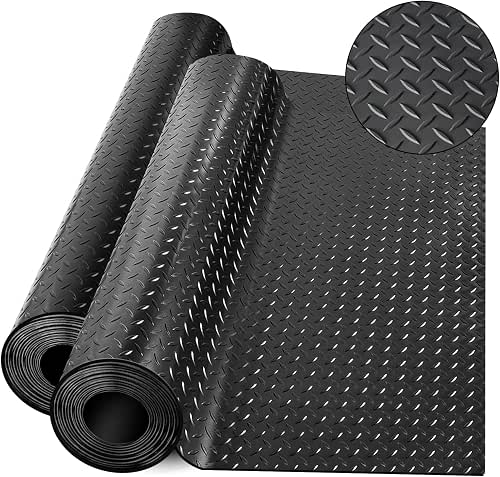
| Garage Workhorse | Size / Coverage: Roll 21 ft × 16 in (can be cut) — covers approx 4 ft × 7 ft | Thickness: (not explicitly listed as exact thickness) — heavy, pressure-resistant PVC roll | Surface Texture / Pattern: Diamond-plate pattern (anti-slip) | VIEW LATEST PRICE | Read Our Analysis |
| Coin-Grip Rubber Flooring Roll 4’x8′ Black |

| Heavy-Duty Utility | Size / Coverage: Roll 4′ × 8′ | Thickness: 1/8 in | Surface Texture / Pattern: Coin-grip texture (non-slip) | VIEW LATEST PRICE | Read Our Analysis |
| SUPERJARE Interlocking Rubber-Top EVA Gym Flooring Mats |

| Performance Pick | Size / Coverage: 12 tiles, 24″ x 24″ each — total 48 sq ft | Thickness: 0.56 in | Surface Texture / Pattern: Ultra-grip rubber top (high traction) | VIEW LATEST PRICE | Read Our Analysis |
| 4×6 ft Black Diamond Plate Garage Floor Mat |

| Quick Garage Shield | Size / Coverage: Mat 4′ × 6′ | Thickness: 2.8 mm (approx 0.11 in) | Surface Texture / Pattern: 3D diamond-plate surface (anti-slip) | VIEW LATEST PRICE | Read Our Analysis |
More Details on Our Top Picks
PRAISUN Interlocking Rubber Gym Flooring Mats (48 sq ft)
Whenever you want a durable, easy-to-install home gym surface that stands up to heavy lifting and high‑impact workouts, the PRAISUN interlocking rubber mats are a smart pick. You get 12 tiles (24×24×0.6 in) covering 48 sq ft with a 3-layer build: rubber top, adhesive layer, and high-density EVA foam core. The 0.6 in thickness cushions jumps and lifts, protecting joints and subfloors while cutting noise. Textured rubber resists slipping as you sweat; materials are SGS-certified non-toxic. Installation is quick with puzzle edges and two border pieces per tile; they’re portable, water-resistant, and wipe-clean.
- Size / Coverage:12 tiles, 24″ x 24″ each — total 48 sq ft
- Thickness:0.6 in
- Surface Texture / Pattern:Textured rubber surface (grippy)
- Material / Construction:Rubber top + adhesive layer + high-density EVA foam core (3-layer)
- Main Applications:Home gym, garage, basement, playroom, HIIT, yoga, lifting
- Installation / Maintenance:Interlocking puzzle tiles — quick install, portable, easy to clean (wipe)
- Additional Feature:Includes 2 borders
- Additional Feature:SGS-certified non-toxic
- Additional Feature:Minor initial odor
Diamond-Plate Rubber Garage Flooring Roll (16in x 21ft)
Provided you want a tough, low-maintenance garage floor covering that stands up to tools, oil, and heavy use, the Diamond-Plate Rubber Garage Flooring Roll (16in x 21ft) is a smart choice. You get a black PVC roll with a diamond-plate surface that enhances traction and resists wear, corrosion, pressure, and water. It protects against oil stains, rust, scratches, and preserves your original floor while staying elastic and hard to deform. Cut it to cover about 4 ft × 7 ft, use adhesive tape for complex areas, and clean easily with a broom, mop, vacuum, or pressure washer.
- Size / Coverage:Roll 21 ft × 16 in (can be cut) — covers approx 4 ft × 7 ft
- Thickness:(not explicitly listed as exact thickness) — heavy, pressure-resistant PVC roll
- Surface Texture / Pattern:Diamond-plate pattern (anti-slip)
- Material / Construction:PVC (diamond-plate rubber-style roll)
- Main Applications:Garage floor, RV/trailer flooring, tool table, gym mat, outdoor waterproofing
- Installation / Maintenance:Roll can be cut to fit; includes adhesive/tape; cleanable with broom/mop/pressure washer
- Additional Feature:Includes adhesive roll
- Additional Feature:Cut-to-fit flexibility
- Additional Feature:Outdoor-safe waterproof
Coin-Grip Rubber Flooring Roll 4’x8′ Black
Should you need a tough, low‑maintenance floor for heavy‑use areas, the Coin‑Grip Rubber Flooring Roll 4’x8′ in black is built for garages, gyms, workshops and loading zones. You’ll get premium rubber with a 1/8″ thickness, waterproofing, high elasticity, wear resistance and rebound to resist compression and aging. The coin-grip texture gives reliable slip resistance while protecting furniture and equipment. It’s easy to cut, bend and install for DIY projects, fitting trailers, corridors, benches and even animal areas. Made by Rubber Specialist, it’s durable and flexible — and customer support is available provided you’ve got questions.
- Size / Coverage:Roll 4′ × 8′
- Thickness:1/8 in
- Surface Texture / Pattern:Coin-grip texture (non-slip)
- Material / Construction:Premium rubber roll
- Main Applications:Garage, workshop, gym, trucks, trailers, heavy-duty workplaces
- Installation / Maintenance:Easy to cut and bend for DIY installation; easy to clean
- Additional Feature:Heavy-duty specialist-made
- Additional Feature:Easy-to-cut DIY
- Additional Feature:Anti-aging durability
SUPERJARE Interlocking Rubber-Top EVA Gym Flooring Mats
Provided that you need heavy-duty, low-odor gym flooring that balances cushioning with stable footing, the SUPERJARE interlocking rubber-top EVA tiles are a smart pick for home gyms and garages. You get 12 tiles (24″ x 24″) covering 48 sq ft, 0.56″ thick, with a high-density EVA base and EPDM rubber top in black/grey. The rubber surface gives ultra-grip traction for lifts and HIIT, while the foam layer absorbs shock and reduces noise. They bear heavy equipment, protect your subfloor, and resist wear. Interlocking edges and two detachable borders make installation, layout changes, and removal straightforward and neat.
- Size / Coverage:12 tiles, 24″ x 24″ each — total 48 sq ft
- Thickness:0.56 in
- Surface Texture / Pattern:Ultra-grip rubber top (high traction)
- Material / Construction:EPDM rubber top + high-density EVA foam base (dual-layer)
- Main Applications:Home/garage gym, weightlifting, HIIT, yoga, treadmills, playroom
- Installation / Maintenance:Interlocking tiles with detachable borders — easy assembly/disassembly; low odor (wipe/clean)
- Additional Feature:No rubber odor
- Additional Feature:Detachable border pieces
- Additional Feature:Supports treadmills/wrestling
4×6 ft Black Diamond Plate Garage Floor Mat
In case you need a tough, low-maintenance garage mat that handles cars and heavy foot traffic, the 4 x 6 ft Black Diamond Plate Garage Floor Mat delivers with its 2.8 mm commercial-grade PVC and raised diamond pattern for reliable grip and floor protection. You’ll get a sturdy, durable surface that resists scratches and traps spills, keeping floors looking new. Installation’s simple — unfold and place, then trim to fit. Clean with a vacuum, broom, damp cloth, or dry mop. Use it in garages, trailers, basements, shops, gyms, or under SUVs and staircases for dependable, non-slip coverage.
- Size / Coverage:Mat 4′ × 6′
- Thickness:2.8 mm (approx 0.11 in)
- Surface Texture / Pattern:3D diamond-plate surface (anti-slip)
- Material / Construction:Commercial-grade PVC rubber
- Main Applications:Garage, warehouse, trailer, SUV, basement, shop, gym
- Installation / Maintenance:Unfold and place, cut-to-fit; clean with vacuum, broom, damp cloth
- Additional Feature:Unfold-and-place setup
- Additional Feature:2.8 mm thickened PVC
- Additional Feature:Vehicle-traffic rated
Factors to Consider When Choosing Rubber Flooring
Upon choosing rubber flooring, you’ll want to weigh thickness and cushioning against the surface texture for grip. Check the material composition and expected durability to match your traffic and wear needs. Also consider installation method and ongoing maintenance so the floor performs well long-term.
Thickness And Cushioning
Although thickness is often the initial spec you check, it’s really the combination of thickness and core density that determines how a rubber floor will cushion impacts, protect joints, and resist indentation from heavy equipment. For high-impact activities like weightlifting or plyometrics, pick thicker options (0.5–0.75 in) with a dense core so you get shock absorption without excessive give. In low-impact zones, thinner mats (1/8–3/16 in) outperform because they stay stable. Should you run treadmills or place heavy racks, choose thick, high-density pads to prevent subfloor damage and reduce concentrated indentations. Thicker, denser flooring also cuts noise and vibration to lower floors. For mixed-use spaces, aim for moderate compression under body weight—comfortable yet firm enough to maintain stable footing.
Surface Texture Grip
Because grip determines how safely you move on rubber floors, pay close attention to surface texture—the pattern and depth directly change slip resistance and how liquids disperse. Choose textured patterns (coin, diamond) whenever you need 20–50% higher slip resistance than smooth finishes; their raised channels divert liquids and cut hydroplaning risk. Pick finer micro-textures in case you’ll be barefoot for yoga or stretching, and coarser patterns in case users wear rubber-soled shoes or you need weightlifting stability. Aim for measured static coefficients of friction above 0.6 for general areas and 0.8+ for high-slip-risk or industrial zones. Keep in mind high-grip surfaces will abrade footwear faster and trap dirt more, so balance grip with cleaning and wear expectations to match your use.
Material Composition Type
Should you want rubber flooring that fits your space and budget, start by matching material type to performance needs: natural rubber gives exceptional elasticity and resilience but can cost more and could precipitate latex sensitivities; synthetics like SBR, EPDM, and PVC blends deliver budget-friendly durability plus better UV and chemical resistance; composites pair a tough rubber wear layer with foam or EVA cores for added cushioning; and recycled crumb rubber offers durability and impact absorption with a greener footprint, although it can be heavier and occasionally release an initial odor. Choose natural rubber for high elasticity and tear resistance; pick synthetics whenever UV or chemical exposure matters; use composites where comfort and slip resistance count; select recycled for sustainability. Consider thickness and density for load-bearing and sound control.
Durability And Wear
At the time choosing rubber flooring, focus on the specs that predict how long it will keep its shape and surface under real use: thickness and density determine resistance to compression and indentation; abrasion and tensile strength show how well the top layer will stand up to foot traffic and equipment; and compression set plus rebound tell you whether the floor will spring back after repeated impacts. You should check thickness (mm/in) and density or Shore A hardness—thicker, denser rubber resists tears and permanent dents under heavy loads. Compare abrasion loss (ISO 4649) and tensile strength (MPa) for longevity in busy areas. Look for low compression set and good rebound ratings. Also confirm resistance to oils, chemicals, UV/ozone and review manufacturer life‑expectancy and warranty tied to traffic type.
Installation And Maintenance
In case you’re planning installation and ongoing care, match the product and method to the room’s use and your skill level to avoid costly repairs or premature wear. Choose interlocking tiles for tool-free, fast assembly and easy relocation; pick rolls or glued sheets for seamless coverage in high-traffic, permanent areas. Measure precisely and add 5–10% extra for cuts, borders, and pattern matching to prevent visible gaps. Inspect and prepare the substrate—clean, level, and dry it; patch porous or uneven concrete and use a primer whenever required. For glued installs, use a rubber-compatible adhesive, allow cure times, and work in sections to avoid trapped air. For floating systems, leave a small perimeter gap for expansion. Maintain floors by sweeping, vacuuming, and mopping with a mild pH-neutral cleaner; avoid solvents and lift edges occasionally to inspect.
Odor And Emissions
Because new rubber floors often give off a noticeable “rubber” smell from VOCs and plasticizers, consider emissions whenever choosing a product—especially for homes with kids, seniors, or respiratory issues. New vulcanized or recycled rubber can off‑gas for days to weeks; in poorly ventilated spaces it might last longer. Choose products with third‑party VOC certifications like GREENGUARD or FloorScore to limit off‑gassing. Note that dense bonded rubber and EPDM/virgin rubber typically emit less than crumb or recycled rubber with unknown binders. During installation, ventilate aggressively—open windows, run fans and HVAC—to speed dissipation in the initial 48–72 hours. Should occupants be sensitive, let the flooring air out for several days before regular use and consider a consumer VOC monitor to confirm air quality.
Price Versus Value
During evaluating rubber flooring, compare price per square foot rather than per piece so you can fairly judge options of different sizes and thicknesses; keep in mind that a higher upfront cost often buys thicker, denser, or multi‑layer products that cut noise, absorb shock, and last longer, lowering your long‑term cost. You should calculate lifecycle cost by estimating years of use, maintenance frequency, and replacement intervals instead of fixating on sticker price. Don’t forget installation and edge‑finishing: interlocking tiles reduce labor, while rolls or sheets might need adhesive and pros. Prioritize the performance metrics that matter—shock absorption, load capacity, slip and water resistance—because stronger performance can prevent equipment damage and repairs, maximizing value per dollar over time.
