

Should you want versatile and reliable IFTTT-compatible hubs in 2026, consider the Aqara Hub M1S Gen 2 and Smart Hub M2 for Zigbee support and voice control with Apple, Alexa, and Google. YoLink offers long-range LoRa hubs great for energy monitoring and remote areas, while Aeotec Smart Home Hub unifies Z-Wave, Zigbee, and Matter devices for sturdy automation. Each excels in device capacity, security, and integration—you’ll find which fits your smart home needs best.
| Aqara Hub M1S Gen 2 Smart Home Bridge |
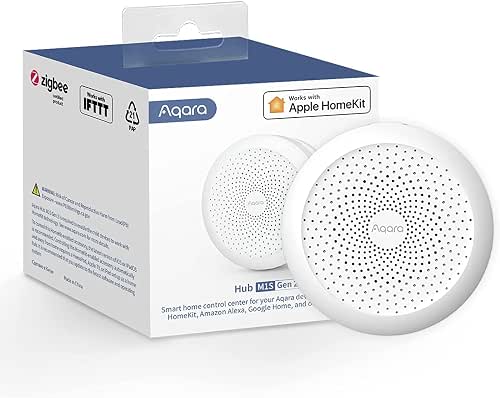
| Best for HomeKit Users | Wireless Protocols Supported: Zigbee 3.0 (Aqara devices only) | Voice Assistant Compatibility: Apple HomeKit, Google Assistant, Amazon Alexa, IFTTT | Maximum Connected Devices: Up to 128 Aqara Zigbee devices | VIEW LATEST PRICE | Read Our Analysis |
| Aqara Smart Hub M2 for Home Automation |

| Best for IR Device Control | Wireless Protocols Supported: Zigbee 3.0 (Aqara devices only) | Voice Assistant Compatibility: Apple HomeKit, Google Assistant, Amazon Alexa, IFTTT | Maximum Connected Devices: Up to 128 Aqara Zigbee devices | VIEW LATEST PRICE | Read Our Analysis |
| YoLink Smart Home Starter Kit with Energy Monitoring |

| Best Long-Range Connectivity | Wireless Protocols Supported: Proprietary LoRa RF spread spectrum | Voice Assistant Compatibility: Alexa, Google Assistant (via YoLink skill) | Maximum Connected Devices: Not specified (supports multiple devices via LoRa) | VIEW LATEST PRICE | Read Our Analysis |
| YoLink Smart Energy Plug 15A with Hub |

| Best for Heavy-Duty Appliances | Wireless Protocols Supported: Proprietary LoRa RF spread spectrum | Voice Assistant Compatibility: Alexa, Google Assistant, IFTTT, Home Assistant | Maximum Connected Devices: Not specified (works with multiple YoLink devices) | VIEW LATEST PRICE | Read Our Analysis |
| Aeotec Smart Home Hub with Z-Wave & Zigbee |
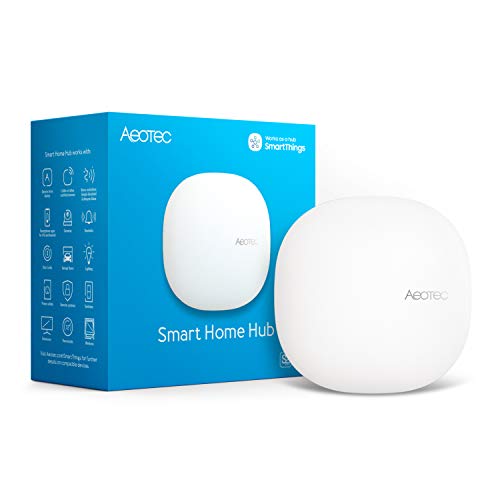
| Best Multi-Protocol Compatibility | Wireless Protocols Supported: Z-Wave Plus (V3), Zigbee, Wi-Fi, Matter | Voice Assistant Compatibility: Alexa, Google Assistant | Maximum Connected Devices: Supports multiple Z-Wave, Zigbee, Wi-Fi, and Matter devices (no exact number specified) | VIEW LATEST PRICE | Read Our Analysis |
More Details on Our Top Picks
Aqara Hub M1S Gen 2 Smart Home Bridge
Provided you frequently rely on IFTTT to connect and automate your smart home devices, the Aqara Hub M1S Gen 2 Smart Home Bridge is an excellent choice. It supports Apple HomeKit, Google Assistant, Amazon Alexa, and IFTTT, giving you versatile control options. Just make sure you use a secure 2.4 GHz Wi-Fi network and keep the hub within about 400 inches of your router. You can connect up to 128 Aqara Zigbee devices, though larger setups need repeaters. The hub features a built-in RGB light and a speaker for alarms or doorbells, enhancing your automation possibilities.
- Wireless Protocols Supported:Zigbee 3.0 (Aqara devices only)
- Voice Assistant Compatibility:Apple HomeKit, Google Assistant, Amazon Alexa, IFTTT
- Maximum Connected Devices:Up to 128 Aqara Zigbee devices
- Network Connectivity Options:2.4 GHz Wi-Fi only (no Wi-Fi 6), Zigbee 3.0
- Alarm and Alert Capabilities:Built-in 2 W speaker for alarms, doorbell, customizable ringtones
- App and Automation Support:Aqara Home app; supports schedules, timers, scenes, and HomeKit alarm modes
- Additional Feature:Built-in RGB light
- Additional Feature:2 W speaker alarm
- Additional Feature:Illumination sensor included
Aqara Smart Hub M2 for Home Automation
Provided you want a reliable hub that seamlessly connects up to 128 Aqara Zigbee devices and supports voice control with Apple HomeKit, Google Assistant, Amazon Alexa, and IFTTT, the Aqara Smart Hub M2 is a strong choice. It uses Zigbee 3.0 and requires 2.4 GHz Wi-Fi, with an Ethernet port for stable connections. You can control IR devices like TVs and air conditioners via voice or automation. The compact black hub (3.94 x 3.94 x 1.12 inches) offers a built-in speaker for alerts and alarms, creating a flexible, integrated home automation experience. Just keep firmware updated for full compatibility.
- Wireless Protocols Supported:Zigbee 3.0 (Aqara devices only)
- Voice Assistant Compatibility:Apple HomeKit, Google Assistant, Amazon Alexa, IFTTT
- Maximum Connected Devices:Up to 128 Aqara Zigbee devices
- Network Connectivity Options:2.4 GHz Wi-Fi and Ethernet RJ45 port, Zigbee 3.0
- Alarm and Alert Capabilities:Built-in speaker for security alerts, doorbell, alarms, configurable ringtones
- App and Automation Support:Aqara Home app; supports home automations, voice control, and platform integrations
- Additional Feature:360° IR remote control
- Additional Feature:Ethernet RJ45 port
- Additional Feature:Surface-mounted indoor use
YoLink Smart Home Starter Kit with Energy Monitoring
Should you need a home automation hub that can cover hard-to-reach areas like basements or remote sheds, the YoLink Smart Home Starter Kit with Energy Monitoring has you covered. Using LoRa technology, it offers a wireless range up to a quarter mile, circumventing Wi-Fi dead zones. You’ll get two smart outlets and a hub that tracks real-time energy use, with detailed reports via the YoLink app. Compatible with Alexa, Google Assistant, and IFTTT, it lets you automate and control your devices remotely. Plus, its durable, fire-resistant design works safely with household appliances up to 12.5A.
- Wireless Protocols Supported:Proprietary LoRa RF spread spectrum
- Voice Assistant Compatibility:Alexa, Google Assistant (via YoLink skill)
- Maximum Connected Devices:Not specified (supports multiple devices via LoRa)
- Network Connectivity Options:2.4 GHz Wi-Fi or wired network (Ethernet included), LoRa RF
- Alarm and Alert Capabilities:No built-in speaker; alerts via app notifications
- App and Automation Support:YoLink app; real-time monitoring, energy reports, IFTTT integration
- Additional Feature:LoRa long-range tech
- Additional Feature:Real-time energy reports
- Additional Feature:Low Wi-Fi usage
YoLink Smart Energy Plug 15A with Hub
In case you want to keep a close eye on your energy use while running heavy-duty appliances like heaters or pumps, the YoLink Smart Energy Plug 15A with Hub is made for you. It supports up to 15A loads and offers real-time wattage readings through the YoLink app, letting you monitor consumption instantly. You can schedule cycles with customizable days and intervals, plus create direct device-to-device automations without internet. Installation is simple—just plug it in and connect to the included YoLink Hub using long-range LoRa technology. It also integrates smoothly with Alexa, Google Assistant, IFTTT, and Home Assistant for voice and smart home control.
- Wireless Protocols Supported:Proprietary LoRa RF spread spectrum
- Voice Assistant Compatibility:Alexa, Google Assistant, IFTTT, Home Assistant
- Maximum Connected Devices:Not specified (works with multiple YoLink devices)
- Network Connectivity Options:Pairs with YoLink Hub via LoRa; Hub uses 2.4 GHz Wi-Fi or wired network
- Alarm and Alert Capabilities:No built-in speaker; app notifications and device-to-device triggers
- App and Automation Support:YoLink app; real-time monitoring, advanced scheduling, D2D triggers, IFTTT, Home Assistant
- Additional Feature:Overload protection auto-shutdown
- Additional Feature:Device-to-Device triggers
- Additional Feature:Heavy load support 15A
Aeotec Smart Home Hub with Z-Wave & Zigbee
Whenever you’re looking to unify your smart home devices under one roof, the Aeotec Smart Home Hub with Z-Wave and Zigbee offers seamless compatibility with a wide range of protocols like Matter, SmartThings, and Wi-Fi. You can control your devices via the SmartThings app or voice commands using Alexa and Google Assistant. Its local automation guarantees faster, reliable performance. The hub supports numerous devices, including lighting, comfort, and energy management products, making it ideal for North American homes. Setup is easy with Wi-Fi or Ethernet, and the package includes an adapter and Ethernet cable for convenience.
- Wireless Protocols Supported:Z-Wave Plus (V3), Zigbee, Wi-Fi, Matter
- Voice Assistant Compatibility:Alexa, Google Assistant
- Maximum Connected Devices:Supports multiple Z-Wave, Zigbee, Wi-Fi, and Matter devices (no exact number specified)
- Network Connectivity Options:Wi-Fi, Ethernet, Z-Wave Plus, Zigbee, Matter
- Alarm and Alert Capabilities:Supports alarms and alerts via SmartThings app and compatible devices
- App and Automation Support:SmartThings app; custom automations, local execution for speed and reliability
- Additional Feature:Supports Matter protocol
- Additional Feature:Local automation execution
- Additional Feature:Includes Ethernet cable
Factors to Consider When Choosing Home Automation Hubs for IFTTT
Whenever choosing a home automation hub for IFTTT, you’ll want to check its compatibility with IFTTT and the communication protocols it supports. Consider how many devices it can handle and whether it can grow with your setup. Also, pay attention to network connectivity options and the automation features it offers to match your needs.
Compatibility With IFTTT
Although many home automation hubs claim broad compatibility, you should verify that the hub explicitly supports IFTTT with dedicated integrations and applet triggers. Native platform compatibility doesn’t always mean the hub offers IFTTT service or supports specific triggers and actions. Check which device types and attributes the hub exposes to IFTTT—for example, on/off, temperature, or motion—since limited options can restrict your automation possibilities. Confirm whether interactions happen in real time or provided the hub polls data at intervals, as delays can affect responsiveness. Make sure the integration supports two-way control unless you want both remote commands and status feedback. Finally, review any account limits, API rate caps, or cloud dependencies that could impact automation reliability or scale.
Supported Communication Protocols
Since your home automation hub needs to communicate seamlessly with your devices and IFTTT, you should initially confirm it supports the wireless protocols your gadgets use, such as Wi-Fi, Zigbee, or Z-Wave. Mismatched protocols mean extra bridges and complexity. Check whether the hub can act as a protocol gateway, bridging devices to the cloud since IFTTT usually interacts via the hub’s cloud API, not direct radio signals. Also, verify network requirements—some hubs need 2.4 GHz Wi-Fi, Ethernet, or LAN access for stable connectivity. Make certain the hub exposes device-level events and commands through its cloud API or webhooks, maximizing what IFTTT applets can control. Finally, consider mesh support for protocols like Zigbee or Z-Wave to guarantee reliable communication across all your devices.
Device Capacity And Scalability
As you build out your smart home ecosystem, you’ll want a hub that can handle your current devices and scale with your future needs. Check the maximum device capacity—many hubs support 50 to 300+ devices, but you’ll want to avoid hitting those limits too soon. Verify the protocol limits for Zigbee or Z-Wave channels, since these often cap how many devices the hub can manage reliably. Consider whether the hub supports repeaters or mesh expansion to cover larger homes or numerous battery-powered sensors. Some hubs let you deploy multiple units on the same account or LAN, distributing the load and increasing total capacity. Finally, make certain the hub’s CPU, memory, and firmware update policies can keep up with growth to maintain smooth performance as you add more devices and automations.
Network Connectivity Options
Beyond device capacity, the way your home automation hub connects to your network plays a big role in how well it works with IFTTT. You’ll want a hub that supports stable 2.4 GHz Wi-Fi or wired Ethernet, ensuring consistent LAN or internet access for your IoT devices and IFTTT applets. Check whether the hub uses cloud-based endpoints, since many IFTTT triggers rely on cloud-to-cloud communication rather than local-only protocols. Also, verify compatibility with security standards like WPA3 and TLS to keep your data safe during automation. Make sure your hub can stay on the same subnet as your devices or offers port forwarding or VPN options, preventing failed triggers caused by network segregation. Finally, consider bandwidth and latency—robust Ethernet or strong Wi-Fi reduces delays and missed automation events.
Automation And Control Features
Upon selecting a home automation hub for IFTTT, you’ll want to focus on how well it handles automation and control features. Check whether the hub exposes device-level triggers and actions like on/off, temperature, or motion events so your applets access precise controls. Make sure it supports bi-directional control and state reporting, ensuring commands reflect the devices’ real status and prevent false positives. Confirm the hub can manage the number and type of automations you plan without throttling or limiting active applets. Should you need complex routines, verify support for conditional and scheduled automations such as time triggers or multi-condition checks. Finally, consider whether critical automations run locally or depend on cloud services, since local execution enhances reliability and reduces latency.
Security And Privacy Measures
Upon selecting a home automation hub for IFTTT, you should prioritize strong security and privacy measures to protect your smart home from unauthorized access and data breaches. Make certain the hub offers end-to-end encryption like TLS for cloud connections and AES-128/256 for local links, securing commands and data in transit. Prefer hubs that support local processing or let you keep sensitive automations on-premises, reducing exposure in the event cloud services are compromised. Verify strong authentication options such as unique device credentials, OAuth 2.0 for integrations, and multi-factor authentication to block unauthorized control. Check the vendor’s data retention policies—choose hubs with minimal, configurable logging and limited data sharing. Finally, look for regular security updates, signed firmware, and a clear vulnerability disclosure process to keep your system safe over time.
