

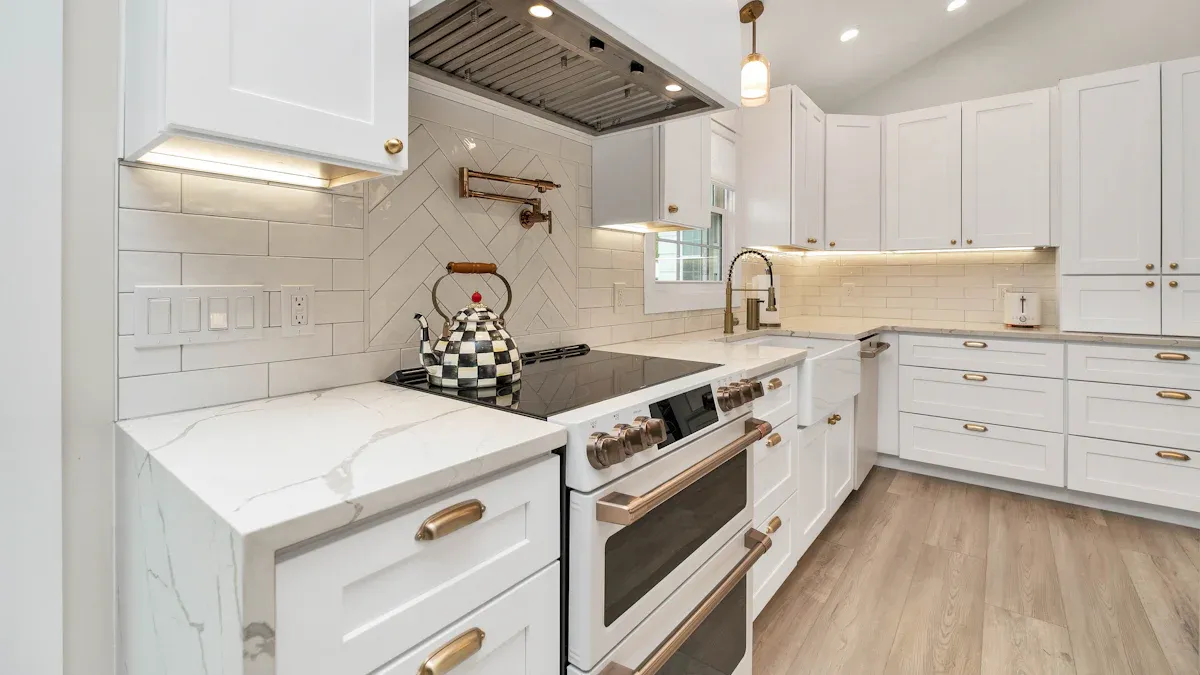
Want to give your kitchen a fresh new appearance without spending a fortune? You can paint kitchen cabinets myself! This do-it-yourself project offers a huge transformation. It costs much less than buying new ones, saving you up to half the price. New cabinets often start at $10,000 or more. This approach also gives you a great return on investment, often 70-80%. You can achieve a professional-looking job with these easy steps. This guide shows you how to paint kitchen cabinets like a pro. Get ready for amazing kitchen cabinet painting results!
Key Takeaways
Proper preparation is very important for painting cabinets. This includes cleaning, sanding, and priming.
Choose the right paint and tools. Alkyd paints and good quality brushes or rollers help get a smooth finish.
Apply paint in thin, even coats. Let each coat dry completely before adding another.
Sanding lightly between coats makes the surface smooth. This helps the paint stick better.
Be patient during the curing process. Paint needs time to get hard and strong after it feels dry.
Essential Tools and Materials
To learn how to paint kitchen cabinets like a pro, you need the right tools and materials. Following these instructions carefully ensures a great result. Gathering everything beforehand makes your project smoother.
Choosing Cabinet Paint
Choosing the right paint is a crucial decision. Alkyd paints are an excellent choice for cabinets. They combine the durability of oil-based paints with the easy cleanup of water-based options. Many professionals recommend Benjamin Moore Advance Waterborne Alkyd. It levels incredibly well and offers great durability. Sherwin Williams Urethane Trim Enamel is another solid option.
It dries quickly and provides a durable finish. For most kitchens, a semi-gloss finish works best. It balances durability, easy cleaning, and a nice look. Satin is also a good option if you prefer less shine. For DIY projects, latex or hybrid paints are easier to use and dry faster.
Primers and Sealers
A high-quality primer is your secret weapon for lasting results. It acts like a “glue layer,” connecting your paint to the cabinet surface. This ensures the paint sticks well. This strong adhesion prevents paint from rubbing off. Oil-based primers are highly recommended. They work especially well on smooth or lacquered surfaces. Zinsser BIN Shellac Based Primer and Zinsser BIN Oil Based Primer are excellent choices. They also seal and block stains. This stops wood tannins from bleeding through your paint.
Brushes, Rollers, and Sprayers
Your tools make a big difference in the finish. For flat surfaces like doors, use a mini roller. For frames and detailed areas, use brushes. If you use oil-based paints, natural bristle brushes are best. They keep their shape. For latex paints, synthetic bristle brushes work well. They stay stiff and clean easily. High-quality foam brushes also give a smooth finish. They leave fewer brush strokes. Some rollers, like Whizz Velour, offer great coverage with no roller marks. Whizz Concave Foam gives the smoothest finish. It has no shedding.
Cleaning and Sanding Supplies
You will need specific items for cleaning and sanding. Get a good degreaser, like TSP substitute. You also need sanding sponges or sandpaper in various grits. Microfiber cloths are great for dust removal.
Safety Gear and Drop Cloths
Protect yourself and your kitchen. Wear safety glasses and a respirator mask. Use drop cloths or plastic sheeting to cover your countertops and floors. This protects them from paint drips.
Prep Your Kitchen Cabinets

To truly learn how to paint kitchen cabinets like a pro, you must master the preparation phase. You need to prep your kitchen cabinets meticulously. This crucial stage sets the foundation for a flawless finish when you paint kitchen cabinets. Proper preparation ensures your paint adheres well and lasts for years. You also need to protect your surrounding work area. Lay down drop cloths or plastic sheeting over countertops, floors, and appliances. This keeps them safe from any drips or dust. This thorough prep work makes all the difference.
Emptying and Labeling
First, empty everything from your cabinets and drawers. Take out all dishes, food, and other items. As you remove doors and drawers, label them. Use a numbering system. For example, “Upper 1,” “Upper 2,” “Drawer 1,” etc. Write these numbers on a piece of painter’s tape. Stick the tape inside the cabinet box and on the corresponding door or drawer. This makes reassembly much easier.
Removing Hardware and Doors
Next, remove all hardware. Take off hinges, knobs, and pulls. Keep these items in labeled bags or containers. This prevents losing small pieces. Then, carefully remove all cabinet doors and drawer fronts. You will paint these separately. This gives you better access and a smoother finish.
Thorough Cleaning and Degreasing
This step is vital. You must thoroughly clean and degrease your cabinets. Kitchen cabinets collect grease and grime over time. Paint will not stick to dirty surfaces. For general cleaning, a simple solution of dish soap and water works well. Dish soap is a classic contender for lighter grease stains. For tougher grease, especially around the cooktop, you need something stronger.
💡 Pro Tip: For heavy grease areas, particularly around the stove, Krud Kutter is a game-changing degreaser. Many professionals consider it the best product for these areas. You can use it at full strength for extra greasy spots. Trisodium Phosphate (TSP) is another powerful option. It’s like the heavy artillery for cutting through layers of grime.
Always follow the product instructions carefully. Wear gloves and eye protection when using strong cleaners. After cleaning, wipe everything down with a clean, damp cloth. Let the surfaces dry completely. This thorough prep ensures your paint job lasts.
Repairing Imperfections
Now, inspect your cabinets for any damage. Look for dents, dings, or small holes. Use wood filler to repair these imperfections. Apply the filler with a putty knife. Let it dry completely. Then, sand the repaired areas smooth. This step ensures a perfectly even surface for painting.
Sanding for a Smooth Finish
Sanding is a crucial step. It prepares your cabinets for paint. This process creates tiny grooves on the surface. These grooves help primer and paint stick better. Sanding also removes glossy layers that resist new coatings. It opens wood pores for better primer absorption. This step creates a uniform surface for even paint application. By removing old finishes and smoothing imperfections, sanding ensures a strong bond. This prevents peeling and chipping. It extends the life of your paint job.
Understanding Grit Levels
You need to understand sandpaper grit levels. Different grits serve different purposes.
Medium grit sandpaper (100-150): Use this for initial sanding. It works well if your cabinets lack paint or have deep scratches. This prepares the surface for finer sanding.
Fine grit sandpaper (180-220): You use this for final surface perfection. It prepares the surface before applying paint.
Extra fine grit sandpaper (320+): This grit is ideal for sanding between coats of paint. It improves adhesion and removes imperfections. It helps you achieve a smooth, glass-like finish.
Initial Sanding for Adhesion
Start your sanding process with a coarser grit. You can use 100 grit for initial sanding. This helps break through glossy finishes. It also removes old coatings and levels rough areas. Always work along the grain. This prevents unwanted marks. You want to create a surface where paint can really grip. This initial sand helps ensure optimal paint adhesion. You must sand your cabinets thoroughly at this stage.
Fine Sanding for Smoothness
After the initial pass, switch to finer grits. Smooth the surface with 150 grit. Then, refine it further with 220 grit. This creates a paint-ready base. This step minimizes scratches. It prevents them from showing through your primer and paint. You are aiming for the smoothest finish possible. Continue to sand your cabinets until they feel perfectly smooth to the touch.
Dust Removal
Dust is your enemy after you sand. Immediately after sanding, vacuum all surfaces. This captures loose particles. For a final dust-free surface, wipe with a tack cloth. You can also use a lint-free rag dampened with mineral spirits. This step is crucial for flawless primer application. Make sure you remove every bit of dust. This ensures your primer sticks perfectly.
Priming Cabinets for Durability
Priming is a critical step. It ensures your paint job lasts. It also makes your cabinets look professional. Priming covers porous surfaces. It blocks stains. It also evens out the texture. This step is especially important in kitchens. Kitchens have high humidity and moisture. A good primer ensures excellent coverage and adhesion. It also resists mold. Always clean any mold or mildew first. Let surfaces dry completely before you apply primer.
Selecting the Right Primer
Choosing the right primer is key. You need a high-quality primer. It must block stains and help paint stick. KILZ 3 Premium Primer is a good choice. It works well on slick surfaces. It dries fast and has low odor. It also resists mildew. This primer has a thick formula. It covers dark colors well. KILZ Kitchen & Bath Primer also works great. It creates a smooth surface. It forms a mildew-resistant film. It sticks well to most surfaces. KILZ Mold & Mildew Primer is another option. It works inside and outside. It is a water-based primer-sealer-stain blocker. It’s perfect for humid places like kitchens. KILZ 2® Gray Primer helps dark topcoats look better. KILZ 2® All-Purpose is a versatile primer. It helps paint stick to many surfaces.
Applying the First Primer Coat
Now, you will apply the first primer coat. After cleaning and sanding, you are ready. Use a brush for corners and small areas. Then, use a mini foam roller for the rest of the surface. This method helps cover brush strokes. It gives you a smooth finish. You can also use a paint sprayer for cabinet doors. An airless sprayer gives an impeccable finish. Make sure you apply cabinet primer evenly.
Drying and Light Sanding
Let the primer dry completely. Follow the manufacturer’s instructions for drying times. Usually, you let the primer dry for 1-2 hours. After your primer is dry, you will sand lightly. Use a 220-grit sanding sponge. Sand everything very gently. This helps the next coat stick better. It also makes the surface smoother. You want to sand flat surfaces with 220-grit paper. Wait an hour after priming. Then, sand the primer lightly with 280-grit paper.
Second Primer Coat (If Needed)
Sometimes, you need a second primer coat. This is true if you are covering dark colors. It also helps if you had stubborn stains. A second coat ensures a uniform base. It gives you the best surface for your paint. If you apply cabinet primer a second time, follow the same steps. Let it dry. Then, sand it lightly before painting.
How to Paint Kitchen Cabinets
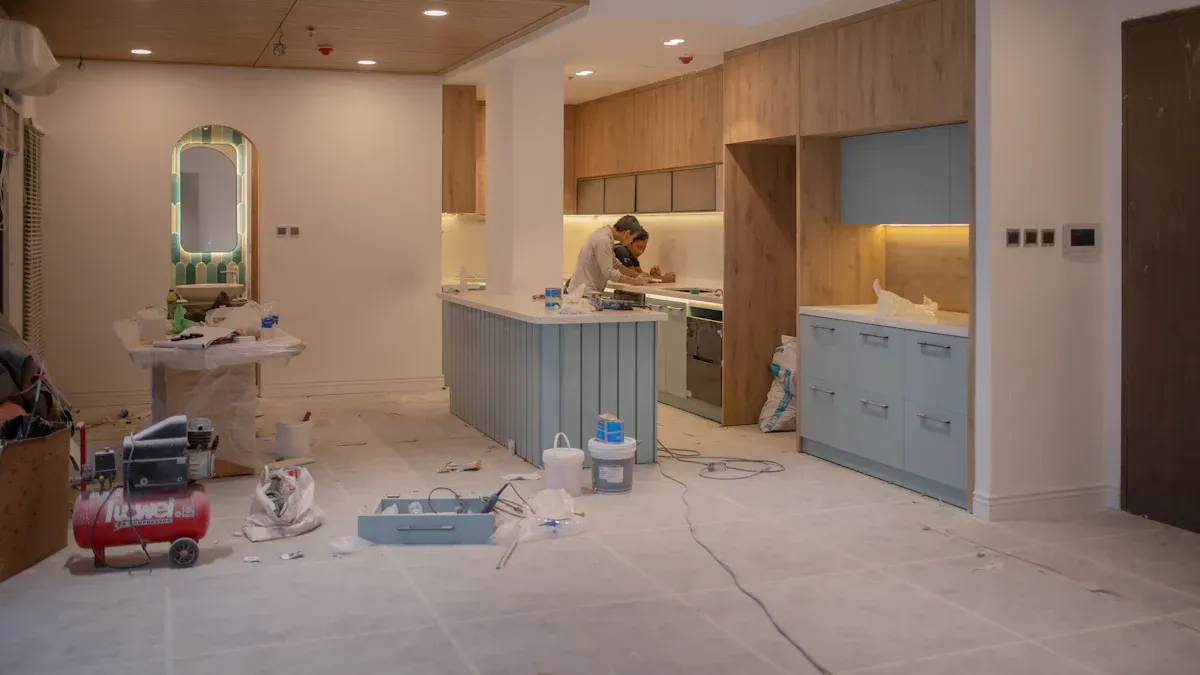
Now you are ready to apply paint. This is the exciting part! Knowing how to paint kitchen cabinets correctly makes all the difference. You will see your hard work pay off. This section gives you the specific instructions you need for a professional finish.
Paint Preparation
Before you start, prepare your paint. Stir it thoroughly. If you want an even smoother finish, consider adding a paint conditioner. This additive helps the paint flow better. It also levels out the mixture. This promotes evenness and reduces brush marks or roller stippling. Always follow the specific instructions on your paint can for mixing and thinning.
Brush Application Techniques
Brushes are great for cabinet frames and detailed areas. To get a smooth, streak-free finish, choose high-quality brushes. These brushes are designed for cabinet paint. When you apply paint, use smooth, consistent strokes. Always paint in the direction of the wood grain. This helps brush marks blend in. After painting, dry your cabinet doors horizontally. Gravity will pull the paint downward. This helps conceal any brush strokes. Lightly sand between coats to minimize visible marks. This technique ensures better adhesion and a lasting finish.
Roller Application Techniques
For flat surfaces like cabinet doors and drawer faces, a mini foam roller is your best friend. This technique helps you achieve a smooth, even finish. Apply paint in thin, even coats. Do not overload your roller. This prevents drips and uneven layers. A paint conditioner can also enhance paint flow and leveling. This helps reduce roller stippling for an ultra-smooth finish.
💡 Pro Tip: Be patient! Avoid common errors like painting over wet edges or neglecting corners. Patience and attention to detail are crucial for a great result.
After each coat, lightly sand the surface. This keeps the surface level and prevents buildup. Each coat adds texture, so gentle sanding is key. You smooth the surface without sanding through the paint. Apply multiple rolled topcoats, sanding after each one. This helps you achieve a smooth, professional-looking finish. It can even compare to sprayed cabinets.
Sprayer Application Techniques
For the most professional appearance, a paint sprayer is an excellent choice. High-Volume, Low-Pressure (HVLP) turbine systems are highly recommended. They atomize paint efficiently. This reduces blowback and overspray. It also converts 60-80% of the finish onto the surface. This painting technique gives you an impeccable and uniform look. You will not see brush or roller marks.
Before you spray your cabinets, practice on cardboard or scrap wood. This helps you test the system features. Adjust the volume, size, and spray pattern. Determine the optimal distance (6-8 inches) and speed for an even coat. This practice helps you master the technique before working on your actual cabinet pieces.
When you spray, keep the tip level and parallel to the surface. Move across the project without arcing the gun. Maintain a steady pace. Avoid oversaturating vertical surfaces to prevent runs. Apply multiple thin coats instead of one or two thick ones. This saves significant time compared to traditional methods. It also provides seamless coverage, even in hard-to-reach areas.
First Thin Paint Coat
When you apply your first coat of paint, make it thin. Multiple thin coats will always produce superior results. This is much better than fewer thick ones. A thin coat prevents paint from dripping or sagging. It allows each layer to dry properly. This helps it adhere better.
Drying Between Coats
Drying time is critical for a durable finish. Always refer to the manufacturer’s instructions on the product label. Drying times can vary. For primers, allow at least 1-2 hours of drying time. However, a full 24 hours for the primer to dry completely is often best. After you apply the first coat of paint, let it dry for about 24 hours. Each subsequent coat also requires 24 hours of drying time. This ensures proper adhesion and a smoother finish.
Light Sanding Between Coats
After each paint coat dries, perform light sanding between coats. Use a fine-grit sandpaper, specifically 220–320 grit. This is ideal for most cabinet paints. A 320 grit is recommended for smoothing mid-coats. This step reduces dust nibs that may have settled during drying. It also helps the next coat adhere better. Be gentle during sanding. You want to smooth the surface without sanding through the paint.
Subsequent Paint Coats
You will typically need 2-3 coats of paint for kitchen cabinets. This achieves a durable and opaque finish. This often includes a primer coat. The exact number can vary. It depends on the paint quality and the original cabinet condition. If you are painting light colors over dark surfaces, you might need three coats. Using premium paints can reduce the number of coats needed. They have superior resins and pigments. Even with high-quality paints, at least two coats are generally required. A common approach is two coats of primer and one coat of paint, or one coat of primer and two coats of paint. This totals three coats.
Curing and Reassembly
You are almost done! Now you need to let your hard work set. This final stage is very important. It makes sure your newly painted cabinets last a long time.
Understanding Curing Times
You might think your cabinets are ready when they feel dry. But there is a big difference between drying and curing. Drying happens when the paint’s liquid part goes away. The surface feels dry to your touch. However, the paint is still soft. It can get dents or scratches easily.
Curing is a chemical process. The paint gets hard and strong. Pigments and binders join together. This makes the paint tough. It can handle scratches, bumps, and washing. Curing takes much longer than drying. It can take weeks for the paint to fully cure. Some paints need about one month to become completely hard.
Reattaching Hardware
You need to be patient before you put everything back. Wait a full 48 hours after your last paint coat. This lets the paint bond well. Then you can reattach your hardware. Put your knobs and pulls back on. Handle everything gently for at least a week. This helps prevent scratches or chips.
Reinstalling Doors and Drawers
After 48 hours, you can also put your cabinet doors and drawers back. Use the labels you made earlier. This makes it easy to match everything up. Remember, the paint is still curing. It will get its maximum hardness and durability in about 30 days. Be careful with your cabinets during this time.
Final Inspection
Take a big look at your newly painted kitchen. Check for any spots you might have missed. Admire the fresh appearance of your cabinets. You did a great job!
Troubleshooting Painting Issues
Even the most careful painters can run into problems. Don’t worry! You can fix most painting issues. Here’s how you handle common cabinet painting problems.
Dealing with Drips
You might find drips on your cabinets. Here’s what you do:
For drips on primer: Sand these spots well. If sanding doesn’t fully smooth them, move to the next step.
For drips on paint: Use a single-sided razor blade. Carefully scrape off the drip. Hold the blade at a shallow angle. This stops you from digging into the wood. Adjust your pressure until the drip comes off.
After using a razor blade, use a sanding sponge. This refines the area.
Always fix primer drips before you paint. Paint sheen makes them more noticeable.
Preventing Brush Strokes
You want a smooth finish. Use high-quality brushes. Apply thin, even coats. Always paint in the direction of the wood grain. This helps brush marks disappear. Sand lightly between coats. This makes the surface smooth.
Fixing Uneven Coverage
Sometimes, your paint looks uneven. For this, professional refinishing is often the best way to go. Experts ensure precision. They prepare the surface well. They also pick durable finishes. This gives you a clean, even, and updated look. All cabinet surfaces will match.
Here are the steps for professional refinishing:
Clean and degrease surfaces thoroughly. This removes buildup.
Sand the cabinets carefully. This smooths finishes and imperfections.
Repair chips, dents, or splits. These can hurt the final look.
Apply a good primer. Pick one for your cabinet material.
Use high-quality paint or stain. Choose for looks and strength.
Finish with a protective topcoat. This makes the finish last longer.
Addressing Peeling Paint
Peeling paint is frustrating. It happens for a few reasons.
Timeline | What You’ll See | Why It Happens |
|---|---|---|
Early | Paint lifts off | Poor surface prep, wrong primer, or moisture |
Later | Flaking | Wear and tear, or paint not bonding well over time |
To fix peeling paint, you must address the cause. You need to remove the old finish completely. Use a specialized cabinet cleaner. This gets rid of dirt and grease. Then, use a proprietary primer. This blocks bleed-through. It also helps paint stick. Use water-based acrylic polyurethane blend paints. These resist chipping and peeling. They give you a stronger finish.
You now know how to paint kitchen cabinets like a pro! With careful preparation, the right materials, and patience, you can achieve professional-looking results. Remember the critical steps: thorough cleaning, proper sanding, and applying thin, even coats. This diy cabinet painting project truly transforms your kitchen’s appearance. Take pride in your do-it-yourself project. Enjoy the lasting beauty and value your refreshed kitchen brings to your home!
FAQ
Can I paint my kitchen cabinets without sanding?
You can skip sanding, but we do not recommend it. Sanding creates a surface for paint to grip. This helps your paint stick better and last longer. Skipping this step can lead to peeling paint later.
How long does it take to paint kitchen cabinets?
Painting kitchen cabinets takes time. Expect to spend 3-5 days on the project. This includes prep, priming, and multiple paint coats. Drying and curing times make up most of this period. Patience gives you the best results.
What kind of paint is best for kitchen cabinets?
You should use high-quality alkyd or hybrid enamel paints. These paints offer excellent durability and a smooth finish. They resist chips and scratches well. Many professionals recommend Benjamin Moore Advance or Sherwin Williams Urethane Trim Enamel.
How do I clean my newly painted cabinets?
You should clean your painted cabinets gently. Use a soft cloth and mild soap with water. Avoid harsh abrasive cleaners. These can damage the paint finish. Always wipe spills quickly to prevent stains.

