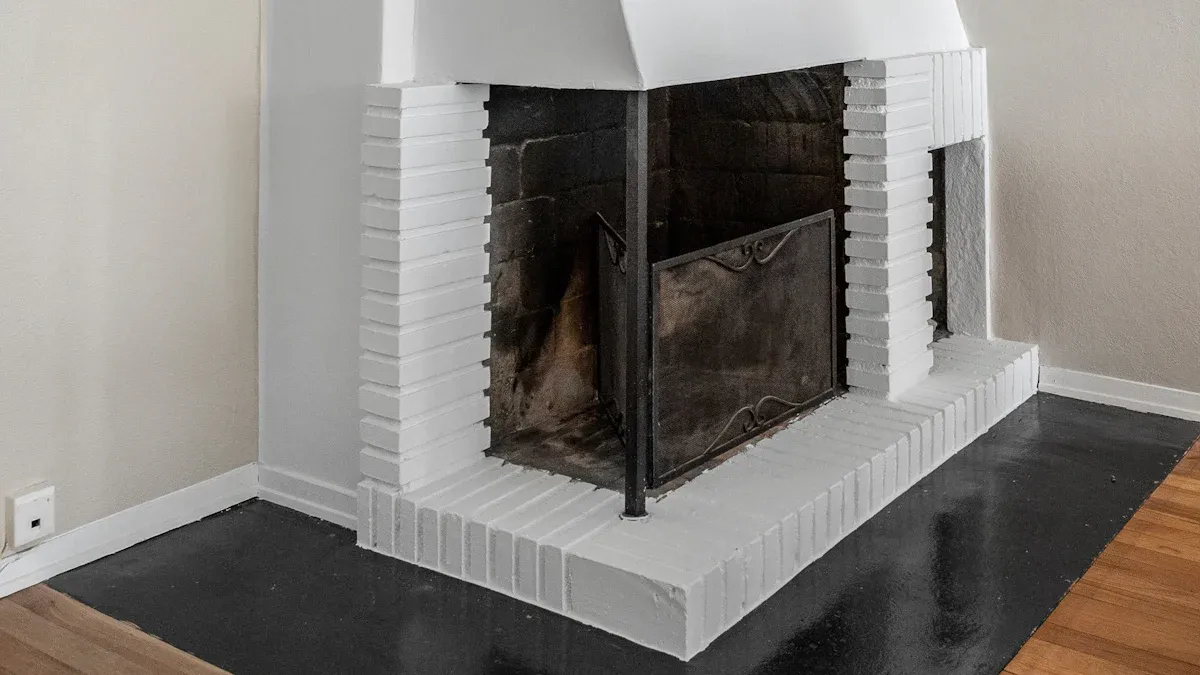
You want to refresh your living space. Many homeowners paint their fireplaces for an updated look. Limewash and whitewash offer two distinct options for a lighter aesthetic. You might think they are similar. However, their compositions, application, and final aesthetics differ greatly. This guide explores whitewash vs. limewash. Which fireplace finish is best for your home? We help you decide.
Understanding Limewash
Limewash: Composition & Traits
You might ask, what is limewash? Limewash is a natural, breathable, and traditional fireplace finish. It comes from slaked lime, also known as calcium hydroxide. Manufacturers create this by heating limestone, which is calcium carbonate, to make quicklime. Then, they mix quicklime with water. Water is also used to thin the limewash to the right consistency. You can add natural earth pigments for color if you want. This mineral-based finish absorbs into your fireplace surface. It becomes part of the material instead of just sitting on top.
Limewash Aesthetic for Fireplaces
Limewash gives your fireplace a unique, soft, and matte appearance. It creates a chalky, velvety finish with subtle color variations. These variations come from the natural minerals. The finish is not uniform. It offers a beautiful, aged look. Many people choose limewash to achieve a charming vintage look for their fireplace.
Limewash Fireplace Benefits
Choosing limewash for your fireplace offers several advantages. It is an eco-friendly option. Limewash is also naturally alkaline. This makes it resistant to mold and mildew. This is great for areas that might get damp. Because it is mineral-based, limewash allows your fireplace material to breathe. This helps regulate moisture. It prevents moisture from getting trapped, which can cause peeling with other finishes.
Limewash Drawbacks & Considerations
You should know some things before choosing limewash. It is a “living finish.” This means it ages naturally. You might need to do touch-ups or reapply it every 5–7 years. Applying limewash can be complex. It needs proper surface preparation and multiple coats. Getting an exact color match between different batches is also difficult. This is due to its natural tinting. You should buy enough limewash for your whole project at once. Embrace its natural imperfections; limewash will not stay perfectly fresh-coated forever.
Applying Limewash to Fireplaces
Applying limewash to your fireplace involves a few steps. First, prepare the surface. Clean it well to remove dirt or debris. Lightly mist the stone with water. This helps the limewash stick evenly. You can mix limewash with water, often a 1:1 ratio, for a softer look. Use a masonry brush to apply it. Work in small sections. You can dab and blend the limewash onto the stone. If your stones have a seal, you need to apply a primer first. This ensures the limewash adheres correctly. You can also tint limewash to match your room’s colors.
Understanding Whitewash
Whitewash: Composition & Traits
You might wonder, what is whitewashing? Whitewash is a versatile and popular fireplace finish. It gives your fireplace a brighter look. You create whitewash by diluting paint, usually water-based latex paint, with water. A common mixture involves combining interior paint with an equal amount of water. This is a 1:1 ratio. You can adjust this proportion. It depends on the coverage and opacity you want. You mix equal parts of water and paint in a clean bucket. Stir it thoroughly until it combines well. This dilution allows the brick’s natural texture and color to show through. It still provides a white finish.
Whitewash Aesthetic for Fireplaces
Whitewash visually transforms a fireplace surface. It lightens up the space. It gives traditional fireplaces a makeover. Its densely pigmented formula absorbs into brick. This creates a durable and lasting color. It complements any decor. The visual transformation adjusts based on application ratios. You get less coverage with a 1:1 ratio of water to paint. You use a wiping rag. For more coverage, use a 1:2 ratio of water to paint with a wiping rag. You achieve total coverage with a 1:2 ratio of water to paint without a wiping rag. This allows you to control the final appearance.
Whitewash Fireplace Benefits
Choosing whitewash for your fireplace offers many advantages. It significantly impacts a room. It makes the room appear redesigned or remodeled. Whitewash enhances the fireplace as a key focal point. This makes the room “come alive.” It unifies contrasting tones in stone walls. This creates a more subtle, modern look. Whitewash offers a cost-effective alternative to removing stone or brick. It saves you money. It avoids extensive renovation work. You can complete it in less time than a full overhaul. It modernizes your living room. It tones down undesirable colors. It retains the beautiful brick texture. This is important for interior design.
Whitewash Drawbacks & Considerations
Whitewash has some considerations. It is less breathable than limewash. This means it can trap moisture if your fireplace has existing moisture issues. It can look less natural if you apply it too opaquely. You might need more precise application to get the desired transparency. Once you apply it, it is a more permanent finish than limewash. Removing it can be difficult.
Applying Whitewash to Fireplaces
Applying whitewash to your fireplace is a straightforward process. First, prepare the area. Mask off surrounding surfaces. Clean the brick to remove dirt and residue. Create the whitewash mixture. Combine equal parts paint and water. Stir it until it reaches a milk-like consistency. Test the mixture on an inconspicuous area. Apply the whitewash to the brick in small sections. Use an angled brush. Ensure it gets into crevices and mortar lines. Immediately after application, dab and blend the paint. Use a clean rag or sponge. This achieves the desired coverage and look. Work quickly before the paint dries. You can address uneven absorption. Apply a second coat or use a thicker mixture. Blend new and old mortar. Use undiluted paint on darker lines. Perform finishing touches. Remove tape. Touch up missed spots. Consider a clear sealer for protection.
Comparing Whitewash vs. Limewash
You now understand limewash and whitewash individually. Let’s explore the key differences between them. This section helps you see the difference between whitewashing and limewashing. You can then decide which fireplace finish suits your home best.
Aesthetic Differences: Sheen & Texture
You will notice distinct visual qualities when you compare these two finishes. Both limewash and whitewash can achieve different sheens. This depends on the paint sheen level you use. You can choose matte, eggshell, or high gloss. However, their inherent textures and looks vary.
Feature | Whitewashing | Limewashing |
|---|---|---|
Texture | Smooth, thin layer | Smooth, chalky finish |
Look | Subtle, washed-out | Soft, evolving tones |
Whitewashing involves a thin, watered-down paint or stain. You brush it on and quickly wipe it back. This creates a smooth, thin layer. It does not add texture. Instead, it lightens the existing brick color. Limewashing uses a special lime-based mixture. It creates a chalky, matte finish. This finish ages beautifully. It patinas over time. You get a soft, evolving look.
Durability & Longevity
You want a finish that lasts. The durability of each option differs. Whitewash typically lasts 2-4 years. It needs a complete reapplication by year 4. Limewash offers greater longevity. It lasts 5-7 years. You can expect a recoat around year 6 or 7. This recoat costs less than the original application.
Maintenance & Cleaning
Maintaining your fireplace is important. Whitewash is generally easy to clean. You can wipe it with a damp cloth. You might need touch-up paint every two years. Limewash requires less frequent maintenance. Its natural properties resist mold and mildew. You can gently clean it with water. Avoid harsh chemicals. They can damage the natural limewash finish.
Breathability & Moisture
Consider how each finish interacts with moisture. Limewash is a natural, breathable material. It allows your fireplace material to “breathe.” This prevents moisture from getting trapped. It helps avoid peeling or blistering. Whitewash, made from diluted paint, is less breathable. It can trap moisture if your fireplace has existing moisture issues. This makes limewash a better choice for older homes or damp environments. It is also an eco-friendly option.
Cost Comparison
You also consider the cost of your project. The initial cost and long-term expenses vary for whitewash vs. limewash.
Project Type | Whitewash Total Cost | Limewash Total Cost |
|---|---|---|
Fireplace surround (5m²) | $75-125 | $200-400 |
Here are some extra costs you might encounter:
Whitewash extras:
Primer (if switching from dark brick): +$5/m²
Annual cleaning supplies: $50/year
Touch-up paint every 2 years: $100
Limewash extras:
Lime-compatible brushes: $40-60 set
Misting equipment for curing: $30
pH testing kit: $25
Over ten years, the costs add up differently. Whitewash requires a full reapplication every 2-4 years. This means you pay the initial cost plus about 2.5 full reapplications over a decade. Limewash lasts longer. You pay the initial cost plus one partial reapplication over ten years. This partial reapplication costs 50-60% of the original.
Choosing Your Ideal Fireplace Finish

You have learned about limewash and whitewash. Now, you need to decide which one is right for your home. This section helps you make that choice. You will consider your specific needs and preferences.
Desired Aesthetic
Your desired look is a big factor. Think about the style you want for your fireplace.
Limewash: This creates a sophisticated, old-world texture. It suits traditional designs well. It gives a softer, more organic look to interior brick fireplaces. When you use it on stone, limewash enhances the natural stone texture. It also tones down darker colors.
Whitewash: This offers a clean, bright finish. It is ideal for modern interiors. It works especially well on exposed or painted brick surfaces. Whitewash creates a warm, modern rustic vibe on brick.
Consider this table to help you visualize the outcomes:
Finish | Fireplace Type | Aesthetic Outcome |
|---|---|---|
Limewash | Stone | Enhances natural stone texture, tones down darker colors |
Whitewash | Brick | Creates a warm, modern rustic vibe |
You choose the fireplace finish that matches your home’s style.
Material Compatibility
The material of your fireplace also matters. Different finishes work better on certain surfaces.
Limewash absorbs into porous materials. Brick or concrete are good examples. It actually hardens into these materials. You can use it on wood, but it is truly meant for stone. This makes limewash an excellent choice for brick and stone fireplaces.
Whitewash is also versatile. You can use it on brick, interior walls, and stone. It adheres well to these surfaces.
DIY vs. Pro Application
You might wonder if you can apply the finish yourself.
Limewash is a forgiving material. This makes the application process easy. It is suitable for those without much DIY experience. The active working time for a limewash project is about a couple of hours. Limewash coats typically dry in 30 to 45 minutes each. If you use high heat paint, it needs 24 hours to fully dry. However, sitting overnight is enough for touch-ups. DIY limewash application on a fireplace is a very easy project. Even first-timers can do it. There is a slight learning curve, but it does not add much to the overall time. It is suitable for beginners and does not require advanced skills.
Whitewash application is also straightforward. You dilute paint and apply it. You can control the transparency. Both options are generally DIY-friendly.
Maintenance Preferences
Think about how much maintenance you want to do.
Limewash offers easy maintenance. It ages gracefully. Its appearance often improves over time. Limewash absorbs into the surface. This prevents it from peeling or cracking. It develops a natural patina, especially on exterior surfaces. This means it subtly changes over time. You can do simple touch-ups. You only need to focus on the affected area. You do not need to redo the entire surface.
Limewash is durable once it fully cures. It resists moisture buildup. This prevents mold and mildew. For general cleaning, you can rinse it with a garden hose. For tougher spots, use a soft-bristled brush and a mild, non-acidic soap solution. You can easily fix scuffs and imperfections. Mix a small amount of limewash and feather it onto the area. The natural variations help touch-ups blend seamlessly. If you change your mind shortly after applying it, you have a few days. You can wash it off with a pressure washer. Limewash calcifies onto the brick. It forms a hard, protective layer. This resists chipping and peeling. It is naturally mold-resistant. It has a high pH, which helps deter insects. This results in a long-lasting finish with minimal upkeep. Limewash ages gracefully. It requires only light dusting and occasional touch-ups.
Whitewash needs touch-up paint every two years. It is generally easy to clean with a damp cloth.
Budget & Time
Your budget and time commitment are also important.
The material cost for whitewash typically ranges from $2 to $4 per square foot for fireplace projects. This process can achieve a rustic look. It can brighten the existing exterior. Or, it can prepare the surface for a new paint color.
You saw the cost comparison in the previous section. Limewash has a higher initial cost. However, it lasts longer. It requires less frequent reapplication. Whitewash has a lower initial cost. But, it needs more frequent reapplication over time. Consider both the upfront cost and the long-term expenses.
Both limewash and whitewash offer beautiful ways to transform your fireplace. They meet different needs and preferences. Limewash provides a natural, matte, breathable, and subtly varied finish. Whitewash gives a brighter, more uniform, and often more opaque look. Consider your fireplace’s existing material. Think about your desired aesthetic outcome, your willingness for maintenance, and your budget. Understanding these differences helps you confidently choose the ideal fireplace finish for your home’s focal point.
FAQ
Can you apply limewash or whitewash over a previously painted fireplace?
You can apply limewash over painted brick if you use a special primer. Whitewash, which is diluted paint, works best on unpainted, porous surfaces. It might not adhere well to existing paint. Always test a small area first.
Are limewash and whitewash safe for indoor fireplaces?
Yes, both are safe for indoor fireplaces. Limewash is natural and breathable. Whitewash uses diluted interior paint. Ensure the fireplace is cool before you apply either finish. Follow all product instructions for safety.
How do you choose the right shade of white for your fireplace?
Consider your room’s lighting and existing decor. Limewash offers natural, subtle variations. Whitewash allows you to dilute paint to your desired opacity. Test samples on your fireplace. Observe them at different times of day.
Can you reverse a limewash or whitewash application?
You can wash off limewash with a pressure washer within a few days of application. Once cured, it is harder to remove. Whitewash is more permanent. You would need to paint over it or strip it, which is difficult.