


Painting your bathroom cabinets can truly transform your bathroom. You need to choose the best paint for these high-moisture environments. The unique challenges of a bathroom, like constant humidity and potential splashes, demand a paint that offers exceptional durability. This selection ensures your cabinets withstand daily wear. You also want a stylish finish that elevates the entire room’s aesthetic. Achieving this lasting transformation for your cabinets requires careful paint selection, thorough preparation for optimal adhesion, and precise application. This guide will help you make informed decisions for beautiful, resilient cabinets.
Choosing the Best Paint for Bathroom Cabinets

Selecting the best paint for your bathroom cabinets requires careful thought. You face unique challenges in a bathroom environment. Factors like steam, splashes, and frequent cleaning directly impact your paint choice. You need a paint that performs well under these conditions.
Moisture Resistance is Key
You must prioritize moisture resistance for your bathroom cabinets. Paint formulated for high humidity prevents mold and mildew growth. This is essential in a humid bathroom. A good moisture-resistant finish creates a barrier. This barrier stops water from seeping into your cabinets, preventing damage. Many modern bathroom paints also include primer. This saves you time and effort. It also provides good coverage and protection, especially on surfaces prone to moisture like vanity cabinets.
Durability for Daily Use
Your cabinets endure daily use and frequent cleaning. You need paint with excellent durability. Choose high-quality paint for these areas. You should regularly clean surfaces to remove dirt and mildew. A simple wash with soap and water and a soft brush works well. Promptly address any signs of wear, like cracks or peeling paint. This prevents further damage. Regular assessment helps you determine when maintenance is necessary.
Aesthetic Appeal & Color
The right color and finish enhance your bathroom’s aesthetic. Current trendy colors for bathroom cabinets include deep navy, sage green, blush pink, and charcoal gray. These colors create a modern and stylish look. For small bathrooms, you should choose light colors. Soft whites, pale grays, and light blues reflect more light. This makes the space feel larger and more open. A high-gloss finish can further enhance this effect.
Easy Cleaning & Maintenance
You want paint that is easy to clean and maintain. Regularly dust your cabinets with a microfiber cloth. For cleaning, use a soft cloth dampened with a mild soap and water mixture. Avoid excessive moisture to prevent paint peeling. For tough stains, spot clean with care. You can use a small amount of baking soda mixed with water as a gentle scrub. Always test this on a hidden area first. Do not use harsh chemicals like ammonia or bleach. These can strip finishes and damage the material. Warm water and distilled vinegar, mixed 50/50, also make an effective cleaning solution.
Top Paint Types: Best Cabinet Paint Choices
You have many options when choosing the best paint for your bathroom cabinets. Each type offers unique benefits and considerations. Understanding these differences helps you select the right product for your project.
Enamel Paint: Durable Finish
Enamel paint offers a highly durable finish for your bathroom cabinets. It resists wear and tear, including harsh cleaning chemicals. This makes it ideal for high-traffic areas like cabinets that need frequent cleaning. Enamel paint provides a washable finish and a high gloss sheen. It is also water and stain-resistant, ensuring long-lasting color.
However, enamel paint has some drawbacks. It often has long dry and re-coat times. Solvent-based products can have high VOC levels. Waterborne enamel options exist with less VOCs and flammability. These are easier to work with, apply smoothly, and clean up more easily. Yet, solvent-based enamels dry to a harder, more durable surface. Water-based enamel paint is easier to clean and produces fewer fumes. It dries faster and is more environmentally friendly. However, it may not achieve the same level of hardness or longevity as oil-based versions. Oil-based enamel paint offers superior durability and wear resistance. It gives a smooth glossy appearance and strong adhesion on challenging surfaces. But it has longer drying times, higher odor, and requires mineral spirits for cleanup. For a self-leveling, scratch and stain-resistant option, consider Valspar Cabinet Enamel. It is a good choice for your bathroom cabinets.
Latex Paint: Versatile Choice
Latex paint is a versatile choice for your bathroom cabinets. It offers good moisture resistance and is easy to apply. You will find it dries quickly and produces minimal odor during application. Latex paint provides excellent coverage. It is also less likely to yellow over time compared to oil-based paints. High-quality latex paint, especially those formulated for high-humidity areas, often contains mildewcides. These additives enhance performance in a bathroom.
For some of the best paint options, consider Benjamin Moore Advance. This is a waterborne alkyd paint. It offers the resilience of oil-based paint with easy water cleanup. It provides a hard, smooth surface ideal for cabinets. Sherwin-Williams ProClassic is another strong recommendation. It is known for its strength and a smooth appearance. Behr Alkyd Semi-Gloss Enamel also combines resilience and quality. It has the convenience of a water-based formula. This makes it resistant to moisture, stains, and wear. These are some of the best cabinet paint choices.
Oil-Based Paint: Classic Durability
Oil-based paint offers classic resilience for your bathroom cabinets. It has self-leveling properties. These help minimize brush strokes, giving you a smoother appearance. Oil-based paint is extremely durable. This makes it ideal for areas with heavy use. It creates a hard surface that resists chipping and scratching. However, you must consider its application. It requires mineral spirits for cleanup. It also generally emits higher levels of volatile organic compounds (VOCs). An oil-based primer is beneficial for protecting bathroom vanities from moisture and stains. Using oil-based or hybrid alkyd paint can eliminate the need for a separate sealant. Benjamin Moore Satin Impervo is a strong choice if you seek this type of paint.
Chalk Paint: Unique Styles
Chalk paint offers unique styles for your bathroom cabinets. It allows for a “slightly distressed or worn look.” This gives character to the piece. It also adds dimension as all the edges now stand out. You can transform a tired old vanity into a new look quickly. However, chalk paint has limitations in a bathroom setting. The problem with using wax as a sealant in kitchens, bathrooms, and outside is the heat and humidity. It softens and melts the wax. This makes it as if you never sealed the paint at all. For kitchens and bathrooms, you should seal with a water-based poly. Users have reported success with “4 coats of Varathane Soft Touch Poly in Matte.” It held up beautifully for almost 2 years. “General Finishes High Performance water based top coat” also proves resilient. Chalk paint may not give you a polished, clean look in a bathroom. Many users prefer to leave chalk paint for dry area pieces to avoid frequent touch-ups.
Paint Finishes: Style & Protection
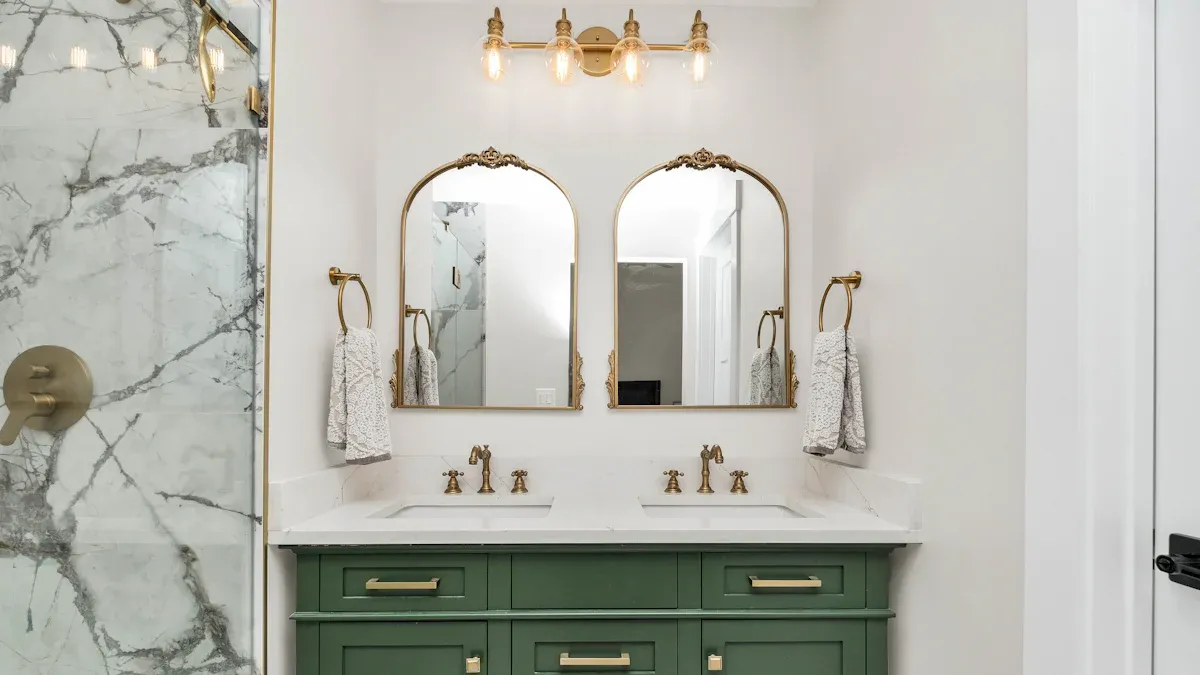
Choosing the right paint finish for your bathroom cabinets is as important as selecting the best paint colors for bathroom cabinets. The finish impacts both the look and the durability of your cabinets. You need to consider how each finish performs in a high-moisture bathroom environment.
Satin Finish
A satin finish offers a soft, subtle sheen. It falls between matte and semi-gloss. This finish creates a warm and inviting atmosphere for your bathroom. Satin cabinets are excellent at hiding scratches, dents, fingerprints, and smudges. This makes them a strong and reliable choice for daily use in family spaces. However, satin finishes are less moisture-resistant. They are not ideal for bathrooms or laundry rooms where moisture is constant. While satin paint is good for moderate use, it may require more frequent touch-ups. You will find it easy to clean, and fingerprints are less visible. This finish diffuses light for a warm tone, creating a muted, contemporary look.
Semi-Gloss Finish
Semi-gloss finishes are highly durable and moisture-resistant. This makes them practical for high-traffic family bathrooms. You should consider semi-gloss for your bathroom cabinets to resist moisture and withstand wear and tear. Its non-porous surface is easy to clean and less prone to mold growth. Semi-gloss is a smart option for high humidity or heavily used bathrooms. It resists water damage and stains. You can easily wipe it down. For superior durability and easy cleaning, semi-gloss is a top recommendation. It also makes your chosen colors appear brighter and more vibrant. Many popular color recommendations, including white, look crisp with a semi-gloss finish.
High-Gloss Finish
High-gloss finishes offer a mirror-like shine. They add a luxurious and modern touch to your bathroom. Their reflective surface makes a bathroom appear more spacious and polished. This fits well with modern or minimalist designs. High-gloss finishes are known for their durability. They resist moisture and stains, making them an excellent choice for bathroom cabinets. However, high-gloss finishes readily show fingerprints and smudges. You will need regular cleaning to maintain their pristine look. You should choose a high-quality, scratch-resistant clear coat to protect the finish. This preserves its shine. This finish makes colors, like a bold navy or a crisp white, truly pop.
Matte & Eggshell Finishes
Matte and eggshell finishes offer a low-sheen, non-reflective look. They create a soft, understated aesthetic. These finishes are excellent at hiding imperfections on your cabinets. However, they are generally less durable and harder to clean than satin or semi-gloss in a bathroom setting. They absorb moisture more readily. This makes them less ideal for areas with high humidity. While they offer unique styles, you might find them less practical for bathroom cabinets that need frequent cleaning. For durable bathroom cabinet colors, you typically want a finish that can withstand moisture and scrubbing. Consider these finishes for a specific aesthetic, but be aware of the maintenance. For timeless bathroom cabinet colors, a matte finish can offer a classic look, but you must protect it well.
Cabinet Prep for Best Results
Proper preparation is the foundation for a long-lasting paint job. You must prepare your cabinets well. This ensures excellent results. Good prep makes your your paint job durable and beautiful.
Thorough Cleaning & Degreasing
You must clean your cabinets thoroughly. First, perform an initial cleaning cycle. Use regular cleaning products or solutions. Then, follow up with a second cleaning cycle. Specifically use a degreaser. This two-step process ensures the surface is free from dirt, grime, and oils. This is crucial before painting your cabinets. These cleaning tips help paint stick better.
Sanding for Adhesion
Sanding helps paint adhere. Begin by sanding all surfaces with 150-grit sandpaper. This removes the existing clear coat and any uneven paint. Next, use 220-grit sandpaper. Continue sanding until the surface achieves a smooth, dull finish. It should not be glossy. After the first coat of paint dries, lightly sand the surface again with 220-grit sandpaper. Wipe the sanded surface clean with a damp microfiber cloth. Do this before applying subsequent coats of paint. These sanding tips improve adhesion.
Priming for Adhesion & Durability
Priming before painting your bathroom cabinets is essential. It guarantees proper paint adhesion. It also effectively covers existing stains or imperfections. For optimal adhesion and durability, use an oil-based primer. Do this before applying topcoats like Benjamin Moore Advance or Sherwin Williams Emerald. When choosing a primer, prioritize bonding and blocking stains. General-purpose primers like Zinsser Smart Prime work well. For wooden cabinets, adhesion primers are recommended for long-lasting durability. Mildew-resistant primers are crucial in bathrooms. They prevent fungal growth.
Repairing Imperfections
You should repair any imperfections. Common issues include small holes, dents, and gouges. Use wood filler or spackle to fix these. Apply the material into the imperfection. Allow it to dry. Then, sand it smooth with 220-grit sandpaper. This prepares the surface for painting. Fixing these flaws ensures a smooth finish on your cabinets.
Application & Maintenance for Lasting Beauty
You have prepared your cabinets. Now, you are ready for the final steps. Proper application and ongoing care ensure your painted cabinets offer lasting beauty. These steps make your hard work pay off.
Brushing & Rolling Techniques
You can achieve a smooth, streak-free finish on your bathroom cabinets even without a sprayer. Professional painters often use spray systems for a flawless, factory-smooth finish on bathroom cabinets. Even when brushing or rolling, they employ careful layering of paint and light sanding between coats. This ensures consistency and prevents streaks or brush marks. The result looks manufactured, not just repainted.
To achieve a smooth finish when painting cabinet doors by hand, follow these steps:
Thoroughly clean doors. Use compressed air or a tack cloth to remove all dust.
Optionally, pre-wet your roller. This primes it for more even paint application. Make sure it is only slightly damp.
Apply the first coat evenly. Cover the entire surface. Smooth out any brush or roller marks.
After the paint dries sufficiently, lightly sand any debris or imperfections. Use a fine sanding block.
Clean off sanding debris. Use compressed air or a tack cloth.
Apply the final coat by brushing or rolling. Ensure complete coverage.
Choosing the right roller also makes a difference. Here is a comparison of common roller types:
Roller Type | Pros | Cons |
|---|---|---|
Whizz Velour | Great coverage, even finish | Slight shedding |
Whizz Concave Foam | Smoothest finish, no shedding | Poor coverage |
Sherwin Williams Mohair | Great coverage, even finish | Shed the most |
Wooster Microplush | Great coverage | Sheen had a stippled effect |
Spraying for a Smooth Finish
For the smoothest finish, consider spraying your cabinets. This method provides a factory-like look. It minimizes brush strokes and roller textures. You can rent paint sprayers or hire a professional for this task. A professional application ensures an even coat and superior adhesion. This method is ideal for achieving truly flawless results.
Proper Curing & Ventilation
After painting, proper curing is vital. Curing is different from drying. Drying means the paint feels dry to the touch. Curing means the paint has reached its full hardness and durability. This process can take several days or even weeks, depending on the paint type and environmental conditions. During this time, avoid heavy use of your cabinets.
Good ventilation is also crucial during and after painting. It helps paint dry and cure properly. It also removes harmful fumes.
Implement a system with both intake and exhaust fans. Place intake fans low near fresh air sources. Position exhaust fans high to expel contaminated air.
Supplement ventilation with air purification. Use air purifiers with activated carbon filters. These reduce VOCs, especially in enclosed areas with limited ventilation.
Arrange fans strategically for optimal airflow. Create a steady, indirect airflow across the room. Avoid blowing directly onto wet paint. This prevents uneven drying, bubbles, or streaks.
Consider environmental factors. Temperature and humidity affect drying times. Cooler temperatures and higher humidity slow evaporation. Overly dry and hot conditions can cause paint to dry too quickly. This leads to poor adhesion or cracking.
For large-scale projects, design a comprehensive ventilation plan. Detail fan types and placements. Use continuous air quality monitoring with sensors to track VOC levels.
Utilize specialized ventilation equipment. For vast or complex areas, employ ducted fans and portable exhaust systems. These target specific zones for pollutant removal.
Cleaning & Protecting Your Cabinets
Once your cabinets are fully cured, you need to clean and protect them. This ensures their lasting beauty. Regular cleaning helps maintain their appearance.
Here is a step-by-step process for cleaning painted cabinets:
Fill a bucket with warm water and a small amount of mild dish soap.
Dip a microfiber cloth in the soapy water. Wring it out until damp.
Gently wipe each cabinet door in a circular motion. Work from top to bottom.
Rinse the cloth frequently to remove grease and grime.
Use a second cloth dampened with plain water. This removes any remaining soap residue.
Dry the surface with a soft towel. This prevents streaks or water damage.
For stubborn stains or grease buildup:
Start with a mixture of warm water and a small amount of dish soap.
If grease persists, mix one part vinegar with one part water in a spray bottle. Lightly mist the surface. Then wipe with a soft cloth.
For sticky spots, sprinkle a little baking soda on a damp cloth. Gently rub in a circular motion. Always test a small, hidden area first.
You should avoid certain cleaners and tools.
Avoid cleaners like ammonia, bleach, or strong acids. These can dull the paint or cause it to peel.
Do not use abrasive scrubbers like steel wool or melamine sponges. They are too rough for painted finishes and can cause scratches.
Avoid excessive water. Do not soak cabinets or leave them wet for long periods. Too much water can seep into seams and edges. This leads to bubbling or cracking of the paint.
Here are some cleaning tips for your painted cabinets:
For everyday upkeep, use a soft microfiber cloth with warm water.
For regular cleaning (every few weeks), use a mild dish soap solution.
For stubborn stains or grease, use diluted vinegar (one part vinegar to one part water) or baking soda (sprinkled on a damp cloth).
For commercial cleaners, choose gentle, pH-balanced cleaners. These are specifically designed for wood or painted finishes. Check labels to ensure safety for painted surfaces. Avoid anything labeled heavy-duty or degreasing unless explicitly safe for painted surfaces.
Apply cleaner to a cloth first. Do not spray directly onto the cabinet. This avoids soaking the surface.
You select the best paint and diligently follow preparation steps. This creates durable and stylish bathroom cabinets. These choices transform your bathroom. Your refreshed cabinets will give your bathroom an inviting new look. You can confidently undertake your cabinet painting project. Your bathroom cabinets will look beautiful.
FAQ
What are the best paint colors for bathroom cabinets?
You should choose durable and stylish options. Many people consider classic white a top choice. It offers a clean, bright look. Other popular colors include soft grays, blues, and greens. These best paint colors for bathroom cabinets create a serene atmosphere. You can also pick bold colors for a modern feel. Consider how these colors complement your existing decor. A warm tone can make your space inviting.
What paint finish is best for bathroom cabinets?
You will find semi-gloss or high-gloss finishes are best. They offer excellent durability and moisture resistance. These finishes are easy to clean. They protect your cabinets from humidity and splashes. Satin finishes also work well. They provide a softer look. However, they might need more frequent cleaning. These finishes enhance the best paint colors for bathroom cabinets. They make your chosen colors pop. A warm finish can add comfort.
What are some popular colors for a modern bathroom?
You can choose from several modern colors. Crisp white remains a timeless option. It creates a fresh, clean aesthetic. Deep navy or charcoal gray offers a sophisticated touch. Sage green or light blue brings a calming, spa-like feel. These best paint colors for bathroom cabinets help define your style. Consider how these colors interact with natural light. A warm gray can feel very contemporary.
How do I choose the right white for my bathroom cabinets?
You should consider the undertones of white. Some whites have cool undertones, like blue or gray. Others have warm undertones, like yellow or beige. Match the white to your bathroom’s existing tiles and fixtures. This ensures a cohesive look. The best paint colors for bathroom cabinets often include various shades of white. These colors can brighten any space. A warm white can feel very inviting.
What makes certain colors feel warm in a bathroom?
You will find colors with red, orange, or yellow undertones feel warm. Think of creamy whites, soft beiges, or muted terracotta shades. These colors create a cozy and inviting atmosphere. They can make a large bathroom feel more intimate. Choosing warm colors for your cabinets adds comfort. These are some of the best paint colors for bathroom cabinets if you want a welcoming space.


