

Do you install the sink before or after the countertop? For an undermount kitchen sink, the answer is almost always before the countertop is permanently installed. This installation order is crucial. It ensures proper sealing and structural integrity for your undermount sink. This sequence also simplifies the entire installation process. You get a cleaner countertop installation with less mess. This approach benefits a professional during the countertop installation.
This guide outlines the 7 key steps. It shows you the correct sequence for a successful undermount kitchen sink installation. You will achieve a durable and aesthetically pleasing result for your kitchen sink. This meticulous process prevents future issues with your undermount fixture.
Undermount Sink Installation Sequence
Why Sink Before Countertop is Best
You install an undermount sink before you permanently set the countertop. This is the standard procedure for an undermount kitchen sink. This installation order ensures the best results for your kitchen. It makes the entire installation process smoother.
Think about why this sequence works best. When you install the sink first, you get a much better seal. The fabricator can flip the countertop over. This gives them full access to the sink’s rim. They can apply sealant evenly and securely. This creates a strong, watertight bond between the sink and the countertop. This method also provides proper support. The sink attaches directly to the underside of the countertop. This provides structural integrity.
If you try to install the undermount sink after the countertop is already in place, you face many challenges. You might struggle to get a good seal. You have limited access. Many installers use only silicone adhesive in this situation. This adhesive can fail over time. The continuous strain from the sink’s weight, moisture, and vibrations from a garbage disposal can cause the sink to pull away. This leads to delamination. Some might use permanent epoxies. These avoid adhesive limitations. However, if your sink becomes damaged, you cannot replace it easily. Removing it would destroy your countertop. Failing to seal properly also causes problems. You can get mold and mildew in your cabinet. These issues highlight why the “sink before countertop” sequence is critical for a durable installation. This careful installation order prevents common failures.
For other types of sinks, the countertop installation might happen first. For example, you often install top-mount sinks after the countertop is in place. These sinks drop into an opening from above. But for an undermount, the “sink before countertop” sequence is key. This sequence is especially important when installing new countertops.
Avoiding Common Installation Pitfalls
You want your undermount to last. You must avoid common mistakes. Many errors can lead to problems later.
One major pitfall involves sizing. You might choose a fixture too large for your cabinet. This requires cutting and modifying cabinets. This can void cabinet warranties. Another mistake is making the cutout too large. This leaves insufficient material at the front and back of the fixture. This increases the risk of breakage and cracks in your counter. You also need enough room for your faucet. Insufficient space can limit faucet operation. You might even need to drill holes into the fixture for multiple faucet holes. This voids its warranty.
Incorrect measurements are a frequent error. The hole for the fixture must be the correct size. You must double-check measurements before cutting. This ensures a precise fit.
Sealant application is another critical area. You might not use enough sealant. Or you might not allow it to dry properly. This leads to leaks. Leaks can damage your cabinets and floors. You need a generous amount of sealant. You also need ample drying time. This is crucial for a watertight seal.
You must also position the fixture correctly. Misplacing or misaligning it with the countertop is a common error. Use accurate measurement and marking. Always use the provided template. This ensures precise alignment.
Inadequate adhesive application is another issue. Insufficient or uneven adhesive can cause the fixture to loosen over time. Apply adhesive evenly and generously along its rim. Use a high-quality product designed for undermount fixtures.
Poor bracket attachment also causes problems. Failing to properly secure clips or brackets results in an unstable fixture. Follow manufacturer instructions. Secure brackets to stable parts of the countertop or cabinetry. This is vital for a secure kitchen setup.
Finally, never ignore proper sealant use. Skipping or using inadequate sealant around the fixture’s perimeter leads to water damage. Apply a high-quality, waterproof sealant evenly. It must fully cover the gap between the fixture and countertop. This is necessary for a successful process.
Essential Preparations for Your Sink Project
Gathering Tools and Materials
You need specific tools for a successful undermount sink installation. Gather these items before you begin. You will need high-quality silicone sealant. Have mounting brackets and screws ready. A drill with appropriate bits is essential. A measuring tape and a level ensure accuracy. Clamps and scrap wood provide crucial support during the sink installation. Always wear safety goggles to protect your eyes. You will use flathead and Phillips screwdrivers. A jigsaw is necessary if you cut the countertop opening yourself. A utility knife and a caulk gun complete your basic kit. Do not forget a pencil for marking.
Consider a sink setter tool. The Granite Earth’s Undermount Sink Installation Tool™ holds your undermount sink securely. It allows one-person installation for most sinks. This tool works for both kitchen and bathroom undermount sinks. It protects the sink and ensures correct positioning. This tool makes your sink installation much easier and more precise.
Inspecting Sink and Countertop
Carefully inspect your new sink. Look for any defects or damage. Check the finish and ensure it is flawless. Verify the sink template matches your actual sink. This prevents costly cutting errors on your countertop. Examine the countertop itself for any damage. Look for chips, cracks, or inconsistencies. Ensure the countertop surface is clean and ready for the sink installation. This thorough inspection prevents problems later in the installation process. You want a perfect fit for your undermount sink.
Preparing the Workspace
Clear your kitchen workspace completely. Remove all items from the cabinets and the existing countertop area. Protect surrounding surfaces with drop cloths or old towels. This prevents scratches or spills during the installation. Ensure you have good lighting. Proper ventilation is also important, especially when using sealants. A clean and organized area helps you focus on the task. This careful preparation helps you prepare for countertop installation. This meticulous planning makes the entire process more efficient and safer. It sets the stage for a successful undermount sink project.
Step 1: Dry Fitting the Sink
You begin your installation with a crucial step: dry fitting the sink. This process ensures everything aligns perfectly before you apply any permanent sealants. It helps you visualize the final placement.
Optimal Sink Positioning
First, you will flip your new countertop upside down. Place it on a stable, protected surface. Now, carefully position your undermount sink onto the inverted countertop. You want to find the best spot for the sink. Center the sink within the cabinet opening below. Ensure you have enough clearance around the edges. This clearance allows for mounting hardware. It also provides space for faucet installation later.
You must check the sink’s alignment. Make sure it sits straight and even. The sink should fit well within the designated area. You also need to consider the overhang. Some prefer a slight overhang of the countertop over the sink rim. Others prefer a flush fit. Decide on your preferred style now. This decision affects how you mark the cutout. This careful positioning ensures the sink will fit correctly.
Marking the Countertop Cutout
Once you are happy with the sink’s position, you will mark the cutout. Most undermount sinks come with a template. You will use this template. Place the template precisely on the countertop. Align it with your chosen sink position. Secure the template with painter’s tape. This prevents it from shifting.
Now, trace the outline of the template onto the countertop. Use a pencil or a fine-tip marker. This line will be your cutting guide. Double-check your measurements. Ensure the traced line matches the sink’s dimensions. This precise marking is vital. It guarantees the sink will fit perfectly into the opening. A good fit prevents future problems. This step prepares your countertop for the next stage.
Step 2: Cutting the Countertop Opening
You have marked your countertop. Now, you will cut the opening for your undermount sink. This step requires precision. It ensures a perfect fit for your sink.
Precision Cutting Techniques
You will use a jigsaw for most of the cutting. First, drill a pilot hole inside the marked line. This hole allows you to insert the jigsaw blade. Carefully follow the traced line. Cut slowly and steadily. This prevents chipping or splintering the countertop material. You should cut just inside the line. This leaves a small amount of material for final finishing. Always wear safety glasses. Protect your hands. This ensures your safety during the cutting process. You want a clean cut for your undermount sink.
Finishing Edges for the Sink
After cutting the rough opening, you need to finish the edges. This creates a smooth, precise edge for your sink. You will use a router for this task.
You can use a template. This template is often made from hardboard or plywood. Cut it to fit the outside of the sink opening.
Employ a bearing-guided router bit. This bit helps you cut precisely. You will remove most of the material with a jigsaw first. Then, use the router for the final edge.
For laminate countertops, you create a waterproof edge. Route a dado in the particle board substrate. Fill it with epoxy. West System epoxy works well. Then, cut the sink opening through the epoxy and laminate.
Utilize a premium top-bearing straight bit. Use a powerful router, like a 2-1/4 horsepower model. This ensures clean cuts.
Pre-cut 99% of the material with a jigsaw. This reduces the load on the router. It ensures a light, clean pass for the final edge.
Secure the template with clamps. Do not use tape. Clamps provide stability during routing.
Practice on scrap material. This helps you perfect your technique. It ensures the guide is accurate.
This careful finishing ensures a professional look. It also provides a strong surface for your undermount sink. You will have a durable countertop opening.
Step 3: Applying the Sealant
You have cut the opening for your undermount sink. Now, you prepare to create a strong, waterproof bond. This step involves applying the correct sealant.
Choosing the Right Sealant
Selecting the right sealant is very important for your undermount sink. You need a high-strength silicone. This silicone must be designed for structural applications. It provides permanent flexibility. It also offers chemical resistance. Acrylic or hybrid sealants do not offer these benefits.
Look for specific features in your sealant:
100% Silicone Chemistry: This ensures lasting flexibility. It resists chemicals.
Mold-Free Product Protection: This keeps your sink area looking clean. It prevents mold growth in wet places.
Excellent Adhesion: The sealant must bond well to many materials. This includes stainless steel, granite, quartz, and porcelain.
Superior Flexibility: Your sink will experience changes. This includes temperature shifts and daily use. The sealant must handle these without cracking.
Chemical Resistance: It must withstand cleaning products. It also resists food acids and kitchen chemicals.
Products like BoPin 550 Sanitary Neutral Silicone offer guaranteed mold-free protection. They create a water barrier quickly, often within 30 minutes. Supreme Silicone Kitchen & Bath Sealant also offers great flexibility and mold protection. These types of sealants are safe for natural stone. They will not cause discoloration.
Ensuring a Watertight Seal
You must ensure a watertight seal for your undermount sink. Poor surface preparation is the most common cause of sealant failure. You must thoroughly clean the sink flange. Also, clean the countertop underside. Remove all dust, grease, or soap scum. Get rid of any old adhesive. A clean surface helps the sealant stick properly.
Apply a generous bead of sealant. This ensures enough bonding area. Place the sealant evenly around the rim of the undermount sink. This creates a strong, waterproof barrier. After applying the sealant, you will attach the sink. Then, you must allow the sealant to cure fully. This usually takes 24 to 48 hours. Do not use the sink before it cures. Premature use weakens the bond. This can lead to leaks later. Proper curing time ensures a durable, leak-free installation for your sink.
Step 4: Attaching the Sink
Securing with Mounting Clips
You are ready to attach your undermount sink. First, you will use the mounting clips. These clips are essential for a secure sink installation. They provide the mechanical support your undermount sink needs. These clips come with your sink. You place the long end of each bracket flat against the sink lip. This ensures proper leverage for the sink installation. Then, you screw the wing bolts through the brackets. You also put them through the bolt holes. You tighten these wing bolts snugly. Do not fully tighten them yet. You need to adjust the undermount sink’s position first. Align it perfectly with the cutout in the vanity top. This is especially important before the silicone sets. After the silicone has fully dried, you will flip the vanity top. Then, you check for any gaps. Look between the undermount sink and the vanity top. If you see gaps, the sink clips may need further tightening. This step ensures a secure undermount installation.
Tightening for a Firm Hold
Now, you will fully tighten the mounting clips. This creates a firm hold for your sink. A firm hold prevents any movement. It ensures the long-term durability of your undermount sink. You tighten each clip evenly. This distributes the pressure across the sink’s rim. Uneven tightening can cause stress points. These stress points might lead to future issues with your sink. Do not overtighten the clips. Overtightening can damage the countertop material or the sink itself. You want the sink to be stable. It should not shift or wobble when you apply pressure. This final tightening secures the sink in place. It completes this crucial step of the undermount installation. Your careful work here ensures a lasting and secure sink installation. This firm attachment is vital for the overall success of your kitchen sink project.
Step 5: Sealant Curing
You have attached your sink. Now, you must allow the sealant to cure. This step is critical for a strong, waterproof bond. Do not rush this process.
Understanding Curing Times
Sealant curing is not instant. It happens in stages. First, you will notice a “skin-over time.” This means the surface of the sealant becomes dry to the touch. For most bathroom and kitchen sealants around sinks, this takes about 15 to 25 minutes. You can expose the sealant to light water after 24 hours. However, you should avoid heavy use or cleaning for 48 to 72 hours.
The sealant typically dries and cures within 24 to 48 hours. Complete curing can take up to seven days. External factors affect this time. Product type also plays a role. You must avoid contact or stress during this period. This ensures a successful seal.
Protecting the Installation
You need to protect your newly installed sink during curing. This prevents movement. It ensures the sealant forms a perfect bond.
You can use bar clamps and 2×4 blocks. These firmly hold the sink against the countertop. You attach mounting brackets. Use epoxy or screws. The countertop material determines which method you use. Gradually tighten the clamps. This presses the sink securely against the countertop. You must verify the sink’s alignment. Do this before any adhesive or caulk sets. Allow the caulk to cure fully. This usually takes about 24 hours. Always follow the manufacturer’s guidelines. Carefully remove the clamps after curing. This avoids disturbing the sink’s alignment. This protection ensures a durable and leak-free installation.
Step 6: Faucet and Drain Installation
Pre-Installing Faucet Components
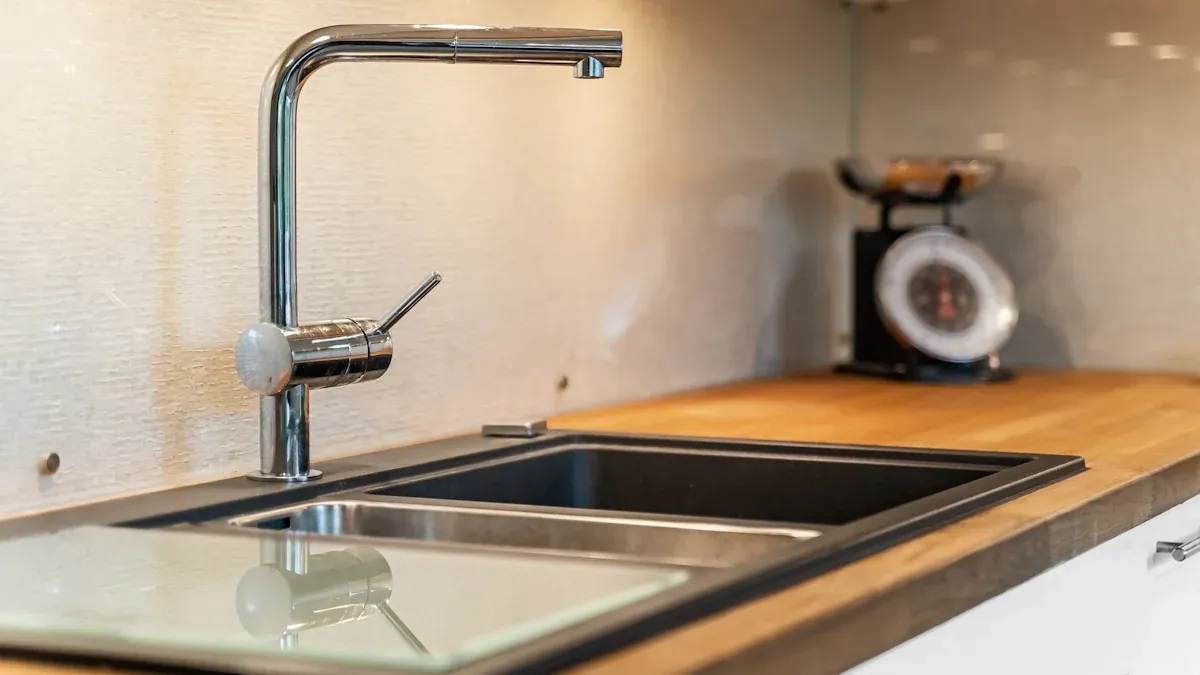
You should install many faucet components before the final countertop installation. This makes the job much easier. Pre-installing provides clear access for tightening faucet nuts and gaskets. You can easily position and seal the faucet. This happens before the countertop is permanently in place. It allows for a cleaner application of silicone or putty under the faucet base. You also reduce the risk of cross-threading or damaging supply lines. This speeds up the overall installation process. It minimizes the chances of undertightened fittings. You get a cleaner silicone line around the faucet.
Start by attaching the hot and cold supply lines to the faucet. Hand-tighten them first. Then, use a wrench for a snug fit. Do not overtighten. Next, attach any mounting hardware to the faucet body. This includes gaskets and mounting nuts. Make sure these are secure. This early step simplifies the entire sink installation. It ensures your undermount sink is ready for water connections.
Connecting Drain Hardware
Now, you will connect the drain hardware to your undermount sink. This is another crucial part of the installation. First, place a bead of plumber’s putty or silicone sealant around the drain opening on the sink. Then, insert the drain flange into the opening. Press it down firmly.
Next, from underneath the undermount sink, attach the rubber gasket and friction washer. Secure these with the large locknut. Tighten this nut with a wrench. Wipe away any excess putty or silicone. This creates a watertight seal for your sink. Finally, connect the P-trap assembly to the tailpiece of the drain. Ensure all connections are hand-tight. Then, use a wrench for a final snug fit. This completes the drain installation for your undermount sink. This careful work prevents leaks. It ensures a functional setup.
Step 7: Final Countertop Installation

Carefully Lowering the Countertop
Your installation day has arrived. The final countertop installation is next. This step brings your kitchen together. If you are replacing countertops, first remove the old ones. This clears the space. The new countertop, with its undermount sink, is heavy. You need help. Carefully bring the countertop into the kitchen. Set it on the cabinets. This is a crucial part of the countertop installation process. Make sure it aligns with the cabinet edges. Check for levelness. Use shims if needed. This ensures a flat surface. This careful placement prevents damage. Installing new countertops requires precision. This is a big installation day.
Securing the Countertop in Place
Once the countertop is perfectly positioned, you will secure it. This prevents any movement. You will attach the countertop to the cabinet bases. Use screws or adhesive. The method depends on your cabinet and countertop material. For wood cabinets, you often use screws. Drill pilot holes through the cabinet supports. Then, drive screws up into the underside of the countertop. Do not overtighten. This can crack the countertop. For stone countertops, you might use silicone adhesive. Apply beads of silicone along the top edges of the cabinet bases. Then, lower the countertop onto it. This creates a strong bond. This final installation step makes your kitchen functional. Your undermount sink is now fully integrated. This completes the countertop installation. This careful installation ensures your undermount sink stays secure. The undermount fixture is now ready for use. Enjoy your new kitchen.
You must install your undermount sink before the countertop. This sequence ensures optimal results and a durable finish for your kitchen countertop. Following the 7 key steps provides enhanced durability and long-lasting reliability for your undermount sink. It prevents leaks and mold buildup. This creates a professional aesthetic and increases your kitchen’s value. This correct installation sequence saves time and effort in the entire installation process. It prevents costly future repairs to your countertop. The 7 key steps ensure a smooth installation experience for your new countertop. Approach your sink installation with patience and attention to detail. This applies whether you undertake a DIY project or oversee professional work for your kitchen undermount sink. These 7 key steps are vital for any professional installation process.
FAQ
What is an undermount sink?
An undermount sink attaches below your countertop. It creates a seamless look. This design makes cleaning easier. Water and crumbs wipe directly into the basin. It gives your kitchen a modern appearance.
What sealant should you use?
You need 100% silicone sealant. Choose one designed for kitchen and bath. It must offer strong adhesion and flexibility. Look for mold-free protection. This ensures a watertight and durable seal.
What happens if you install the sink after the countertop?
Installing an undermount sink after the countertop causes problems. You get poor sealing. The sink might loosen over time. This leads to leaks and water damage. It also makes replacement difficult.
What tools are essential for installation?
You need a drill, measuring tape, and level. Gather a caulk gun and safety goggles. Clamps and a jigsaw are also important. A sink template helps with accuracy. These tools ensure a smooth process.


