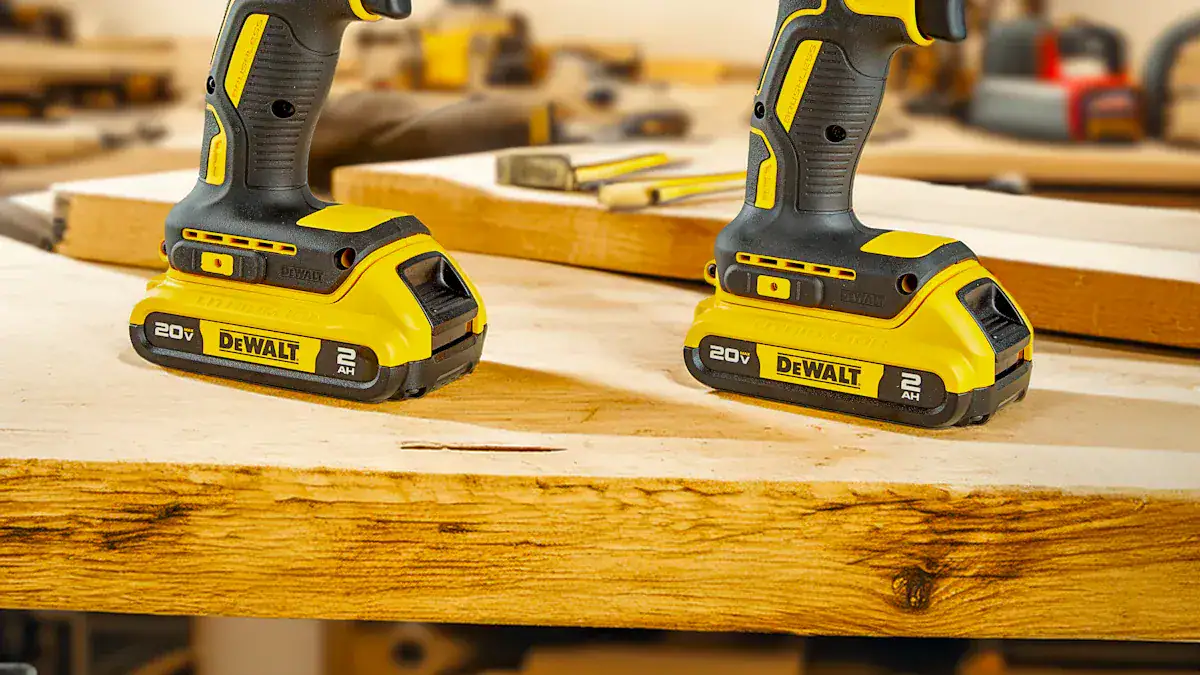
The main distinction between 2Ah and 4Ah lithium batteries lies in their Amp-hour (Ah) rating. This rating directly shows a battery’s energy capacity and its runtime. A higher Ah rating means more stored energy. This provides your tools with longer operation time. It is a crucial factor when you select a power source. A higher capacity offers more power.
You need to understand the key differences. Choosing between a 2.0ah battery and a 4.0ah battery depends on your specific needs. It also depends on tool compatibility and your preferences. This will help you choose the right capacity. This guide will clarify these aspects of battery amp hours.
Key Takeaways
Amp-hour (Ah) shows how much energy a battery stores. A higher Ah means longer tool use.
2Ah batteries are light and charge fast. They are good for quick, light jobs like drilling small holes.
4Ah batteries offer longer power and more strength. They are best for big jobs like cutting wood or using lawnmowers.
A 4Ah battery costs more and is heavier. It also takes longer to charge than a 2Ah battery.
Choose your battery based on your task. Think about how long you need power and the tool’s weight.
Understanding Battery Amp Hours
What is an Amp-Hour (Ah)?
An Amp-hour (Ah) measures a battery’s electrical charge. It tells you the amount of energy a power source can store. Think of it as the size of your battery’s fuel tank. This specification indicates how much charge a battery can hold over time. It measures the current a battery can provide over a specific period. One amp-hour means one amp of current flows for one hour. You calculate Amp-hour (Ah) by multiplying Current (I) by Discharge time (T). For example, a 100 Ah battery can provide 5 amps continuously for 20 hours (100 divided by 20). A ‘150 AH @ 15 hours’ specification means the battery can give you 10 amps continuously for 15 hours. This unit shows how much charge your battery has over time. It is a fundamental measure of battery capacity. Understanding battery amp hours helps you gauge how long a power source will power a device.
How Ah Impacts Battery Performance
A higher Amp-hour (Ah) rating directly affects your tool’s runtime. It means your battery holds more charge. This is like having a larger water jug for your tools. This increased capacity directly translates to longer operational duration for your cordless power tools. They can run for extended periods before needing a recharge. For instance, a 5.0Ah battery lasts 20% longer than a 4.0Ah battery under similar conditions.
Consider a battery cell with 1.0 amp-hour capacity. It supplies 1.0 amps of current for 1 hour. If your tool draws 2.0 amps of current, the same cell supplies power for 1/2 hour. For a tool drawing 10.0 amps, the cell supplies current for 1/10 of an hour (6 minutes). This clearly shows how amp hours affect power delivery.
A higher Ah rating offers longer runtime. You complete more work between charges, especially with high-drain tools. This also leads to better performance under load. Your tools, especially newer brushless models, sustain peak performance longer. They reduce stalling or bogging down. Fewer battery swaps mean less downtime. This increases your overall productivity. Understanding how amp hours affect power is key to choosing the right power source.
2Ah Batteries: Compact Power
2Ah Battery Characteristics
A 2.0ah battery offers a balance of size and power. You find these batteries in many cordless tools. They are generally smaller and lighter than their higher-capacity counterparts. This makes your tools easier to handle. These lithium batteries are designed for efficiency in compact forms.
Compact Size: 2Ah lithium-ion batteries are small yet powerful. Manufacturers create lighter and less bulky devices with them. This improves your user experience and tool handling. It reduces fatigue and makes tools easier to move.
High Energy Density: These batteries store more energy in a smaller space. This means you get more power in a compact form. It helps with better tool handling and steady performance.
Low Self-Discharge Rate: Lithium-ion batteries lose very little charge when you do not use them. This makes them reliable for emergency power. It also means less frequent charging. Your tools are ready when you need them.
Ideal 2Ah Battery Applications
You should choose 2Ah batteries for tasks that need quick bursts of power or shorter runtimes. They are perfect for light-duty jobs around your home. Think about drilling small holes, driving screws, or assembling furniture. Tools like impact drivers, small drills, and LED work lights often use 2Ah batteries. Their lighter weight makes them great for overhead work. You can also use them for quick touch-ups in your garden with small trimmers.
Advantages of 2Ah Batteries
The main advantage of a 2Ah battery is its portability. It makes your tools lighter. This reduces strain on your arms and wrists. You can work longer without getting tired. These batteries also charge faster. This means less downtime between tasks. You can quickly swap out a depleted battery for a freshly charged one. This quick charging capability is a big plus for many users.
Disadvantages of 2Ah Batteries
While 2Ah batteries offer convenience, they have some limitations. You will notice a shorter runtime compared to larger batteries. This means you need to recharge them more often for bigger jobs.
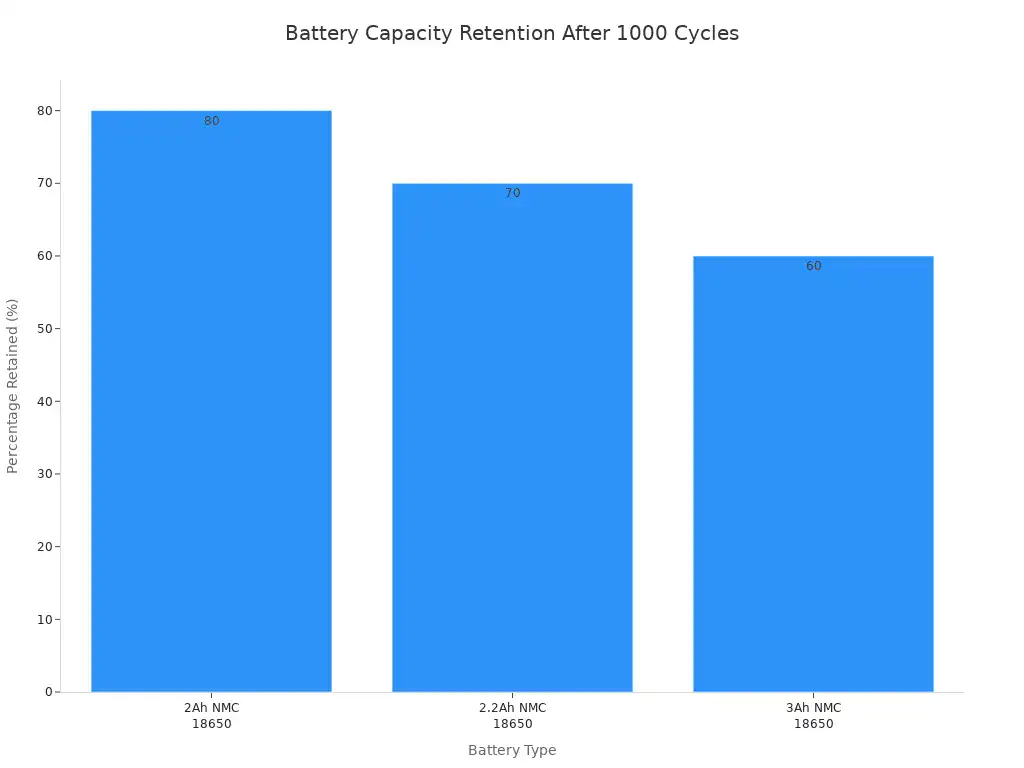
Battery Type | Initial Capacity | Capacity After 1000 Cycles | Percentage Retained |
|---|---|---|---|
2Ah NMC 18650 | 2Ah | 1.6Ah | 80% |
2.2Ah NMC 18650 | 2.2Ah | 1.54Ah | 70% |
3Ah NMC 18650 | 3Ah | 1.8Ah | 60% |
You also face other challenges:
Performance drops significantly in cold temperatures.
Charging is difficult and can cause permanent damage below 0°C (32°F).
Fast charging (less than 90 minutes or rates above 1C) harms the battery. It can also affect warranty claims.
Safety concerns, including fire risks, still exist. This is true even with improved failure rates.
4Ah Batteries: Extended Runtime
4Ah Battery Characteristics
A 4.0ah battery provides significantly more capacity than smaller options. You get extended runtime for your tools. These lithium batteries are designed for demanding applications. They store a large amount of energy. This allows for prolonged use. You can see typical sizes and weights of a 4.0ah battery in the table below.
Battery Type | Dimensions (mm) | Weight (kg) |
|---|---|---|
24V 4Ah Lithium Ion | 81 (L) x 68 (D) x 98 (W) | 0.95 |
25.6V 4Ah LiFePO4 | 150 x 65 x 94 | 0.94 |
12V 4Ah Lithium | 112 (L) x 68 (W) x 89 (H) | 0.44 (approx. 15.6 oz) |
A 4.0ah battery features high energy density. This means it stores much power in a compact space. This feature is crucial for devices needing prolonged usage. Your 4.0ah battery also has a low self-discharge rate. It retains its charge effectively when you do not use it. This reliability benefits applications like backup power supplies.
Ideal 4Ah Battery Applications
You should choose a 4.0ah battery for tasks needing extended runtime and more power. These batteries are perfect for heavy-duty tools. Think about cordless lawnmowers, circular saws, or reciprocating saws. A 4.0ah battery lets you cut more of your lawn without recharging. They excel in heavy-duty tasks on job sites. Professionals often use a 4.0ah battery for continuous work. This includes drilling many holes or driving numerous screws. For any heavy-duty task, a 4.0ah battery delivers the necessary power.
Advantages of 4Ah Batteries
The main advantage of a 4.0ah battery is its extended runtime. You complete more work on a single charge. This means fewer interruptions for battery swaps. Your productivity increases, especially during heavy-duty tasks. A 4.0ah battery also provides consistent power output. This helps your tools maintain peak performance longer. You experience less power fade during demanding heavy-duty tasks. This makes a 4.0ah battery a reliable choice for serious work.
Disadvantages of 4Ah Batteries
While powerful, a 4.0ah battery has some drawbacks. It is generally heavier and larger than a 2Ah battery. This can add to tool fatigue during prolonged use. A 4.0ah battery also takes longer to charge. You need more time to get it ready for use again. Finally, the initial cost of a 4.0ah battery is higher. You pay more upfront for the increased capacity and power.
2Ah vs 4Ah Lithium Battery Comparison
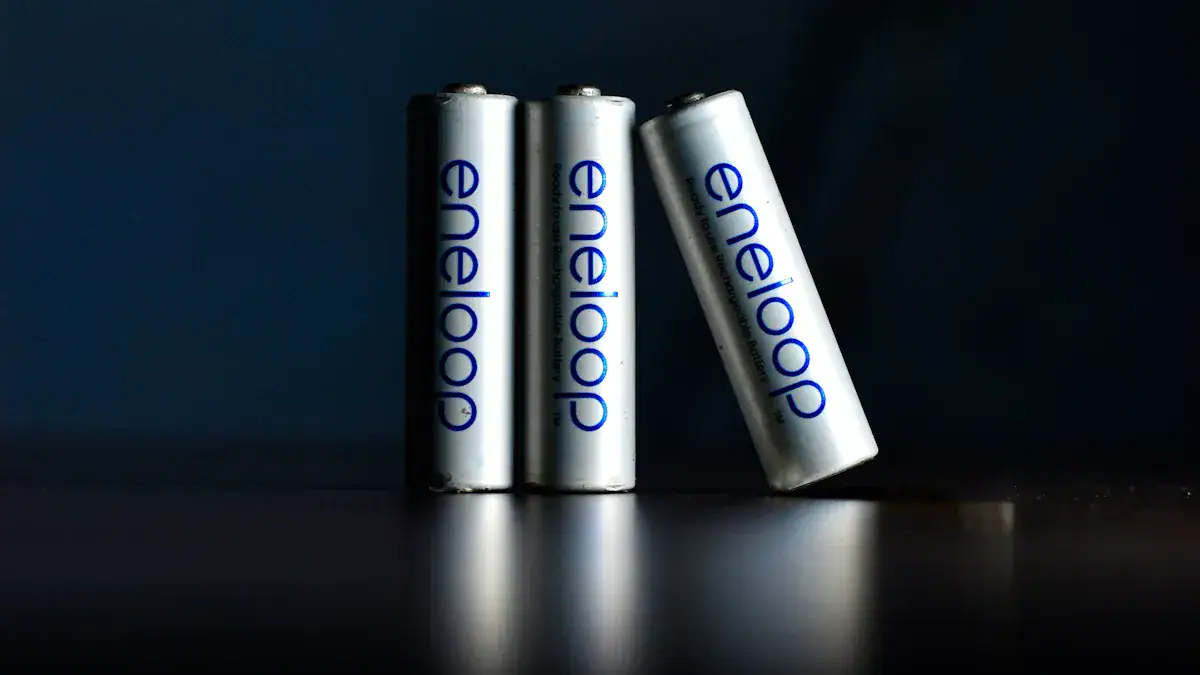
You face a choice between different lithium batteries. Understanding the key differences between a 2Ah and a 4Ah battery helps you make the best decision. This battery comparison looks at several important factors. You will see how each battery type performs in various situations.
Capacity and Runtime
The most significant difference lies in capacity. A 4.0ah battery has double the energy capacity of a 2Ah battery. This means it stores more power. For example, if your device consumes 1 amp of current, a 2Ah battery will last about 2 hours.
A 4.0ah battery, under the same conditions, will power that device for approximately 4 hours. You can expect a 4.0ah battery to power your device for roughly twice as long as a 2Ah battery. This holds true when both operate under identical load conditions.
However, factors like the specific load, the battery’s age, and your usage patterns can affect the actual runtime. This increased capacity gives you significantly longer runtime. You can complete more work without interruptions. This extended runtime is a major advantage for demanding tasks.
Size and Weight Differences
You will notice a clear difference in physical size and battery weight. A 4.0ah battery is generally larger and heavier than a 2Ah battery. This is because it contains more cells to achieve its higher capacity. The added battery weight can impact your tool’s ergonomics.
For instance, a heavier battery might make your drill feel less balanced. This can lead to increased fatigue during prolonged use. If you perform overhead work, the lighter 2Ah battery offers better comfort.
However, for stationary tools or those where weight is less critical, the extra battery weight of a 4.0ah battery is often a worthwhile trade-off for its increased capacity and runtime.
Charging Time Considerations
The charging time comparison is another important factor. Because a 4.0ah battery has twice the capacity, it naturally takes longer to charge than a 2Ah battery. If your charger takes one hour to fully charge a 2Ah battery, it will likely take two hours for a 4.0ah battery.
This difference in battery charging time can affect your workflow. If you need quick turnarounds, having multiple 2Ah batteries might be more efficient. However, if you plan your charging sessions, the longer charging time for a 4.0ah battery might not be an issue. You simply need to factor it into your schedule.
Cost Analysis
You will find a difference in cost. A 4.0ah battery typically costs more upfront than a 2Ah battery. This higher initial cost reflects its increased capacity and durability. However, you should consider the long-term value.
A 4.0ah battery often offers better overall cost-efficiency due to its extended runtime and longer lifespan. You might buy fewer batteries over time. This can save you money in the long run. When you evaluate the cost, think about how often you will use the battery and for what types of tasks. This helps you determine the true value.
Performance Under Load
A higher amp-hour battery often provides better performance under load. A 4.0ah battery can sustain higher power output for longer periods. This means your tools maintain their peak performance even during demanding tasks.
You will experience less power fade. Your tools will not bog down as easily. This improved performance is especially noticeable with high-drain tools like circular saws or reciprocating saws. The increased capacity allows the battery to deliver consistent power, enhancing the tool’s efficiency and overall power delivery. This consistent power contributes to better work quality and faster completion times.
Lifespan and Value
The lifespan of your battery is crucial for long-term value. A 4.0ah battery generally offers more charge cycles than a 2Ah battery. For example, a 4.0ah battery typically supports 500-700 charge cycles.
A 2.0ah battery usually provides 300-500 cycles. This increased durability means your 4.0ah battery will last longer. You get more use out of it before needing a replacement. This extended durability contributes to better long-term value. You invest in a battery that performs well and lasts longer. This makes the higher initial cost of a 4.0ah battery a worthwhile investment for many users.
Battery Compatibility and Interchangeability
Using Different Ah Batteries with Tools
You often wonder if you can swap batteries between tools. You can generally use a 2Ah battery in a tool designed for a 4Ah battery. This will not likely damage the tool itself. Modern lithium-ion batteries have safety features. These features prevent the tool from drawing too much current.
The control circuitry will shut off the tool if it demands excessive power. A smaller battery will mainly affect runtime and efficiency. A 2Ah battery might cause earlier shutdowns as its voltage drops. It cannot deliver the last usable milliamp-hours. However, it will not inherently damage your tool.
You can also generally replace a 2Ah battery with a 4Ah battery. This works if the voltage and connector types are the same.
This upgrade usually doubles the capacity. You get longer usage times without harming your device. You must consider the battery’s size, weight, and charging compatibility. Also, check the tool’s specific needs. This ensures a safe and effective swap. Higher capacity batteries, like a 5.0ah battery, can deliver sustained currents. This might increase heat. So, proper fit, ventilation, and batteries with built-in protection circuits are important for safety.
Impact on Tool Performance
Using a lower Ah battery than recommended for power tools shortens operating times. You will need to recharge more often. Power tools are high-power devices. They need higher Ah ratings for optimal performance.
A higher Ah battery leads to fewer recharge cycles. This can help the battery’s overall lifespan. For heavy-duty tasks, a higher capacity battery is better. It avoids interruptions and boosts productivity. A 5.0ah battery, for example, offers excellent performance for demanding jobs.
For heavy-duty tasks like building a deck or remodeling, you need continuous power. A standard battery with higher capacity is often the better choice. The extended runtime means fewer interruptions to swap or recharge batteries. This increases productivity and efficiency on the job site.
Conversely, slim batteries offer less runtime. They are enough for most DIY tasks and shorter professional jobs. They suit occasional use or act as a backup for quick power boosts. A 5.0ah battery provides the sustained performance you need for big projects. You will notice improved tool performance with a larger 5.0ah battery. This 5.0ah battery helps you work longer.
Choosing Your Lithium Battery
You need to select the right power source for your tools. Making an informed decision about lithium batteries improves your work. Consider several factors before you buy. These practical recommendations help you choose.
Assessing Runtime Needs
First, think about how long you need your tools to run. Your tasks dictate the battery capacity. For light tasks like drills or flashlights, a 1-2Ah battery is suitable. Medium-power tools, such as string trimmers or circular saws, need a 3-4Ah battery. High-power tools like chainsaws or lawn mowers perform best with a 5Ah+ battery. A 4.0ah battery provides extended runtime for many demanding jobs. It helps you finish more work without interruption.
Evaluating Tool Compatibility
You must ensure your battery fits your tools. Most power tool brands use specific voltage systems. Common voltages include 12V, 18V, 20V, 24V, 36V, 40V, and 60V. For example, 18V–20V systems are common for DIYers and professionals from brands like DeWALT, Milwaukee, and Makita. 12V systems are excellent for compact tools.
40V+ systems are for heavy-duty use. Ryobi offers battery sizes from 1.5Ah to 4.0Ah. Metabo HPT uses MultiVolt technology. This allows a 4.0ah battery at 36V or an 8.0Ah battery at 18V. Always check your tool’s voltage and brand ecosystem.
Weight and Ergonomics
Consider the battery’s weight. A heavier battery can cause fatigue. Lithium-ion batteries are much lighter than older types. A 40V 4Ah battery weighs only about 2.5 lbs.
This contributes to comfortable extended use. While a 4.0ah battery offers more power, it is heavier than a 2Ah option. For overhead work or long tasks, a lighter battery might be better. For stationary tools, the extra weight of a 4.0ah battery is less of an issue.
Budget and Long-Term Value
Evaluate the cost of the battery. A 4.0ah battery has a higher initial cost. However, it often provides better long-term value. It offers more charge cycles and a longer lifespan. This means you replace it less often. Consider the overall cost over time. These practical recommendations help you save money. The initial cost might be higher, but the durability of a 4.0ah battery can be a smart investment.
Charging Equipment
You need the right charger for your battery. Different chargers offer varying speeds. The Batavia 12V 2.4A Fast Charger charges a 2Ah battery in about 50 minutes. The same charger charges a 4.0ah battery in about 100 minutes. Modern chargers feature smart charging technology.
This optimizes battery life. It prevents overcharging and overheating. An Energizer Battery Charger 3BP offers ultra-fast charging for both 2Ah and 4.0ah battery types. Proper charging extends your battery’s life.
Real-World Battery Applications
DIY and Home Use Cases
You often tackle projects around your home. For quick tasks like hanging pictures or assembling flat-pack furniture, a 2Ah battery provides enough power. It keeps your drill light and easy to handle. However, for more involved DIY, such as building a deck or renovating a room, you need more sustained power. A 4.0ah battery becomes invaluable here. This 4.0ah battery lets you work longer without stopping. You can drive more screws or cut more wood. A 4.0ah battery ensures your tools have the necessary power for these larger home improvements. You will appreciate the extended runtime a 4.0ah battery offers.
Professional Trades and Job Sites
Professionals on job sites demand reliable power and extended runtime. For continuous, heavy-duty work, a 4.0ah battery is often the standard. You use a 4.0ah battery in tools like circular saws, reciprocating saws, and impact wrenches. These tools require significant power to perform effectively. A 4.0ah battery ensures you complete tasks efficiently.
It minimizes interruptions for battery changes. This consistent power is crucial for productivity. For example, a plumber needs a 4.0ah battery for pipe cutting. An electrician relies on a 4.0ah battery for drilling through studs. This robust battery supports your heavy-duty applications.
Specialized Equipment
Beyond common power tools, specialized equipment also benefits from specific battery capacities. Portable lighting systems, for instance, need a battery that offers long-lasting power. A 4.0ah battery can keep a work light running for hours. Diagnostic tools or remote monitoring devices also require a dependable power source. Here, the consistent power from a 4.0ah battery ensures accurate readings and uninterrupted operation. Even some outdoor recreational gear, like high-power fishing electronics, uses a 4.0ah battery for extended use. You choose the right battery to match the specific power demands of your specialized gear.
You now understand the differences between 2Ah and 4Ah lithium batteries. Your choice balances runtime, tool compatibility, weight, and budget. No battery is inherently “better.” Suitability depends on your task. A 4.0ah battery offers extended runtime, improving work efficiency.
This 4.0ah battery also boosts tool performance. For demanding jobs, a 4.0ah battery provides consistent power, enhancing overall efficiency. A 4.0ah battery is great for heavy use. A 4.0ah battery gives you more power. A 4.0ah battery helps your tool performance. A 4.0ah battery is a smart choice. A 4.0ah battery improves efficiency. Assess your needs to optimize tool performance and overall efficiency. This ensures you get the best value.
FAQ
Can I use a 2Ah battery in a tool that usually takes a 4Ah battery?
Yes, you can. Your tool will work. However, you will get less runtime. You will need to recharge more often. The tool’s performance might also feel less robust for demanding tasks.
Does a 4.0ah battery make my tool more powerful?
A 4.0ah battery does not increase your tool’s maximum power output. It provides power for a longer time. Your tool’s motor determines its power. The higher Ah rating means extended runtime, not more raw power.
How do I choose the right battery for my tool?
Consider your task’s duration. Think about the tool’s power demands. Evaluate the battery’s weight for comfort. Match the battery voltage to your tool. Check compatibility with your tool’s brand and model.
Is a 4Ah battery always the best choice?
No, not always. A 4Ah battery offers longer runtime. It is heavier and costs more. For light, quick tasks, a 2Ah battery is lighter and more convenient. Your best choice depends on your specific needs.